Key takeaways
- Wireless needs a clean network. Connect the PC to the router by Ethernet and give the headset a 5 GHz or 6 GHz band in the same room. A bitrate of 150 to 200 Mbps with H.264, or lower with HEVC or AV1, is a common starting point for Quest streaming.
- Wired headsets need DisplayPort directly from the GPU. USB-C adapters and laptop ports routed through integrated graphics often fail.
- Base stations need mounting. Two units mounted high in opposite corners, about 2 to 5 meters apart, are the norm.
- Comfort accessories matter. Most Quest owners replace the stock strap with a rigid or battery strap for long sessions.
- Glasses wearers: Quest headsets accept glasses with a spacer. Beyond 2 and Pimax headsets work better with prescription lens inserts.
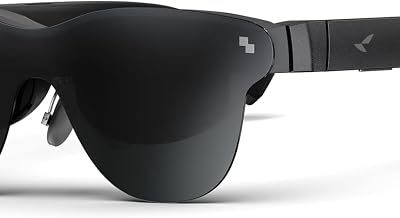
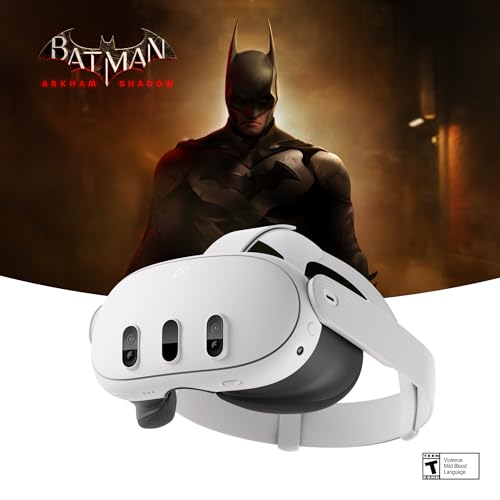
The best PC VR headset for most players in 2026 is the Meta Quest 3. It streams SteamVR games wirelessly, works as a standalone headset, and costs far less than dedicated PC headsets. If you can get one, Valve’s new Steam Frame is the best wireless option for a large Steam library. Choose the Bigscreen Beyond 2 or 2e for the lightest, sharpest wired experience if you already own base stations, and the Pimax Crystal Light or Crystal Super for sim racing and flight sims where clarity matters most.
The Valve Index was discontinued in November 2025, so the 2026 market splits into two groups: wireless headsets that compress a video stream from your PC, and wired headsets that receive an uncompressed DisplayPort signal. That split matters as much as resolution.
Our top picks



As an Amazon Associate we earn from qualifying purchases at no extra cost to you. Ratings are shown as listed on Amazon.
The 2026 PC VR lineup at a glance
| Headset | Resolution per eye | Display | Connection | Tracking | Weight | Typical price |
|---|---|---|---|---|---|---|
| Meta Quest 3S | 1832 x 1920 | LCD, Fresnel lenses | Wireless or USB-C stream | Inside-out | About 515 g | $350–$450 |
| Meta Quest 3 | 2064 x 2208 | LCD, pancake lenses | Wireless or USB-C stream | Inside-out | About 515 g | About $600 |
| Valve Steam Frame | 2160 x 2160 | LCD, eye-tracked foveated streaming | Wireless (Wi-Fi 7 adapter included) | Inside-out | About 440 g | $1,060–$1,300 |
| Bigscreen Beyond 2 / 2e | 2560 x 2560 | Micro-OLED | Wired DisplayPort | SteamVR base stations | About 107 g | $960–$1,160 plus tracking and controllers |
| Pimax Crystal Light | 2880 x 2880 | LCD with local dimming, glass lenses | Wired DisplayPort | Inside-out or base stations | Heavy | About $900 with controllers |
| Pimax Crystal Super | 3840 x 3840 | QLED or micro-OLED options | Wired DisplayPort | Inside-out or base stations | Heavy | $1,600–$2,200 |
Prices are typical US ranges in autumn 2026. Meta raised Quest prices in April 2026, citing the memory shortage, and Valve said the same shortage kept the Steam Frame above its original price target.
How much GPU each headset needs
Headset resolution translates directly into GPU load. A useful way to compare is pixels drawn per second at 90 Hz, measured against a 4K monitor at 60 Hz (about 498 million pixels per second). The figures below use native panel resolution. Real render targets are usually 20 to 40 percent higher to correct lens distortion.
| Headset | Total pixels (both eyes) | Pixels per second at 90 Hz | Versus 4K at 60 Hz | Suggested GPU class |
|---|---|---|---|---|
| Quest 3S | 7.0 million | 633 million | 1.3x | RTX 3060 Ti / RTX 4060 and up |
| Quest 3 | 9.1 million | 820 million | 1.6x | RTX 3070 / RTX 4060 Ti and up |
| Steam Frame | 9.3 million | 840 million | 1.7x | RTX 3070 and up (foveated streaming helps) |
| Bigscreen Beyond 2 | 13.1 million | 1.18 billion | 2.4x | RTX 4070 Super / RTX 5070 and up |
| Pimax Crystal Light | 16.6 million | 1.49 billion | 3.0x | RTX 4080 / RTX 5070 Ti and up |
| Pimax Crystal Super | 29.5 million | 2.65 billion | 5.3x | RTX 4090 / RTX 5090 class |
Many demanding titles let you lower render resolution, use upscaling, or rely on eye-tracked foveated rendering. Even so, a high-resolution headset paired with a mid-range GPU usually ends up running below its native resolution, which removes much of the reason to buy it.
Picks by player type
Best for most players: Meta Quest 3
The pancake lenses are sharp across most of the view, and the headset can stream PC VR over Air Link, Steam Link or Virtual Desktop, or over a USB-C cable. Mixed-reality passthrough and a large standalone library add value when the PC is off. The downside is that wireless streaming compresses the image, so fine text and dark scenes can show artifacts, and you need a good Wi-Fi 6 or 6E router near your play space.
Best budget entry: Meta Quest 3S
It uses the same chip and tracking as the Quest 3 with lower-resolution panels and Fresnel lenses. It is the cheapest way into PC VR, and it suits newer players or mid-range GPUs.
Best for Steam libraries: Valve Steam Frame
Valve’s streaming-first headset ships with a dedicated Wi-Fi 7 USB adapter, so it doesn’t depend on your router. Eye tracking drives foveated streaming, which sends the most detail to where you are looking and reduces visible compression. It also runs SteamOS on its own Snapdragon 8 Gen 3 chip. At launch it was sold through a reservation queue, so availability is the main obstacle. Passthrough is black and white unless you add a color camera accessory.
Best comfort and clarity: Bigscreen Beyond 2 or 2e
At about 107 grams, it is a fraction of the weight of any other headset here, and micro-OLED gives true blacks. It needs SteamVR base stations and controllers, which add several hundred dollars if you don’t already own them from a Valve Index or HTC Vive. The 2e adds eye tracking. Each unit is fitted to the buyer’s face scan or a universal cushion.
Best for sim racing and flight sims: Pimax Crystal Light and Crystal Super
High resolution makes cockpit gauges readable without leaning in. The Crystal Light is the more practical choice for most simmers. The Crystal Super gives the sharpest image available, but it needs a top-end GPU and is heavy enough that a counterweight or comfort strap is worth adding.
Decision matrix
| Your situation | Best choice |
|---|---|
| First VR headset, mid-range PC | Quest 3S or Quest 3 |
| Room-scale and active games, no cables | Quest 3 or Steam Frame |
| Already own base stations and Index controllers | Bigscreen Beyond 2 or 2e |
| Sim racing or flight sims with an RTX 4080 or better | Pimax Crystal Light or Crystal Super |
| Long social VR sessions | Bigscreen Beyond 2e for comfort |
| Laptop with no DisplayPort output | Quest 3, Quest 3S or Steam Frame |
Setup realities that spec sheets skip
- Wireless needs a clean network. Connect the PC to the router by Ethernet and give the headset a 5 GHz or 6 GHz band in the same room. A bitrate of 150 to 200 Mbps with H.264, or lower with HEVC or AV1, is a common starting point for Quest streaming.
- Wired headsets need DisplayPort directly from the GPU. USB-C adapters and laptop ports routed through integrated graphics often fail.
- Base stations need mounting. Two units mounted high in opposite corners, about 2 to 5 meters apart, are the norm.
- Comfort accessories matter. Most Quest owners replace the stock strap with a rigid or battery strap for long sessions.
- Glasses wearers: Quest headsets accept glasses with a spacer. Beyond 2 and Pimax headsets work better with prescription lens inserts.
FAQ
Is wireless PC VR good enough in 2026?
For most games, yes. Compression is visible mainly in dark scenes and fine text. Simmers who need to read small instruments still prefer wired headsets.
Can I still buy a Valve Index?
Valve discontinued it in November 2025. Used units still work with SteamVR, and Index controllers and base stations pair with the Bigscreen Beyond 2.