Key takeaways
- The strap that ships in the box with most cameras is thin, scratchy, and printed with a logo that advertises your gear to everyone on the street.
The strap that ships in the box with most cameras is thin, scratchy, and printed with a logo that advertises your gear to everyone on the street. Swapping it is one of the cheapest upgrades in photography, yet the choice is less obvious than it looks. A neck strap, a shoulder sling, and a wrist-length cord all carry weight differently, and a strap that feels fine for an hour can ache after a full day of walking.
This guide is for photographers carrying a DSLR, mirrorless body, or compact rig who want better comfort, quicker access, or a tidier look. The six straps below cover canvas, leather, neoprene, nylon rope, and a configurable sling design. Judgments here come from the listed materials and features, so confirm lug compatibility and strap length on the maker page, especially if your camera has unusual attachment points.
Quick Picks
Our top picks



As an Amazon Associate we earn from qualifying purchases at no extra cost to you.
| Product | Best for | Key spec from the title |
|---|---|---|
| waka Rapid Strap | Fast sling carry | Quick release, safety tether |
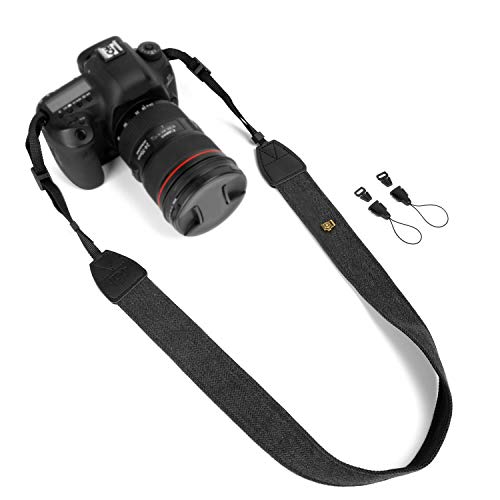
| WANBY Canvas Strap | Vintage look on a budget | Canvas with quick release buckles |
| K&F Concept BJ01 | Street photography | 100cm nylon rope with O-ring |
| Peak Design Slide Lite | Flexible carry styles | Sling, neck, or shoulder setup |
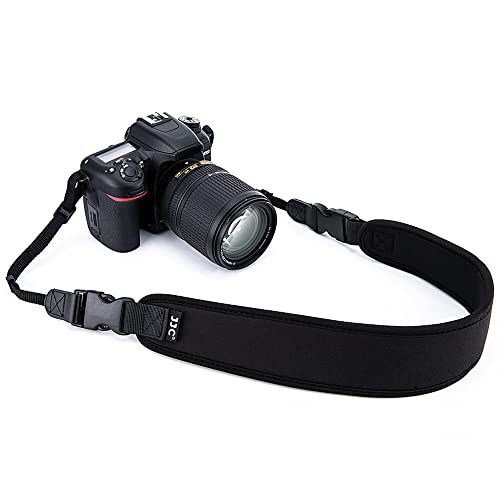
| JJC Neoprene Strap | Heavy bodies | Neoprene, quick release, adjustable |
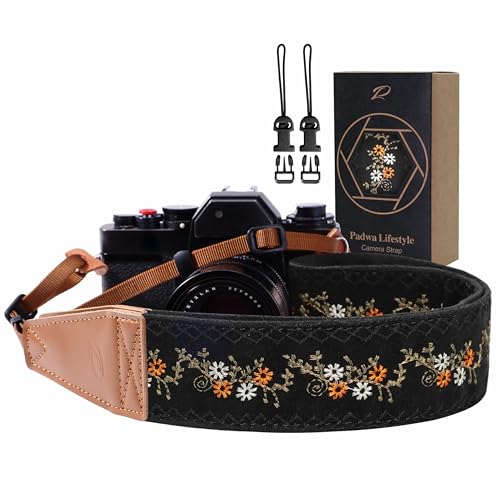
| Padwa Lifestyle Strap | Classic leather style | 2-inch full grain leather ends |
How to Choose
Match the strap style to how you shoot
A neck strap keeps the camera at chest height and suits slow, deliberate shooting, such as landscapes and portraits. A shoulder or sling strap lets the body hang at your hip and swing up quickly, which works better for events, travel, and street work. If you often swap between a tripod and handheld, a quick release system lets you detach the strap in a second.
Width and padding
For a lightweight compact, a thin strap is fine. For a DSLR with a large lens, look for padding or a wide strap, since a narrow cord concentrates the load on one spot. Neoprene and suede pads reduce pressure, while canvas and nylon rope stay slim but offer less cushioning. A width near two inches spreads the weight best on the neck. If your camera and lens weigh over three pounds together, padding is not optional, and a sling that moves weight to the shoulder and torso can be even more comfortable.
Attachment hardware
Check how the strap connects: traditional leather ends thread through camera lugs, O-rings and quick release buckles clip on, and some designs use a separate anchor. Safety tethers, mentioned in some listings, add a backup if a connection fails. Make sure the hardware suits your camera’s lugs, because some small mirrorless bodies have narrow slots. Also look at the stitching around the buckles and the quality of the metal or plastic clips, because those points take the full load every time you lift the camera.
Length and material
A 100 centimeter strap suits a quick cross-body carry, while longer adjustable straps suit taller photographers or heavier coats. Leather and canvas look good and age well but can stiffen in wet weather, while nylon and neoprene shrug off rain. Ignore claims of universal fit and focus on lug type, length range, and quick release hardware, because budget straps often cut corners on stitching and buckle quality.
The 6 Best Options
waka Rapid Camera Strap
The waka strap pairs a quick release with a safety tether in an adjustable shoulder sling design. The listing names Nikon, Canon, Sony, and Olympus DSLR cameras, which suits photographers who want to bring the camera up to the eye fast.
- Strength: quick release makes detaching for tripod work effortless.
- Strength: the safety tether adds a backup connection.
- Trade-off: a sling puts weight on one shoulder, which can tire you on long walks.
Skip it if you prefer a classic around-the-neck carry. It suits events, travel, and any shoot where speed to the eye matters more than appearance. The safety tether is worth a closer look for anyone who works in crowds or on ladders, since a second connection point keeps the body from falling if a clip is bumped open. The listing also names several camera brands, which helps with confidence about fit.
WANBY Canvas Strap
WANBY offers a black canvas shoulder strap with quick release buckles. The vintage, adjustable design fits DSLR, SLR, and most digital cameras, and the canvas gives a throwback look at an accessible tier.
- Strength: canvas has a classic, understated look.
- Strength: quick release buckles make swapping bodies easier.
- Trade-off: canvas offers little padding for heavy lens combinations.
Skip it if you carry a long telephoto lens for hours. It fits lighter bodies, film SLRs, and photographers who care about style. A quick glance at the title suggests it also works for film and older cameras, so owners of a classic SLR can treat it as a period-correct match. Wash or spot clean canvas gently, because dye can bleed when it gets soaked.
K&F Concept BJ01
This K&F strap is a 100cm nylon rope with an O-ring, built for DSLR cameras and described as suitable for street photography. It is the slim, low-profile choice, easy to wrap around the wrist when needed. Short lengths like 100cm also keep the body close, which reduces swing when you walk through a crowd. Street photographers often prefer that tight carry because it keeps the camera out of the way until the moment arrives.
- Strength: nylon rope is light and shrugs off moisture.
- Strength: the O-ring attachment is simple to fit.
- Trade-off: a thin rope is less comfortable under a heavy body.
Skip it if you need padding or a wide contact area. It fits street shooters who want something discreet and light.
Peak Design Slide Lite
The Slide Lite is a premium configurable strap that works as a sling, neck, or shoulder strap, with quick release and connection points and a smooth, grippy side. It is the flexible choice for photographers who change carry styles through the day.
- Strength: one strap supports three carry styles.
- Strength: the smooth and grippy sides let you control slip.
- Trade-off: it sits at the premium end of this group.
Skip it if you only ever need a basic neck strap. It rewards buyers who switch between gear, bags, and shooting styles often. The textured sides give a choice of friction: the grippy face stays put on a jacket, while the smooth face glides when you want the camera to slide into position. That kind of adjustability explains why it costs more than a plain cord.
JJC Neoprene Strap
JJC makes a neoprene shoulder strap with quick release, adjustable length, and compatibility listed for Canon, Nikon, and Sony DSLRs, including models such as the Rebel T7, EOS R50, and R6. Neoprene cushions the neck and shoulder.
- Strength: neoprene padding spreads weight comfortably.
- Strength: quick release and adjustable fit suit varied bodies.
- Trade-off: neoprene can feel warm in hot weather.
Skip it if you want a slim, minimal look. It suits owners of heavier DSLRs and bigger lenses. Because the listing mentions specific Canon bodies, it is a safe match for owners of those cameras, though buyers of other models should confirm the lug design. Neoprene is easy to wipe clean, which helps after a sweaty day outdoors.
Padwa Lifestyle Strap
Padwa uses a 2-inch strap with full grain leather ends, a vintage embroidered cotton weave, and a padded, soft suede feel. The width and padding make it comfortable, and the style matches classic film bodies.
- Strength: leather ends and a wide strap look refined.
- Strength: padding spreads weight across the neck.
- Trade-off: leather ends need threading through lugs, so swaps take longer.
Skip it if you want a quick release system. It suits portrait and travel photographers who value appearance and comfort. The 2-inch width is generous, so it works best with heavier mirrorless and DSLR bodies, and the leather ends age with natural wear. Keep it dry, and condition the leather occasionally so the ends stay supple.
Which One Fits Your Situation
You shoot weddings or events
The waka Rapid or Peak Design Slide Lite brings the camera to your eye quickly and allows a fast tripod swap. The WANBY and JJC straps also list quick release hardware, so they work for photographers who move between handheld shooting and a tripod several times per session, though neither adds a separate safety tether in the title.
You carry a heavy DSLR and lens
The JJC neoprene strap or the Padwa padded strap spreads weight and reduces neck strain on long days. Photographers who hike with a camera should prefer these over thin cords, because the cushioning prevents the strap from digging in when the load shifts.
You shoot street or travel
The K&F Concept BJ01 is light and discreet, ideal for blending in and staying mobile. Its nylon rope also packs small, so it doubles as a spare strap stored in a camera bag for a second body.
You prefer a vintage look
The WANBY canvas or the Padwa leather strap match film bodies and add character to a classic camera. Pick the leather option if you care most about comfort and the canvas option if you want the lighter, simpler build.
Common Mistakes
- Buying a strap without checking the lug design of your camera.
- Choosing a thin cord for a heavy lens combination.
- Skipping a safety tether or backup connection on expensive gear.
- Setting the strap too long so the camera swings into walls and railings.
- Trusting a universal fit claim without reading the hardware details.
Related guides
- Gaming Headsets For Competitive Fps Directional Audio
- Threadripper Vs Xeon Vs Core I9 For Workstations
- Compact Mini Itx Gaming Pcs For Small Desks
Frequently Asked Questions
Is a sling strap better than a neck strap?
It depends on how you shoot. A sling keeps the camera at your hip and speeds access, while a neck strap spreads weight across both shoulders. Many photographers own one of each in 2026.
Do quick release straps risk dropping the camera?
Quality hardware holds securely, but a safety tether adds peace of mind. Inspect the buckles and anchors regularly for wear, and replace any strap with frayed stitching or a cracked clip. Treat the tether as insurance rather than a substitute for a secure connection at the lug.
How long should a camera strap be?
A strap near 100 centimeters suits a cross-body style, while longer adjustable ones suit layered clothing. Pick adjustability if you share the strap across bodies. Taller photographers and anyone wearing a bulky winter coat should look for extra length, because a strap that is too short pulls the camera uncomfortably up against the chest.
Will these straps fit a mirrorless camera?
Most will, provided the camera has standard lugs or an anchor system. Check the listed compatibility and the connector type, and consider a small adapter or anchor set if your body lacks traditional lugs. Also confirm the width of the slot, since very small bodies may need smaller connectors.