The best drum heads depend on the sound and playing feel you need: choose a single-ply coated head for open, sensitive tone, a double-ply head for controlled durability, and a purpose-built bass-drum head when low-end punch and tuning stability matter most.
Our top picks
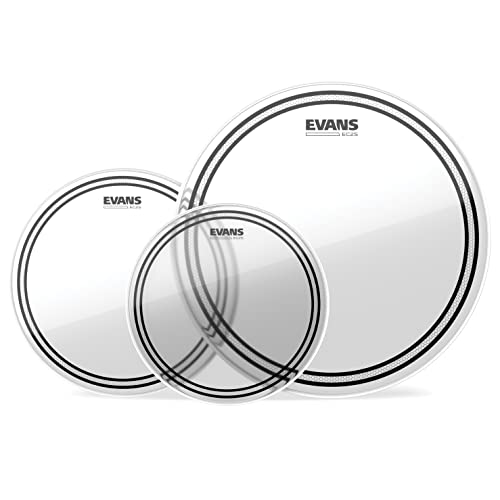 Evans EC2S Clear Rock Tompack Drum Heads
- 2-Ply Drumheads: Featuring Sound Shaping Technology (SST) rings…
- Consistent and Durable: Made with two plies of…
- Heads for the Complete Kit: Be prepared for…
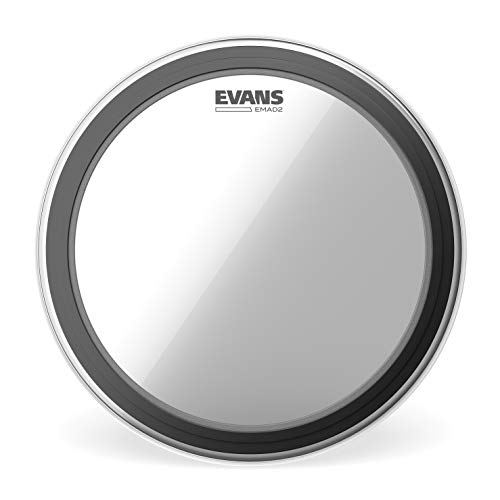 Evans EMAD2 Clear Bass Drum Head
- Clear Bass Drum Head: This bass batter head…
- Optimum Sound Quality: A Level 360 collar allows…
- Heads for the Complete Kit: Be prepared for…
 Evans Genera HD Dry Snare Drum Head
- Heavy Duty Snare Drum Heads: These snare heads…
- Balanced Response: Made with a coated outer ply…
- Heads for the Complete Kit: Be prepared for…
| Product | Key specs | |
|---|---|---|
| Evans EC2S Clear Rock Tompack Drum Heads | 2-Ply Drumheads: Featuring Sound Shaping Technology (SST) rings… Consistent and Durable: Made with two plies of… Heads for the Complete Kit: Be prepared for… | Check price |
| Evans EMAD2 Clear Bass Drum Head | Clear Bass Drum Head: This bass batter head… Optimum Sound Quality: A Level 360 collar allows… Heads for the Complete Kit: Be prepared for… | Check price |
| Evans Genera HD Dry Snare Drum Head | Heavy Duty Snare Drum Heads: These snare heads… Balanced Response: Made with a coated outer ply… Heads for the Complete Kit: Be prepared for… | Check price |
 Evans G2 Coated Rock Tompack Drum Heads Evans G2 Coated Rock Tompack Drum Heads | 2-Ply Drumhead: With a beautifully warm and clear… Versatile and Balanced: G2 heads have a balanced… Heads for the Complete Kit: Be prepared for… | Check price |
As an Amazon Associate we earn from qualifying purchases at no extra cost to you.
Best Drum Heads at a Glance
| Playing situation | Snare recommendation | Tom recommendation | Bass-drum recommendation | Why it works |
|---|---|---|---|---|
| Jazz, acoustic, low-volume playing | Coated single-ply, such as Remo Ambassador Coated or Evans G1 Coated | Coated single-ply | Single-ply or lightly muffled bass head | Maximum brush response, sustain and dynamic detail |
| Pop, rock and general-purpose playing | Coated single-ply with a reinforced center or control ring | Evans G2 Clear, Remo Emperor Clear or equivalent two-ply head | Evans EMAD or Remo Powerstroke-style head | Balanced attack, body and manageable overtones |
| Heavy rock, metal and hard hitters | Two-ply or reinforced head, such as Evans HD Dry or Remo Emperor X | Two-ply clear heads | Two-ply or pre-muffled head such as Evans EQ4 | Greater durability and shorter, more focused decay |
| Funk, R&B and studio-controlled sound | Coated head with a controlled center or damping ring | Evans EC2S Clear or Remo Pinstripe | Moderately muffled head | Defined notes that sit cleanly in a mix |
| Maximum sensitivity and low-volume response | Coated single-ply | Coated single-ply | Single-ply with minimal damping | Responds to light strokes without needing high force |
Single-Ply vs Double-Ply Drum Heads
Single-ply heads: open tone and sensitivity
A single-ply head uses one film layer, commonly around 10 mil thick. It starts vibrating easily, which makes it the strongest choice for brushes, ghost notes, soft jazz comping and nuanced tom playing. The trade-off is a longer, brighter sustain and less resistance under hard hits.
Coated single-ply heads such as the Remo Ambassador Coated and Evans G1 Coated are versatile snare choices. The coating slightly reduces high-frequency brightness and gives brushes a textured surface. On toms, coated single-ply heads produce a rounder, more vintage-style note than their clear equivalents.
Double-ply heads: control and lifespan
Two-ply heads use two thinner films, often totaling about 14–16 mil. They resist dents better and reduce unwanted high overtones. Evans G2 Clear, Remo Emperor Clear and Aquarian Response 2 are common examples of this design.
Double-ply does not automatically mean “better.” It can make a lightly played drum feel less responsive, particularly on small toms or a snare used for ghost notes. Choose it when the drummer hits hard, the kit needs a shorter studio-friendly note, or a single-ply head develops dents too quickly.
Reinforced and specialty heads
A reinforced center dot adds durability and changes the impact response without making the entire head as heavy as a two-ply model. A head such as the Remo Controlled Sound combines a relatively open outer area with extra protection under the main striking zone.
Dry heads, including Evans HD Dry, add a control ring and small venting to reduce ringing. They are useful for a snare that produces excessive overtones, but they can sound too narrow if the drum is already heavily damped.
Coated vs Clear: Which Surface Should You Choose?
Clear heads emphasize attack, projection and upper harmonics. They are particularly effective on toms for rock, metal and amplified pop, where a clean initial note must cut through guitars. They also make the pitch movement of a tom easier to hear.
Coated heads soften the attack, reduce some brightness and improve brush articulation. They suit snares in jazz, folk, blues, worship and general live playing. A coated tom head can also give a large kit a warmer, less aggressive character.
- Choose clear when you want bright attack, strong projection, long sustain or a modern rock sound.
- Choose coated when you want warmth, brush response, softer transients or a more vintage character.
- Choose a coated snare head unless you specifically prefer the sharper attack of a clear head.
- Choose clear tom heads for maximum cut; choose coated tom heads when the room or recording needs less high-frequency energy.
Snare, Tom and Bass-Drum Choices
Snare drum
For the broadest range of styles, start with a 10-mil coated single-ply head. Tune it medium-high and add only enough damping to stop unwanted ringing. This preserves rimshots, ghost notes and brush work.
Move to a two-ply, reinforced or dry head when the snare dents easily, produces uncontrolled overtones, or is played with consistently heavy rimshots. Evans HD Dry is a focused option; Remo Emperor X offers a particularly durable, controlled approach. These heads may need a slightly higher tuning than a thin head to retain sensitivity.
Toms
Clear single-ply heads provide the most open tom sound, while clear two-ply heads give a shorter and more controlled note. A practical rock setup is two-ply clear batter heads with clear or coated resonant heads. For a warmer sound, use coated batter heads or lower the tuning while keeping the resonant heads clean and evenly tensioned.
Pre-damped tom heads such as Evans EC2S Clear and Remo Pinstripe reduce the need for external gels or tape. They are useful when microphones are close to the kit or when the room creates excessive sustain. The cost is less pitch bloom and fewer overtones to shape during mixing.
Bass drum
Bass-drum heads are designed around low-frequency movement and pedal impact. Evans EMAD uses an adjustable external damping system, allowing you to select a more open or more focused response. Evans EQ4 and comparable pre-muffled heads give a controlled note with less setup work.
Use a single-ply or lightly damped head for jazz, acoustic music and a resonant “boom.” Choose a two-ply or pre-muffled head for rock and metal when you need a defined beater click and a short low-end punch. A small amount of internal blanket contact is usually more predictable than stuffing the shell with heavy material, which can remove too much low-end resonance.
Tuning Stability: The Part the Packaging Does Not Tell You
Tuning stability comes from the entire system: head construction, bearing edges, hoop condition, lug lubrication, seating and playing force. A durable two-ply head can still go out of tune if the tension rods are uneven or the hoop is distorted.
Use this setup process whenever installing a new head:
- Clean the bearing edge and hoop. Dust or debris creates gaps that cause false low spots and uneven tension.
- Place the head and finger-tighten every rod. Do not tighten one lug fully before the others; that can seat the film unevenly.
- Tighten in a cross pattern. Turn each rod by about a quarter-turn, moving across the drum rather than around one side.
- Check opposite points. Tap about 2–3 inches from each lug and adjust until the pitches sound similar. The exact note matters less than consistency.
- Seat the head carefully. Press gently near the center or apply moderate hand pressure around the surface, then retune. Avoid excessive force, especially on thin heads.
- Stretch and recheck after playing. New film often drops in pitch during the first rehearsal. Retune after 10–20 minutes, then again the next day.
For a tom, tune the resonant head slightly higher than the batter head for a quicker response, or slightly lower for a deeper, more descending pitch. On a snare, a tight resonant head improves sensitivity and snare-wire response, while an overly loose resonant head can create sluggish articulation and excessive buzz.
A Practical Buying Decision
Use the following decision path rather than buying the thickest available head:
- If the head feels unresponsive during quiet playing, move thinner or choose coated single-ply.
- If the drum rings too much but is not damaged, try controlled damping before switching to a much thicker head.
- If dents appear in the center, move to two-ply or add a reinforced center.
- If the drum sounds dead immediately after installation, reduce external damping and check whether the head is tuned evenly.
- If pitch falls repeatedly at only one lug, inspect that lug, the hoop and the bearing edge rather than blaming the head.
How Long Should Drum Heads Last?
There is no universal replacement interval. A lightly played coated snare head may remain useful for many months, while a heavily played snare can lose rebound and tuning stability within weeks. Replace a head when it develops a visible dent, a permanent tuning problem, a wrinkled area that will not tension out, or a noticeably dull response.
Tom heads often last longer because they receive fewer repeated center strikes. Bass-drum batter heads can last for years in moderate use, but the impact area should be checked for deformation and the pedal beater should be kept properly aligned.
Final Recommendation
For one flexible starting point, use a coated single-ply head on the snare, clear two-ply heads on rock-oriented toms, and a moderately muffled bass-drum head such as Evans EMAD or EQ4. Shift toward thinner coated heads for sensitivity and vintage warmth; shift toward reinforced or two-ply heads for heavy playing, shorter sustain and improved durability. The best drum heads are the ones that match both your playing force and the amount of natural resonance your music can use.