Key takeaways
- Power: check the maker’s recommended system power. Cards in this class are commonly listed with a 550W to 650W recommendation, but the exact figure is on the product page.
- Connectors: some models use an 8-pin or 16-pin (12V-2×6) connector. Confirm your power supply has the right cable or that an adapter ships in the box.
- Case clearance: board-partner designs vary widely in length and thickness. Check your case’s maximum GPU length.
- PCIe slot: several 8GB cards use an x8 electrical interface. On an older PCIe 3.0 board that can cost performance, which reviewers have flagged for the 8GB RX 9060 XT and RTX 5060 Ti.
- Display outputs: make sure the card has the right mix of DisplayPort and HDMI for your monitor’s refresh rate.
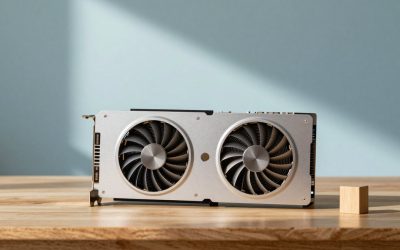
If you want the best graphics card in this budget band, the Radeon RX 9060 XT 16GB is the pick most reviewers lean toward, with the GeForce RTX 5060 Ti and Intel’s Arc B580 as the main alternatives depending on whether you value ray tracing, DLSS or the lowest cost of entry. The deciding factor is video memory: 8GB versions of the same chips are widely described as the weaker long-term buy. Below is how the options compare, what to watch for in the listing, and which card fits which kind of player.
Quick Answer Table
| Card | Maker-listed memory | Best for | Main limit |
|---|---|---|---|
| Radeon RX 9060 XT 16GB | 16GB GDDR6, 128-bit | 1440p raster value, long-term VRAM headroom | Ray tracing and features trail GeForce in some titles |
| GeForce RTX 5060 Ti 16GB | 16GB GDDR7, 128-bit | DLSS 4 users, ray tracing, 1440p | Often sits at the upper edge of this budget |
| GeForce RTX 5060 Ti 8GB | 8GB GDDR7 | 1080p and lighter 1440p | 8GB can run short in newer games |
| Radeon RX 9060 XT 8GB | 8GB GDDR6 | Cost-focused 1080p | Same 8GB ceiling |
| Intel Arc B580 | 12GB GDDR6 | Lowest-cost 1080p to light 1440p with more memory than 8GB cards | Driver maturity and some older games vary by report |
| GeForce RTX 5060 | 8GB GDDR7 | 1080p with DLSS | 8GB, lower tier than the Ti |
Why the Budget Question Is Tricky in 2026
Several outlets have reported a memory shortage squeezing graphics card supply, and Nvidia is reported to be prioritising some models while trimming production of others. The result is that street pricing for these cards has moved around, and a model that comfortably fits under 400 at launch may not do so now. Tom’s Hardware and other outlets have also reported that no new Nvidia gaming generation is expected this year. So rather than chase a single model, treat this page as a ranking by value tier: what to buy first if the price fits, and what to drop to if it does not.
Video Memory Is the Deciding Spec
Both Nvidia and AMD sell the same chip in 8GB and 16GB variants at this tier. The GPU performance is nearly the same between them; what changes is how the card behaves when a game asks for lots of texture memory. Reviewers, including those who compared the two RX 9060 XT versions, have shown that the 8GB model can fall behind or stutter in memory-heavy games at higher settings, while the 16GB model keeps going. If you play at 1080p with medium settings and swap games often, 8GB can be fine. If you plan to keep the card for years or play at 1440p, the 16GB version is the safer choice.
Choosing by Resolution
1080p, high refresh
Any of the cards above handles 1080p well. The RTX 5060 and Arc B580 are credible here, and an 8GB card is more defensible at this resolution than anywhere else.
1440p
This is where 16GB pays off. The RX 9060 XT 16GB and RTX 5060 Ti 16GB are aimed squarely at 1440p, according to their makers and most reviewers.
Entry-level 4K
Not what this tier is built for. Reviewers suggest relying on upscaling and lower settings, or stepping up to a card in the RTX 5070 or RX 9070 class.
Nvidia Versus AMD Versus Intel at This Tier
| Brand | Strengths reported | Trade-offs |
|---|---|---|
| Nvidia (RTX 5060 Ti, 5060) | DLSS 4 with multi frame generation, stronger ray tracing, broad game support | 8GB versions limited; 16GB version costs more |
| AMD (RX 9060 XT) | Competitive raster speed, 16GB option, FSR 4 on RDNA 4 | Ray tracing trails Nvidia in several reviews; FSR 4 game support is still growing |
| Intel (Arc B580) | 12GB memory at a low tier, XeSS upscaling | Driver and older-game compatibility can vary; works best with a modern CPU |
One point that applies to the Arc B580 specifically: reviewers have reported that it can lose performance with older or lower-end processors because of driver overhead. If you are pairing it with an older Ryzen 5 or Core i5, read CPU-scaling reviews first.
Compatibility Checks Before Buying
- Power: check the maker’s recommended system power. Cards in this class are commonly listed with a 550W to 650W recommendation, but the exact figure is on the product page.
- Connectors: some models use an 8-pin or 16-pin (12V-2×6) connector. Confirm your power supply has the right cable or that an adapter ships in the box.
- Case clearance: board-partner designs vary widely in length and thickness. Check your case’s maximum GPU length.
- PCIe slot: several 8GB cards use an x8 electrical interface. On an older PCIe 3.0 board that can cost performance, which reviewers have flagged for the 8GB RX 9060 XT and RTX 5060 Ti.
- Display outputs: make sure the card has the right mix of DisplayPort and HDMI for your monitor’s refresh rate.
Pick X If Decision Table
| Pick this | If |
|---|---|
| RX 9060 XT 16GB | you want the most memory and raster performance for the spend |
| RTX 5060 Ti 16GB | you want DLSS and ray tracing and can stretch the budget |
| RTX 5060 Ti 8GB or RX 9060 XT 8GB | you play mostly at 1080p and are tight on cost |
| Arc B580 | you want the lowest cost with 12GB and have a modern processor |
| Last-generation RTX 4060 Ti or RX 7700 XT class | you find one at a noticeably lower price than the current options |
Common Mistakes
- Buying an 8GB card for 1440p because the price looks attractive.
- Treating frame generation as extra performance in every game; it adds latency and is not universal.
- Forgetting the power supply and case when moving to a newer card.
- Comparing a model by chip name only; the listing may be the 8GB version.
- Putting a budget GPU in a very old system without checking PCIe and CPU limits.
Alternatives
- Used last-generation cards: an RTX 3070 class or RX 6700 XT class card can compete on value, but you lose warranty and the latest upscaling features.
- Step-up tier: if you can stretch, the RTX 5070 (12GB per Nvidia) or RX 9070 (16GB per AMD) gives a clear performance jump for 1440p.
- Integrated or older card for now: if prices feel inflated, waiting is a legitimate option, though reports say supply constraints could last through next year.
Frequently Asked Questions
Is 8GB of VRAM enough in 2026?
It is enough for many games at 1080p with sensible settings. Reviewers have shown that some newer titles at higher textures or resolutions exceed 8GB, causing stutter. For a card you want to keep for several years, 12GB or 16GB is safer.
RX 9060 XT or RTX 5060 Ti?
The 9060 XT 16GB is often favoured for value and memory, while the 5060 Ti leads in ray tracing and DLSS support. If you rely on DLSS or ray-traced games, the GeForce card makes sense; otherwise the Radeon is a strong choice.
Is the Intel Arc B580 still a good option?
It remains attractive for its 12GB of memory at a low tier. Reports suggest it works best with newer processors and may have inconsistent behaviour in some older games, so read recent driver reviews first.
Do I need a new power supply?
Probably not if you already have a quality 550W to 650W unit, but check the card maker’s recommendation and the connector type. If your supply is old or lacks the required connectors, replacing it is simpler than relying on adapters.
Will a new GPU generation make these cards cheaper?
Reports from several outlets say no new Nvidia gaming GPUs are expected in 2026, and AMD has not signalled a new generation either. That makes a near-term drop less likely than in a normal year, though nothing is officially confirmed.
Can these cards play 4K?
They can with upscaling and reduced settings in many games, but they are designed for 1080p and 1440p. For consistent 4K, a higher tier is the more comfortable choice.
FAQ
Is 8GB of VRAM enough in 2026?
RX 9060 XT or RTX 5060 Ti?
Is the Intel Arc B580 still a good option?
Do I need a new power supply?
Will a new GPU generation make these cards cheaper?
Can these cards play 4K?
More from Amazon
Programs that pair well with the guide above. Offers and eligibility are set by Amazon and may change.
Free shipping on eligible items, Prime Video and more. Eligible new members can start with a free trial.
Start a Prime free trialAd-free music streaming. Eligible new subscribers can start with a free trial.
Try Music Unlimited freeA Prime membership for ages 18-24 with a trial period. Eligibility is set by Amazon.
See Prime for Young AdultsAudiobooks and podcasts to listen to on the go. Eligible new members can start with a free trial.
Try Audible freeAs an Amazon Associate we earn from qualifying purchases.