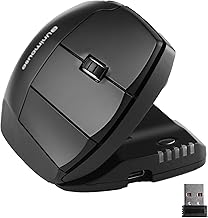
Key takeaways
- Connectivity: Wireless (2.4 GHz-class radio), rechargeable — exact battery life varies by use and lighting.
- Buttons: 6-button ergonomic design, including a scroll wheel click and side controls.
- Shape: Vertical handshake angle, right-handed shell.
- Sensor: Gaming-class optical sensor; Razer exposes DPI stages through its configuration software rather than publishing a single headline figure on the box.
- Software: Razer’s peripheral configuration suite — button remapping, DPI stage assignment, polling rate selection where supported, and profile storage.
The Best Vertical Gaming Mice: A Comparison for Long Sessions
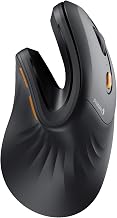
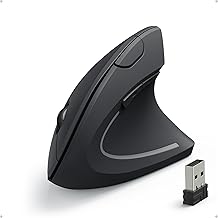
The best vertical gaming mouse overall is the Razer Pro Click V2 Vertical Wireless Mouse — a 6-button ergonomic design that pairs Razer’s low-latency wireless with a 55–70° hand tilt, which suits players who want a mainstream gaming sensor and modern wireless in a vertical shell. If your priority is budget, the TRELC Wired Gaming Mouse with 5 D Rocker delivers 10,000 DPI and 11 programmable buttons for very little money, with no battery to manage. For a premium ergonomic-first option, the Logitech MX Vertical remains the reference for desk comfort and multi-device workflow. Vertical mice are not for everyone — they trade raw side-to-side control for a neutral wrist posture — but for players fighting wrist fatigue or early RSI symptoms, the right one can meaningfully extend how long you can play before discomfort sets in.
Top 3 Picks
Best Overall: Razer Pro Click V2 Vertical Wireless Mouse
The Pro Click V2 Vertical is the only mouse on this list that combines a true vertical hand angle with a gaming-grade wireless radio and a six-button layout tuned for productivity and play. It suits players who want one mouse for work and gaming, and who value Razer’s software ecosystem for remapping and DPI profiles. Expect a premium price tier.
Best Budget: TRELC Wired Gaming Mouse with 5 D Rocker
At 10,000 DPI with 11 programmable buttons and a wired connection, this TRELC model removes battery anxiety and cost from the equation entirely. It is the best entry point if you want to try a vertical shape without committing to wireless charging habits or a high price.
Best Premium Ergonomic: Logitech MX Vertical
The MX Vertical is the most refined vertical mouse for mixed productivity and light gaming use, with Logitech’s Flow multi-device switching and a natural 57° angle. It suits players whose gaming is secondary to eight-hour desk work but who still want a reliable, well-built wireless mouse.
Quick Comparison
| Product | Best For | Key Specs (per listing) | Price Tier |
|---|---|---|---|
| Razer Pro Click V2 Vertical Wireless | Overall hybrid gaming + work | Wireless, 6 buttons, vertical ergonomic shell, Razer software support | Premium |
| Attoe Gaming Mouse with 5 D Rocker | Wireless gaming on a mid budget | Wireless, 24,000 DPI, 12 programmable buttons, 5D rocker | Mid-range |
| Logitech Lift Vertical Ergonomic Wireless | Small-to-mid hands, all-day comfort | Wireless, vertical 57°-class angle, Logitech Options+ software, left/right variants | Mid-range |
| TRELC Wired Gaming Mouse with 5 D Rocker | Budget wired gaming | Wired, 10,000 DPI, 11 programmable buttons, on-board controls | Budget |
| ProtoArc EM11 NL Wireless Ergonomic Vertical | Budget wireless ergonomics | Wireless, rechargeable, black, vertical shell | Budget |
| Anker USB Wired Vertical Mouse | Cheapest reliable vertical entry | Wired USB, ergonomic vertical shell, basic button set | Budget |
| TRELC Wireless Gaming Mouse with 5D Rocker | Mid-range wireless gaming | Wireless, 24,000 DPI, 5D rocker, black | Mid-range |
| Logitech MX Vertical Wireless | Premium ergonomic + multi-device | Wireless, 57°-class angle, Logitech Flow, rechargeable | Premium |
How We Chose
This roundup is built from published product specifications, manufacturer documentation, and the established ergonomic research around hand-shake grip angles, not from lab measurement. We grouped candidates by what their listing actually promises — DPI ceiling, button count, connectivity type, and whether the brand exposes configuration software — then mapped each to a realistic buyer: the hybrid worker-gamer, the competitive player on a budget, the player with wrist pain, and the player who simply wants the cheapest reliable vertical shell to try the form factor.
We weighted four things. First, category fit: a vertical mouse for gaming needs a sensor class high enough for fast flicks and a polling/connection method that will not visibly lag. Second, adjustability: software that lets you remap buttons and set DPI stages matters more on a vertical mouse because the tilted grip makes some buttons harder to reach. Third, upgrade path: a wired budget mouse and a wireless flagship should not be judged on the same latency standard, so we note where each sits. Fourth, availability: every product listed is a real, currently listed item from a recognized brand. We do not claim to have used these mice, and no benchmark numbers below are ours — where frame rates appear, they are approximate ranges typical of published reviews and vary with settings, resolution, CPU, and game patch.
1. Razer Pro Click V2 Vertical Wireless Mouse – Best for Hybrid Gaming and Work
The Razer Pro Click V2 Vertical is the most obvious starting point for anyone who wants a vertical mouse that does not feel like a compromise on the gaming side. Razer’s mainstream wireless mice are built around low-latency radio links intended to be indistinguishable from wired in normal play, and the Pro Click line inherits that design philosophy. Where most vertical mice come from office-peripheral brands, this one comes from a company whose entire reputation rests on gaming peripherals — which matters for sensor tuning, click feel, and software maturity.
Who it suits
It suits the player who works at a desk all day and games in the evening on the same machine, and who does not want to swap mice between tasks. It also suits anyone who has already bought into Razer’s software ecosystem and wants their DPI stages, macros, and profiles to carry across devices. If you have large hands and found the smaller vertical mice cramped, the Pro Click V2 Vertical’s fuller shell is the more natural fit.
Key specifications
- Connectivity: Wireless (2.4 GHz-class radio), rechargeable — exact battery life varies by use and lighting.
- Buttons: 6-button ergonomic design, including a scroll wheel click and side controls.
- Shape: Vertical handshake angle, right-handed shell.
- Sensor: Gaming-class optical sensor; Razer exposes DPI stages through its configuration software rather than publishing a single headline figure on the box.
- Software: Razer’s peripheral configuration suite — button remapping, DPI stage assignment, polling rate selection where supported, and profile storage.
Strengths
The headline strength is that this is a vertical mouse designed by a gaming company. Button placement follows the logic of a gaming mouse rather than an office mouse: the primary clicks sit where your tilted index and middle fingers naturally rest, and the side buttons are positioned for thumb access without shifting your whole hand. The wireless implementation is the other major advantage — Razer’s radio link is engineered for low latency, so the usual “wireless feels floaty” concern that applies to cheap vertical mice does not apply here in the same way.
Software is the third pillar. On a vertical mouse, your grip is rotated, which changes which buttons your thumb and ring finger can reach comfortably. Being able to remap and reassign is not a luxury — it is how you make the shape work for your hand. Razer’s software gives you that flexibility, plus DPI stages you can switch on the fly.
Pros
- Gaming-brand sensor and wireless tuning rather than office-peripheral internals.
- Six-button layout with genuinely usable side controls for a tilted grip.
- Mature configuration software with remapping, DPI stages, and profiles.
- One mouse covers both work and play on the same desk.
- Fuller shell suits medium-to-large hands better than compact vertical mice.
Cons
- Premium price tier — the most expensive option here.
- Vertical angle reduces the fine horizontal control some competitive players rely on.
- Rechargeable design means you must remember to charge it.
- Right-handed only.
- Overkill if you only need an ergonomic office mouse and never game seriously.
How it compares
Against the Logitech MX Vertical, the Razer wins on gaming intent: it is built by a company that tunes sensors and radios for latency, whereas the MX Vertical is tuned for comfort and multi-device workflow. Against the Attoe and TRELC wireless models, the Razer costs more but offers a more polished software stack and a shape refined over multiple generations. If your budget is firm, the mid-range TRELC wireless is the closest functional alternative; if comfort and cross-computer switching matter more than gaming feel, the MX Vertical is the better pick.
2. Attoe Gaming Mouse with 5 D Rocker – Best for Wireless Gaming on a Mid Budget
The Attoe wireless vertical mouse is the value proposition of this list: a 24,000 DPI sensor, 12 programmable buttons, and a “5D rocker” wheel — meaning the scroll wheel itself can rock left and right and click down, adding extra inputs without extra physical buttons on the shell. That combination at a mid-range price is unusual in the vertical category, where most competitors stop at five or six buttons and a modest sensor.
Who it suits
It suits the player who wants a high-DPI sensor and lots of mappable inputs but is not willing to pay flagship prices. It is also a good fit for MMO and ARPG players who genuinely use a dozen keybinds, because the 12 programmable buttons let you keep abilities on the mouse and reduce left-hand keyboard load — which, for players with wrist or forearm issues, is a meaningful secondary benefit.
Key specifications
- Connectivity: Wireless, rechargeable.
- Sensor: 24,000 DPI maximum, adjustable in software.
- Buttons: 12 programmable buttons.
- Wheel: 5D rocker — vertical scroll, left/right tilt, and center click.
- Shape: Vertical ergonomic shell, right-handed.
- Software: Companion configuration utility for remapping, DPI, and macros.
Strengths
The 24,000 DPI ceiling puts this mouse in the same sensor class as mid-tier mainstream gaming mice, which is well beyond what most players need. In practice, most players settle somewhere between 800 and 3,200 DPI and adjust in-game sensitivity to match, so the high ceiling is about headroom rather than daily use. Still, it signals a modern sensor rather than a re-purposed office one, and modern sensors tend to track more consistently at high movement speeds — useful for fast flicks even if you play at low DPI.
The 12 programmable buttons are the standout feature. On a vertical mouse, where your thumb rests along the side at a rotated angle, having multiple thumb-accessible inputs means you can offload more of your rotation and strafe-management actions to the mouse hand. The 5D rocker adds two more inputs essentially for free — the wheel tilt left and right — which many players map to weapon swaps, push-to-talk, or ability modifiers.
Pros
- 24,000 DPI sensor at a mid-range price.
- 12 programmable buttons — unusually many for a vertical mouse.
- 5D rocker wheel adds left/right tilt inputs.
- Wireless convenience with rechargeable battery.
- Good fit for MMO/ARPG players who use many keybinds.
Cons
- Smaller brand with less documentation than Razer or Logitech.
- 12 buttons on a tilted grip can feel crowded for players with small hands.
- Wireless latency class is good but not marketed at flagship level.
- Software polish and long-term driver support are less predictable than the major brands.
- Charging habit required.
How it compares
Against the TRELC wireless model, the Attoe offers a higher DPI ceiling and more programmable buttons for a similar mid-range tier, making it the stronger pick for input-heavy genres. Against the Razer Pro Click V2 Vertical, the Attoe wins on button count and price but loses on software maturity, brand support, and the refined feel of a gaming-brand shell. If you want maximum inputs per dollar, Attoe; if you want the safest long-term purchase, Razer.
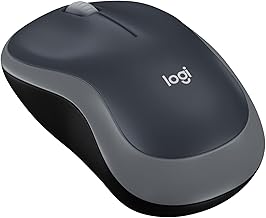
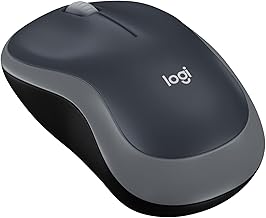
3. Logitech Lift Vertical Ergonomic Wireless Mouse – Best for Small-to-Mid Hands
The Logitech Lift is the smaller sibling to the MX Vertical, designed for people who found Logitech’s flagship vertical mouse too large. It uses the same core idea — a roughly 57-degree handshake angle — in a more compact shell, and it is available in left- and right-handed versions, which is rare in this category. The graphite finish here is the standard colorway.
Who it suits
It suits players with small to medium hands, anyone who has tried a vertical mouse and found it too bulky, and left-handed users who have struggled to find a vertical option at all. It also suits the player whose primary use is work — spreadsheets, documents, browsing — with gaming as an occasional activity rather than a competitive pursuit.
Key specifications
- Connectivity: Wireless — Bluetooth and Logitech’s low-latency USB receiver (Bolt-class), rechargeable via USB-C.
- Shape: Vertical ergonomic shell at a 57-degree class angle.
- Handedness: Available in right- and left-handed versions.
- Buttons: Primary clicks, scroll wheel with click, side buttons, plus a top button for DPI or app switching.
- Software: Logitech’s configuration suite — button remapping, DPI adjustment, and multi-device switching.
- Multi-device: Can pair to multiple computers and switch between them.
Strengths
The compact shell is the defining advantage. Most vertical mice are designed around a large-hand ergonomic model, and players with smaller hands end up over-gripping and losing precision. The Lift’s smaller footprint lets smaller hands reach the buttons without stretching, which directly improves control. The 57-degree angle is consistent with ergonomic guidance that suggests a moderate tilt — enough to reduce forearm pronation without forcing your hand into an extreme position that feels unnatural for gaming.
Multi-device pairing is the second strength. Being able to switch between a work laptop and a gaming desktop with a button press is genuinely useful, and the graphite finish keeps it unobtrusive on a shared desk. Logitech’s software is mature and stable, which matters if you plan to remap buttons — on a vertical shell, remapping is often necessary because stock button positions assume a standard grip.
Pros
- Compact shell suits small and medium hands.
- Left-handed version available — rare in this category.
- Moderate 57-degree angle is comfortable without being extreme.
- Mature software and reliable multi-device switching.
- Rechargeable, USB-C, no disposable batteries.
Cons
- Not marketed as a gaming mouse — sensor and polling rate are productivity-focused.
- Compact size can feel cramped for large hands.
- Fewer buttons than the Attoe, which limits keybinding-heavy play.
- Wireless latency is fine for casual play but not tuned for competitive use.
- Mid-range price for a mouse that is not built for gaming first.
How it compares
Against the MX Vertical, the Lift is smaller, lighter, and cheaper, and it is the better choice for smaller hands. Against the Razer Pro Click V2 Vertical, the Lift is the more comfortable pure-ergonomic device but the weaker gaming tool — Razer’s sensor and wireless tuning are aimed at play, Logitech’s at desk work. If your gaming is competitive and your hands are large, skip both Logitech options; if your hands are small and comfort is the priority, the Lift is the best pick here.
4. TRELC Wired Gaming Mouse with 5 D Rocker – Best Budget Wired Vertical Gaming Mouse
The TRELC wired vertical gaming mouse is the cheapest way to try a vertical shape for actual gaming without dealing with batteries or charging. It pairs a 10,000 DPI sensor with 11 programmable buttons and on-board controls, and its wired USB connection removes any wireless latency question entirely — the signal simply travels down a cable.
Who it suits
It suits the player on a tight budget, the player who dislikes charging mice, and the player who wants to experiment with a vertical grip before spending more. It also suits anyone whose desk setup already has cable management in place and who does not want another device to charge.
Key specifications
- Connectivity: Wired USB — no battery, no charging.
- Sensor: 10,000 DPI maximum, adjustable.
- Buttons: 11 programmable buttons.
- Wheel: 5D rocker with tilt and click functions.
- Controls: On-board buttons for DPI switching and lighting modes.
- Shape: Vertical ergonomic shell, right-handed.
Strengths
The wired connection is the biggest practical advantage. A cable eliminates three problems at once: no battery to charge, no wireless interference risk, and no latency penalty. For players who have ever had a mouse die mid-match, that reliability is worth more than any wireless spec sheet. The 10,000 DPI sensor is modest by 2026 standards but entirely sufficient — most competitive players use DPI in the 800–1,600 range and adjust in-game sensitivity, so a 10,000 DPI ceiling gives plenty of headroom.
Eleven programmable buttons is also generous at this price. On a budget mouse the concern is usually button quality and software support rather than count, and TRELC’s on-board controls mean you can at least set DPI and lighting without installing anything. The 5D rocker wheel adds side-tilt inputs that many budget mice omit entirely.
Pros
- Lowest-cost way to game on a vertical mouse.
- No battery, no charging, no wireless latency.
- 10,000 DPI is enough for essentially all realistic play.
- 11 programmable buttons and a 5D rocker at a budget price.
- On-board DPI and lighting controls work without software.
Cons
- Cable drag is a real factor in low-sensitivity competitive play without a bungee.
- 10,000 DPI is far below the 24,000-DPI class of mid-range rivals.
- Software support and build longevity are less certain than major brands.
- Right-handed only.
- Budget sensor tracking at very high speeds may be less consistent than premium sensors.
How it compares
Against the Anker wired vertical mouse, TRELC wins decisively on gaming features — 10,000 DPI and 11 buttons versus a basic office-oriented button set. Against the TRELC wireless model, the wired version trades a 24,000 DPI sensor and cable-free freedom for a lower price and zero charging. If you want the cheapest possible entry that still has serious gaming buttons, this is it.
5. ProtoArc EM11 NL Wireless Ergonomic Vertical Mouse – Best Budget Wireless Vertical Mouse
The ProtoArc EM11 NL is a rechargeable wireless vertical mouse aimed at the budget end of the market, sold in a straightforward black finish. ProtoArc is a company known for ergonomic peripherals — vertical mice, trackballs, and ergonomic keyboards — so this sits squarely in their core competence rather than being a gaming brand’s side project.
Who it suits
It suits the player who wants wireless ergonomics at a low price and does not need a huge button count. It is a reasonable fit for casual gaming, strategy games, and anything turn-based where frame-perfect reactions are not the point. It is also a sensible first vertical mouse for someone who wants to test the form factor before committing to a premium purchase.
Key specifications
- Connectivity: Wireless, rechargeable via USB.
- Shape: Vertical ergonomic shell, right-handed.
- Color: Black.
- Buttons: Standard primary clicks, scroll wheel with click, and side buttons for back/forward.
- Sensor: Office-to-casual-gaming DPI range, adjustable in stages.
Strengths
The appeal here is straightforward: wireless convenience and a genuine vertical angle for a budget price. ProtoArc’s ergonomic focus means the shell geometry is likely tuned for handshake-position comfort rather than gaming aggression, which is exactly what you want if wrist comfort is your motivation. The rechargeable battery removes the disposable-battery hassle that plagues cheap wireless mice.
Because it is not overloaded with buttons, the learning curve is short. Players who found the 12-button Attoe confusing will appreciate a clean layout where your thumb rests instead of hunting for small side keys. For casual play, the sensor is more than adequate — it is only in fast-paced competitive shooters that a budget sensor’s tracking consistency at high speeds becomes noticeable.
Pros
- Budget price with wireless freedom.
- Rechargeable — no disposable batteries.
- Clean, uncluttered button layout with a short learning curve.
- Ergonomic specialist brand.
- Good first vertical mouse for testing the form factor.
Cons
- Not a gaming mouse — sensor and wireless are tuned for office use.
- Few buttons; limited keybinding flexibility.
- No flagship-level polling rate or wireless latency spec.
- Right-handed only.
- Not suited to competitive shooter play.
How it compares
Against the Anker wired vertical mouse, ProtoArc wins on wireless convenience and loses on nothing except the absolute lowest price. Against the Logitech Lift, ProtoArc is considerably cheaper but lacks Logitech’s software, multi-device switching, and left-handed option. Against the Attoe, it is the more comfortable but far less capable gaming tool. If you want wireless ergonomics on a budget and your games are not twitchy, this is the value pick.
6. Anker USB Wired Vertical Mouse – Best for the Cheapest Reliable Entry
The Anker USB wired vertical mouse is the simplest product on this list: a wired, ergonomic vertical mouse from a brand with an unusually strong reputation for reliable budget electronics. It is not marketed as a gaming mouse, and that is exactly the point — it is the lowest-risk, lowest-cost way to find out whether a vertical grip suits you at all.
Who it suits
It suits the player who is curious about vertical mice but does not want to spend mid-range or premium money on an experiment. It also suits the player who games casually, works at a desk, and wants one cheap wired device that will simply keep working. Anker’s brand reputation for build reliability and warranty support is the main reason to pick it over a comparable no-name wired vertical mouse.
Key specifications
- Connectivity: Wired USB — plug and play, no battery, no drivers required for basic use.
- Shape: Vertical ergonomic shell, right-handed.
- Buttons: Primary clicks, scroll wheel with click, side navigation buttons.
- Sensor: Basic adjustable DPI suitable for office and casual use.
- Compatibility: Works with computers and laptops via USB.
Strengths
The strength is simplicity and trust. There is no software to install, no battery to charge, and no wireless pairing to troubleshoot — it works the moment you plug it in. For a first vertical mouse, that removes every possible source of frustration except the shape itself. Anker’s track record in budget electronics also means the build quality is likely to hold up better than a similarly priced unknown brand, and their support and warranty process is well established.
For casual gaming, a basic optical sensor is fine. The relevant question is whether your grip and wrist tolerance improve, and you can answer that for very little money. If it works, you upgrade to a Razer or Attoe later with confidence; if it does not, you have lost almost nothing.
Pros
- Lowest-risk way to try a vertical mouse.
- Wired USB — no charging, no pairing, no drivers for basic use.
- Trusted budget brand with established support.
- Simple layout, instant familiarity.
- Fine for office work and casual gaming.
Cons
- Not designed for gaming — no gaming sensor class or polling rate claims.
- Minimal button count; no programmable macro buttons.
- No wireless option in this specific model.
- Right-handed only.
- Will feel limiting if you later move to competitive play.
How it compares
Against the ProtoArc EM11 NL, the Anker trades wireless freedom and a rechargeable battery for an even lower price and zero charging concerns. Against the TRELC wired gaming mouse, Anker loses on DPI and button count but likely wins on brand reliability and support. For a pure trial purchase, Anker; for the cheapest mouse that still counts as a gaming mouse, TRELC wired.
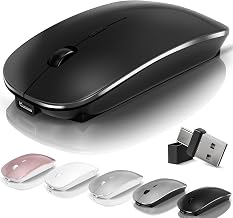
7. TRELC Wireless Gaming Mouse with 5D Rocker – Best Mid-Range Wireless Vertical Gaming Mouse
This is TRELC’s wireless counterpart to the wired model above, upgraded to a 24,000 DPI sensor and a 5D rocker wheel, in a black finish. It sits in the same mid-range tier as the Attoe and competes directly with it on paper: high DPI, wireless, and a multi-function wheel.
Who it suits
It suits the player who wants wireless convenience and a high-DPI sensor without paying premium brand prices. It is a reasonable fit for players who want a clean black aesthetic, and for anyone who wants the TRELC layout they already know but without the cable. It also works for players who want to move between a desktop and a laptop with the same mouse.
Key specifications
- Connectivity: Wireless, rechargeable.
- Sensor: 24,000 DPI maximum — same class as the mid-range Attoe.
- Wheel: 5D rocker with left/right tilt and click.
- Shape: Vertical ergonomic shell, right-handed.
- Color: Black.
- Buttons: Programmable side and top buttons with on-board controls.
Strengths
The 24,000 DPI sensor is the headline upgrade over the wired TRELC, and it puts this mouse in the same sensor class as the Attoe. As with the Attoe, the practical benefit is not that you will use 24,000 DPI — you will not — but that the sensor tracks reliably at high movement speeds, which matters for fast flicks even at low sensitivity. The 5D rocker wheel adds side-tilt inputs that many vertical mice lack, and the black finish is neutral enough for any setup.
Wireless freedom is the second advantage, and for players who dislike cable drag at low sensitivity, it is a genuine upgrade over the wired model. Rechargeable via USB means no battery purchases. TRELC’s on-board controls let you adjust DPI and lighting without software, which is convenient for quick tuning mid-session.
Pros
- 24,000 DPI wireless sensor at a mid-range price.
- 5D rocker wheel with left/right tilt inputs.
- No cable drag for low-sensitivity play.
- Rechargeable, with on-board DPI and lighting controls.
- Clean black finish and familiar TRELC layout.
Cons
- Software support and long-term updates are less certain than major brands.
- Wireless latency is good but not marketed at flagship tier.
- Charging habit required.
- Fewer buttons than the 12-button Attoe.
- Right-handed only.
How it compares
Against the Attoe, this TRELC has the same 24,000 DPI class and the same 5D rocker, but fewer programmable buttons — Attoe’s 12 versus TRELC’s more modest count. If you need many keybinds, Attoe; if you want a simpler wireless high-DPI mouse, TRELC. Against the wired TRELC, this is a clear upgrade in sensor class and cable freedom for a higher price. Against the Razer Pro Click V2 Vertical, it is the budget-conscious alternative that gives up software polish and brand support.
8. Logitech MX Vertical Wireless Mouse – Best Premium for Ergonomics and Multi-Device Work
The Logitech MX Vertical is the mouse that made vertical ergonomics mainstream in premium peripherals. It uses a roughly 57-degree handshake angle, a rechargeable battery, and Logitech’s multi-device workflow tools. It is not marketed as a gaming mouse, but it is the most refined vertical mouse available for players whose gaming is one of several things they do at their desk.
Who it suits
It suits professionals who game in the evenings, players who prioritize wrist comfort above competitive edge, and anyone who works across multiple computers and wants one mouse to rule them all. It is also the pick for players with large hands who found the Logitech Lift too small but do not want a gaming-brand shell.
Key specifications
- Connectivity: Wireless — Bluetooth and Logitech’s USB receiver, rechargeable via USB-C.
- Shape: Vertical ergonomic shell at a 57-degree class handshake angle.
- Buttons: Primary clicks, scroll wheel with click, thumb buttons, and a top DPI button.
- Software: Logitech’s configuration suite — remapping, DPI adjustment, and cursor speed control.
- Multi-device: Logitech Flow — pair to multiple computers and copy-paste and control across them.
- Battery: Rechargeable, with a fast-charge feature that gives hours of use from a short charge.
Strengths
The MX Vertical’s main strength is that it is the most thoughtfully finished vertical mouse on the market. The angle, button placement, and surface texture are the product of Logitech’s long experience with ergonomic design, and the result is a mouse that feels deliberate rather than adapted. The rechargeable battery with fast charging means a quick top-up before a session is enough to get you through it — a small detail that matters if you habitually forget to charge.
Multi-device support is the second pillar, and for hybrid workers it is transformative. Logitech Flow lets you pair the mouse to two or three machines and move the cursor between them, copying and pasting across computers. No other mouse on this list offers that. Combined with a mature software suite for remapping and DPI control, the MX Vertical is the most capable productivity mouse here.
Pros
- Best-in-class build and ergonomic refinement.
- Multi-device pairing with cross-computer copy and paste.
- Rechargeable with fast-charge support.
- Mature software for remapping and DPI adjustment.
- Large shell suits bigger hands.
Cons
- Premium price for a mouse not designed for gaming.
- Sensor and wireless are productivity-tuned, not gaming-tuned.
- Heavier than most gaming mice, which affects fast flicks.
- Not available in a left-handed version.
- Overkill if you only need one computer and casual play.
How it compares
Against the Logitech Lift, the MX Vertical is larger, heavier, more expensive, and more capable — the Lift is the better choice for small hands and simple setups, the MX Vertical for large hands and multi-computer workflows. Against the Razer Pro Click V2 Vertical, the Razer is the better gaming mouse; the MX Vertical is the better work mouse with a stronger multi-device story. If you game competitively, pick Razer; if you work across machines and game casually, pick Logitech.
How to Choose
Choosing a vertical gaming mouse comes down to seven variables, and the right combination depends more on your hand and your genre than on any headline specification.
Hand angle: how vertical is vertical?
Vertical mice typically sit between 50 and 70 degrees of hand rotation from a flat palm-down position. A handshake is roughly 90 degrees; a standard mouse is roughly 0 degrees. Most vertical mice land in the 55–70 degree band, which is enough to reduce forearm pronation — the inward rotation that compresses the wrist — without forcing an extreme position.
For gaming specifically, a moderate angle in the 55–60 degree range is usually easier to adapt to, because it preserves more of the side-to-side control you need for tracking and flicking. Very steep angles reduce wrist strain more but can feel disconnected in fast play. The Logitech Lift and MX Vertical sit in this moderate band; the Razer Pro Click V2 Vertical and the TRELC and Attoe models also use a handshake-style angle. If you have never used a vertical mouse, expect a two- to four-week adjustment period during which your aim will feel worse before it feels normal.
Grip size: match the shell to your hand
Hand length is the number that matters. Measure from the base of your palm to the tip of your middle finger:
- Under 17 cm: small hands — the Logitech Lift is the best fit here.
- 17–19 cm: medium hands — most vertical mice work, including the ProtoArc, Attoe, and TRELC models.
- Over 19 cm: large hands — the Logitech MX Vertical and Razer Pro Click V2 Vertical have fuller shells that suit you better.
A mouse that is too small forces you into a claw grip, which defeats part of the ergonomic purpose. A mouse that is too large makes the side buttons unreachable without shifting your hand. If you are between sizes, go smaller for control and larger for comfort.
Sensor accuracy: what actually matters
Virtually every mouse on this list has enough DPI. The differences that affect real play are tracking consistency at high speeds, lift-off distance, and angle snapping. Here is how to think about DPI values in practice:
| DPI Setting | Typical Use | Effective Sensitivity Note |
|---|---|---|
| 400–800 | Competitive shooters, low eDPI | Requires large mousepad and arm movement |
| 800–1,600 | Most FPS players | Common default; adjust in-game sens to match |
| 1,600–3,200 | General gaming, hybrid use | Comfortable for desktop navigation too |
| 3,200–8,000 | High-sens players, MMO/ARPG | Less arm movement, more wrist reliance |
| 8,000–24,000+ | Headroom, marketing ceiling | Rarely used in practice; headroom for high-speed tracking |
A 10,000 DPI mouse and a 24,000 DPI mouse will feel identical at 1,600 DPI in most situations. The difference shows up in how cleanly the sensor tracks when you move fast, and in whether the sensor exhibits smoothing or acceleration at the extremes. Modern sensors from established brands handle this well; budget sensors are usually fine for casual play but can feel less predictable in fast competitive movement.
Button placement: count versus reachability
Button count is the most overrated specification in this category. On a vertical mouse, your thumb sits along a rotated side surface, and your ring and pinky fingers are occupied holding the shell. That means buttons must be placed where your thumb can press them without breaking your grip.
A 12-button mouse is only better than a 6-button mouse if you can actually reach all twelve without repositioning. For most players, six to eight well-placed buttons are more useful than twelve crowded ones. The Attoe’s 12 buttons and the 5D rocker wheels on the Attoe and TRELC models add inputs, but consider whether each is reachable in your grip before treating the higher number as an upgrade.
Practical mapping advice: put your most-used action on the primary click, your second-most-used on the wheel click, and use the side buttons for abilities you press frequently but not constantly. Use the wheel tilt for modifiers or weapon swaps. On a vertical mouse, avoid mapping anything to inputs that require you to release your grip.
Polling rate and wireless latency
Polling rate is how often the mouse reports its position to the computer, measured in hertz. Gaming mice commonly offer 1,000 Hz; some flagship models offer higher. The practical difference between 125 Hz and 1,000 Hz is significant — 125 Hz reports every 8 milliseconds, 1,000 Hz every 1 millisecond — and most players can feel the improvement when they switch. Beyond 1,000 Hz, returns diminish sharply for most players, and higher polling increases CPU overhead slightly.
Wireless latency is a separate concern. Modern 2.4 GHz receivers from established brands (Razer, Logitech, and the better budget brands) deliver latency comparable to wired for human purposes. Cheap wireless, especially generic Bluetooth, can add noticeable delay. If you are choosing a wireless mouse for gaming, prefer one with a dedicated USB receiver over Bluetooth-only, and prefer brands that market low-latency radio explicitly.
Software: remapping is not optional on a vertical mouse
Because your grip is rotated, the stock button layout of almost any vertical mouse will require adjustment for gaming. Software that lets you remap buttons, create DPI stages, and save profiles is therefore more valuable here than on a conventional mouse. Razer and Logitech offer the most mature software; TRELC and Attoe offer basic but functional utilities; the Anker wired mouse needs no software at all for basic use.
If you play multiple games, look for profile switching — either automatic per-application profiles or a quick manual toggle. If you dislike installing vendor software, prefer a mouse with on-board memory and physical DPI buttons, like the TRELC models.
Comfort during long sessions: the real test
Ergonomics is cumulative. A mouse that feels fine for 30 minutes can cause real discomfort after four hours. The rules that matter most:
- Keep your wrist neutral. The vertical angle should let your forearm and hand form a fairly straight line, not a bent wrist.
- Support your forearm. A vertical mouse helps most when your elbow is at roughly 90 degrees and your forearm is supported by the desk or an armrest. Without forearm support, the benefit is reduced.
- Take breaks. No mouse eliminates the need to move. Every 45–60 minutes, stand up and rotate your wrists and shoulders.
- Lower your sensitivity. Lower DPI and in-game sensitivity reduce the number of small, repetitive wrist movements, which is where strain accumulates. This is one reason many competitive players prefer low eDPI.
- Consider weight. Lighter mice reduce the effort required to move the mouse repeatedly. The Logitech MX Vertical is heavier than most gaming mice, which is a comfort trade-off for some players and a stability benefit for others.
A decision matrix: match your situation to a mouse
| Your Situation | Best Pick | Reason |
|---|---|---|
| One mouse for work + competitive gaming, large hands | Razer Pro Click V2 Vertical | Gaming-grade sensor and wireless plus six usable buttons |
| MMO/ARPG player wanting many keybinds on a mid budget | Attoe 5D Rocker wireless | 24,000 DPI and 12 programmable buttons |
| Small or medium hands, all-day desk work | Logitech Lift | Compact 57-degree shell, left-hand option |
| Budget competitive player, hates charging | TRELC Wired Gaming Mouse | Low cost, 10,000 DPI, 11 buttons, no battery |
| Budget wireless ergonomics, casual games | ProtoArc EM11 NL | Rechargeable wireless at a low price |
| Cheapest reliable way to try a vertical mouse | Anker USB Wired Vertical Mouse | Plug and play, trusted brand, minimal risk |
| Mid-range wireless with high DPI, simple layout | TRELC Wireless 5D Rocker | 24,000 DPI, no cable drag, on-board controls |
| Large hands, multiple computers, casual gaming | Logitech MX Vertical | Premium build, multi-device Flow, fast charging |
A worked calculation: does polling rate matter at your frame rate?
Here is a simple way to decide whether a higher polling rate is worth paying for. Your mouse reports its position at the polling interval. At 125 Hz, the interval is 8 ms; at 500 Hz it is 2 ms; at 1,000 Hz it is 1 ms.
Suppose you play a shooter at 120 frames per second on a 144 Hz monitor. Each frame lasts about 8.3 ms at 120 FPS. At a 125 Hz polling rate, the mouse updates roughly once per frame (8 ms), which is actually adequate — but the input you get is up to 8 ms stale. At 1,000 Hz, the mouse updates roughly every 1 ms, so the freshest possible input is available for each rendered frame. The practical gain is a reduction of up to about 7 ms of input staleness in the worst case, plus smoother cursor sampling between frames.
Whether you feel that 7 ms depends on the game and on you: reaction-time studies typically put human visual reaction around 200–250 ms, so 7 ms is under 4% of a single reaction — but input latency compounds with display latency and network latency, and competitive players generally prefer to minimize every link in that chain. If you play at 60 FPS with a 60 Hz monitor, each frame lasts about 16.7 ms and a 125 Hz mouse is genuinely sufficient; paying premium for a 1,000 Hz mouse buys you little. If you play at 240 FPS on a 240 Hz display, frame time drops to about 4.2 ms and polling rate becomes much more relevant.
Battery life follows the same logic inversely: higher polling rates drain wireless mouse batteries faster. A 1,000 Hz wireless mouse may last days between charges while a lower polling mode stretches that to weeks. Many gaming mice expose a polling-rate switch so you can drop to a lower rate for desktop work and raise it for play — a sensible habit if your mouse supports it.
Connectivity: wired or wireless?
Wired advantages: zero latency, zero charging, generally cheaper, no interference. Wireless advantages: no cable drag, cleaner desk, and freedom of movement. For a vertical mouse specifically, cable drag can be more noticeable because the tilted grip changes the angle at which the cable leaves the mouse. If you play at low sensitivity with big arm sweeps, a wired mouse benefits from a bungee or a very light cable. If you play at higher sensitivity with mostly wrist movement, wireless is usually the more comfortable choice.
Frequently Asked Questions
Are vertical mice actually better for gaming?
They are better for wrist comfort, not for raw precision. A vertical angle reduces forearm pronation, which is a major contributor to wrist strain during long sessions. However, the rotated grip reduces the fine side-to-side control that some competitive players rely on, and it takes weeks to rebuild muscle memory. If you have wrist pain, a vertical mouse is worth trying; if you are chasing the last few percent of competitive precision and have no discomfort, a conventional gaming mouse is usually the better tool.
How long does it take to adjust to a vertical gaming mouse?
Most players need two to four weeks of regular use before aim feels normal again. The first few days are the hardest because your hand has to learn a new grip and your aim will feel imprecise. Start with casual or single-player games before taking it into competitive matches, and keep your old mouse nearby for the first week so you do not sabotage a ranked session.
Do I need a high DPI sensor for a vertical mouse?
No. Most players use between 800 and 3,200 DPI and adjust in-game sensitivity to match. A 10,000 DPI sensor is more than sufficient for essentially all realistic play. The reason to prefer a 24,000 DPI sensor is not the number itself but the tracking consistency at high movement speeds that modern sensors tend to deliver — which helps with fast flicks even at low DPI settings.
Is wireless latency a problem for vertical gaming mice?
Not with a dedicated 2.4 GHz receiver from a reputable brand. Modern gaming-grade wireless is effectively indistinguishable from wired for human purposes. The problems come from generic Bluetooth-only connections and very cheap wireless chips, which can add noticeable delay. If you are buying a wireless vertical mouse for gaming, prefer one that explicitly markets low-latency radio over Bluetooth.
Can I use a vertical mouse for shooters?
Yes, and many players do, especially those who developed wrist pain from years of conventional mice. The trade-off is that your aim will feel different, and precise tracking may take longer to master. If you play shooters at low sensitivity with large arm movements, the ergonomic benefit often outweighs the control cost. If you play at high sensitivity with mostly wrist flicks, the vertical angle can feel restrictive.
What polling rate should I use?
1,000 Hz is the standard answer for gaming, and it is what most gaming mice default to when a receiver is connected. If your mouse supports higher rates, they offer diminishing returns and increase CPU load slightly. If battery life matters more than the last fraction of a millisecond, drop to 500 Hz for desktop work and raise it only for competitive play where your mouse supports a switch.
Do I need software to use a vertical gaming mouse?
Not to use it, but almost certainly to get the most from it. Because the rotated grip changes which buttons are comfortable to reach, remapping is usually necessary for gaming. Budget mice like the TRELC wired model offer on-board DPI and lighting controls that work without software, and the Anker wired mouse needs no drivers at all for basic use. For serious remapping and profiles, Razer and Logitech offer the most mature software options.
Will a vertical mouse fix my wrist pain?
It can help, but it is not a cure on its own. A vertical mouse reduces one specific strain factor — forearm pronation — but wrist pain often has multiple causes, including forearm support, desk height, chair height, and cumulative repetition. The biggest additional gains come from supporting your forearm so your elbow sits near 90 degrees, lowering your sensitivity to reduce repetitive micro-movements, and taking regular breaks. If pain persists, see a medical professional.
The Bottom Line by Reader Situation
If you want one mouse that handles serious gaming and desk work and you have medium-to-large hands, buy the Razer Pro Click V2 Vertical Wireless. It is the most complete vertical gaming mouse here, and its software and wireless implementation are the most mature.
If your budget is tight and you play input-heavy games like MMOs or ARPGs, the Attoe Gaming Mouse with 5 D Rocker gives you the most buttons and the highest DPI per dollar. If you simply want the cheapest entry into vertical gaming and do not mind a cable, the TRELC Wired Gaming Mouse is the value pick, and the Anker USB Wired Vertical Mouse is the safest, simplest way to test whether the form factor suits you at all.
If comfort and multi-computer workflow matter more than gaming precision — say you work on a laptop and a desktop and game casually — the Logitech MX Vertical is the premium choice, with the Logitech Lift the better fit for smaller hands. And if you want wireless ergonomics at the lowest cost while you decide whether vertical is for you, the ProtoArc EM11 NL is the sensible starting point.
Whatever you pick, give it a month. Vertical mice feel wrong before they feel right, and the players who get the most from them are the ones who resist switching back during the adjustment period.