Our Short List of 3

- Motor: 6.5 amp, 1.25 HP
- Collets: 1/4 in. and 3/8 in.
- Speed: 10,000–32,000 RPM, variable
- Base: fixed base
- Motor: 10 amp, 2.0 HP
- Collets: 1/4 in. and 1/2 in.
- Speed: 10,000–25,000 RPM, variable
- Base: fixed base, die-cast motor housing
- Motor: 8.5 amp, 1-1/2 peak HP
- Collet: 1/4 in.
- Speed: 25,000 RPM, single speed
- Base: fixed base
All 5 Picks at a Glance
| Product | Specs | Action |
|---|---|---|
| AVID POWER MW104 Compact Router |
| Check price on Amazon |
| SKIL RT1323-00 Fixed Base Router |
| Check price on Amazon |
| Ryobi R1631K Fixed Base Router |
| Check price on Amazon |
 DEWALT DCW600B 20V MAX XR Cordless Compact Router |
| Check price on Amazon |
 Milwaukee M18 FUEL 2723-20 Cordless Compact Router |
| Check price on Amazon |
Key takeaways
- Compare wood routers for beginners on published specs: motor power, collet sizes, speed ranges and base types, plus guidance on choosing a first router.
A router is usually the second or third power tool a new woodworker brings home, and it changes what a small workshop can produce more than almost any other single purchase. Edges that needed an hour of sanding come off the bit in one pass, grooves and rabbets stop depending on a table saw setup, and templates turn one carefully shaped part into a matched set. The difficulty for a first-time buyer is that routers look alike on the shelf while behaving very differently in the hand: a one-hand palm router, a two-hand fixed-base machine and a cordless trim router are all sold under the same word.
The five routers below are the shapes that suit a beginner best. Two are compact palm routers built for one-hand control, two are cordless compact models for people already holding a battery platform, and one is a full mid-size fixed-base router for readers who would rather learn on the larger format from day one. Every figure in the specification blocks comes from the maker’s published data, and the buying guide after the picks explains how to read those figures, which collet size matters, and why variable speed earns its place on a first router.
Disclosure: As an Amazon Associate, we earn from qualifying purchases made through links on this page, at no extra cost to you.
The Five Picks at a Glance
The AVID POWER MW104 is the complete compact package, a palm router that arrives with bits and guides in the box. The SKIL RT1323-00 is the mid-size entry, a 10-amp fixed-base router that takes both common collet sizes. The Ryobi R1631K keeps things as simple as a router gets, with a single fixed speed and a small bit set included. The DEWALT DCW600B takes the compact format cordless on the 20V MAX platform, and the Milwaukee M18 FUEL 2723-20 does the same job on the M18 platform with the widest speed range of the group.
AVID POWER MW104 Compact Router
- Motor: 6.5 amp, 1.25 HP
- Collets: 1/4 in. and 3/8 in.
- Speed: 10,000–32,000 RPM, variable
- Base: fixed base
The MW104 is shaped around the way most people actually learn routing: small cuts, one hand on the tool, the other hand free to hold the workpiece or a template. Its 6.5-amp motor is rated at 1.25 horsepower, which is the standard output for the palm router class, and the variable speed dial runs from 10,000 to 32,000 RPM. That range matters more than the headline power figure, because it lets a beginner slow the bit down for larger cutters and speed it up for small edge profiles, learning the relationship between bit diameter and RPM on a forgiving tool.
What separates this kit from most compact routers is how much of the learning setup arrives in the box. Alongside the fixed base, AVID POWER includes five router bits, a straight edge guide, a roller guide for following curved edges, and a dust hood, so the first projects — a rounded edge, a straight groove, a trimmed laminate — can start without a second order. Depth adjustment is a rack-and-pinion system, which moves the motor in small, repeatable steps rather than the twist-and-guess motion of simpler bases, and twin LED lights shine on the cut line from the base. The collets accept 1/4-inch and 3/8-inch shank bits, covering the bits most beginners buy first.
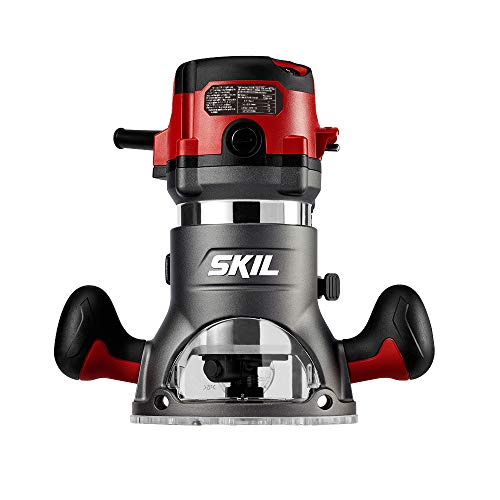
SKIL RT1323-00 Fixed Base Router
- Motor: 10 amp, 2.0 HP
- Collets: 1/4 in. and 1/2 in.
- Speed: 10,000–25,000 RPM, variable
- Base: fixed base, die-cast motor housing
The RT1323-00 is the pick for a beginner who expects routing to become a regular part of the work rather than an occasional edge treatment. It is a full-size fixed-base router with a 10-amp, 2.0-horsepower motor, two shaped handles, and the stability that comes from a wider base and more weight sitting on the workpiece. For long edge profiles, template work and any cut where the router travels a distance, that planted feel is easier to control than a palm router once the first hour of practice is behind you.
Its specification sheet reads like a checklist of features that help new users. Soft start brings the bit up to speed gradually instead of twisting in the hands at switch-on. The variable speed dial covers 10,000 to 25,000 RPM. Both 1/4-inch and 1/2-inch collets are included, and the 1/2-inch option is worth having early: larger bits are made with 1/2-inch shanks, and the thicker shank flexes less in the cut. Three LED worklights ring the collet area, a live tool indicator shows when the router is plugged in and powered, and the die-cast motor housing uses a two-part depth system with coarse steps plus a fine dial marked in 1/256-inch increments for creeping up on an exact depth.
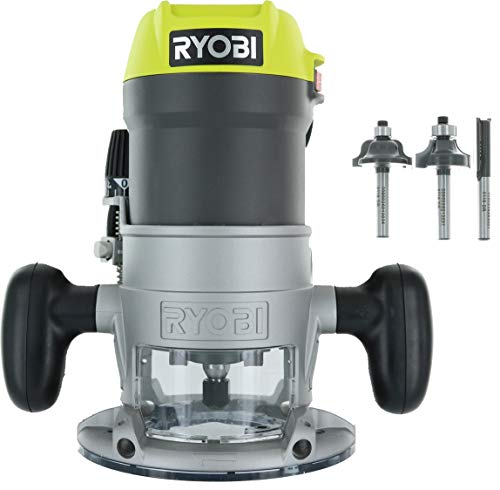
Ryobi R1631K Fixed Base Router
- Motor: 8.5 amp, 1-1/2 peak HP
- Collet: 1/4 in.
- Speed: 25,000 RPM, single speed
- Base: fixed base
The R1631K takes the opposite approach from the SKIL: where that router adds features, this one removes decisions. It is a fixed-base router with an 8.5-amp motor rated at 1-1/2 peak horsepower, and it runs at a single speed of 25,000 RPM. There is no dial to set wrong and no speed chart to consult; a beginner picks a bit from the included three-piece set, sets the depth with the quick-release lever and cam lock, and routes. For the edge profiles, chamfers and shallow grooves that make up most early projects, a fixed mid-range speed paired with small bits is a workable combination.
The body is compact for a two-handle router, and the design keeps the controls a new user touches most within easy reach. An LED light illuminates the work area in front of the bit, the depth system combines a quick-release button for large movements with a fine adjustment for final settings, and a chip shield helps keep the cut line visible. The router takes 1/4-inch shank bits, the most common size in the bit sets sold for home workshops, and the kit includes a tool bag for storage. What it gives up against the variable-speed models is range: large-diameter bits, which need slower speeds, sit outside its comfort zone, so it suits a beginner whose plans centre on edge work and joinery cuts with modest bits.
DEWALT DCW600B 20V MAX XR Cordless Compact Router
- Motor: 20V MAX XR brushless, battery powered (tool only)
- Collet: 1/4 in.
- Speed: 16,000–25,500 RPM, variable
- Base: fixed base (plunge base available separately)
The DCW600B answers a specific beginner situation: the work happens wherever the project is, the cord of a palm router keeps catching on the bench edge, and a set of DEWALT 20V MAX batteries already lives in the shop. It is a compact router built around a brushless motor powered by the 20V MAX platform, sold as a bare tool with its fixed base and a wrench. Without a cord, the router moves around large panels, installed trim and outdoor projects with nothing trailing behind it, and the compact body keeps the one-hand grip that makes this class approachable.
DEWALT publishes a variable speed range of 16,000 to 25,500 RPM, set by a dial, with soft start and electronic feedback that holds speed as the load changes through a cut. An electronic brake stops the bit sooner after switch-off, a small feature that a new user appreciates every time the tool is set down. Twin LED lights illuminate the work surface, and depth is set with an adjustment ring that moves the motor in fine increments, locked by a release clamp that also speeds up bit and base changes. The collet takes 1/4-inch shank bits. A plunge base is available separately in the same system for the day stopped grooves and mortises join the project list; the fixed base in the box covers the edge work that comes first.
Milwaukee M18 FUEL 2723-20 Cordless Compact Router
- Motor: M18 FUEL brushless, 1.25 HP, battery powered (tool only)
- Collet: 1/4 in.
- Speed: 10,000–31,000 RPM, variable
- Base: fixed base
The 2723-20 is Milwaukee’s entry in the same cordless compact class, built on the M18 battery platform and rated at 1.25 horsepower, the output its maker positions as the corded compact equivalent. For a beginner already holding M18 batteries from a drill or impact driver, it turns routing into another use for the packs on the shelf. It is sold as a bare tool with a fixed base, and the box contents lean toward template work: two sub-base plates, including a template sub-base, a straight edge guide and a dust shroud come with it.
Its published speed range is the widest here, 10,000 to 31,000 RPM from a variable speed dial, which gives it the most room to grow into: slow settings for larger bits as skills develop, fast settings for clean edges with small profiles. Milwaukee pairs the brushless motor with electronic controls intended to hold speed under load, and the depth system combines a macro adjustment for large moves with a micro dial for final settings, the same two-stage pattern as larger routers. The collet accepts 1/4-inch shank bits. At just under three pounds for the bare tool, it is the lightest router in this group, which keeps long edge-profiling sessions manageable while control is still being learned.
Buying Guide: Choosing a First Wood Router
Start with the base and the grip, because those decide how the tool feels while you learn. Compact palm routers are held with one hand around the motor body; they excel at edge profiles, flush trimming and sign work, and their small bases follow templates easily. Mid-size fixed-base routers are gripped by a handle in each hand, and the extra weight and footprint steady longer cuts and larger bits. A plunge base, which lets the bit descend into the middle of a panel for stopped grooves and mortises, is the third format; none of the five picks above leads with one, because most first projects are edge work, and a plunge base can join the kit later when the projects call for it.
Collet size is the second decision, and it is really a decision about bits. Bits with 1/4-inch shanks cover the great majority of profiles a beginner uses, and every router here takes them. A 1/2-inch collet, offered by the SKIL, adds the larger straight, panel and template bits, whose thicker shanks run with less flex. If your plans include wide bits early, the 1/2-inch option matters; if they centre on edges and grooves, 1/4-inch is enough for a long while. Buy bits individually for the project in front of you or in a small set, and add a straight bit, a roundover and a flush-trim bit before anything exotic.
Speed range is the third figure to read. The working rule is inverse: the larger the bit’s diameter, the slower it should spin. A variable speed dial lets one router handle both a small roundover at high RPM and a wide bit turned down low, and it lets a beginner soften a cut that is burning the wood by dropping the speed and feeding a little faster. Single-speed routers like the Ryobi are simpler and fine within their bit range, but they set a ceiling on bit diameter. Soft start, depth systems with a fine dial, work lights and an edge guide all earn their keep in the first month, because they remove small frustrations while technique is forming. Finally, cordless models make sense when a compatible battery platform is already in the shop; bought from zero, the packs and charger are part of the true purchase, so compare like with like.
Frequently Asked Questions
Should a beginner start with a compact router or a mid-size router?
A compact router suits most first projects: edge profiles, trimming, shallow grooves and template following with 1/4-inch bits, all with one-hand control. A mid-size fixed-base router like the SKIL suits a beginner whose planned work already includes long edges, larger bits or a future router table, and who prefers the steadiness of two handles and more weight on the work.
What is the difference between 1/4-inch and 1/2-inch collets?
The collet grips the bit’s shank, and the two sizes match the two shank diameters bits are made with. Bits with 1/4-inch shanks cover most profiles and are lighter; bits with 1/2-inch shanks are stiffer, vibrate less and include the largest cutters. A router that ships with both collets, like the SKIL RT1323-00, keeps both ranges open.
Does a first router need variable speed?
Variable speed widens the range of bits a router can run safely, since large bits must turn slower than small ones, and it helps manage burning in woods that scorch easily. A beginner using only small edge bits can learn on a single-speed router, but a speed dial is the feature most likely to extend how long the first router stays useful.
Can a cordless router be a first and only router?
Yes, for the compact class of work. The DEWALT DCW600B and Milwaukee 2723-20 match corded palm routers on the edge work and trimming that dominate early projects, and both accept a plunge base later in their systems. Long sessions and large bits still favour corded mid-size routers, and a cordless model only makes sense alongside the batteries its platform needs.
Conclusion
The five routers divide by format and by what a beginner already owns. The AVID POWER MW104 is the self-contained compact kit, ready for first projects out of the box. The SKIL RT1323-00 is the step into mid-size routing, with both collet sizes and the depth system to grow into. The Ryobi R1631K strips the idea down to a single speed and a small bit set for the simplest possible start. The DEWALT DCW600B and Milwaukee 2723-20 take the compact format cordless for shops already running the 20V MAX or M18 platforms. Any of them will cut a cleaner edge than sandpaper and patience alone, and the right choice is the one whose format matches the projects already on the bench.
FAQ
Should a beginner start with a compact router or a mid-size router?
What is the difference between 1/4-inch and 1/2-inch collets?
Does a first router need variable speed?
Can a cordless router be a first and only router?
More from Amazon
Programs that pair well with the guide above. Offers and eligibility are set by Amazon and may change.
Free shipping on eligible items, Prime Video and more. Eligible new members can start with a free trial.
Start a Prime free trialAd-free music streaming. Eligible new subscribers can start with a free trial.
Try Music Unlimited freeA Prime membership for ages 18-24 with a trial period. Eligibility is set by Amazon.
See Prime for Young AdultsAudiobooks and podcasts to listen to on the go. Eligible new members can start with a free trial.
Try Audible freeAs an Amazon Associate we earn from qualifying purchases.