Our Short List of 3
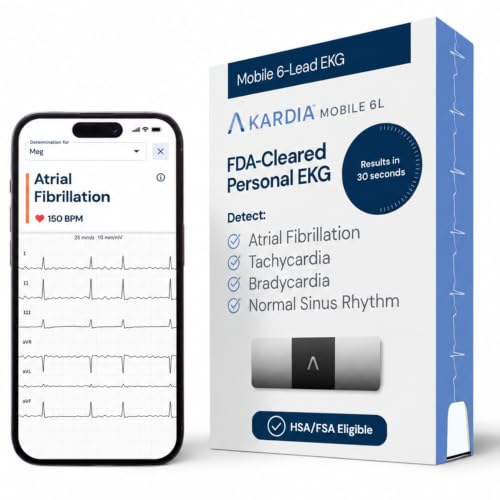
- six-lead ECG, 30-second recordings, Bluetooth connection to iOS and Android, replaceable CR2016 coin cell, unlimited recordings in the app, no subscription required for basic recording and detection.
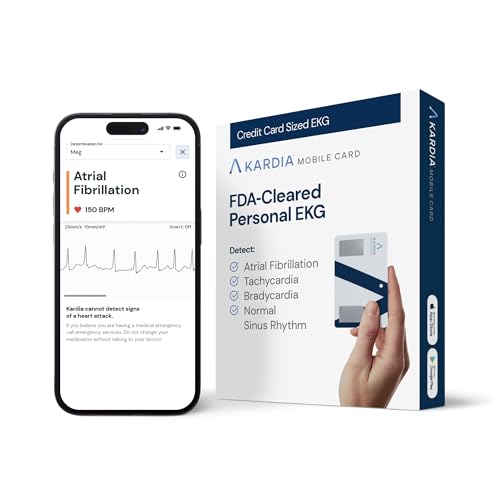
- single-lead ECG, credit-card size, Bluetooth connection to iOS and Android, rechargeable lithium battery with a long standby life, no subscription required for basic recording and detection.

- single-lead ECG, 30-second recordings, Bluetooth connection to iOS and Android, replaceable coin cell battery, unlimited recordings in the app, no subscription required for basic recording and detection.
All 4 Picks at a Glance
| Product | Specs | Action |
|---|---|---|
| 1. AliveCor KardiaMobile 6L — Best Overall Portable EKG Monitor |
| Check price on Amazon |
| 2. AliveCor KardiaMobile Card — Best Wallet-Sized Portable EKG Monitor |
| Check price on Amazon |
| 3. AliveCor KardiaMobile 1-Lead — Best Simple Portable EKG Monitor |
| Check price on Amazon |
 5. EMAY 6L Portable ECG Monitor — Best Six-Lead Monitor With a Screen |
| Check price on Amazon |
Key takeaways
- The best portable EKG monitors for at-home heart rhythm checks — compare six-lead recorders, wallet-sized cards and standalone screens.
The best portable EKG monitors record a heart rhythm trace at home and give the user something concrete to share with a clinician. Unlike a fitness tracker that estimates heart rate from the wrist, a portable EKG monitor records an actual electrocardiogram, which is the waveform a clinician looks at when checking rhythm. That difference matters when the question is not how fast the heart is beating, but whether the rhythm itself is regular.
These devices are small by design. Some are handheld recorders the size of a phone, some are cards that fit in a wallet, and some have their own screen so the trace can be seen without a phone. Most record a trace in about 30 seconds, send it to a companion app, and flag a possible irregular rhythm for the user to discuss with a clinician. A note on scope: a home EKG monitor records rhythm data and can flag a possible irregular rhythm, but it does not diagnose a condition, it does not detect a heart attack, and it does not replace regular medical care. If there are symptoms such as chest pain, shortness of breath, fainting, or a racing heart that will not settle, seek medical care promptly rather than waiting to record a trace. Anyone with a known heart condition should consult a clinician before choosing a monitor and before acting on anything it records.
Every pick in this guide is a dedicated EKG monitor, not a smartwatch and not a chest strap, and each one is described by its maker as cleared for personal ECG recording. Look for that clearance when comparing devices, since it is a meaningful quality signal in a category where unregulated gadgets also exist.
How to Choose
1. Number of leads
A lead is a view of the heart, and more leads mean a more complete trace. A single-lead device records one view and is the standard approach for catching an irregular rhythm when it happens. A six-lead device records six views in one session, which gives a clinician more information to work with. Single-lead devices are smaller and simpler, while six-lead devices suit users whose clinician has asked for more detailed traces.
2. Regulatory clearance
Look for devices described by the manufacturer as cleared for personal ECG recording and rhythm detection. Clearance means the device went through a regulatory process for its stated purpose, which is a meaningful quality signal in a category where unregulated gadgets also exist. All five picks in this guide are described by their makers as cleared personal ECG devices. Treat any monitor that makes bold health claims without clearance with caution.
3. What the device flags
Most portable EKG monitors flag a possible irregular rhythm, including possible atrial fibrillation, along with fast and slow heart rates. The exact detections vary by device and by subscription tier, so check what is included in the basic recording and what needs an optional membership. The flag is a prompt to talk to a clinician, not a diagnosis, and the trace itself is the useful part to share.
4. Standalone screen versus phone-only
Some monitors have their own screen and show the trace immediately, which suits users who do not want to rely on a phone for every recording. Others are phone-only and display the trace in a companion app, which keeps the device smaller and simpler. A standalone screen adds bulk and cost, while a phone-only device depends on the phone battery and the app. Consider who will use the monitor and how comfortable they are with a phone app.
5. Subscription and sharing
Most of these devices record and store basic EKGs with no ongoing membership. Optional memberships add features such as extra rhythm detection, cloud storage, or clinician consultation services. Decide whether those extras are wanted before buying, because the headline device and the full-feature experience can differ. Also check how recordings are shared: emailing a PDF trace to a clinician is the most useful sharing path, and every pick below supports sharing from its companion app or its own screen.
6. Battery and portability
Home EKG monitors are small by design, but battery styles differ. Some use a coin cell that lasts a year or two of occasional use, some use a rechargeable lithium battery, and some use a replaceable coin cell rated for a couple of hundred hours of recording. If the device will live in a wallet, a bag, or a bedside drawer, size and weight matter more than battery style. If it will be used several times a day, a rechargeable or long-life coin cell is the more convenient option.
7. Compatibility and ease of use
Check that the companion app supports the phone in the household, since some monitors work with iOS and Android while others favour one platform. Ease of use matters more here than in most gadget categories, because the monitor may be used by an older relative or during a moment of worry. A device with two finger pads and one button is easier to use under stress than a device with a complicated setup routine.
Top Picks
1. AliveCor KardiaMobile 6L — Best Overall Portable EKG Monitor
- six-lead ECG, 30-second recordings, Bluetooth connection to iOS and Android, replaceable CR2016 coin cell, unlimited recordings in the app, no subscription required for basic recording and detection.
AliveCor KardiaMobile 6L on Amazon
The KardiaMobile 6L is the most capable dedicated EKG monitor in this guide, and the one to choose for the most complete at-home rhythm picture. It is a six-lead personal ECG monitor, which means it records six views of the heart in a single 30-second session: leads I, II, III, aVR, aVL, and aVF. It connects to a smartphone or tablet over Bluetooth, and the companion app displays the trace and stores an unlimited history of recordings.
The six-lead recording is the reason to choose this model over the single-lead devices below. A clinician who receives a six-lead trace has more information to work with than a single-lead trace provides, which is why this is the device to pick when a clinician has asked for detailed traces. Basic recording and detection need no subscription, and the device runs on a replaceable coin cell.
Who it is for: anyone who wants the most detailed at-home ECG available in a handheld device, and anyone whose clinician has asked for six-lead traces.
Caveats: the device has no screen of its own, so a phone or tablet is needed for every recording. It records rhythm data and flags a possible irregular rhythm, but it does not diagnose a condition, so any flag should be discussed with a clinician.
2. AliveCor KardiaMobile Card — Best Wallet-Sized Portable EKG Monitor
- single-lead ECG, credit-card size, Bluetooth connection to iOS and Android, rechargeable lithium battery with a long standby life, no subscription required for basic recording and detection.
AliveCor KardiaMobile Card on Amazon
The KardiaMobile Card is a single-lead ECG monitor built into a device the size of a credit card, designed to live in a wallet so it is always on hand. It records a single-lead EKG in about 30 seconds, connects to a phone over Bluetooth, and detects normal sinus rhythm, possible atrial fibrillation, bradycardia, and tachycardia. For rhythm checks away from home, the card form factor is the most practical in this guide.
The Card is the most advanced single-lead device in the Kardia range, and its thin, light build is the whole point: at a few grams, it adds nothing noticeable to a wallet. The trade-off against the 6L is the single lead, so each recording carries one view of the heart rather than six, but one lead is the standard approach for catching an irregular rhythm when it happens.
Who it is for: anyone who wants an EKG monitor that is always within reach, and travellers who want rhythm checks on the move.
Caveats: the single lead gives less information per recording than the six-lead 6L, so it suits catching an irregular rhythm rather than building a detailed trace history. A phone is needed to view each recording.
3. AliveCor KardiaMobile 1-Lead — Best Simple Portable EKG Monitor
- single-lead ECG, 30-second recordings, Bluetooth connection to iOS and Android, replaceable coin cell battery, unlimited recordings in the app, no subscription required for basic recording and detection.
AliveCor KardiaMobile 1-Lead on Amazon
The KardiaMobile 1-Lead is the simplest device in this guide, a small handheld recorder with two finger pads and one job: record a single-lead EKG in 30 seconds and send it to a phone. It is the original Kardia device, and its simplicity is its strength. There is no screen to learn, no complicated setup, and the companion app walks through each recording step by step.
The 1-Lead detects normal sinus rhythm, possible atrial fibrillation, bradycardia, and tachycardia, and stores an unlimited history of recordings in the app. It runs on a replaceable coin cell that lasts for many months of occasional use, so there is no charging routine to remember. For an older relative or a first-time buyer, this is the easiest starting point in the category.
Who it is for: first-time buyers and anyone who wants the simplest possible EKG monitor, including older users who prefer a device with one button and no screen.
Caveats: single-lead only, so it carries less information per recording than the six-lead 6L. A phone is needed to view and share each trace.
4. EMAY Portable ECG Monitor — Best Standalone Portable EKG Monitor
EMAY Portable ECG Monitor on Amazon
The EMAY Portable ECG Monitor is the pick for users who want to see the trace without reaching for a phone. It is a handheld device with its own colour screen, which displays the ECG waveform as it records, and it stores recordings on the device itself. A phone app is available for sharing, but the monitor works on its own for day-to-day checks.
The standalone screen changes the experience: the trace is visible immediately, the device can be used by someone without a smartphone nearby, and the reading feels more like a medical instrument than a phone accessory. The device records a single-lead ECG, flags a possible irregular rhythm, and runs on a rechargeable battery. Its larger size compared with the Kardia devices is the trade-off for the built-in display.
Specs
- single-lead ECG with built-in colour screen, on-device recording storage, rechargeable battery, companion app for sharing recordings, no subscription required for basic recording.
Who it is for: anyone who wants to see the ECG trace on the device itself, and households where the monitor may be used without a phone nearby.
Caveats: the built-in screen makes it larger than the card-sized and pocket-sized Kardia devices, so it suits a bedside drawer or a bag rather than a wallet. Confirm the exact EMAY model on the listing, since the brand sells several ECG monitors with similar names.
5. EMAY 6L Portable ECG Monitor — Best Six-Lead Monitor With a Screen
- six-lead ECG with built-in screen, on-device recording storage, rechargeable battery, companion app for sharing recordings, no subscription required for basic recording.
EMAY 6L Portable ECG Monitor on Amazon
The EMAY 6L Portable ECG Monitor combines the two features that otherwise sit in separate devices in this guide: six-lead recording and a built-in screen. It records six views of the heart in one session and shows the trace on its own display, so the user gets the most detailed at-home recording without needing a phone to see it.
The six-lead capability matches the KardiaMobile 6L, while the screen matches the standalone EMAY above, which makes this the most complete device in the guide on paper. It stores recordings on the device, shares them through a companion app, and runs on a rechargeable battery. The trade-off is size: it is the largest device here, and it suits a bedside table or a desk drawer rather than a pocket.
Who it is for: anyone who wants six-lead traces and a built-in screen in one device, and users whose clinician has asked for detailed traces that can be checked without a phone.
Caveats: the largest device in this guide, so it is not a pocket or wallet monitor. Confirm the exact EMAY 6L model on the listing, since the brand sells several ECG monitors with similar names.
Comparison Table
| Monitor | Leads | Screen | Size | Battery | Best For |
|---|---|---|---|---|---|
| AliveCor KardiaMobile 6L | Six | Phone only | Handheld | Coin cell | Most detailed traces |
| AliveCor KardiaMobile Card | Single | Phone only | Credit card | Rechargeable | Always within reach |
| AliveCor KardiaMobile 1-Lead | Single | Phone only | Handheld | Coin cell | Simplest first monitor |
| EMAY Portable ECG Monitor | Single | Built-in | Handheld | Rechargeable | Seeing the trace on-device |
| EMAY 6L Portable ECG Monitor | Six | Built-in | Larger handheld | Rechargeable | Six leads with a screen |
Which One Is Right for You?
Start with leads. If a clinician has asked for detailed traces, a six-lead device is the right choice, and the decision is then between the KardiaMobile 6L, which needs a phone, and the EMAY 6L, which has its own screen. If the goal is catching an irregular rhythm when it happens, a single-lead device is enough, and the choice turns on size and simplicity.
Then decide on the screen. A built-in screen suits users who do not want to rely on a phone, while a phone-only device is smaller, lighter, and simpler to carry. The KardiaMobile Card is the pick for always having a monitor within reach, since it lives in a wallet. The KardiaMobile 1-Lead is the pick for the simplest possible experience, with one button and no screen to learn.
Whatever the choice, remember the scope: these devices record rhythm data and flag a possible irregular rhythm, and the trace is most useful when shared with a clinician. Anyone with a known heart condition should consult a clinician before choosing a monitor and before acting on anything it records.
Frequently Asked Questions
Can a home monitor diagnose atrial fibrillation?
No. A portable EKG monitor records a rhythm trace and can flag a possible irregular rhythm, but only a clinician can diagnose a condition. If a device flags a possible irregular rhythm, share the trace with a clinician and follow their guidance rather than drawing conclusions from the app alone.
Do I need a subscription to use these monitors?
No, not for basic recording. All five picks in this guide record and store basic EKGs with no ongoing membership. Optional memberships add features such as extra rhythm detection, cloud storage, or clinician consultation services, but the core recording and flagging work without one.
How is a six-lead monitor different from a single-lead one?
A single-lead monitor records one view of the heart, which is enough to catch an irregular rhythm when it happens. A six-lead monitor records six views in one session, which gives a clinician more information to work with. Six-lead devices suit users whose clinician has asked for detailed traces, while single-lead devices suit simple rhythm checks.
Can I share my recordings with my doctor?
Yes. Every pick in this guide supports sharing from its companion app, usually by emailing a PDF of the trace. That PDF is the most useful thing to bring to an appointment, since it shows the waveform itself rather than a summary. Check that the sharing option works with the phone in the household before buying.
Disclosure: As an Amazon Associate, we may earn from qualifying purchases.
FAQ
Which One Is Right for You?
Can a home monitor diagnose atrial fibrillation?
Do I need a subscription to use these monitors?
How is a six-lead monitor different from a single-lead one?
Can I share my recordings with my doctor?
More from Amazon
Programs that pair well with the guide above. Offers and eligibility are set by Amazon and may change.
Free shipping on eligible items, Prime Video and more. Eligible new members can start with a free trial.
Start a Prime free trialAd-free music streaming. Eligible new subscribers can start with a free trial.
Try Music Unlimited freeA Prime membership for ages 18-24 with a trial period. Eligibility is set by Amazon.
See Prime for Young AdultsAudiobooks and podcasts to listen to on the go. Eligible new members can start with a free trial.
Try Audible freeAs an Amazon Associate we earn from qualifying purchases.