Our Short List of 3
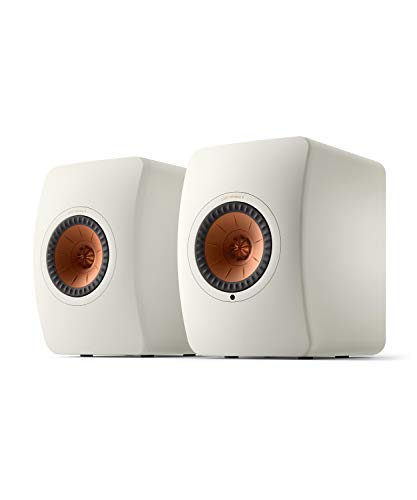
- Best for: Replacing a separate amplifier and passive speakers with one powered stereo system.
- Drivers: Uni-Q array with 130 mm aluminium cone woofer and 25 mm vented aluminium dome tweeter with Metamaterial Absorption Technology
- Amplification per speaker: 280 W Class D for the woofer plus 100 W Class AB for the tweeter
- Frequency response: 45 Hz to 28 kHz (±3 dB)
- Maximum output: 108 dB at 1 m

- Best for: Dolby Atmos Music and spatial tracks from one compact speaker.
- Drivers: four tweeters (front, two side-firing, one up-firing) and two woofers
- Amplification: six Class-D amplifiers, one per driver
- Audio formats: Dolby Atmos Music and spatial audio; stereo pairing supported
- Connectivity: Wi-Fi 6, Bluetooth 5.0 and AirPlay 2

- Best for: Filling a large room with music, with a turntable line-in as a bonus.
- Drivers: three woofers and three tweeters in a sealed enclosure
- Amplification: six Class-D amplifiers
- Streaming: Wi-Fi (dual band) and AirPlay 2 through the Sonos app; no Bluetooth
- Inputs: 3.5 mm line-in and Ethernet port
All 4 Picks at a Glance
| Product | Specs | Action |
|---|---|---|
| KEF LS50 Wireless II |
| Check price on Amazon |
| Sonos Era 300 |
| Check price on Amazon |
| Sonos Five |
| Check price on Amazon |
 Marshall Woburn III |
| Check price on Amazon |
Key takeaways
- Compare five high end wireless speakers from KEF, Sonos, JBL and Marshall: stereo pairs, Dolby Atmos one-box models, inputs and platforms checked.
High-end wireless speakers all promise hi-fi sound without a rack of separates, yet they solve different problems. Some are powered stereo pairs that replace an amplifier and passive speakers outright. Others are single cabinets that spread sound around a room, add Dolby Atmos height effects, or put a voice assistant in charge. The real decision is which job the speaker does in your home, because paying for a flagship streaming platform you never open, or for output your room cannot use, wastes the budget either way.
This guide is for listeners building a main music system around a television or turntable, for Sonos households adding a bigger room, and for buyers who want one substantial speaker instead of a soundbar. The five picks below were chosen from their Amazon listings on driver layouts, amplification, streaming platforms and physical inputs, so the comparison stays on hardware you can verify rather than on house sound claims.
Quick Picks
As an Amazon Associate we earn from qualifying purchases
| Product | Best for | Key spec from title |
|---|---|---|
| KEF LS50 Wireless II | True stereo hi-fi without separates | 280 W + 100 W amplification in each speaker |
| Sonos Era 300 | Dolby Atmos Music from one speaker | Up-firing tweeter among six driven drivers |
| JBL Authentics 500 | Both voice assistants in one cabinet | Alexa and Google Assistant available together |
| Sonos Five | Filling a large room from one spot | Three woofers in a sealed cabinet |
| Marshall Woburn III | TV sound with guitar-amp styling | HDMI ARC input on a 150 W three-way system |
How to Choose
Decide Between a Stereo Pair and a Single Cabinet
Real stereo separation needs two cabinets placed apart, which in this group means the KEF pair or two Sonos Fives bought together. A single cabinet is simpler to place and power, and models like the Era 300 use side-firing drivers to widen the image, but no processing fully replaces physical separation. Measure your shelf or stand width before choosing: the JBL cabinet is 447 mm wide, while the KEF pair needs two positions plus a mains socket each. Buy the format your room can actually hold, not the one that looks best in a photograph.
Match the Streaming Platform to Your Services
Every pick here streams differently, and the platform decides your daily routine for years. Sonos models live inside the Sonos app and group only with other Sonos speakers. The KEF pair casts the widest net, adding Chromecast and Roon Ready alongside AirPlay 2. The JBL offers Wi-Fi streaming through its own app, while the Marshall has no Wi-Fi at all, so your phone becomes the hub over Bluetooth. Check that your main services are supported natively, and think about whether a second room will join later, because ecosystems do not mix when you expand.
Check the Inputs Your TV and Turntable Need
Wireless speakers vary sharply in wired connections. The KEF pair takes a television over HDMI eARC and still finds room for optical, coaxial and a 3.5 mm auxiliary input. The Marshall covers TV duty with HDMI ARC and adds RCA for older gear. On the Sonos side, the Five keeps a proper 3.5 mm line-in for a turntable, while the Era 300 reaches line-in only through a separate USB-C adapter. List every source you own, including the record player in the cupboard, and confirm each one has a working route in before you order.
Size the Output and Placement to the Room
Amplifier figures only help when matched to the space. The KEF pair is rated to 108 dB and suits a main listening room; the Era 300 spreads less raw power across six drivers but fills a bedroom or kitchen with reflected height and width. Side-firing and up-firing drivers need clear air around them, so a speaker wedged into a bookshelf wastes the design you paid for. Check cabinet depth against your furniture, leave space beside Atmos models, and remember that a sealed cabinet like the Five keeps bass controlled close to a wall.
The 5 Best Options
KEF LS50 Wireless II
- Best for: Replacing a separate amplifier and passive speakers with one powered stereo system.
- Drivers: Uni-Q array with 130 mm aluminium cone woofer and 25 mm vented aluminium dome tweeter with Metamaterial Absorption Technology
- Amplification per speaker: 280 W Class D for the woofer plus 100 W Class AB for the tweeter
- Frequency response: 45 Hz to 28 kHz (±3 dB)
- Maximum output: 108 dB at 1 m
Replacing a separate amplifier and passive speakers with one powered stereo system.
The wireless interspeaker link resamples audio to 96 kHz/24-bit, so the full 192 kHz/24-bit path needs the wired interconnect cable run between the cabinets.
The LS50 Wireless II is the pick for listeners who want a genuine stereo system without separate amplifiers or a receiver. Each cabinet carries its own amplification and the Uni-Q array puts the tweeter inside the woofer, so vocals stay anchored between the speakers even when you sit off to one side. Streaming covers the major platforms, and the HDMI eARC input lets the pair double as TV speakers. It suits a dedicated listening spot or a living room where the television and the turntable both need to sound right, provided you can give each cabinet shelf or stand space and its own mains socket.
Sonos Era 300
- Best for: Dolby Atmos Music and spatial tracks from one compact speaker.
- Drivers: four tweeters (front, two side-firing, one up-firing) and two woofers
- Amplification: six Class-D amplifiers, one per driver
- Audio formats: Dolby Atmos Music and spatial audio; stereo pairing supported
- Connectivity: Wi-Fi 6, Bluetooth 5.0 and AirPlay 2
Dolby Atmos Music and spatial tracks from one compact speaker.
There is no wired audio input on the cabinet itself, and the side-firing and up-firing drivers need clear space around and above the speaker to do their job.
Era 300 is built for listeners who want spatial audio from a single box rather than a stereo pair. Four tweeters fire forwards, sideways and up, with two woofers angled outwards, so Dolby Atmos Music tracks gain height and width that a conventional one-box speaker cannot fake. It runs on the Sonos app with Alexa and Sonos Voice Control on board, and Trueplay tuning adjusts the output to the room. Choose it for a bedroom, kitchen or smaller living room where one speaker has to do everything, and where you may later add a second Era 300 or a Sonos soundbar for surround duty.
JBL Authentics 500
The Authentics 500 is the one-box option for people who talk to their speaker as much as they listen to it. It is the rare model with Amazon Alexa and Google Assistant available at the same time, so households split between the two ecosystems stop arguing about which assistant a speaker supports. Under the retro Quadrex grille, a 3.1 driver layout with a down-firing subwoofer plays Dolby Atmos Music, and automatic self-tuning adjusts the sound each time the speaker is moved. Pick it for a main living space where voice control, multi-room playback and a vintage look all matter.
Specs
- Sound system: 3.1 channels with virtual Dolby Atmos Music
- Drivers: three 25 mm aluminium dome tweeters, three 2.75-inch midrange drivers and a 6.5-inch down-firing subwoofer
- Total output: 270 W (maximum, at 1 percent THD)
- Frequency response: 40 Hz to 20 kHz (-6 dB)
- Wireless: Wi-Fi 6 (802.11ax, dual band) and Bluetooth 5.3
- Voice assistants: Amazon Alexa and Google Assistant, available simultaneously
- Inputs: 3.5 mm audio in, Ethernet and USB-C (USB playback on the US version)
- Dimensions: 447 × 240 × 255.7 mm
- Weight: 17.2 lb
Best for: Households that want both major voice assistants inside one retro-styled speaker.
Watch out for: It is a wide, heavy cabinet at 447 mm across, so measure the sideboard first; USB playback applies to the US version, while other regions treat that port as service only.
ASIN: B0CCK36RSY
Sonos Five
- Best for: Filling a large room with music, with a turntable line-in as a bonus.
- Drivers: three woofers and three tweeters in a sealed enclosure
- Amplification: six Class-D amplifiers
- Streaming: Wi-Fi (dual band) and AirPlay 2 through the Sonos app; no Bluetooth
- Inputs: 3.5 mm line-in and Ethernet port
Filling a large room with music, with a turntable line-in as a bonus.
There is no Bluetooth and no built-in voice assistant, so every source reaches it through Wi-Fi, the Sonos app or the line-in.
Five is Sonos’s biggest single speaker and the one aimed squarely at music rather than voice control. Three woofers and three tweeters sit in a sealed cabinet, which keeps bass tight when the volume climbs, and there is no microphone and no Bluetooth: everything arrives over Wi-Fi through the Sonos app or AirPlay 2. A 3.5 mm line-in on the back keeps a turntable or CD player in play, which few streaming speakers still offer. Choose Five for a large room that needs filling from one position, or buy two and run them as a stereo pair for a main system.
Marshall Woburn III
- Best for: A music-first room that also needs a TV speaker, without apps or accounts.
- Drivers: three-way system with 6-inch woofer, two 2-inch midrange drivers and two 0.75-inch tweeters
- Amplification: 150 W total Class D (90 W woofer, 15 W per midrange driver, 15 W per tweeter)
- Frequency range: 35 Hz to 20 kHz
- Maximum sound pressure level: 100.5 dB at 1 m
A music-first room that also needs a TV speaker, without apps or accounts.
Bluetooth is the only wireless route, so there is no Wi-Fi streaming or multi-room grouping, and the deep cabinet needs shelf space to match.
Woburn III is the traditionalist’s route into this group: a big mains-powered cabinet in Marshall’s guitar-amp styling, with brass-effect knobs for volume, bass and treble on top. Its three-way driver system plays louder and lower than the smart speakers here, and an HDMI ARC input means the television can feed it directly, which makes it a soundbar alternative for music-first rooms. There is no Wi-Fi and no app-driven multi-room, just Bluetooth streaming and wired inputs. Choose it if you want one substantial speaker for records, TV and phone streaming without accounts, apps or voice assistants involved.
Which One Fits Your Situation
You Want a Real Stereo System Without Separates
Choose the KEF LS50 Wireless II pair. It is the only pick here that arrives as two amplified cabinets, so instruments sit in stable positions between the speakers and the television connects over HDMI eARC. If your budget or room suits Sonos better, two Fives in a stereo pair reach a similar place inside that ecosystem.
You Want Atmos Music in One Smaller Room
Choose the Sonos Era 300. Its up-firing and side-firing tweeters are designed for spatial tracks, Trueplay sorts out awkward room shapes, and the cabinet is small enough for a bedroom or kitchen counter. Voice control is built in, and a second Era 300 can join later as a stereo partner or surround speaker.
Your Household Is Split Between Alexa and Google
Choose the JBL Authentics 500. It runs Amazon Alexa and Google Assistant at the same time, which no other pick here offers, so nobody has to switch ecosystems to use the speaker. The 3.1 layout and down-firing subwoofer also give it the fullest one-box sound in this group for a main living room.
You Want Music and TV Sound With No Apps
Choose the Marshall Woburn III. It skips Wi-Fi, accounts and voice assistants entirely: pair a phone over Bluetooth, feed the television through HDMI ARC, and adjust bass and treble with the top-panel knobs. It behaves like a classic powered speaker that happens to stream, which is exactly the point.
Common Mistakes
- Buying a Bluetooth-only speaker and expecting Wi-Fi multi-room grouping later; the two connection types do different jobs.
- Pushing a speaker with side-firing or up-firing drivers hard against a wall or into a closed shelf, which blocks the reflections it is designed to use.
- Assuming every premium speaker has a line-in socket, then finding a turntable has nowhere to plug in without an adapter.
- Mixing brands and expecting them to group for whole-home playback; grouping stays inside one platform.
- Ordering by amplifier wattage alone and ignoring cabinet size, driver layout and the inputs your sources actually need.
Frequently Asked Questions
Can a wireless speaker really replace a separate stereo system?
Yes, when it is built as a powered pair. The KEF LS50 Wireless II carries its own amplification, streaming and TV input in the cabinets, so no receiver or speaker cable runs are needed. Single speakers simplify further but give up physical stereo separation, which matters most for focused listening at a desk or sofa.
Do I need Wi-Fi, or is Bluetooth enough for home listening?
Bluetooth is enough for playing music from a phone in one room, and it is the Marshall’s only route. Wi-Fi adds app control, grouping across rooms, voice assistants and streams that keep playing when a call comes in. If you plan a second room later, choose the Wi-Fi platform now, because brands do not group together.
Can these speakers double as TV speakers?
Three of the five connect directly: the KEF pair uses HDMI eARC, the Marshall uses HDMI ARC, and the JBL covers TV duty through its inputs and streaming. The Sonos models are music-first; the Era 300 instead joins a Sonos soundbar as a surround speaker. Check your TV’s HDMI socket label before relying on an ARC connection.
Can I pair two different brands into one stereo or multi-room setup?
No. Stereo pairing and multi-room grouping happen inside one ecosystem, so two Sonos speakers group together and the KEF pair links to itself, but a Sonos and a JBL will never play as one system. AirPlay 2 can send the same stream to compatible speakers from different brands, which is the closest workaround.
FAQ
Can a wireless speaker really replace a separate stereo system?
Do I need Wi-Fi, or is Bluetooth enough for home listening?
Can these speakers double as TV speakers?
Can I pair two different brands into one stereo or multi-room setup?
More from Amazon
Programs that pair well with the guide above. Offers and eligibility are set by Amazon and may change.
Free shipping on eligible items, Prime Video and more. Eligible new members can start with a free trial.
Start a Prime free trialAd-free music streaming. Eligible new subscribers can start with a free trial.
Try Music Unlimited freeA Prime membership for ages 18-24 with a trial period. Eligibility is set by Amazon.
See Prime for Young AdultsAudiobooks and podcasts to listen to on the go. Eligible new members can start with a free trial.
Try Audible freeAs an Amazon Associate we earn from qualifying purchases.