Key takeaways
- Cooling ceiling: Top 360mm AIOs handle the hottest chips best; premium dual-tower air coolers match 240mm AIOs and beat single-tower designs.
- Reliability: Air coolers have only a fan to fail; AIOs add a pump and the small long-term risk of a leak or pump wear.
- Noise: A large air cooler can run quieter at low loads; AIOs add pump noise but move heat directly out of the case.
- Clearance: Tall air coolers can block RAM or hit the side panel; AIOs free up space around the socket.
- Aesthetics: AIOs offer a cleaner look with an RGB pump block; big air coolers dominate the case visually.
- Price and install: Air coolers are cheaper and simpler to mount; AIOs cost more and require radiator mounting.
How you cool your CPU shapes your build’s temperatures, noise, aesthetics, and even reliability—and the choice between a big air cooler and an all-in-one (AIO) liquid cooler is one of the most debated topics in PC building. In 2026, with CPUs generating serious heat, both approaches have matured to the point where either can keep a modern chip in check. The real question is which fits your case, your budget, your noise tolerance, and the look you want.
This comparison breaks down air versus liquid cooling on the factors that actually matter, so you can choose confidently instead of following hype. Spoiler: a quality air cooler beats a cheap AIO, and a good AIO beats a mediocre air cooler—the tier of the cooler matters more than the technology. Here is how the two approaches truly compare.
Our top picks
 ARCTIC Liquid Freezer III Pro 360 A-RGB
- CONTACT FRAME FOR INTEL LGA1851 | LGA1700: Optimized…
- ARCTIC's P12 PRO FAN: More power at any…
- Shifting the cold plate center towards the CPU…
 BXQINLENX 24-Piece Silver Chrome G1/4" Fittings Kit
- G1/4" Universal Compatibility: Precision-engineered threads ensure seamless compatibility…
- Durable Electroplated Finish: Silver chrome plating provides corrosion…
- Hand-Tighten Design: User-friendly, tool-free installation—simply screw fittings by…
 Thermalright Aqua Elite 240 V3 Water Cooling
- 【Better Cooling】 The cooler adopts the fourth generation…
- 【Unique Pump Head】 The octagonal shaped cold pump…
- 【Excellent LED Lighting Effect】Fan and water-cooling header ARGB…
| Product | Key specs | |
|---|---|---|
| ARCTIC Liquid Freezer III Pro 360 A-RGB | CONTACT FRAME FOR INTEL LGA1851 | LGA1700: Optimized… ARCTIC's P12 PRO FAN: More power at any… Shifting the cold plate center towards the CPU… | Check price |
| BXQINLENX 24-Piece Silver Chrome G1/4" Fittings Kit | G1/4" Universal Compatibility: Precision-engineered threads ensure seamless compatibility… Durable Electroplated Finish: Silver chrome plating provides corrosion… Hand-Tighten Design: User-friendly, tool-free installation—simply screw fittings by… | Check price |
| Thermalright Aqua Elite 240 V3 Water Cooling | 【Better Cooling】 The cooler adopts the fourth generation… 【Unique Pump Head】 The octagonal shaped cold pump… 【Excellent LED Lighting Effect】Fan and water-cooling header ARGB… | Check price |
 DIYhz Water Cooling Computer Radiator DIYhz Water Cooling Computer Radiator | ★ Product Name: Water Cooling Radiator ★ Fan Installation Size: 120 x 120 ★ Efficiently pulling heat away from cycling coolant… | Check price |
 MUSETEX ATX PC Case 7 PWM ARGB MUSETEX ATX PC Case 7 PWM ARGB | 【MUSETEX presents the K2 gaming pc case】both a… 【Tower Case Powerful Space Layout】The internal structure of… 【Upgrade High Speed IO Panel】1 x Type-C, 2… | Check price |
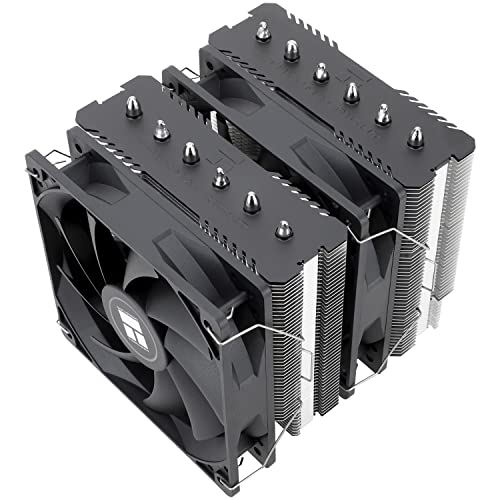 Thermalright Peerless Assassin 120 SE CPU Cooler Thermalright Peerless Assassin 120 SE CPU Cooler | [Brand Overview] Thermalright is a Taiwan brand with… [Product specification] Thermalright PA120 SE 【2 PWM Fans】TL-C12C | Check price |
 DIYhz Water Cooling Computer Radiator DIYhz Water Cooling Computer Radiator | ★ Product Name: Water Cooling Radiator ★ Fan Installation Size: 120x120(This product does not… ★ Efficiently pulling heat away from cycling coolant… | Check price |
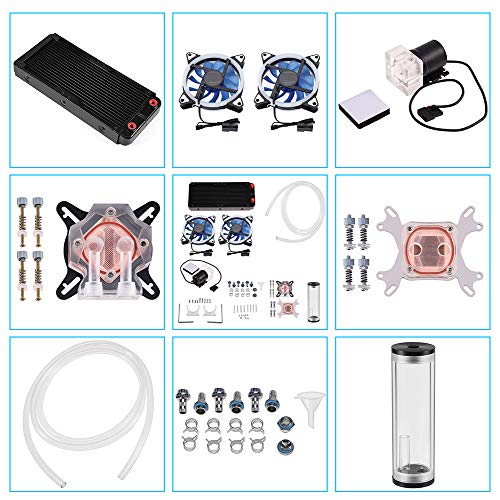 DIY 240mm Water Cooling Kit DIY 240mm Water Cooling Kit | 【Professional Water Cooling Kit】This liquid CPU cooler kit… 【High Performance】The CPU/GPU block is constructed with a… 【Super Water Circulation Cooling System】240mm Heat Sink: Provide… | Check price |
As an Amazon Associate we earn from qualifying purchases at no extra cost to you.
⚡ Save on Your Next PC — Amazon Prime
Prime members get fast free shipping on the systems above, plus early access to Prime Day & Black Friday PC deals. New members get a 30-day free trial.
Watch: Air vs Water Cooling for Gaming PCs — Video Review
Quick Verdict
For most gamers, a high-end air cooler like a dual-tower design offers the best balance of performance, reliability, and value—it matches many 240mm AIOs while costing less and never risking a pump failure or leak. Choose a liquid AIO (240mm or 360mm) when you have a very hot high-core CPU, a compact case where air clearance is tight, or you want the clean look and top-exhaust heat routing that liquid provides. Both keep a modern CPU cool; the decision is about your specific case, chip, and priorities.
Key Differences
- Cooling ceiling: Top 360mm AIOs handle the hottest chips best; premium dual-tower air coolers match 240mm AIOs and beat single-tower designs.
- Reliability: Air coolers have only a fan to fail; AIOs add a pump and the small long-term risk of a leak or pump wear.
- Noise: A large air cooler can run quieter at low loads; AIOs add pump noise but move heat directly out of the case.
- Clearance: Tall air coolers can block RAM or hit the side panel; AIOs free up space around the socket.
- Aesthetics: AIOs offer a cleaner look with an RGB pump block; big air coolers dominate the case visually.
- Price and install: Air coolers are cheaper and simpler to mount; AIOs cost more and require radiator mounting.
Air Cooling
Air cooling uses a metal heatsink with heat pipes and one or two fans to pull heat off the CPU and disperse it into the case air. A premium dual-tower cooler like the Thermalright Peerless Assassin 120 SE offers cooling that rivals mid-range liquid units at a fraction of the cost, with the reliability of having no pump to fail. For the vast majority of gaming CPUs, a good air cooler is all you will ever need.
The downsides are size and clearance: top-tier air coolers are large and heavy, can obstruct tall RAM, and may not fit compact cases. They also dump heat into the case rather than out of it, so case airflow matters. But for value, simplicity, and set-and-forget reliability, air cooling is tough to beat.
Water Cooling (AIO)
An all-in-one liquid cooler pumps coolant through a block on the CPU to a radiator, where fans expel the heat—usually straight out the top or front of the case. A 240mm or 360mm AIO like the ARCTIC Liquid Freezer III Pro 360 or Thermalright Aqua Elite 240 handles the hottest high-core CPUs with headroom, and routing heat directly out of the case helps in compact builds where a big air tower would struggle.
AIOs deliver a clean aesthetic with a low-profile block and often RGB, and they free up space around the socket for RAM and airflow. The trade-offs are cost, the added complexity of a pump, and a small long-term reliability consideration—pumps can wear out and, rarely, leak. For high-end or space-constrained builds, though, an AIO is often the better fit.
Which Should You Buy?
- Choose a premium air cooler for the best value, reliability, and most gaming CPUs.
- Choose a 240mm+ AIO for very hot high-core CPUs that push serious wattage.
- Choose an AIO if your case has tight air-cooler clearance or you want a cleaner look.
- Choose air if you want set-and-forget simplicity with no pump to ever fail.
- Prioritize the cooler’s tier—a great air cooler beats a cheap AIO every time.
Frequently Asked Questions
Is water cooling better than air cooling?
Not universally. A top 360mm AIO cools the hottest chips better than most air coolers, but a premium dual-tower air cooler matches mid-range liquid units while costing less and being more reliable. The technology matters less than the cooler’s quality—a great air cooler beats a cheap AIO. Choose based on your CPU’s heat, your case, and your budget.
Do AIO liquid coolers leak?
Leaks are rare in quality modern AIOs, which are sealed units designed to run for years. The more common long-term issue is pump wear, since the pump is a moving part that can eventually fail. Air coolers avoid both risks entirely, having only a fan. For most users an AIO is reliable, but air is the lower-risk option.
Will an air cooler fit in my case?
Check your case’s maximum CPU cooler height against the cooler’s spec—tall dual-tower coolers can exceed the clearance of compact and small-form-factor cases and may block tall RAM. AIOs sidestep height concerns but require radiator mounting space in the top or front. Always verify clearance before buying either type.
Which is quieter, air or liquid?
It depends on the specific coolers. A large air cooler with slow-spinning fans can be extremely quiet at low loads. AIOs add pump noise but expel heat directly out of the case and can run their fans slower under heavy load. At the top tier both can be very quiet; the difference comes down to fan quality and pump design.
Final Verdict
Air versus liquid cooling is less about which technology is superior and more about matching the cooler to your build. For most gamers, a premium air cooler delivers outstanding value, reliability, and performance with no pump to worry about. Reach for a 240mm or 360mm AIO when you have a very hot CPU, tight case clearance, or want the cleanest look. Buy the best cooler your budget allows in whichever category fits, and your CPU will run cool for years.