Key takeaways
- 30-minute Class 350: Minimum for a single-family home with a fast fire department response time under 10 minutes. Usually 1000°F to 1550°F external test.
- 1-hour Class 350: The sweet spot for most homes and small offices. Tested to 1700°F for 60 minutes, plus a drop test and explosion test.
- 2-hour Class 350: Recommended if you live in a rural area, have a large home, or want protection for an overnight fire. Tested to 1850°F for 120 minutes. These safes are significantly heavier and more expensive.
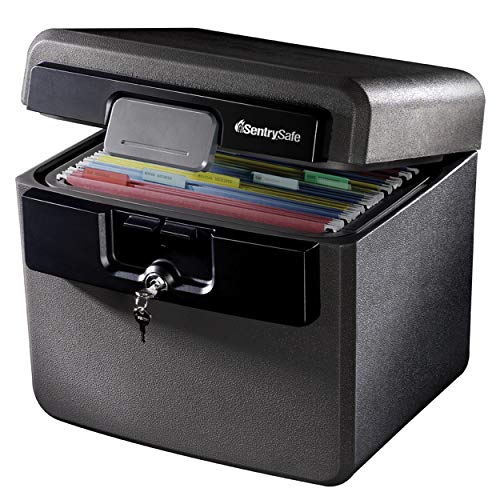
The best fireproof document safes for home and office in 2026 are UL Class 350 1-hour models with ETL-verified water resistance, such as the SentrySafe SFW123GDC and Honeywell 1104 class, because they keep interior temperatures below 350°F long enough for fire department response while providing enough interior volume for letter and legal documents without forcing you into a heavy commercial fire file.
Our top picks


As an Amazon Associate we earn from qualifying purchases at no extra cost to you. Ratings are shown as listed on Amazon.
How Fire Ratings Actually Work for Documents
Ignore marketing terms like “fireproof” and look for independent testing. In the US, the two meaningful standards are UL 72 Class 350 and ETL Verified to UL 72. Both mean the safe held an internal temperature below 350°F while the outside was exposed to 1700°F+ in a furnace. That threshold matters because paper chars at 451°F and cash and documents will discolor and become brittle above about 350°F.
For media – USB drives, external SSDs, film negatives – you need UL Class 150 or Class 125. A Class 350 safe will protect paper but will destroy plastic media. If you need to protect both, you need a safe rated for media or a small UL 150 media insert inside a larger Class 350 safe.
Common ratings and what they mean in practice:
- 30-minute Class 350: Minimum for a single-family home with a fast fire department response time under 10 minutes. Usually 1000°F to 1550°F external test.
- 1-hour Class 350: The sweet spot for most homes and small offices. Tested to 1700°F for 60 minutes, plus a drop test and explosion test.
- 2-hour Class 350: Recommended if you live in a rural area, have a large home, or want protection for an overnight fire. Tested to 1850°F for 120 minutes. These safes are significantly heavier and more expensive.
A house fire typically burns at 1100°F to 1600°F in a room and fire crews in urban areas average 7-12 minutes to begin suppression after arrival, but total exposure can be 30-60 minutes before a room is fully cooled. That is why a 1-hour rating is the most recommended baseline, not a 30-minute rating.
Comparison Table: Popular Fireproof Document Safe Classes in 2026
| Spec Class / Example Model | Fire Rating | Water Resistance | Lock Type Options | Interior Capacity | Weight | Typical Market Price Range |
|---|---|---|---|---|---|---|
| SentrySafe SFW123GDC / First Alert 2087F class | UL Class 350 1-hour (1700°F) | ETL Verified 24 hours up to 8 inches | Digital keypad + tubular key backup | 1.23 cu ft (34.8 liters) | 86-90 lbs | usually $300-$500 |
| Honeywell 1104 / SentrySafe SFW205BXC class | UL Class 350 1-hour (1700°F) | ETL Verified water resistant for 24 hours | Digital keypad + override key | 2.05 cu ft (58 liters) | 130-145 lbs | usually $500-$750 |
| FireKing DS1812-2 or DS1813 class (commercial fire file) | UL Class 350 1-hour + impact rated | Designed for sprinkler, not submersion | UL-listed mechanical combination or electronic | 10-13 cu ft, filing drawers for letter/legal | 450-650 lbs | usually $1100-$2000 |
| Hollon HS-500D / American Security AMSEC FS149E5LP class | UL Class 350 2-hour (1850°F) | ETL Verified flood protection | Electronic + key or dial combination | 1.4-1.5 cu ft | 180-220 lbs | usually $700-$1000 |
| Media-rated insert / small UL 150 safe | UL Class 150 1-hour or UL Class 125 | Sealed, often water resistant | Key or digital | 0.2-0.4 cu ft | 20-45 lbs | usually $250-$600 |
Water Resistance: What the Numbers Hide
Fire protection is useless if the safe floods during firefighting. Look for ETL Verified water resistance, which tests submersion or water spray after a fire test. A common spec is “water resistant for 24 hours in up to 8 inches of water.” This does not mean the safe is waterproof for a basement flood of 2 feet.
Two types of water claims to compare:
- ETL Verified Submersion: Tested by submerging the safe in standing water. Best for homes where the safe sits on a ground floor or basement.
- ETL Verified Water Spray: Tested with sprinkler-style spray. Common on heavier commercial files that are not designed to sit in standing water but will survive fire hoses.
If your safe will be on a concrete basement floor, elevate it 3-4 inches on a steel stand or pallet. Standing water and concrete sweat cause rust that destroys the fire seal over 5-10 years, even on good safes.
Lock Types Compared for Home and Office Use
There is no single best lock. Choose based on who needs access and how often.
Mechanical Combination Dial
Most reliable long-term, no batteries, no electronics to fail in heat. Slower to open (3-4 wheel rotations), poor for frequent daily access. Best for archival storage where you open the safe weekly or less.
Electronic Keypad with Override Key
Fastest for daily use and easy to share codes with family or office staff. Requires 4xAA batteries replaced every 12-18 months. Always store the override key outside the safe in a separate secure location. Electronics can fail after extreme heat, but UL testing includes operability after fire.
Dual Key + Keypad or Dial + Key
Common on SentrySafe and Honeywell consumer models. Provides redundancy but the tubular key is not high-security against theft. Think of it as a fire box with basic theft deterrence, not a burglary safe.
If burglary protection matters as well as fire, look for a UL RSC (Residential Security Container) rating or a UL TL-15 rating. Most light fire safes in the 80-150 lb range are not burglary rated. A 2-hour Hollon or AMSEC fire and burglary combo will have thicker steel and bolt-down capability but costs and weighs more.
Interior Size: A Worked Calculation So You Don’t Buy Too Small
Manufacturers list interior capacity in cubic feet, but that does not tell you how many documents fit. Use this calculation before you buy.
Example need: A family wants to protect passports (4), letter-size property deeds (20 sheets), insurance folders (about 300 sheets total), a cash envelope, and two external SSDs.
Step 1: Estimate paper volume. 500 sheets of standard 20 lb copy paper = 2 inches thick and occupies about 0.12 cu ft. So 320 sheets = (320 / 500) * 0.12 = 0.077 cu ft.
Step 2: Add folders and box overhead. Hanging file folders and the passport box add about 40% overhead: 0.077 * 1.4 = 0.108 cu ft.
Step 3: Add non-paper items. Two SSDs in padded cases = about 0.02 cu ft. Cash envelope = negligible.
Step 4: Total needed = 0.13 cu ft. A 1.23 cu ft safe provides roughly 9x that volume, but usable space is reduced by 25-30% due to the thick walls, door chunk, and drawer mechanism. Effective usable space: 1.23 * 0.70 = 0.86 cu ft. Result: The 1.23 cu ft class is more than enough, with room to keep documents flat and not packed tight, which is important because tightly packed paper transfers heat faster.
Rule of thumb: If you only need documents and passports, 1.2 cu ft is sufficient for most homes. If you need hanging files for legal-size documents or want to store a laptop, move to 2.0+ cu ft. For a small office with multiple years of records, a FireKing-style 2-drawer fire file is more efficient than several small boxes.
Decision Matrix: Which Safe Class Fits Your Situation
| Your Situation | Recommended Fire Rating | Water Priority | Best Lock Type | Suggested Size Class |
|---|---|---|---|---|
| Apartment or urban home, fire station within 3 miles, documents only | 1-hour Class 350 | 24-hour ETL submersion up to 8 inches | Electronic keypad | 1.2-1.5 cu ft |
| Suburban home, safe in basement, risk of flooding or fire hoses | 1-hour to 2-hour Class 350 | High – ETL submersion + elevate safe | Electronic with key backup | 1.2-2.0 cu ft |
| Rural property or large 2-story home, longer fire response | 2-hour Class 350 | Moderate | Mechanical dial or high-quality electronic | 1.4-2.0 cu ft, bolted down |
| Home office with legal contracts, needs frequent access | 1-hour Class 350 | Moderate | Electronic keypad | 2.0 cu ft or fire file with drawers |
| Need to protect SSDs, USB keys, photos and paper together | Class 150/125 for media + Class 350 for paper | High – sealed media insert | Electronic or key | 1.2 cu ft + 0.3 cu ft UL 150 insert inside |
| Business needing burglary and fire protection for cash and documents | 1 to 2-hour Class 350 + UL RSC / TL-15 | Moderate | UL-listed electronic or dial | 1.5+ cu ft bolt-down fire/burglary combo |
What to Check Before You Buy
- Verify the exact wording on the label inside the door: “UL Classified” or “ETL Verified to UL 72” with time and temperature. “Fire resistant” or “tested to” without UL/ETL is not the same.
- Measure the interior with hanging file dimensions, not just exterior. Many 1.23 cu ft models have an interior height under 12 inches, so legal-size folders must lay flat.
- Confirm bolt-down hardware is included if theft is a concern. A 90 lb safe can be carried out by one person; a 180 lb bolted safe cannot.
- Check door seal type. Intumescent seals that expand in heat provide better smoke and heat protection than simple rubber gaskets.
- Plan placement. Interior rooms on the ground floor away from the kitchen or garage see lower peak temperatures than a garage safe. Against an exterior wall helps cooling after a fire.
Frequently Asked Questions
Is a 30-minute safe enough for documents?
Only if you have very fast professional fire response and the safe is not in a high-fuel area like a garage. For most homes, the price difference between 30-minute and 1-hour Class 350 is small, usually $50-$120, while the protection doubles. A 1-hour rating is the safer default.
Do fireproof safes need to be waterproof?
Not fully waterproof, but water resistance matters. Firefighters may flow hundreds of gallons per minute. A safe that survives fire but leaks and soaks documents will still destroy paper records. Choose ETL verified water resistance if the safe sits below grade or near a sprinkler system.
Can I store a laptop or SSD in a document safe?
You should not store electronics directly in a Class 350 safe if you expect to recover data. Interior temperatures of 250-350°F will melt plastics and damage drives. Use a UL Class 150 or Class 125 media container inside the larger safe, and keep backups offsite or in cloud storage as well.
How often should I replace batteries and inspect the seal?
Replace electronic lock batteries once a year, even if they still work. Inspect the door seal every 6 months for cracks, compression, or rust. Keep the interior at 30-50% humidity with a small desiccant pack to prevent mold on documents.