Our Short List of 3

- Best for: An unattended spotting stream that should follow aircraft on its own.
- Resolution: 4K UHD, dual-lens design
- Zoom: 6X hybrid zoom
- Pan and tilt: 355° pan, 90° tilt
- Tracking: auto tracking

- Best for: Distant viewpoints where optical zoom quality decides whether footage is worth streaming.
- Resolution: 4K UHD
- Zoom: 5X optical zoom with 3D zoom
- Pan and tilt: 360° pan, 90° tilt, with auto tracking
- Detection: AI detection

- Best for: One well-chosen fixed view, streamed or recorded with the least possible maintenance.
- Resolution: 4K (8MP), 3840 × 2160 at 25 fps
- Lens: 4.0mm fixed, F2.0, 87° horizontal field of view
- Night vision: infrared up to 100 ft (30 m)
- Detection: person, vehicle and pet detection
All 3 Picks at a Glance
| Product | Specs | Action |
|---|---|---|
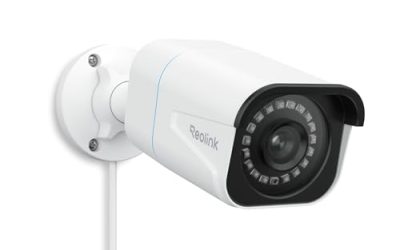
| 1. Reolink TrackMix PoE |
| Check price on Amazon |
| 2. Reolink RLC-823S1 |
| Check price on Amazon |
| 3. Reolink RLC-810A |
| Check price on Amazon |
Key takeaways
- Outdoor cameras for plane-spotting and airport watch streams: long optical zoom, auto tracking and weatherproof PoE bodies, verified on Amazon.
A quick note on what this guide covers, because the keyword is ambiguous: “airport webcams” is read here the way plane spotters use it — a camera set up to watch an airport, streaming movements from a fence line, a spotting hill or a rooftop with a runway view. That job has nothing in common with a desk webcam. It needs optical zoom that can reach across an airfield, a body that survives being outside in all weather, and the stamina to record or stream for hours at a time without a battery dying.
So the picks below are outdoor IP cameras rather than USB webcams, chosen from their Amazon listings for exactly those traits: real zoom figures, pan-and-tilt tracking on two of them, Power over Ethernet so one cable handles power and data, and continuous recording. Every specification quoted comes from the product listings. If you instead wanted a webcam for video calls at an airport hotel, this is the wrong guide — these cameras are built to be mounted and left outside.
Quick Picks
As an Amazon Associate we earn from qualifying purchases.
| Product | Best for | Key spec from title |
|---|---|---|
| Reolink TrackMix PoE | Following aircraft automatically | Dual lens, 6X hybrid zoom, auto tracking |
| Reolink RLC-823S1 | Maximum optical zoom and full rotation | 5X optical zoom, 360-degree pan, IP66 |
| Reolink RLC-810A | A fixed view of one runway spot | 4K bullet camera, 100 ft infrared night vision |
How to Choose
Zoom Reach Decides Whether You Read a Tail Number
Distance is the whole problem in plane spotting. A parked aircraft a few hundred metres away fills very little of a wide-angle frame, so zoom is the first specification to check — and the type matters. Optical zoom moves lens elements and keeps full detail, which is what the RLC-823S1’s 5X optical zoom offers. Hybrid zoom, as on the TrackMix, blends an optical stage with digital cropping, so it reaches further on paper but softens at the far end. For a stream where viewers read registrations, prioritise optical reach and resolution together.
Pan, Tilt and Auto Tracking Keep Moving Aircraft Framed
A fixed camera only sees the slice of airport it was aimed at. A pan-and-tilt model covers the rest: the two PTZ picks here rotate 355 to 360 degrees and tilt up to 90 degrees, and both can auto-track movement, following an aircraft as it taxis or lines up without anyone touching the controls. That matters for unattended streams, where nobody sits ready to steer. Tracking is not perfect — it can latch onto a service vehicle instead — but for a one-person streaming setup it is the difference between a living channel and a static postcard.
Power and Weatherproofing Decide Whether It Survives Outside
An airport watch camera lives outdoors through rain, frost and summer heat, so look for a sealed outdoor body — the RLC-823S1’s listing states IP66 weatherproofing — and a power plan that does not involve swapping batteries on a ladder. All three picks run on Power over Ethernet: one cable carries both power and network, which also removes the Wi-Fi dropouts that plague wireless cameras at the far end of a garden or rooftop. Remember that PoE needs a PoE switch, injector or compatible recorder at the other end of the cable.
Plan the Stream and the Recording Path
Watching live and keeping footage are separate needs. These cameras record continuously — to a memory card, a network recorder, or both — which suits reviewing movements later, and their network feeds can be pulled into broadcasting software for a public stream. Night coverage splits the picks: the RLC-823S1 offers colour night vision for floodlit aprons, while the RLC-810A relies on infrared rated to 100 feet, which renders night movements in black and white. Decide whether early-morning and late-evening movements matter to your channel before choosing between them.
The 3 Best Options
1. Reolink TrackMix PoE
- Best for: An unattended spotting stream that should follow aircraft on its own.
- Resolution: 4K UHD, dual-lens design
- Zoom: 6X hybrid zoom
- Pan and tilt: 355° pan, 90° tilt
- Tracking: auto tracking
An unattended spotting stream that should follow aircraft on its own.
Hybrid zoom blends optical and digital, so the far end of the range is softer than a true optical zoom. PoE means running an Ethernet cable to the mounting point, and you need a PoE switch, injector or recorder to power it.
The TrackMix solves the spotter’s framing problem with two lenses instead of one. A wide lens holds the general scene while a telephoto lens produces a close-up view, and the camera displays both at once, so an aircraft is never lost while you look at its details. The 6X hybrid zoom, 355-degree pan and 90-degree tilt work with auto tracking to follow movement across the fence line, and the 4K dual-lens image keeps registrations legible at moderate distances. AI detection separates people and vehicles from general motion, which trims useless alerts when the camera doubles as security for its own mounting spot.
2. Reolink RLC-823S1
- Best for: Distant viewpoints where optical zoom quality decides whether footage is worth streaming.
- Resolution: 4K UHD
- Zoom: 5X optical zoom with 3D zoom
- Pan and tilt: 360° pan, 90° tilt, with auto tracking
- Detection: AI detection
Distant viewpoints where optical zoom quality decides whether footage is worth streaming.
This model succeeds the discontinued RLC-823A, so check the exact model name on the listing to avoid old stock under a similar name. A PTZ camera at full zoom also magnifies mount shake, so the bracket and pole need to be rigid.
The RLC-823S1 is the reach pick. Its 5X optical zoom is backed by a 3D zoom feature for picking out a subject in the frame, the head rotates a full 360 degrees with a 90-degree tilt, and auto tracking keeps a moving aircraft centred while it does so. The listing specifies an IP66 weatherproof body, colour night vision for floodlit areas after dark, two-way talk, H.265 video and 24/7 recording, all over a single PoE cable. For a spotter whose viewpoint sits far from the action, this is the camera that closes the distance without giving up detail.
3. Reolink RLC-810A
- Best for: One well-chosen fixed view, streamed or recorded with the least possible maintenance.
- Resolution: 4K (8MP), 3840 × 2160 at 25 fps
- Lens: 4.0mm fixed, F2.0, 87° horizontal field of view
- Night vision: infrared up to 100 ft (30 m)
- Detection: person, vehicle and pet detection
One well-chosen fixed view, streamed or recorded with the least possible maintenance.
A fixed lens means no zoom and no panning — placement decides everything the camera will ever see, so scout the angle carefully before drilling. The PoE injector or switch needed to power it is not in the box.
The RLC-810A is the fixed alternative: a 4K bullet camera you aim once at the spot that matters — a threshold, a taxiway crossing, a favourite fence gap — and then leave alone. Its 3840 × 2160 sensor records at 25 frames per second through a fixed 4.0mm lens with an 87-degree horizontal view, infrared night vision reaches 100 feet, and smart detection tells people, vehicles and pets apart. Recording goes to a microSD card up to 512GB or a network recorder, with no subscription involved. There are no motors to wear out and nothing to re-aim after a storm.
Which One Fits Your Situation
You Stream Alone and Cannot Steer a Camera All Day
Let auto tracking do the work. The TrackMix follows movement while showing a wide view and a close-up at the same time, which is the closest thing here to a second pair of hands. The RLC-823S1 also tracks, with better optical reach but a single view. Either way, mount the camera somewhere it can see the taxiway or runway section where movements actually happen, not just the terminal building.
Your Viewpoint Is Far From the Runway
Distance argues for the RLC-823S1. True optical zoom keeps tail numbers and liveries crisp where digital zoom would smear them, and the full 360-degree rotation means one camera covers approaches in both directions. Pair it with the most rigid mount you can manage: at full zoom, a wobbling pole turns a sharp sensor into shaky footage, and no stabilisation setting rescues a bad installation.
You Only Care About One Threshold or Fence Gap
Save the moving parts and buy the RLC-810A. A fixed 4K frame over the exact spot where aircraft pass is often better content than a PTZ hunting around, it records around the clock to a card or recorder with no fees, and there is nothing to drift out of alignment. It is also the natural second camera later, holding the wide or fixed angle while a PTZ does the following.
Night and Early-Morning Movements Matter to You
Choose based on light. Aprons and taxiways under floodlights suit the RLC-823S1’s colour night vision, which preserves liveries that infrared washes out. For an unlit fence line, the RLC-810A’s 100-foot infrared is the more honest tool, accepting black-and-white footage as the trade. Either way, test the night picture before committing the channel to a schedule built around dawn departures.
Common Mistakes
- Buying a USB desk webcam for an outdoor stream, when it has neither weatherproofing nor the zoom an airfield demands.
- Comparing zoom numbers without checking the type, and expecting digital or hybrid zoom to match optical sharpness.
- Mounting a PTZ camera on a flexible pole, so full-zoom footage shakes every time the wind picks up.
- Forgetting the PoE hardware, then discovering the camera has no power supply in the box on installation day.
- Setting up overlooking an airport without checking the site’s own rules and local regulations for cameras and streaming first.
Frequently Asked Questions
Can I stream one of these cameras to YouTube continuously?
Yes — that is a common use for cameras of this type. They sit on your network rather than plugging into the computer, and their feeds can be pulled into broadcasting software that sends the stream on to YouTube or a similar platform. Continuous streaming also means continuous upload bandwidth and a camera that records around the clock, both of which the picks here are built for. Check the platform’s rules for long-running streams before you start.
How far away can these cameras read an aircraft registration?
There is no single distance, because it depends on the size of the lettering, the light and how much zoom is genuinely optical. A 5X optical zoom on a 4K sensor, as on the RLC-823S1, keeps small text legible far beyond a fixed wide lens, while hybrid and digital zoom interpolate and soften sooner. As a working rule, frame a test shot at your real distance before the stream matters — if the registration is not readable in the recording, no setting will invent it later.
Do airport watch cameras need a subscription?
Not with these picks. Recording stays local — on a microSD card, which the RLC-810A takes up to 512GB, or on a network video recorder — and the listings describe no required plan for that. Live viewing and playback run through the maker’s app and desktop software. A subscription only enters the picture if you deliberately choose a cloud recording service, which a fixed spotting setup has no need for.
What is the difference between the TrackMix and a normal PTZ camera?
A normal PTZ camera shows one view: wide or zoomed, never both. The TrackMix carries two lenses and shows a wide picture and a telephoto picture simultaneously, with auto tracking steering the close-up. For plane spotting that means the stream keeps its sense of place — viewers see where the aircraft is — while the second view carries the detail. The trade is that its 6X zoom is hybrid rather than fully optical, so ultimate reach still belongs to the RLC-823S1.
FAQ
Can I stream one of these cameras to YouTube continuously?
How far away can these cameras read an aircraft registration?
Do airport watch cameras need a subscription?
What is the difference between the TrackMix and a normal PTZ camera?
More from Amazon
Programs that pair well with the guide above. Offers and eligibility are set by Amazon and may change.
Free shipping on eligible items, Prime Video and more. Eligible new members can start with a free trial.
Start a Prime free trialAd-free music streaming. Eligible new subscribers can start with a free trial.
Try Music Unlimited freeA Prime membership for ages 18-24 with a trial period. Eligibility is set by Amazon.
See Prime for Young AdultsAudiobooks and podcasts to listen to on the go. Eligible new members can start with a free trial.
Try Audible freeAs an Amazon Associate we earn from qualifying purchases.