Key takeaways
- Find the best keyboard and mouse position for gaming, with chair height, elbow angle, monitor distance, and a setup routine that keeps sessions comfortable.
Your keyboard and mouse position shapes every gaming session more than most players realise. A keyboard pushed too far forward forces your shoulders up, a mouse parked too close to the edge cramps your wrist, and a chair set too low leaves your forearms hanging at an awkward angle. None of these problems shows up in the first ten minutes, yet after an hour they turn into sore shoulders, a stiff neck, and aim that feels less steady than it should. Small adjustments to height, distance, and angle cost nothing and pay off in comfort and consistency.
This guide is for players who game for long stretches, for anyone whose wrist or shoulder aches after a session, and for new PC gamers setting up a desk for the first time. It covers chair height, elbow angle, keyboard placement, mouse space, and monitor distance, with a simple setup routine you can repeat whenever your desk changes. As an Amazon Associate we earn from qualifying purchases
How to Choose
Set your chair height first
Chair height is the foundation everything else rests on, so set it before you touch the keyboard or mouse. Sit with your feet flat on the floor and your knees bent at roughly a right angle, with your thighs level and your lower back resting against the chair. If your feet dangle, lower the chair or add a footrest, since dangling feet pull your posture forward and strain your lower back. If your knees sit higher than your hips, raise the chair until your thighs level out. Your forearms should rest naturally on the desk or armrests without your shoulders rising toward your ears. Get this right and every other adjustment becomes easier, because your arms finally meet the desk at a neutral angle instead of reaching up or down.
Keep your elbows near a right angle
The angle of your elbows tells you whether your desk height works for your body. When your hands rest on the keyboard, your elbows should sit close to a right angle, with your upper arms hanging relaxed at your sides. Elbows bent much tighter than that mean the desk is too high or the chair is too low, and your shoulders will creep upward within minutes. Elbows opened wide mean the desk is too low, and your wrists will bend back to reach the keys. Many players game with elbows slightly open, which is fine as long as the shoulders stay down and the wrists stay straight. If you cannot reach a comfortable angle, adjust the chair first, then consider a keyboard tray or a desk with adjustable height.
Place the keyboard straight and close
The keyboard should sit directly in front of you, centred on the keys you use most rather than on the middle of the board. For most gamers that means the movement keys sit under your left hand without twisting your wrist, and the board itself lies flat or tilted only slightly toward you. A steep tilt looks comfortable but bends the wrists backward, which adds strain over long sessions. Keep the keyboard close enough that your elbows stay near your sides, roughly a handspan from the desk edge. If you use a tenkeyless or compact board, you gain space for the mouse, which is a real advantage for low-sensitivity players. A wrist rest can help if it keeps your wrists level, but it should support the heel of your palm, not press into the wrist itself.
Give the mouse room to move
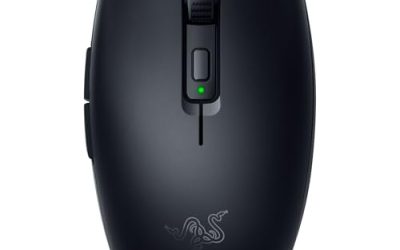
Mouse position decides how freely your aim hand moves, and cramped space is one of the most common desk problems. Your mouse should sit at the same height as the keyboard, on a flat surface, with enough room beside it for the full sweep your sensitivity needs. Low-sensitivity players need a wide pad and space to the right, while high-sensitivity players can manage with less room. Keep your wrist straight and let the arm do the moving, with the elbow resting lightly near your side. If your mouse keeps hitting the keyboard or the desk edge, slide the keyboard left or switch to a smaller board. A large pad that covers both keyboard and mouse keeps the surface level and stops the mouse catching on a hard edge.
How to Set Up Your Desk
Start from the chair and work outward
Begin by sitting in your chair with your feet flat and your back supported, then adjust the chair height until your thighs are level and your forearms rest naturally. Next, slide the keyboard into place directly in front of you and check that your elbows sit near a right angle. Then put the mouse beside the keyboard at the same height and test a full sweep in each direction. Finally, look at your monitor and adjust its height so the top of the screen sits near eye level. Working outward from the chair keeps each step honest, because a wrong chair height will mislead every adjustment that follows it.
Check your posture after twenty minutes
A setup that feels fine at first can still fail after twenty minutes, so treat the first half hour as a test. Notice whether your shoulders have crept upward, whether your wrists bend at an angle, or whether you keep shifting in your seat. Each of those signals points to a specific fix: raised shoulders mean the desk or chair height is off, bent wrists mean the keyboard tilt or mouse height needs changing, and constant shifting means the chair support is wrong. Make one change at a time and give it a few minutes before judging it. Small, patient adjustments beat a full rebuild, and your body will tell you quickly when something is right.
Build a routine for long sessions
Long sessions need breaks built in, no matter how good the setup is. Stand up and stretch every hour, roll your shoulders, and flex your fingers for a minute before sitting back down. Keep water on your desk so you stay hydrated without breaking focus for long. If your wrist starts to ache, lower your sensitivity slightly or take a longer break, since pushing through pain only makes the next session worse. A good position delays fatigue, but it does not remove the need to move. Treat breaks as part of the setup, not as an interruption to it.
Keep cables and clutter out of the way
A clear desk surface matters more than most players expect, because clutter pushes the keyboard and mouse into awkward spots. Route the keyboard and mouse cables behind the desk or through a cable tray so they do not drag across your wrist or pull the mouse sideways during a fast sweep. Keep drinks, notebooks, and controllers off the mouse area, since even a small object at the edge of the pad can block a movement at the worst moment. A large pad that covers the keyboard and mouse zones keeps the surface level and gives both devices room to move. If your mouse cable keeps catching, a small cable holder or a wireless mouse removes the problem entirely. A tidy desk is not about looks; it is about giving your hands the same clear space every session.
Which One Fits Your Situation
You play competitive shooters for hours
Set the chair so your forearms rest level and your elbows sit near a right angle, then give the mouse as much room as your desk allows. Low-sensitivity aim needs wide sweeps, so a large pad and a compact keyboard are worth the change. Keep the monitor at arm’s length with the top near eye level, and take a short break every hour to keep your aim steady through the session.
You game at a desk you also work at
Keep one position that works for both jobs instead of rebuilding the desk twice a day. Set the chair height for typing, place the keyboard straight in front of you, and keep the mouse beside it at the same height. A keyboard tray helps if the desk is too high for comfortable typing. At the end of the workday, slide the keyboard left for extra mouse room and you are ready to play.
Your wrist or shoulder aches after playing
Start by lowering the chair until your shoulders drop and your forearms rest level, then flatten the keyboard tilt so your wrists stay straight. Move the mouse closer to your body so the arm does the work instead of the wrist, and consider a larger pad for smoother movement. If the ache persists after a week of better positioning, take longer breaks and consider a different mouse shape.
You are setting up your first gaming desk
Begin with the chair: feet flat, thighs level, back supported. Place the keyboard directly in front of you and the mouse beside it, both at the same height. Put the monitor an arm’s length away with the top near eye level. Test the setup for twenty minutes, fix whatever feels wrong, and remember that small adjustments matter more than expensive gear.
Common Mistakes
- Setting the chair too low and gaming with shoulders raised toward the ears for hours.
- Tilting the keyboard steeply, which bends the wrists backward and adds strain over time.
- Parking the mouse too close to the desk edge, leaving no room for a full sweep.
- Placing the monitor too low, so the neck bends forward for the whole session.
- Ignoring early aches and playing through wrist or shoulder pain instead of adjusting the setup.
Frequently Asked Questions
How far should my keyboard be from the edge of the desk?
Keep the keyboard roughly a handspan from the desk edge, close enough that your elbows stay near your sides and your forearms rest on the desk. If the board sits too far back, you lean forward and your shoulders rise, which adds tension across the top of your back by the end of the day. If it sits too close to the edge, your wrists hang off the desk and bend upward. A wrist rest can bridge the gap if it supports the heel of your palm without pressing into the wrist itself.
Should my mouse be at the same height as my keyboard?
Yes, the mouse should sit at the same height as the keyboard so your wrist stays straight when you switch between them. A mouse raised above the keyboard bends the wrist upward, while a mouse set lower pulls it downward, and both angles add strain over a long session. A large pad that covers both devices keeps the surface level and makes the transition between keyboard and mouse feel natural. If your desk has a keyboard tray, put both devices on it so they share one level, and avoid resting the mouse on a book or a raised pad that tilts your wrist.
What is the best elbow angle for gaming?
Aim for an angle close to a right angle, with your upper arms hanging relaxed and your forearms reaching forward to the keyboard. Slightly open is fine, but a much tighter or wider angle means the desk or chair height is wrong. Players with a lower desk often sit with elbows slightly open, which is fine as long as the wrist stays straight and the shoulder does not lift. If you cannot reach a comfortable angle by adjusting the chair, consider a keyboard tray or an adjustable desk. Your shoulders should stay down and relaxed at all times.
How far away should my monitor be?
Place the monitor about an arm’s length away, with the top of the screen near eye level so your gaze falls slightly downward. Too close and your eyes work hard to track the whole screen; too far and you lean forward to read small text. If you wear glasses, the distance may need a small adjustment. If you play fast games, a slightly closer monitor can help you track movement at the edges of the screen, but keep the top of the screen near eye level either way. A monitor arm makes fine-tuning easy, but a stack of books under the stand works just as well.
FAQ
How far should my keyboard be from the edge of the desk?
Should my mouse be at the same height as my keyboard?
What is the best elbow angle for gaming?
How far away should my monitor be?
More from Amazon
Programs that pair well with the guide above. Offers and eligibility are set by Amazon and may change.
Free shipping on eligible items, Prime Video and more. Eligible new members can start with a free trial.
Start a Prime free trialAd-free music streaming. Eligible new subscribers can start with a free trial.
Try Music Unlimited freeA Prime membership for ages 18-24 with a trial period. Eligibility is set by Amazon.
See Prime for Young AdultsAudiobooks and podcasts to listen to on the go. Eligible new members can start with a free trial.
Try Audible freeAs an Amazon Associate we earn from qualifying purchases.