Key takeaways
- CPU Core Count: Aim for at least 6 cores and 12 threads, though 8 cores is ideal for streaming. Your processor handles game logic, OBS scene compositing, and x264 software encoding (if you’re not using NVENC), so anything below 6 cores will bottleneck the moment you go live.
- GPU Encoder Quality: NVIDIA’s NVENC encoder (built into RTX cards) offloads stream encoding from the CPU with minimal quality loss, making RTX GPUs the streaming standard. Prioritize GPUs with at least 8GB of VRAM if you plan to game and stream simultaneously at 1440p.
- RAM Capacity: 16GB is the minimum for gaming plus streaming, but 32GB gives you breathing room for browser sources, Discord, Spotify, and chat bots running alongside your game. DDR5 is preferable for its higher bandwidth, though DDR4 3200MHz remains viable.
- Storage Setup: A 1TB NVMe SSD should be your starting point. Streaming software, capture folders, game libraries, and your OS add up fast, and running out of space mid-session can cause recording corruption and stuttering.
- Cooling and PSU: Streaming sessions last hours, not minutes. A 360mm AIO liquid cooler or quality air cooler keeps boost clocks high, while an 80+ Gold PSU rated above your system’s draw ensures stable voltage under sustained load—critical for preventing crashes during long broadcasts.
Streaming and gaming demand very different things from your hardware. Gaming wants high frame rates and low latency; streaming wants headroom for OBS, scene switching, browser sources, and encoding—all running simultaneously without dropping frames on either side. The problem most buyers face is that prebuilt PCs are marketed purely on gaming performance, leaving you to discover mid-stream that your CPU is pegged at 100% the moment you open a second application. On top of that, GPU encoding support, RAM capacity, and even PSU quality all play a role in whether your stream stays smooth or falls apart during a clutch moment.
Our top picks


As an Amazon Associate we earn from qualifying purchases at no extra cost to you. Ratings are shown as listed on Amazon.
This guide cuts through the marketing noise. We’ve rounded up prebuilt gaming PCs that are genuinely suited to streaming in 2026—systems with the right CPU multi-core performance, GPU encoder quality, and memory configuration to handle both gaming and broadcasting at once. Whether you’re streaming at 1080p60, pushing 1440p, or aiming for 4K capture, these picks cover every budget tier without the usual compromises that leave streamers scrambling for an upgrade three months in.
🛒 Best Price Today on Amazon
Prime members get fast, free shipping on everything above, plus member-only deals. New members get a 30-day free trial — cancel anytime.
Watch: Best Prebuilt Gaming PC for Streaming — Video Review
How to Choose a Prebuilt Gaming PC for Streaming (2026)
- CPU Core Count: Aim for at least 6 cores and 12 threads, though 8 cores is ideal for streaming. Your processor handles game logic, OBS scene compositing, and x264 software encoding (if you’re not using NVENC), so anything below 6 cores will bottleneck the moment you go live.
- GPU Encoder Quality: NVIDIA’s NVENC encoder (built into RTX cards) offloads stream encoding from the CPU with minimal quality loss, making RTX GPUs the streaming standard. Prioritize GPUs with at least 8GB of VRAM if you plan to game and stream simultaneously at 1440p.
- RAM Capacity: 16GB is the minimum for gaming plus streaming, but 32GB gives you breathing room for browser sources, Discord, Spotify, and chat bots running alongside your game. DDR5 is preferable for its higher bandwidth, though DDR4 3200MHz remains viable.
- Storage Setup: A 1TB NVMe SSD should be your starting point. Streaming software, capture folders, game libraries, and your OS add up fast, and running out of space mid-session can cause recording corruption and stuttering.
- Cooling and PSU: Streaming sessions last hours, not minutes. A 360mm AIO liquid cooler or quality air cooler keeps boost clocks high, while an 80+ Gold PSU rated above your system’s draw ensures stable voltage under sustained load—critical for preventing crashes during long broadcasts.
The Best Prebuilt Gaming PC for Streaming (2026)s Reviewed
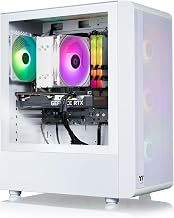
STORMCRAFT Falcon RTX 5070
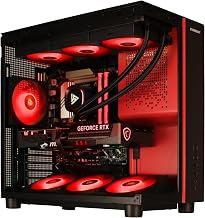
The standout pick for serious streamers. The Ryzen 7 7800X3D remains the best gaming CPU available, and paired with the RTX 5070 and 32GB of 6000MHz DDR5, this system handles 1440p gaming plus NVENC streaming with power to spare. The 360mm AIO and 850W Gold PSU ensure sustained performance through marathon sessions.
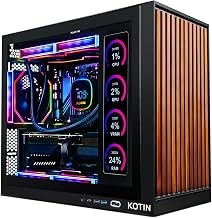
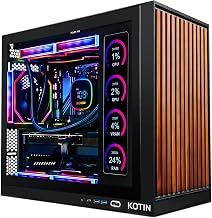
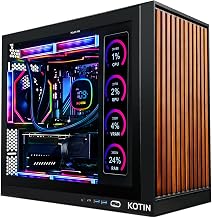
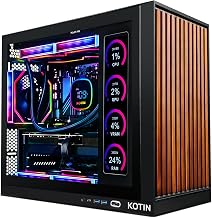
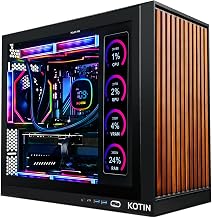
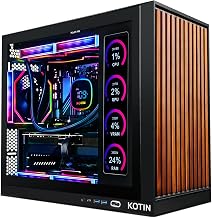
KOTIN RTX 5070 Ryzen 7 9700X
A strong alternative to the Falcon, swapping the X3D chip for the Ryzen 7 9700X. You still get 32GB DDR5, a 360mm liquid cooler, 850W Gold PSU, and the RTX 5070’s NVENC encoder. The integrated 11.3-inch Smart Display is a genuine bonus for stream monitoring or chat without eating a monitor input.
YAWYORE Ryzen 7 5700X RTX 5060
The value sweet spot. The 8-core Ryzen 7 5700X handles OBS and multitasking competently, while the RTX 5060 provides solid 1080p gaming performance and NVENC encoding. With 32GB DDR4 and a 1TB NVMe SSD, you’re getting streaming-ready specs at a price that leaves room in the budget for a decent capture card or mic.
RTX 5060 Ti Ryzen 7
Sitting between the 5060 and 5070 tier, this prebuilt offers a good middle ground for streamers who want slightly more GPU headroom. The 16GB DDR4 is adequate for 1080p streaming, and the 5060 Ti’s NVENC encoder handles broadcast encoding without noticeable quality degradation.
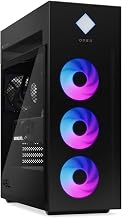
Ryzen 7 RTX 3050 8GB Streaming Tower
The budget entry point for new streamers. The 8-core Ryzen 7 keeps multitasking smooth, and the RTX 3050’s 8GB VRAM supports NVENC encoding, though you’ll want to stick to 1080p gaming while streaming. Six RGB fans and WiFi 6 round out a package that gets you live without breaking the bank.
Frequently Asked Questions
Do I need two PCs for streaming?
No. Modern NVIDIA RTX GPUs handle encoding via NVENC with minimal CPU impact, meaning a single well-spec’d PC can game and stream simultaneously. A dual-PC setup only becomes necessary if you’re capturing high-bitrate 4K content or running complex production software.
Is the RTX 3050 enough for streaming?
For 1080p60 streaming, yes. The RTX 3050 includes NVENC encoding support, which is the same encoder used in higher-end RTX cards. You’ll be limited to 1080p gaming while live, but the stream quality itself will be solid at standard bitrates.
How much RAM do I really need for streaming?
16GB is the practical minimum if you’re running OBS, a game, Discord, and a browser. 32GB is recommended if you use multiple browser sources, run chat bots, play memory-heavy titles, or want to avoid closing applications before going live.
Does DDR5 matter for streaming?
It helps, but it’s not essential. DDR5 offers higher bandwidth, which benefits CPU-bound scenarios and frame consistency, but DDR4 3200MHz remains perfectly capable. Prioritize capacity (32GB) over generation (DDR5 vs DDR4) if you’re on a budget.
Final Thoughts
For most streamers in 2026, the STORMCRAFT Falcon RTX 5070 is the clear top pick—its 7800X3D plus RTX 5070 combination is purpose-built for high-refresh gaming and flawless NVENC streaming. The KOTIN RTX 5070 with the Ryzen 7 9700X is an equally strong alternative if you want the built-in Smart Display for stream monitoring. On a tighter budget, the YAWYORE Ryzen 7 5700X with the RTX 5060 delivers the core streaming essentials—8 cores, NVENC, and 32GB RAM—at a price that won’t eat your entire setup budget.