Key takeaways
- Compare the best prebuilt gaming PC with RTX 5080 options for 2026, with power, cooling and CPU-pairing guidance to help you pick the right build.
Finding a prebuilt gaming PC with NVIDIA’s RTX 5080 in 2026 can feel overwhelming. The GPU market is crowded with sky-high expectations, confusing spec sheets, and builds that promise the world but cut corners on power delivery, cooling, or memory. Buyers end up second-guessing whether a particular configuration will actually hold up at 4K, whether the power supply leaves headroom for spikes, and whether the AIO cooler is genuinely adequate or just decorative.
Our top picks
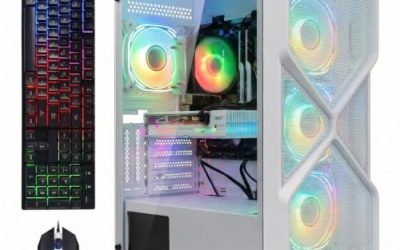
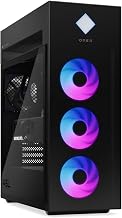
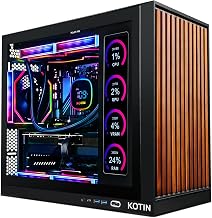
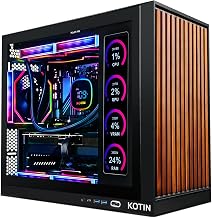
 STORMCRAFT Phantom RTX 5080 Gaming PC Ryzen
- 【System】AMD Ryzen 7 9800X3D CPU Processor 8 Cores…
- 【Graphics & Memory】 RTX 5080 16 GB GDDR7,…
- 【Cooler & Power】STORMCRAFT Phantom Gaming Computer Case, 360mm…
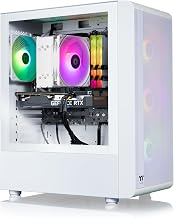
 Skytech Gaming Azure 3 Gaming PC
- AMD Ryzen 7 7800X3D 4.2GHz (5.0GHz Turbo Boost)…
- NVIDIA Geforce RTX 5080 16GB GDDR7 Graphics Card…
- 802.11 AC | No Bloatware | Graphic output…
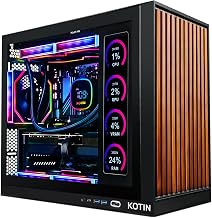
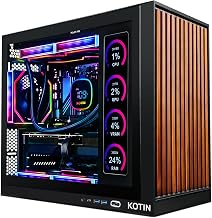
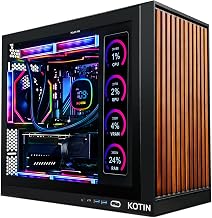
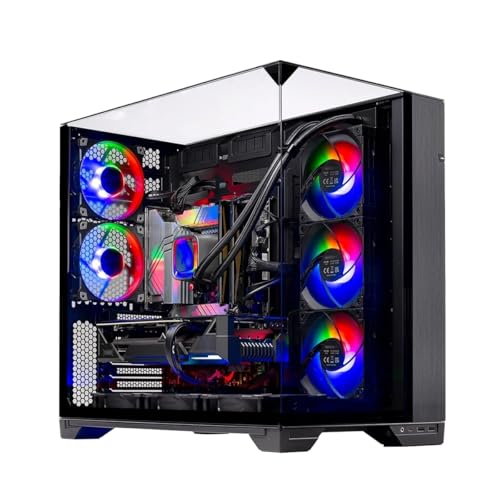 Skytech Gaming PC O11 Vision
- Intel Core Ultra 7 U7 270K 3.7GHz (5.4GHz…
- NVIDIA GeForce RTX 5080 16GB GDDR7 Graphics Card…
- WI-FI 6 802.11ax | No Bloatware | Graphic…
| Product | Key specs | |
|---|---|---|
| STORMCRAFT Phantom RTX 5080 Gaming PC Ryzen | 【System】AMD Ryzen 7 9800X3D CPU Processor 8 Cores… 【Graphics & Memory】 RTX 5080 16 GB GDDR7,… 【Cooler & Power】STORMCRAFT Phantom Gaming Computer Case, 360mm… | Check price |
| Skytech Gaming Azure 3 Gaming PC | AMD Ryzen 7 7800X3D 4.2GHz (5.0GHz Turbo Boost)… NVIDIA Geforce RTX 5080 16GB GDDR7 Graphics Card… 802.11 AC | No Bloatware | Graphic output… | Check price |
| Skytech Gaming PC O11 Vision | Intel Core Ultra 7 U7 270K 3.7GHz (5.4GHz… NVIDIA GeForce RTX 5080 16GB GDDR7 Graphics Card… WI-FI 6 802.11ax | No Bloatware | Graphic… | Check price |
 Alienware Aurora Gaming Desktop | Legend perfected: Modern design with a matte "basalt… Game changing graphics: Step into the future of… Marathon gaming unlocked: This high-performance technology ensures clean… | Check price |
 Skytech Gaming Azure 3 Gaming PC | AMD Ryzen 7 9800X3D 4.7GHz (5.2GHz Turbo Boost)… NVIDIA Geforce RTX 5080 16GB GDDR7 Graphics Card… 802.11 AC | No Bloatware | Graphic output… | Check price |
 Skytech Gaming King 95 Gaming PC | AMD Ryzen 7 9850X3D 4.7GHz (5.6GHz Turbo Boost)… NVIDIA GeForce RTX 5080 16GB GDDR7 Graphics Card… WI-FI 5 802.11ac | No Bloatware | Graphic… | Check price |
 ZOTAC MEK Gaming PC Desktop | Effortless Gaming: MEK from ZOTAC comes with all… Heart of the MEK: the ZOTAC GAMING GeForce… Powerful Processor: the AMD Ryzen 7 9800X3D AM5… | Check price |
As an Amazon Associate we earn from qualifying purchases at no extra cost to you.
This guide cuts through the noise. We’ve rounded up the best RTX 5080 prebuilt gaming PCs available right now, focusing on real-world performance, component quality, thermal design, and overall value. Whether you want a no-compromise 9800X3D pairing, a polished Intel alternative, or a value-oriented build that still delivers flagship frame rates, these picks cover the spectrum. Here’s what stands out in 2026.
🛒 Best Price Today on Amazon
Prime members get fast, free shipping on everything above, plus member-only deals. New members get a 30-day free trial — cancel anytime.
Watch: Best Prebuilt Gaming PC with RTX 5080 — Video Review
How to Choose a Prebuilt Gaming PC with RTX 5080 (2026)
- CPU Pairing: The RTX 5080 deserves a processor that won’t bottleneck it at higher resolutions. Look for AMD’s Ryzen 7 9800X3D or 7800X3D for gaming dominance, or Intel’s Core Ultra 7 270K and Ultra 9 285 for a balanced workload approach.
- RAM Speed and Capacity: 32GB of DDR5 at 6000MHz is the sweet spot for DDR5 gaming in 2026. Slower kits or 16GB configurations will hold back performance, especially at 1440p and 4K with modern titles.
- Storage: Aim for at least 1TB of Gen4 NVMe SSD storage, though 2TB is ideal given the size of current game installs. Prioritize PCIe Gen4 M.2 drives for fast load times and future-proofing.
- Cooling Solution: A 360mm AIO liquid cooler is the gold standard for high-end prebuilts. It keeps temperatures in check during extended gaming sessions and allows for potential CPU boosts without thermal throttling.
- Power Supply Quality: An 850W Gold-rated PSU is the minimum we recommend for RTX 5080 systems. Look for ATX 3.0 compliance to handle NVIDIA’s power spikes safely and ensure long-term reliability.
The Best Prebuilt Gaming PC with RTX 5080 (2026)s Reviewed
STORMCRAFT Phantom RTX 5080
The STORMCRAFT Phantom pairs the Ryzen 7 9800X3D with the RTX 5080 and 32GB of DDR5 6000MHz memory, making it one of the most well-balanced gaming rigs on the market. The 360mm AIO and 850W PSU provide the thermal headroom and power stability this flagship pairing demands.
Skytech Azure 3 (7800X3D)
Skytech’s Azure 3 with the Ryzen 7 7800X3D remains a compelling value pick in 2026, delivering outstanding 1080p and 1440p performance with the RTX 5080. The 1TB NVMe SSD is slightly modest for a flagship build, but the 850W Gold PSU and 360mm ARGB AIO keep everything running cool and stable.
Skytech O11 Vision (Ultra 7 270K)
The Skytech O11 Vision stands out for its clean aesthetics and Intel Core Ultra 7 270K pairing, offering strong productivity performance alongside flagship GPU power. With Wi-Fi 6, a 360mm ARGB AIO, and an 850W Gold ATX 3.0 PSU, it’s a polished, well-rounded alternative to AMD-centric builds.
Cooler Master TD5 Pro
Cooler Master’s TD5 Pro leverages the company’s deep expertise in cases and cooling, pairing the 9800X3D and RTX 5080 with a 360mm AIO and a generous 2TB SSD. The build quality and thermal management here are a cut above what most system integrators manage at this price point.
Alienware Aurora (Ultra 9 285)
Alienware’s Aurora brings the Intel Core Ultra 9 285 and RTX 5080 together with Wi-Fi 7 and 2.5Gb Ethernet, making it a future-ready option for both gaming and content creation. The 1TB SSD is a bit limiting for the class, but the unique chassis design and robust connectivity options compensate.
What to Look For in an RTX 5080 Prebuilt (2026)
The RTX 5080 is a 16GB GDDR7 card with a rated total graphics power of 360W and a single 16-pin 12V-2×6 connector, and that one spec drives most of the other decisions in a prebuilt. Before comparing paint jobs or RGB fans, check the four areas below, since a build that gets these wrong will bottleneck or thermal-throttle a card this demanding no matter how fast the GPU itself is.
Power Supply Headroom
NVIDIA’s own guidance sets 850W as the baseline power supply for a typical RTX 5080 pairing, and board partners such as ASUS repeat that same 850W floor for builds using a Core Ultra 7, Ryzen 9, or Core i9 chip, moving up to 1000W for HEDT-class processors or any manual overclocking. A prebuilt that ships with anything under 850W is working with less margin than NVIDIA itself considers safe, which matters more once a case warms up during a multi-hour session rather than in a quick benchmark run.
CPU and GPU Balance
A 360W GPU this capable needs a modern eight-core chip to avoid leaving frames on the table at 1440p, where the CPU still does meaningful work feeding the card. Current-generation AMD X3D parts and Intel Core Ultra chips both clear that bar; the practical question is less “which brand” and more whether the cooler attached to that CPU can sustain its boost clocks in the specific case the system ships in, since a cramped mid-tower can throttle a capable chip just as easily as a weak one.
Case Airflow and Cooling
A 360W GPU plus a 100-170W CPU puts 450-550W of heat into the case at full load, so front and top mesh panels, at least two intake fans, and a GPU cooler long enough to clear its own fan curve all matter more here than on a mid-range build. Builds that rely on a single rear exhaust fan and a solid front panel for looks tend to run hotter and louder under sustained load than their spec sheet would suggest.
Memory and Storage Thresholds
32GB of system RAM is the realistic floor for a card in this class once streaming overlays, Discord, and background browser tabs are part of the picture, and dual-channel configuration matters more than raw capacity for frame-time consistency. On storage, a single Gen4 NVMe drive under 1TB fills up fast with modern install sizes, so treat 1TB as the minimum and plan for a second drive bay if the case supports one.
Which One Should You Buy?
The five builds below cover different priorities rather than a single “best” pick. Match your main use case to the row instead of chasing the highest clock speed on paper.
| If you… | Choose… | Why |
|---|---|---|
| Want the highest-end components money can buy in one box | STORMCRAFT Phantom RTX 5080 | Built around flagship-tier parts rather than a mid-tier CPU paired down to the GPU |
| Game primarily and want the strongest gaming CPU pairing | Skytech Azure 3 (7800X3D) | X3D-series chips consistently lead in gaming frame rates over similarly priced non-X3D parts |
| Split time between gaming and creator or multitasking workloads | Skytech O11 Vision (Ultra 7 270K) | Intel’s Ultra 7 line trades a little pure gaming headroom for stronger multi-threaded performance |
| Care more about cooling and case airflow than brand recognition | Cooler Master TD5 Pro | Cooler Master’s own case design background typically means better stock airflow planning |
| Want the most polished out-of-box software and support experience | Alienware Aurora (Ultra 9 285) | Dell’s first-party support and proprietary chassis trade some upgrade flexibility for a smoother ownership experience |
Common Mistakes When Buying a Prebuilt RTX 5080 PC
- Pairing a 4K-class GPU with a 1080p monitor. The RTX 5080 is built for 1440p high-refresh and 4K; on a 1080p panel you are paying for headroom the display can never use.
- Ignoring the PSU wattage on the spec sheet. Some budget-tier listings quietly ship a 750W unit with this GPU. That is below NVIDIA’s own recommendation and leaves little room for transient power spikes under load.
- Assuming more RAM always beats faster RAM. Dual-channel 32GB at a healthy speed will outperform a mismatched or single-stick 64GB configuration in actual frame-time consistency.
- Overlooking case airflow in favor of looks. A striking tempered-glass panel with limited mesh intake area will run a 360W card hotter and louder than a plainer case built around airflow first.
- Skipping the storage math. A single 500GB-1TB drive fills up quickly once a few modern titles and a capture tool are installed; check for a free second M.2 slot or drive bay before buying.
- Treating “RTX 5080 inside” as the only spec that matters. The CPU, PSU headroom, and case airflow around that GPU decide how consistently it actually performs once the system is out of the box and under real load.
- Buying for 4K without checking the rest of the pipeline. A strong GPU paired with a slow storage drive or a display that caps out well below 4K leaves real performance on the table that the GPU alone cannot fix.
Build Quality Signals Beyond the Spec Sheet
Two prebuilts can list an identical GPU, CPU, and RAM capacity and still differ meaningfully in how they hold up over two or three years of use. A few signals are worth checking even when a listing does not lead with them.
Power Supply Certification Tier
The 80 Plus certification tier (Bronze, Gold, Platinum, or Titanium) tells you how efficiently the PSU converts wall power into DC power, with higher tiers wasting less energy as heat at the same load. A Gold-rated unit is a reasonable floor for a system pulling 450W or more at the wall under gaming load; a Bronze-rated PSU can still do the job but runs warmer and less efficiently at the same wattage, which matters more in a system already managing heat from a 360W GPU. Listings that only state wattage without a certification tier are not necessarily lower quality, but the tier is worth confirming before buying rather than after.
Cable Routing and Airflow Management
Factory cable routing affects case airflow in ways a spec sheet never captures. A build with cables bundled tightly behind the motherboard tray and routed away from intake fans lets air move more freely across the GPU and CPU cooler than one where cables drape loosely across the front intake path. This is rarely listed as a spec anywhere, but photos of the case interior, when available, are worth a look before buying, since it is one of the more reliable tells for how much attention went into the build beyond simply fitting the parts into the case.
Thermal Throttling Risk in Compact or Showcase Cases
An RTX 5080 draws enough power and generates enough heat that case volume and airflow design matter as much as the cooler bolted to the card. Compact or heavily tempered-glass showcase cases that prioritize appearance over ventilation often restrict intake area specifically to keep a clean front panel, and restricted intake starves both the GPU and CPU of fresh air under sustained load. The practical effect is thermal throttling: a chip that would otherwise hold a stable clock speed instead cycles down briefly whenever internal case temperature creeps too high, which shows up as inconsistent frame pacing rather than a dramatic crash.
Checking a case’s intake fan count and filter design, not just its exhaust, is the simplest way to avoid this before buying. A case with strong exhaust but a single restricted front intake can still run warm because it is removing air faster than it can pull fresh air back in, creating mild negative pressure that pulls in dust through every unfiltered gap instead of through the intended filtered path.
Upgrade Path: What You Can Swap Later and What You Cannot
Prebuilt systems vary widely in how upgrade-friendly they actually are once the warranty period is behind you. Standard ATX or similar form-factor motherboards with socketed RAM and a conventional power supply generally allow a future CPU, memory, or storage upgrade without much drama, since those components follow the same standards used in custom builds. Proprietary motherboard shapes, soldered or non-standard RAM, and non-standard power supply connectors, more common in slim or highly compact prebuilt lines, narrow the realistic upgrade path to whatever the original manufacturer continues to sell as a compatible part.
The power supply deserves particular attention before assuming an upgrade is possible. A system shipped with just enough wattage headroom for its original GPU may not have the extra capacity a future, more power-hungry card would need, and a proprietary PSU connector or form factor can block a straightforward swap even when the wattage math would otherwise work. Confirming that a system uses a standard ATX power supply and a standard motherboard form factor is a better upgrade signal than any single spec on the box.
Warranty, Support, and What Typically Voids Coverage
Prebuilt system warranties generally cover defects in the components and assembly as shipped, but most explicitly exclude damage introduced by opening the case to add parts, apply thermal paste, or modify cable routing, so it is worth reading the warranty terms before assuming routine maintenance is covered. Overclocking beyond factory settings, whether on the CPU or GPU, is one of the most common actions that voids coverage outright, since it pushes components outside the conditions the manufacturer validated.
Support quality differences between manufacturers show up most clearly when something does go wrong rather than at purchase time. Systems backed by a manufacturer offering on-site service or advance component replacement reduce downtime considerably compared with mail-in-only support, where a system can be out of the owner’s hands for the full diagnosis-and-repair cycle. Checking stated response times and whether a warranty requires shipping the entire system back versus just the failed part is a practical way to compare support commitments that otherwise look identical on paper.
Noise Levels Under Sustained Load
An RTX 5080 pulls enough power under sustained gaming load that fan curve tuning becomes a real differentiator between otherwise similar prebuilt systems. Manufacturers that lean on a quieter, more gradual fan curve tend to let internal temperatures climb a bit higher before ramping fans aggressively, trading a few degrees of thermal headroom for a noticeably quieter room. Systems tuned toward lower temperatures at the cost of noise will keep components running cooler but can become distracting during quiet, less demanding scenes where fan noise is more noticeable against a quiet room than it is during an intense firefight with game audio playing.
Case design interacts with this tuning more than buyers usually expect, since a case with sound-dampening panels can let a manufacturer use a more aggressive cooling curve without the noise penalty that same curve would create in an open, unpadded chassis. Reviews and published specifications that mention sound-dampening material or measured noise levels under load are a more useful signal than fan size alone, since a larger fan spinning fast can still be louder than a smaller fan in a well-insulated case running a conservative curve.
Frequently Asked Questions
Is the RTX 5080 overkill for 1440p gaming?
Not necessarily. While the RTX 5080 excels at 4K, it’s also an excellent choice for high-refresh-rate 1440p gaming, especially with demanding titles or ray tracing enabled. It provides meaningful headroom for future AAA releases that will push current hardware harder.
Should I choose the Ryzen 7 9800X3D or Intel Core Ultra 7?
For pure gaming, the Ryzen 7 9800X3D is the clear winner thanks to its 3D V-Cache, which delivers exceptional frame consistency. If you stream, edit, or run productivity workloads alongside gaming, Intel’s Core Ultra 7 or Ultra 9 offer a more versatile balance.
Is 32GB of RAM enough for an RTX 5080 build?
Yes, 32GB of DDR5 at 6000MHz is the current sweet spot for high-end gaming. Most titles won’t exceed that, and the speed matches the optimal infinity fabric ratio for AMD Ryzen. Only heavy multitaskers or content creators need to consider 64GB.
Does an 850W PSU have enough headroom for the RTX 5080?
An 850W Gold-rated ATX 3.0 PSU is sufficient for the RTX 5080 paired with a high-end CPU like the 9800X3D. NVIDIA’s power spikes are handled well by ATX 3.0 units, though you’ll want to avoid cheap, non-rated alternatives at this tier.
Final Thoughts
The STORMCRAFT Phantom stands out as the most well-rounded pick, pairing the 9800X3D and RTX 5080 with balanced, no-nonsense components. For buyers who value build quality and cooling engineering, the Cooler Master TD5 Pro is an outstanding alternative, while the Skytech O11 Vision is the go-to for an Intel-based, aesthetically refined flagship.
FAQ
Which One Should You Buy?
Is the RTX 5080 overkill for 1440p gaming?
Should I choose the Ryzen 7 9800X3D or Intel Core Ultra 7?
Is 32GB of RAM enough for an RTX 5080 build?
Does an 850W PSU have enough headroom for the RTX 5080?
More from Amazon
Programs that pair well with the guide above. Offers and eligibility are set by Amazon and may change.
Free shipping on eligible items, Prime Video and more. Eligible new members can start with a free trial.
Start a Prime free trialAd-free music streaming. Eligible new subscribers can start with a free trial.
Try Music Unlimited freeA Prime membership for ages 18-24 with a trial period. Eligibility is set by Amazon.
See Prime for Young AdultsAudiobooks and podcasts to listen to on the go. Eligible new members can start with a free trial.
Try Audible freeAs an Amazon Associate we earn from qualifying purchases.