Our Short List of 3
All 4 Picks at a Glance
| Product | Specs | Action |
|---|---|---|
 Meta Quest 3 512GB | Check price on Amazon | |
 Meta Quest 3S 128GB | Check price on Amazon | |
 HTC VIVE XR Elite | Check price on Amazon | |
 HTC VIVE Focus Vision | Check price on Amazon |
Our Top Picks
A standalone VR headset carries its own processor, storage, battery, and inside-out tracking cameras in the headset itself, so it runs games and apps with no gaming PC, no console, and no external sensors wired around the room. That single design choice changes everything about ownership: setup is mostly a matter of charging the battery, drawing a guardian boundary, and signing in to a store account, and the same headset can move from a living room to a spare bedroom or a friend’s house in a carry case. For PC gamers used to tethered headsets, standalone models also remove the cable that catches on chair arms and limits turning in room-scale games.
The trade-off is that a mobile processor cannot match a desktop graphics card, so standalone games use visuals tuned for that hardware, and battery life rather than session comfort alone decides how long a session lasts. This guide covers four all-in-one headsets that genuinely meet the standalone definition: the Meta Quest 3, the Meta Quest 3S, the HTC VIVE XR Elite, and the HTC VIVE Focus Vision. Each one runs content on its own hardware, and several can also connect to a PC as an optional extra, which is noted where it applies rather than treated as a requirement. Picks were limited to headsets with verifiable Amazon US listings, and the sections below explain the display, processor, storage, and tracking differences that matter most.
As an Amazon Associate, we earn from qualifying purchases.
How to Choose a Standalone VR Headset
Start with the processor and the store behind it, because those two things decide which games are available and how well they run. The Snapdragon XR2 Gen 2 in the Quest 3 and Quest 3S is the current mainstream standalone chip, and the Meta Horizon Store carries the largest standalone game library, including titles built only for that platform. HTC headsets use the VIVEPORT store instead, which has a smaller games catalogue but a stronger focus on mixed reality, enterprise, and PC VR crossover use. A buyer who wants the widest choice of native games should weigh the store as heavily as the hardware, since a headset only plays titles published for its own platform.
Display quality is the second filter. Resolution per eye sets image sharpness, and lens type shapes how much of that sharpness survives across the field of view. Pancake lenses, used in the Quest 3 and the XR Elite, keep clarity closer to the edges and allow slimmer headset bodies. Fresnel lenses, used in the Quest 3S and the Focus Vision, are a proven design but usually show a smaller sweet spot and more visible glare in high-contrast scenes. Refresh rate matters for comfort in fast games, with 90 hertz a sensible baseline and higher modes welcome where a headset offers them. Buyers who wear glasses should also check interpupillary distance adjustment, since a stepped adjustment can leave some eye positions slightly off centre while a continuous dial suits a wider range.
Storage deserves more attention on a standalone headset than on a PC headset, because every game lives on the device itself. A 128 GB model fills quickly once several large games, recorded clips, and app data accumulate, while 256 GB and 512 GB models reduce the need to delete and redownload titles. Memory also affects how smoothly apps stay loaded when switching between them. None of the headsets in this guide accepts a memory card for game storage, so the capacity chosen at purchase is the capacity the headset keeps.
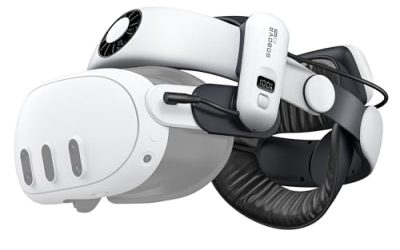
Battery life and fit decide whether the hardware gets used often. Most standalone headsets run for roughly two to two and a half hours per charge, so longer sessions need a charging break, a battery strap accessory, or, on the HTC models, a hot-swappable rear battery. Weight distribution matters as much as total weight: a rear battery can balance a front-heavy visor and reduce pressure on the cheeks. Finally, consider mixed reality passthrough. Full-colour passthrough cameras let a headset blend virtual objects into a real room and make menu use without removing the headset far easier, and the quality of that passthrough varies noticeably between models.
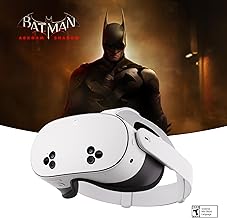
Meta Quest 3 512GB
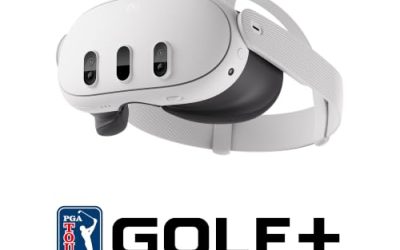
The Quest 3 is the most complete mainstream standalone headset in this group, pairing the Snapdragon XR2 Gen 2 processor with pancake lenses and the sharpest display of the two Meta models. Its 2064 by 2208 resolution per eye gives text, distant objects, and fine game detail a clear step up over the Quest 3S, and the slim visor design keeps the weight closer to the face than older Fresnel designs. Full-colour passthrough supports mixed reality games and apps that place virtual screens or objects in a real room, and the Touch Plus controllers track without the rings used on earlier Quest controllers, which makes close hand movements in climbing and boxing games less likely to collide.
The 512GB configuration listed here is the higher storage option, and it suits buyers who keep a large installed library rather than rotating a handful of games. The Quest 3 also connects to a gaming PC through Link or wireless streaming as an optional extra, so owners of a VR-ready PC can use one headset for both standalone and PC VR libraries. Battery life remains the main limitation, as it does across this category, and the standard fabric strap is basic compared with rigid aftermarket straps.
Who It Suits
The Quest 3 suits buyers who want the strongest all-round standalone package: the largest native game library, a sharp pancake-lens display, and credible mixed reality in one headset. It is also the natural pick for a PC gamer adding a cable-free second headset, since the same device can stream a PC VR library when wanted. Buyers who mainly play a few casual titles and rarely fill storage may find the Quest 3S covers their needs for less commitment.
Meta Quest 3S 128GB
The Quest 3S brings the same Snapdragon XR2 Gen 2 processor as the Quest 3 to a lower tier, which means standalone games run on the same generation of hardware and the full Meta Horizon Store catalogue is available. The savings come from the optics and display: the 3S uses Fresnel lenses and a 1832 by 1920 resolution per eye, carried over from the Quest 2 generation, so the image is softer than the Quest 3 and the sweet spot is smaller. In practice that difference shows most in text-heavy apps, distant scenery, and mixed reality, where the 3S also uses a simpler passthrough arrangement than its sibling.
For many first-time buyers those compromises are reasonable. Fast, colourful games designed around movement rather than fine detail still look clean, load times benefit from the newer processor, and the listing states a battery average life of two and a half hours, which is competitive for this class. The 128 GB of storage is the tightest in this guide, so buyers should expect to manage installed games actively, uninstalling finished titles to make room for new ones.
Who It Suits
The Quest 3S suits newcomers, younger players, and households buying a first or second headset for shared use, where access to the full Quest game library matters more than the sharpest optics. It also suits fitness and party-game use, where sessions are shorter and visual fine detail is rarely the point. Buyers who read a lot of text in the headset, work in virtual desktops, or keep dozens of games installed should look at the Quest 3 instead.
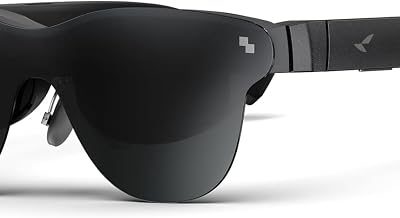
HTC VIVE XR Elite
The VIVE XR Elite takes a different approach to standalone design: it is a convertible headset that can run as a full headset with a rear battery cradle or, with the temples attached, in a lighter glasses-style form for media viewing. It runs standalone content from VIVEPORT on a Snapdragon XR2 processor with generous memory, and its pancake lenses deliver 1920 by 1920 resolution per eye at a 90 hertz refresh rate with a field of view up to 110 degrees. Four wide field of view tracking cameras handle inside-out tracking, so no base stations are needed in either standalone or PC VR mode.
Two features stand out for glasses wearers and long-session users. Adjustable diopter dials let some users correct vision inside the headset without wearing glasses, within the supported range, and the battery cradle is hot-swappable, so a spare charged cradle can extend a session without a long tethered break. The XR Elite also streams PC VR over USB or Wi-Fi as an optional mode. Its standalone games library is smaller than Meta’s, which is the main reason to choose it for its form factor and flexibility rather than for native game breadth.
Who It Suits
The XR Elite suits buyers who value the convertible, travel-friendly design, built-in diopter adjustment, and swappable batteries, and who split time between standalone mixed reality and PC VR streaming. It also suits users outside the Meta account ecosystem who prefer the VIVEPORT platform. Buyers whose priority is the biggest standalone games catalogue should choose a Quest model, since several major standalone releases never reach VIVEPORT.
HTC VIVE Focus Vision
The Focus Vision is HTC’s higher-resolution standalone option, built around a 2448 by 2448 resolution per eye, the highest panel resolution in this guide, with a wide field of view and a 90 hertz refresh rate. It runs standalone content through VIVEPORT and adds features aimed at shared and managed use, including eye tracking that enables automatic interpupillary distance adjustment when a new wearer puts the headset on. That auto adjustment is genuinely useful in households, training spaces, and demo settings where several people use one device and manual lens setup would otherwise be repeated every session.
Like the XR Elite, the Focus Vision uses a hot-swappable rear battery and inside-out tracking, and it can connect to a PC for PC VR, including a DisplayPort wired mode sold for low-latency streaming. Its Fresnel lenses mean the high panel resolution does not translate into edge-to-edge clarity in the way pancake optics would, and the headset is larger and heavier than the Quest models. Buyers should treat it as a resolution-led, multi-user standalone headset rather than a direct Quest rival on game library size.
Who It Suits
The Focus Vision suits shared households, creators, and workplace or training users who want high panel resolution, eye tracking, and automatic lens adjustment in a standalone device, plus an optional wired route into PC VR. It is also a fit for VIVE ecosystem users adding full-body tracking accessories later. Solo gamers focused on the largest native game store and the lowest-friction setup will usually be better served by the Quest 3.
FAQ
Do standalone VR headsets need a gaming PC or console?
No. A standalone headset has its own processor, storage, battery, and tracking cameras, and it downloads and runs games directly from its own store over Wi-Fi. Some models in this guide can also connect to a PC for PC VR as an optional extra, but none of them requires a PC or a console to play their native standalone libraries.
How long does a standalone VR headset battery last?
Most standalone headsets run for roughly two to two and a half hours of active play per charge, depending on the game, brightness, and refresh rate in use. Battery strap accessories can extend that time, and the two HTC headsets in this guide use hot-swappable rear batteries, so a charged spare can be fitted without ending the session for a long recharge.
Is 128 GB of storage enough for a standalone headset?
It can be, if the library stays small and finished games are uninstalled regularly. Standalone games are stored entirely on the headset, and larger titles plus recorded video clips fill space quickly, so keen players who keep many games installed at once are better served by the 256 GB or 512 GB configurations. None of the headsets here accepts expandable storage for games.
Can a standalone headset play PC VR games as well?
Yes, within limits. The Quest 3 and Quest 3S can stream a PC VR library over a cable or Wi-Fi, the XR Elite supports wired and wireless PC VR streaming, and the Focus Vision offers a wired DisplayPort mode with the appropriate kit. Streaming quality depends on the PC, the router, and the connection, and the headset still needs its own battery power while streaming wirelessly.
Final Verdict
For most buyers, the Meta Quest 3 is the standalone headset to choose first: it combines the sharpest mainstream display in this group, the current generation processor, the largest native game library, and the generous 512 GB storage of the configuration listed here. The Quest 3S is the sensible entry point, keeping the same processor and store while trading optical sharpness for a lower tier, which suits first headsets, younger players, and shorter casual sessions.
The two HTC headsets answer narrower needs well. The VIVE XR Elite is the pick for a convertible, travel-friendly design with diopter dials and swappable batteries, while the VIVE Focus Vision leads on panel resolution, eye tracking, and automatic lens adjustment for shared use. Whichever model is chosen, the deciding factors should stay practical: the store that carries the games wanted, enough storage for that library, optics that suit the buyer’s eyes and glasses, and a battery plan that matches typical session length.
Product and ASIN Reference
| Product | ASIN |
|---|---|
| Meta Quest 3 512GB | B0CD1JTBSC |
| Meta Quest 3S 128GB | B0F2GYMC8H |
| HTC VIVE XR Elite | B0BQXDFLJ6 |
| HTC VIVE Focus Vision | B0DDRLX7V4 |
FAQ
Do standalone VR headsets need a gaming PC or console?
How long does a standalone VR headset battery last?
Is 128 GB of storage enough for a standalone headset?
Can a standalone headset play PC VR games as well?
More from Amazon
Programs that pair well with the guide above. Offers and eligibility are set by Amazon and may change.
Free shipping on eligible items, Prime Video and more. Eligible new members can start with a free trial.
Start a Prime free trialAd-free music streaming. Eligible new subscribers can start with a free trial.
Try Music Unlimited freeA Prime membership for ages 18-24 with a trial period. Eligibility is set by Amazon.
See Prime for Young AdultsAudiobooks and podcasts to listen to on the go. Eligible new members can start with a free trial.
Try Audible freeAs an Amazon Associate we earn from qualifying purchases.