Our Short List of 3

- five-inch woofer and one-inch tweeter, powered nearfield design, Image Control Waveguide for stable stereo imaging, balanced XLR and TRS inputs, boundary compensation and high-frequency trim controls, sold as a matched pair.

- five-inch Kevlar woofer and one-inch tweeter, powered nearfield design, front-firing bass port, balanced XLR and TRS inputs, app-assisted room correction, sold singly so order two for stereo.

- three-and-a-half-inch woofer and one-inch silk-dome tweeter, powered nearfield design, front-panel volume control and headphone output, balanced TRS and unbalanced RCA inputs, high-frequency and low-frequency tuning controls, sold as a pair.
All 5 Picks at a Glance
| Product | Specs | Action |
|---|---|---|
| 1. JBL 305P MkII Matched Pair — Best Overall Studio Reference Monitor |
| Check price on Amazon |
| 2. KRK ROKIT 5 G5 — Best Modern Studio Reference Monitor |
| Check price on Amazon |
| 3. PreSonus Eris E3.5 Gen 1 — Best Compact Studio Reference Monitor |
| Check price on Amazon |
 4. Yamaha HS5 — Best Classic Studio Reference Monitor |
| Check price on Amazon |
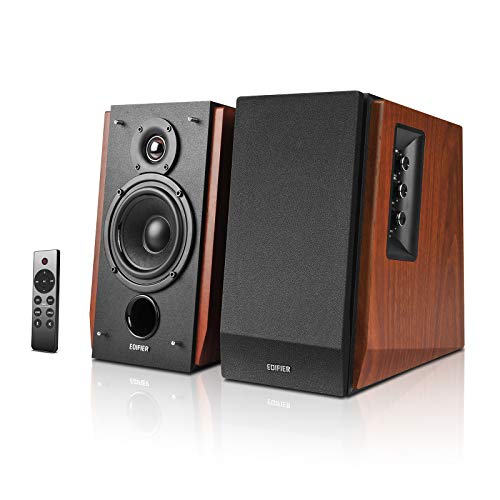 5. Edifier R1700BTs — Best Studio Reference Monitor With Bluetooth |
| Check price on Amazon |
Key takeaways
- The best studio reference monitors for mixing and critical listening — compare nearfield accuracy, bass response and room-friendly sizes.
The best studio reference monitors tell the truth about a mix. Unlike hi-fi speakers, which are designed to flatter music, reference monitors aim for a flat, honest frequency response, so a mix that sounds balanced on them translates to headphones, car speakers, and earbuds without surprises. When a mix sounds good on a reference monitor, it sounds good everywhere, and that is the whole point.
Choosing a reference monitor is a different exercise from choosing a speaker for listening. Power and bass extension matter less than accuracy, stereo imaging, and how the monitor behaves in a real room. A five-inch nearfield monitor on a desk can be more useful than a large speaker in an untreated room, because the nearfield position keeps the direct sound dominant over room reflections. The picks in this guide are all nearfield monitors suited to a desk or a small studio, from compact three-inch models for tight spaces to five-inch models that anchor a serious mixing setup.
Every pick below is a powered monitor, which means the amplifier is built in and no separate amplifier is needed. Most are sold as singles or as a matched pair, and the listing details in each section explain which. Buy two for stereo mixing: a single monitor cannot show the stereo image that a mix depends on.
How to Choose
1. Flat response over flattering sound
A reference monitor should reproduce the mix without adding its own character. Look for a stated flat frequency response and a design that avoids boosted bass or scooped mids. The first time a flat monitor is heard after years of consumer speakers, it can sound dry or restrained. That dryness is the point: it exposes problems in the mix instead of hiding them behind a pleasant curve.
2. Woofer size and bass extension
Woofer size decides how low the monitor reaches. A three-inch woofer suits a small desk and nearfield listening but rolls off well above the lowest bass notes. A five-inch woofer reaches lower and suits a small studio where the low end needs to be heard rather than guessed at. An eight-inch woofer reaches lower still but needs a larger room to avoid overwhelming the space. For most home studios, five inches is the sweet spot.
3. Room size and placement
A monitor is only as good as its room. Nearfield monitors are designed to be heard from about an arm’s length away, with the tweeters at ear level and the pair forming a triangle with the listening position. In a small untreated room, a smaller monitor placed close is more accurate than a larger monitor fighting room modes. Keep the monitors away from walls where possible, and avoid placing them in corners, which exaggerates the bass.
4. Inputs and connectivity
Check the input options against the audio interface on the desk. Balanced XLR and TRS inputs reject interference over longer cable runs, while unbalanced RCA inputs suit short runs from a simple interface. Bluetooth is convenient for casual listening but has no place in a critical listening chain, so treat it as a bonus rather than a feature to choose on. The interface output type decides the cable, so check it before ordering.
5. Matched pairs
Two monitors should match. Some monitors are sold as a matched pair, which means the pair was measured together and performs consistently. Others are sold singly, and two singles of the same model still form a proper stereo pair. What matters is buying two of the same model, not one of each. A mismatched pair cannot present a stable stereo image, and the mix will shift as the balance changes.
6. Front versus rear ports
A bass port on the front of the cabinet is more forgiving when the monitor sits close to a wall, since the port output fires into the room rather than into the wall behind. A rear port needs space behind the cabinet to breathe, and placing a rear-ported monitor hard against a wall exaggerates the low end. For a desk pushed against a wall, front-ported monitors are the easier choice.
7. Room correction and controls
Many reference monitors include high-frequency and low-frequency trim controls on the rear panel, which adjust the response for the room. A small cut in the low end can tame a boomy corner, while a small lift in the high end can compensate for a heavily damped room. Some monitors add boundary compensation settings for desk or wall placement. These controls are no substitute for acoustic treatment, but they help a monitor fit a real room.
Top Picks
1. JBL 305P MkII Matched Pair — Best Overall Studio Reference Monitor
- five-inch woofer and one-inch tweeter, powered nearfield design, Image Control Waveguide for stable stereo imaging, balanced XLR and TRS inputs, boundary compensation and high-frequency trim controls, sold as a matched pair.
The JBL 305P MkII is the reference point for affordable studio monitors, and the pick to choose when a home studio needs honest sound without a large outlay. It is a five-inch nearfield monitor with JBL’s Image Control Waveguide, which shapes the dispersion of the tweeter so the stereo image stays stable across a wider listening area. In practice, that means the mix does not fall apart when the head moves slightly off-centre.
The 305P MkII is sold here as a matched pair, which is the right way to buy it: two monitors measured to perform consistently as a stereo pair. The five-inch woofer reaches low enough for most mixing work, the one-inch tweeter stays clean at the top, and the rear-panel controls include boundary compensation and high-frequency trim for room fitting. The built-in amplification is matched to the drivers, so no external amplifier is needed.
Who it is for: home studios mixing music, podcasts, or video sound, and anyone building a first serious monitoring setup on a desk.
Caveats: this listing is for a matched pair, so confirm the pair on the listing rather than ordering a single unit. A subwoofer is still needed for the very lowest frequencies, as with any five-inch monitor. Confirm the MkII model on the listing, since the earlier 305P is a different monitor.
2. KRK ROKIT 5 G5 — Best Modern Studio Reference Monitor
- five-inch Kevlar woofer and one-inch tweeter, powered nearfield design, front-firing bass port, balanced XLR and TRS inputs, app-assisted room correction, sold singly so order two for stereo.
The KRK ROKIT 5 G5 is the current generation of the most recognisable studio monitor in home studios, and the pick for buyers who want the newest design in the range. The G5 generation updates the drivers, the amplifier, and the cabinet tuning over the earlier G4, with a focus on cleaner low-end detail and a more even response across the listening area.
The five-inch woofer uses a Kevlar cone, which stays rigid under load and keeps bass notes defined rather than boomy, while the one-inch tweeter handles the top end. The front-firing bass port is forgiving when the monitor sits close to a wall, which suits desks pushed against a wall. Room correction is handled through an app that measures the room and suggests settings, which is a useful guide for a first-time setup, though the ear should make the final decision.
Who it is for: home studios that want the newest ROKIT generation, and desks against a wall where the front port helps.
Caveats: this listing is for a single monitor, so order two for a stereo pair. The G5 is a newer model than the widely known G4, so confirm the G5 generation on the listing rather than ordering the older model by mistake. This listing rests on a single-source verification, so a live check is the top priority for this pick.
3. PreSonus Eris E3.5 Gen 1 — Best Compact Studio Reference Monitor
- three-and-a-half-inch woofer and one-inch silk-dome tweeter, powered nearfield design, front-panel volume control and headphone output, balanced TRS and unbalanced RCA inputs, high-frequency and low-frequency tuning controls, sold as a pair.
The PreSonus Eris E3.5 is the compact pick in this guide, a three-and-a-half-inch nearfield monitor that fits a small desk, a bedroom studio, or a setup where space is the limiting factor. Despite the small size, it is a genuine reference monitor: a flat response, a silk-dome tweeter, and acoustic tuning controls on the rear panel for fitting the monitor to the room.
The small woofer means the lowest bass notes roll off earlier than on the five-inch picks, so the E3.5 suits mixing where the low end is checked on headphones as well, and it is ideal for podcast editing, video sound, and general critical listening. The front-panel volume control and headphone output are genuinely useful in daily use, and the pair is sold together, so one order covers the stereo setup.
Who it is for: small desks, bedroom studios, podcast editors, and anyone who needs honest sound in a compact footprint.
Caveats: the small woofer cannot reproduce the lowest bass, so check the low end on headphones as well. Confirm the Gen 1 model on the listing, since the Gen 2 is a different listing and a different design.
4. Yamaha HS5 — Best Classic Studio Reference Monitor
- five-inch woofer and one-inch tweeter, powered nearfield design, room control and high-trim switches on the rear panel, balanced XLR and TRS inputs, sold singly so order two for stereo.
The Yamaha HS5 is the classic white-cone studio monitor, descended from the NS-10 speakers that defined studio sound for a generation, and the pick for buyers who want a monitor with a long reputation for honesty. Its sound is famously revealing: a mix that sounds good on an HS5 tends to translate well everywhere, because the monitor exposes midrange problems that flatter speakers hide.
The five-inch woofer and one-inch tweeter are built around that philosophy, with a flat response and a fast, detailed midrange that suits vocal and instrument work. Room control switches on the rear panel adjust the high end and cut the low end for placement near a wall or in a corner. This listing is for a single monitor, so two are needed for stereo, and the HS5 is a monitor that rewards careful placement and a listening position at ear level.
Who it is for: mixers who want a revealing midrange and a monitor with a long studio heritage, especially for vocal and acoustic work.
Caveats: this listing is for a single monitor, so order two for a stereo pair. The HS5 is deliberately revealing rather than pleasant, so first-time buyers should expect a learning curve. Confirm the HS5 model on the listing, since Yamaha sells several HS models in different sizes.
5. Edifier R1700BTs — Best Studio Reference Monitor With Bluetooth
- four-inch woofer and silk-dome tweeter, powered nearfield pair with one active and one passive speaker, Bluetooth input plus dual RCA wired inputs, front-panel volume, bass, and treble controls, sold as a pair.
The Edifier R1700BTs is the versatile pick in this guide, a four-inch nearfield monitor pair with Bluetooth for casual listening alongside its wired inputs for critical work. It is the only pick here with Bluetooth, which makes it the right choice for a desk where the same speakers handle mixing sessions and everyday music from a phone.
The four-inch woofer and silk-dome tweeter deliver a clear, balanced sound, and the front-panel controls for volume, bass, and treble make quick adjustments easy without reaching around the back. The pair is sold together with one active and one passive speaker, connected by a speaker cable, and the wired inputs include dual RCA connections for an interface and a second source. For a mixed-use desk, that combination is hard to beat.
Who it is for: desks where the same speakers handle mixing and everyday listening, and anyone who wants Bluetooth convenience without giving up wired inputs.
Caveats: Bluetooth is for casual listening only and should not be used for critical mixing, since the wireless link adds processing. The pair uses an active-plus-passive design rather than two powered monitors, which is a different architecture from the other picks. This listing has the weakest confirmation in this guide, so a live check is the first priority.
Comparison Table
| Monitor | Woofer | Sold As | Bluetooth | Best For |
|---|---|---|---|---|
| JBL 305P MkII | 5-inch | Matched pair | No | All-round home studio |
| KRK ROKIT 5 G5 | 5-inch | Single, order two | No | Newest design, wall desks |
| PreSonus Eris E3.5 Gen 1 | 3.5-inch | Pair | No | Compact desks, podcasts |
| Yamaha HS5 | 5-inch | Single, order two | No | Revealing midrange |
| Edifier R1700BTs | 4-inch | Pair | Yes | Mixed mixing and listening |
Which One Is Right for You?
Start with the room. A small desk in a bedroom suits the compact PreSonus E3.5, while a dedicated studio desk has room for a five-inch monitor such as the JBL or the KRK. A desk pushed against a wall favours the front-ported KRK, while a desk with space behind the monitors suits any of the picks.
Then consider the work. Music mixing with a focus on the midrange points to the Yamaha HS5, whose revealing character is its strength. General mixing, podcast editing, and video sound suit the JBL 305P MkII, which is the most balanced pick in the guide. A desk that also plays music from a phone points to the Edifier, the only pick with Bluetooth.
For most home studios, the JBL 305P MkII matched pair is the default answer: honest sound, a stable stereo image, and a price that leaves budget for acoustic treatment, which will improve the sound more than any speaker upgrade. The KRK is the pick for the newest design, the PreSonus for the smallest desk, the Yamaha for the most revealing midrange, and the Edifier for mixed use.
Frequently Asked Questions
Do I need two studio monitors?
Yes, for stereo mixing. A single monitor cannot show the stereo image, the balance between left and right, or the width of a mix. All the picks in this guide are either sold as a pair or need two singles ordered together. The listing details in each section explain which.
What size woofer do I need for a home studio?
A five-inch woofer suits most home studios: it reaches low enough for most mixing work without overwhelming a small room. A three-inch or four-inch woofer suits a very small desk but needs headphones to check the lowest bass. An eight-inch woofer reaches lower still but needs a larger room to avoid exaggerating the low end.
Can I use studio monitors for everyday listening?
Yes. Reference monitors play music accurately, and many people use them as everyday speakers. They will sound less flattering than consumer speakers at first, because they do not boost the bass or sweeten the top end. That honesty is the point for mixing, and most listeners adjust to it within a few days.
Do studio monitors need a subwoofer?
Not necessarily. A five-inch monitor covers most of the frequency range a mix needs, and a subwoofer is only required when the lowest bass must be heard rather than checked on headphones. In a small untreated room, a subwoofer often creates more problems than it solves, so start without one and add it later only if the room allows.
Disclosure: As an Amazon Associate, we may earn from qualifying purchases.
FAQ
Which One Is Right for You?
Do I need two studio monitors?
What size woofer do I need for a home studio?
Can I use studio monitors for everyday listening?
Do studio monitors need a subwoofer?
More from Amazon
Programs that pair well with the guide above. Offers and eligibility are set by Amazon and may change.
Free shipping on eligible items, Prime Video and more. Eligible new members can start with a free trial.
Start a Prime free trialAd-free music streaming. Eligible new subscribers can start with a free trial.
Try Music Unlimited freeA Prime membership for ages 18-24 with a trial period. Eligibility is set by Amazon.
See Prime for Young AdultsAudiobooks and podcasts to listen to on the go. Eligible new members can start with a free trial.
Try Audible freeAs an Amazon Associate we earn from qualifying purchases.