Our Top Picks
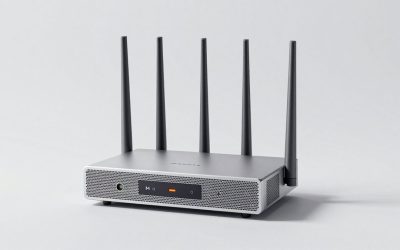
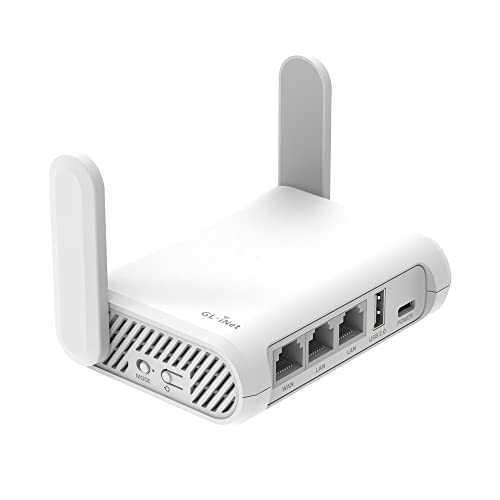
 GL.iNet GL-BE3600 Slate 7 Wi-Fi 7 Travel Router3.5 x 1.3 x 5.1 inches (Mini)3.5 x 1.3 x 5.1 inches0.7 poundsCheck on Amazon

Hotel and cafe Wi-Fi is rarely kind to gamers. Captive portal login pages, per-device limits, weak signals in far-corner rooms and wide-open networks you cannot trust all get in the way of a Steam Deck session, a cloud gaming stream or a few ranked matches on a laptop. A travel router fixes most of that: it joins the venue network once, handles the login page a single time, then rebroadcasts your own private network that every device you own already knows how to join.
The five pocket routers below were chosen for what matters when you game away from home: dual-band Wi-Fi with honest listed speeds, a wired port for the lowest-latency connection in the room, VPN support that wraps handhelds and consoles that cannot run VPN apps of their own, and USB-C power from the same bank or brick you already carry. The picks span Wi-Fi 5, Wi-Fi 6 and Wi-Fi 7 so you can match the router to the way you travel.
Disclosure: As an Amazon Associate, we earn from qualifying purchases made through links in this article, at no extra cost to you.
Quick Picks
| Product | Best for | ASIN |
|---|---|---|
| GL.iNet GL-MT3000 (Beryl AX) | Best overall for most gamers | B0BPSGJN7T |
| GL.iNet GL-BE3600 (Slate 7) | Best Wi-Fi 7 and wired speed | B0F2MR53D6 |
| TP-Link TL-WR3002X (Roam 6 AX3000) | Best for fast hotel Ethernet | B0DY8K122V |
| TP-Link TL-WR1502X (Roam 6 AX1500) | Best compact pick for simple setups | B0D41G5N95 |
| GL.iNet GL-SFT1200 (Opal) | Best for light use and small kits | B09N72FMH5 |
How to Choose a Travel Router for Gaming
Captive portal handling comes first. Hotels, airports and cafes gate their networks behind a browser login page, and game devices are terrible at those pages. A travel router in repeater or WISP mode signs in once from your phone or laptop, then shares that single approved connection with everything else you own. Every router in this guide supports that trick, and it also sidesteps the device-count limits venues sometimes impose.
Wire in when you can. Many hotel rooms still hide a live Ethernet jack behind the desk or TV. Plugging the router into that jack and gaming over its LAN port, or over short-range 5 GHz Wi-Fi fed by a wired uplink, cuts latency and jitter compared with repeating a weak wireless signal. Gigabit is fine for most venue connections, while a 2.5G WAN port keeps the router useful on fast fiber back home.
VPN support protects devices that cannot protect themselves. A Steam Deck can run VPN software, but a Switch and most smart TVs make it awkward. A travel router running a WireGuard or OpenVPN client covers the whole room at once. Check the listed VPN throughput, though: tunnel speed is capped by the router CPU, and the gap between the strongest and weakest picks below is wide.
Power and size decide whether it actually travels. All five picks run from USB-C, so a power bank or the laptop brick in your bag can feed them during a layover or in a room with one free outlet. Weight runs from 145 g to about 300 g, and all are smaller than a paperback book.
Firmware is the final split. GL.iNet routers run OpenWrt-based firmware with deep menus, ad blocking and file sharing, which suits tinkerers. TP-Link’s Roam models use a closed system driven by the Tether app, which suits anyone who wants to tap through setup once and forget the device exists.
The Picks
GL.iNet GL-MT3000 (Beryl AX)
Specs
- Wi-Fi 6 dual-band, listed speed 574 Mbps (2.4 GHz) + 2,402 Mbps (5 GHz)
- 2.5G WAN port, 1 gigabit LAN port, 1 USB 3.0 port
- MediaTek MT7981B dual-core 1.3 GHz CPU, 512 MB DDR4 RAM, 256 MB flash
- Listed VPN speed up to 150 Mbps on OpenVPN and 300 Mbps on WireGuard
- USB-C power at 5V/3A, weight 196 g
- Runs OpenWrt 21.02 firmware with pre-installed OpenVPN and WireGuard
The Beryl AX is the travel router most gamers should buy first. Its 2.5G WAN port is rare at this size, so it handles a fast wired uplink in a rental or a fiber connection at home without becoming the bottleneck, and the gigabit LAN port lets you cable a laptop or docked handheld straight in for the steadiest ping in the room. The listed WireGuard figure of 300 Mbps is plenty for game downloads and cloud streaming behind a tunnel.
It is also genuinely small: at 196 g it vanishes into a carry-on, and USB-C power means the same bank that charges your handheld keeps it alive. The OpenWrt base adds ad blocking, encrypted DNS and repeater modes for venues with login pages, all set up through a clean web panel.
Best for: gamers who want one travel router that handles hotels, rentals and home backup duty equally well.
GL.iNet GL-BE3600 (Slate 7)
Specs
- Wi-Fi 7 dual-band, listed speed 688 Mbps (2.4 GHz) + 2,882 Mbps (5 GHz)
- Dual 2.5G Ethernet ports (1 WAN, 1 LAN), 1 USB 3.0 port
- Front touchscreen for VPN toggles, QR code Wi-Fi sharing and live speed readouts
- Runs OpenWrt 23.05 firmware with OpenVPN and WireGuard support
- 130 x 91 x 34 mm, about 300 g, supports 120+ connected devices per the listing
- USB-C power port, toggle button and reset button on the body
The Slate 7 is the flagship of the group and the pick for anyone whose travel kit includes a gaming laptop that can use Wi-Fi 7. It is the only model here with two 2.5G ports, so you can feed it from a fast wall jack and still cable a second device at full multi-gig speed, and its listed wireless figures are the highest in this guide.
The touchscreen sounds like a gimmick until you use it in a hotel corridor: scan a QR code to join your own network, flip the VPN on or off, and check live throughput without opening a laptop. It is the heaviest pick here at about 300 g, and Wi-Fi 7 only pays off if your devices support it, but as a mini network hub for a whole travel party it has no equal in this size class.
Best for: laptop gamers and heavy kits that want Wi-Fi 7, dual 2.5G ports and on-device controls.
TP-Link TL-WR3002X (Roam 6 AX3000)

Specs
- Wi-Fi 6 dual-band, listed speed 2,402 Mbps (5 GHz) + 574 Mbps (2.4 GHz)
- 2.5 Gbps WAN/LAN port, 1 Gbps LAN port, 1 USB 3.0 port
- microSD slot with listed support for cards up to 512 GB
- MediaTek dual-core 1.3 GHz CPU, USB-C power at 5V/3A
- 4.1 x 3.5 x 1.1 inches, 5.3 oz
- OpenVPN and WireGuard support, managed through the TP-Link Tether app
TP-Link’s Roam 6 AX3000 matches the Beryl AX on headline numbers, a 2.5G port and AX3000-class Wi-Fi, then adds a trick the GL.iNet models lack: a microSD slot and USB 3.0 file sharing that turn it into a tiny media server for the room. Load it with films or game clips before a trip and every device on your network can pull from it without touching the venue connection.
Setup runs through the Tether app rather than a web panel, and the closed firmware will not take custom OpenWrt builds, which is the honest trade here. In exchange you get a polished one-tap flow for hotspot, router, extender and tethering modes, plus a body barely larger than a deck of cards.
Best for: gamers who want 2.5G wired speed and app-led setup, plus media sharing on the road.
TP-Link TL-WR1502X (Roam 6 AX1500)

Specs
- Wi-Fi 6 dual-band, listed speed up to 1.5 Gbps combined
- 1 Gbps WAN port and 1 Gbps LAN port, 1 USB 2.0 port
- USB-C power from a 5V/3A PD/QC power bank or the included AC adapter
- Phone tethering over USB, plus router, hotspot, AP, extender and client modes
- 4.09 x 3.54 x 1.1 inches, 5.44 oz
- OpenVPN and WireGuard support, managed through the TP-Link Tether app
The Roam 6 AX1500 trims the flagship spec sheet down to what most hotel stays actually need. AX1500 Wi-Fi still outruns nearly every venue uplink you will meet, the gigabit LAN port covers the wired-in laptop or docked handheld, and the whole unit weighs about 154 g, so it rides in a handheld case without complaint.
Its party trick is flexibility. Six modes cover the wall jack, the login-page network and the phone-tethering fallback when venue Wi-Fi collapses entirely, and it sips power from any USB-C PD source. You give up the 2.5G port and the faster radio of its bigger sibling, and in most hotel rooms you will never notice either loss.
Best for: handheld gamers who want the smallest, simplest router that still wires in and runs a VPN.
GL.iNet GL-SFT1200 (Opal)
Specs
- Wi-Fi 5 dual-band, listed speed 300 Mbps (2.4 GHz) + 867 Mbps (5 GHz)
- 3 gigabit Ethernet ports (1 WAN, 2 LAN), 1 USB 2.0 port
- SF19A28 dual-core 1 GHz CPU, 128 MB DDR3 RAM, 128 MB flash
- Listed VPN speed up to 65 Mbps on WireGuard and 12 Mbps on OpenVPN
- USB-C power at 5V/3A, weight 145 g, 118 x 85 x 30 mm
- Runs OpenWrt firmware with pre-installed OpenVPN and WireGuard
The Opal is the veteran pick of the GL.iNet line, and its appeal is simple: it does the core travel router job, one login for the whole room, a private network, a VPN option, for less weight than anything else here. At 145 g it is the lightest model in this guide, and unusually for the class it offers two LAN ports, so a laptop and a docked console can both wire in at once.
Be clear about its ceiling, though. Wi-Fi 5 radios and a modest CPU cap its listed WireGuard speed at 65 Mbps and OpenVPN at just 12 Mbps, so big downloads through a tunnel crawl. Used as a portal-beating hub with light VPN duty for play and chat, it remains a smart, tiny travel companion.
Best for: light kits and spare-bag duty where low weight and two LAN ports beat raw speed.
FAQ
Can a travel router get past a hotel login page for a Steam Deck or Switch?
Yes. You join the hotel network from the router’s own setup page on your phone, complete the login page once in that session, and the router then shares the approved connection with every device on your private network. Your handhelds and consoles never see the login page at all, which also helps with venues that limit how many devices each guest may connect.
Will a travel router lower my ping when gaming in a hotel?
It cannot fix a slow venue connection, but it removes two common problems: weak Wi-Fi at the far end of a corridor, which the router can sit closer to or replace with a wired uplink, and congestion from dozens of strangers sharing your access point. Wiring the router to the room’s Ethernet jack and your laptop or dock to the router gives the cleanest result.
Do I need Wi-Fi 7 in a travel router?
Only if your gaming laptop or phone already supports it and you often meet wired uplinks fast enough to feed it. Venue networks rarely exceed Wi-Fi 6 speeds, so most travelers get the same result from the Wi-Fi 6 picks. Wi-Fi 7 earns its keep when the router also serves as a fast home or rental hub between trips.
Can these routers run on a power bank?
Yes, all five picks run from USB-C power, and a 5V/3A PD or QC power bank will feed any of them. That matters in rooms with a single free outlet, in airport seating areas, and in vehicles. Draw is modest, so even a phone-sized bank keeps a router online through a long session.
Conclusion
A travel router is the simplest upgrade you can make to gaming away from home: one login, one private network, one VPN tunnel for every device you packed. The Beryl AX is the balanced default, with a 2.5G port, strong listed VPN speeds and OpenWrt flexibility in a 196 g body. Step up to the Slate 7 for Wi-Fi 7 and dual 2.5G ports, or to the Roam 6 AX3000 for app-led setup and microSD media sharing. The Roam 6 AX1500 trims things down for handheld-first kits, and the Opal remains the featherweight pick for light duty. Match the router to your uplink and your patience for settings pages, and hotel Wi-Fi stops being the boss fight of every trip.
FAQ
Can a travel router get past a hotel login page for a Steam Deck or Switch?
Will a travel router lower my ping when gaming in a hotel?
Do I need Wi-Fi 7 in a travel router?
Can these routers run on a power bank?
More from Amazon
Programs that pair well with the guide above. Offers and eligibility are set by Amazon and may change.
Free shipping on eligible items, Prime Video and more. Eligible new members can start with a free trial.
Start a Prime free trialAd-free music streaming. Eligible new subscribers can start with a free trial.
Try Music Unlimited freeA Prime membership for ages 18-24 with a trial period. Eligibility is set by Amazon.
See Prime for Young AdultsAudiobooks and podcasts to listen to on the go. Eligible new members can start with a free trial.
Try Audible freeAs an Amazon Associate we earn from qualifying purchases.