Our Short List of 3

- continuous optical heart-rate monitoring, ECG app, blood oxygen sensing, irregular rhythm notifications, bright AMOLED display, up to 12 days of battery life, works with iPhone and Android, 45mm case.

- continuous optical heart-rate monitoring, ECG app, high and low heart-rate notifications, irregular rhythm notifications, sleep tracking with sleep apnea notifications, blood oxygen sensing, always-on Retina display, up to 36 hours of battery life, iPhone only, 46mm case.
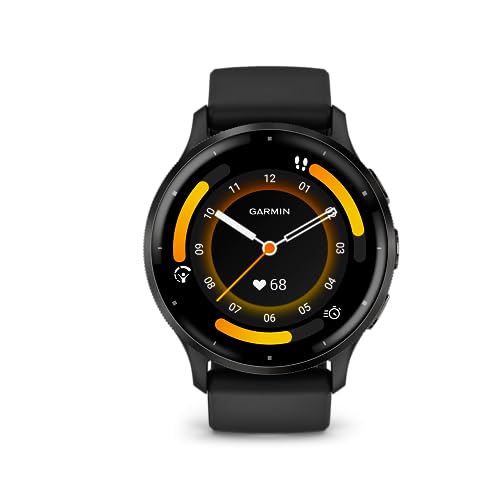
- continuous optical heart-rate monitoring, ECG app, blood oxygen sensing, irregular rhythm notifications, sleep coaching, AMOLED display, multi-day battery life, works with iPhone and Android, 45mm case.
All 5 Picks at a Glance
| Product | Specs | Action |
|---|---|---|
| 1. Garmin Venu 4 45mm — Best Overall Wrist HR Monitor |
| Check price on Amazon |
| 2. Apple Watch Series 10 GPS 46mm — Best Wrist HR Monitor for iPhone |
| Check price on Amazon |
| 3. Garmin Venu 3 45mm — Best Wrist HR Monitor for Battery Life |
| Check price on Amazon |
 4. Fitbit Sense 2 — Best Health-Focused Wrist HR Monitor |
| Check price on Amazon |
 5. Garmin Forerunner 965 — Best Wrist HR Monitor for Runners |
| Check price on Amazon |
Key takeaways
- The best wrist HR monitors for tracking heart rate all day — compare smartwatches and fitness watches for accuracy, battery and comfort.
The best wrist HR monitors track heart rate from the wrist all day, without a chest strap and without thinking about it. A small optical sensor on the back of the watch shines light into the skin and measures the pulse, turning that signal into a continuous heart-rate record: resting heart rate in the morning, peaks during a workout, recovery after exercise, and patterns across weeks. For training, for general health awareness, and for spotting trends worth discussing with a clinician, that continuous record is the value.
Wrist heart-rate monitoring is a tool for awareness, not a medical device. The watches in this guide are fitness and smartwatches, not clinical monitors, and their readings are estimates rather than medical measurements. A note on scope: if there are symptoms such as chest pain, shortness of breath, fainting, or a racing heart that will not settle, seek medical care promptly rather than relying on a watch. Anyone with a known heart condition should consult a clinician before choosing a monitor and before acting on anything it records. The watches here can flag an unusually high or low heart rate and, on some models, record an ECG, but those features are prompts to talk to a clinician, not diagnoses.
Every pick in this guide is a wrist-worn watch with continuous optical heart-rate monitoring, and the picks cover the main platforms: Apple, Samsung, Fitbit, and Garmin. The right choice depends on the phone in the pocket, the battery life needed, and whether the watch is mainly for training, for health awareness, or for everyday use.
How to Choose
1. Sensor quality and accuracy
Optical heart-rate sensors work best when the watch fits snugly and stays still. Accuracy is highest during steady exercise such as running or cycling, and lower during activities with rapid wrist movement such as weight training or racket sports. Multi-LED sensors with more light paths tend to track better than single-LED designs. Whatever the watch, wear it snugly above the wrist bone for workouts and expect the occasional gap during very fast arm movements.
2. Continuous versus spot checks
Some watches measure heart rate continuously through the day and night, while others check at intervals or only on demand. Continuous monitoring builds the useful record: resting heart rate trends, recovery after training, and sleep patterns. Check that the watch records continuously by default, and check how the app presents the data, since a clear trend graph is worth more than a single number on the watch face.
3. Battery life
Battery life decides whether the watch can track sleep as well as daytime activity. A watch that needs charging every night cannot record overnight heart rate, which is when resting heart rate is most meaningful. Garmin and Fitbit watches in this guide run for days between charges, which makes overnight tracking practical. Apple and Samsung watches run for a day or two and need a charging routine that fits around sleep tracking.
4. Phone compatibility
An Apple Watch pairs with an iPhone, a Galaxy Watch works best with an Android phone, and Fitbit and Garmin watches work with both iPhone and Android. Beyond pairing, check how the companion app presents heart-rate data: resting trends over weeks, sleep consistency, and workout heart-rate zones should be easy to find and easy to share. If the data will be shown to a clinician, an app that exports a readable summary is worth more than one that buries numbers behind many taps.
5. Workout and training features
For training, heart-rate zones matter more than the raw number. A watch that shows live heart-rate zones during a workout, alerts when the rate leaves a target zone, and summarises time in each zone afterwards is far more useful than one that only records a graph. Garmin watches lead here, with deep training and recovery analysis, while Apple and Samsung cover the basics well and Fitbit sits between the two.
6. Comfort and wearability
A wrist HR monitor only works when it is worn, so comfort decides everything. A light watch with a soft strap gets worn all day and all night, while a heavy watch with a stiff strap ends up in a drawer. Check the case size against the wrist: a 46mm case suits a larger wrist, while a smaller wrist is more comfortable with a 41mm or 42mm case. The strap should be easy to adjust and easy to clean after sweaty workouts.
7. Extra health features
Many wrist HR monitors add ECG recording, blood oxygen sensing, sleep tracking, and irregular rhythm notifications. These features add context to the heart-rate record, but they are not medical measurements. An ECG app on a watch records a single-lead trace that can be shared with a clinician, while blood oxygen readings are best read as trends rather than precise values. Choose extra features for awareness and conversation with a clinician, not as answers on their own.
Top Picks
1. Garmin Venu 4 45mm — Best Overall Wrist HR Monitor
- continuous optical heart-rate monitoring, ECG app, blood oxygen sensing, irregular rhythm notifications, bright AMOLED display, up to 12 days of battery life, works with iPhone and Android, 45mm case.
The Garmin Venu 4 is the strongest wrist HR monitor in this guide for most buyers, combining continuous heart-rate tracking with the longest battery life and the deepest training analysis. Its optical sensor records heart rate around the clock, and the watch turns that record into resting heart rate trends, recovery guidance, sleep coaching, and workout heart-rate zones that are easy to read during exercise.
Battery life is the standout feature: up to 12 days between charges, which makes overnight sleep and resting heart-rate tracking practical every night without a charging routine. The Venu 4 also includes an ECG app, blood oxygen sensing, and irregular rhythm notifications, which add context to the heart-rate record. It works with both iPhone and Android, and its bright AMOLED display stays readable outdoors. This listing is for the 45mm Slate model with a black silicone band, and a two-band variant exists under a different identifier, so confirm the exact model on the listing.
Who it is for: anyone who wants the longest battery life and the deepest training and recovery analysis, and anyone who follows sleep consistency closely.
Caveats: the Venu 4 is a newer model, so confirm the exact model and band configuration on the listing before buying. Its health features support awareness and conversation with a clinician, not diagnosis.
2. Apple Watch Series 10 GPS 46mm — Best Wrist HR Monitor for iPhone
- continuous optical heart-rate monitoring, ECG app, high and low heart-rate notifications, irregular rhythm notifications, sleep tracking with sleep apnea notifications, blood oxygen sensing, always-on Retina display, up to 36 hours of battery life, iPhone only, 46mm case.
Apple Watch Series 10 on Amazon
The Apple Watch Series 10 is the strongest wrist HR monitor for iPhone owners, with the most polished combination of sensors and software in this guide. Its optical heart-rate sensor records continuously, and the watch adds high and low heart-rate notifications, irregular rhythm notifications, an ECG app, sleep tracking with sleep apnea notifications, and temperature sensing for sleep tracking.
The model linked here is the GPS 46mm version in Jet Black aluminium with a black sport band, with an always-on Retina display and a thinner, lighter case than earlier models. The health app on the iPhone presents heart-rate trends clearly, and the watch pairs with the iPhone in a way no other watch can match. Battery life is up to 36 hours, so a charging routine is needed, usually during a shower or a desk session rather than overnight.
Who it is for: iPhone owners who want the most complete health features and the clearest app for sharing data with a clinician.
Caveats: battery life is the shortest in this guide, so overnight sleep tracking needs a deliberate charging routine. The watch pairs only with an iPhone. Confirm the GPS 46mm Jet Black model on the listing, since many Series 10 variants exist.
3. Garmin Venu 3 45mm — Best Wrist HR Monitor for Battery Life
- continuous optical heart-rate monitoring, ECG app, blood oxygen sensing, irregular rhythm notifications, sleep coaching, AMOLED display, multi-day battery life, works with iPhone and Android, 45mm case.
The Garmin Venu 3 is the previous generation of the Venu line, and the pick for buyers who want long battery life and strong health tracking at a lower outlay than the Venu 4. Its optical heart-rate sensor records continuously, and the watch adds sleep coaching, recovery guidance, and workout heart-rate zones, with a battery life that stretches for many days between charges.
The Venu 3 includes an ECG app, blood oxygen sensing, and irregular rhythm notifications, and its AMOLED display stays readable in bright light. It works with both iPhone and Android, and its app presents resting heart-rate trends and sleep data clearly. For a buyer who wants Garmin health tracking without the newest model, the Venu 3 is the sensible choice.
Who it is for: anyone who wants long battery life and Garmin health tracking without paying for the newest model, and anyone who values overnight sleep tracking.
Caveats: as the previous generation, it lacks the newest sensor refinements of the Venu 4, though its tracking remains strong for daily use. Confirm the Slate Black 45mm model on the listing, since several Venu 3 variants exist.
4. Fitbit Sense 2 — Best Health-Focused Wrist HR Monitor
- continuous optical heart-rate monitoring, ECG app, blood oxygen sensing, sleep tracking with sleep score, stress management with electrodermal activity sensor, built-in GPS, six or more days of battery life, works with iPhone and Android.
The Fitbit Sense 2 is the most focused health watch in this guide, built around stress, sleep, and heart health rather than apps and general smartwatch features. Its optical heart-rate sensor records continuously, and the watch adds an ECG app, blood oxygen sensing, sleep tracking with a sleep score, and stress management tools with an electrodermal activity sensor.
Its main advantage is battery life: the Sense 2 runs for six days or more between charges, which makes overnight sleep and blood oxygen tracking practical every night without a charging routine. The Fitbit app presents daily readiness, sleep, and stress trends in a straightforward way, and the watch works with both iPhone and Android. For someone whose main goal is a long-running health record rather than a general-purpose smartwatch, that combination is hard to beat.
Who it is for: anyone whose main goal is a long-running health record, and anyone who values stress and sleep tracking alongside heart rate.
Caveats: it is less capable as a general smartwatch than the Apple or Samsung watches, with fewer third-party apps and no cellular option in this model. Some deeper insights require a Fitbit Premium membership, and ECG availability varies by region. Confirm the Shadow Grey and Graphite model on the listing.
5. Garmin Forerunner 965 — Best Wrist HR Monitor for Runners
- continuous optical heart-rate monitoring, live heart-rate zones, training load and recovery guidance, race predictions, built-in GPS, AMOLED display, multi-day battery life in smartwatch mode, works with iPhone and Android.
Garmin Forerunner 965 on Amazon
The Garmin Forerunner 965 is the training pick in this guide, a running watch with the deepest workout heart-rate analysis of any pick here. Its optical sensor records continuously, and the watch turns that record into live heart-rate zones during a run, training load and recovery guidance afterwards, and race predictions that adjust as fitness changes.
The Forerunner 965 is built for athletes who train by heart rate: the display shows live zones clearly, the watch alerts when the rate leaves a target zone, and the post-workout summary breaks down time in each zone. Battery life stretches for many days in smartwatch mode and for dozens of hours in GPS mode, so a long run or a multi-day event is no problem. It works with both iPhone and Android.
Who it is for: runners and triathletes who train by heart rate, and anyone who wants the deepest workout analysis in this guide.
Caveats: it is a training watch first and a general smartwatch second, with fewer lifestyle features than the Venu line. Confirm the Black and Powder Gray model on the listing, since several Forerunner 965 variants exist.
Comparison Table
| Watch | Battery Life | ECG App | Phone | Best For |
|---|---|---|---|---|
| Garmin Venu 4 45mm | Up to 12 days | Yes | iPhone and Android | All-round tracking and training |
| Apple Watch Series 10 46mm | Up to 36 hours | Yes | iPhone only | iPhone owners, polished app |
| Garmin Venu 3 45mm | Multi-day | Yes | iPhone and Android | Long battery, previous generation |
| Fitbit Sense 2 | 6+ days | Yes | iPhone and Android | Health record, stress and sleep |
| Garmin Forerunner 965 | Multi-day | No | iPhone and Android | Runners, training by heart rate |
Which One Is Right for You?
Start with the phone. An iPhone owner should look first at the Apple Watch Series 10, which pairs more deeply with the iPhone than any other watch, or at a Garmin or Fitbit if battery life matters more than that pairing. An Android owner should look at the Garmin and Fitbit picks, which work fully with Android.
Then decide what the watch is for. Training by heart rate points to the Garmin Forerunner 965, with its live zones and recovery guidance. A long, unbroken health record points to the Garmin Venu 4 or the Fitbit Sense 2, both of which run for days between charges and track sleep every night. A polished everyday smartwatch with strong health features points to the Apple Watch Series 10, as long as the shorter battery life and its charging routine are acceptable.
For most buyers, the Garmin Venu 4 is the default answer: long battery, deep training analysis, an ECG app, and compatibility with both phone platforms. The Apple Watch is the pick for iPhone owners who want the best app, the Fitbit for the most focused health record, the Venu 3 for the same Garmin experience at a lower outlay, and the Forerunner 965 for serious runners.
Frequently Asked Questions
How accurate is wrist heart-rate monitoring?
Wrist optical sensors are accurate enough for training and for tracking trends, especially during steady exercise such as running or cycling. Accuracy drops during activities with rapid wrist movement, such as weight training, and the sensor needs a snug fit above the wrist bone. For medical decisions, a wrist reading is a prompt to talk to a clinician, not a measurement to act on alone.
Can a wrist HR monitor detect heart problems?
A wrist monitor can flag an unusually high or low heart rate and, on some models, an irregular rhythm, but it cannot diagnose a condition. If a watch flags an irregular rhythm or a very high resting rate, share the data with a clinician and follow their guidance. Anyone with symptoms such as chest pain or fainting should seek medical care promptly.
Do I need a chest strap as well?
For most people, no. A wrist monitor covers daily tracking, sleep, and most workouts well. A chest strap is more accurate during high-intensity intervals and activities with rapid arm movement, so competitive athletes sometimes pair a strap with a watch for key sessions. For everyday use, the wrist sensor is enough.
How important is battery life for a wrist HR monitor?
Very important, because the most useful heart-rate data comes overnight, when resting heart rate is measured. A watch that needs charging every night cannot record overnight data. Garmin and Fitbit watches in this guide run for days between charges, which makes overnight tracking practical, while the Apple Watch needs a charging routine that fits around sleep.
Disclosure: As an Amazon Associate, we may earn from qualifying purchases.
FAQ
Which One Is Right for You?
How accurate is wrist heart-rate monitoring?
Can a wrist HR monitor detect heart problems?
Do I need a chest strap as well?
How important is battery life for a wrist HR monitor?
More from Amazon
Programs that pair well with the guide above. Offers and eligibility are set by Amazon and may change.
Free shipping on eligible items, Prime Video and more. Eligible new members can start with a free trial.
Start a Prime free trialAd-free music streaming. Eligible new subscribers can start with a free trial.
Try Music Unlimited freeA Prime membership for ages 18-24 with a trial period. Eligibility is set by Amazon.
See Prime for Young AdultsAudiobooks and podcasts to listen to on the go. Eligible new members can start with a free trial.
Try Audible freeAs an Amazon Associate we earn from qualifying purchases.