Key takeaways
- Compare the best floor monitor for live stages, with wedge angle, power, inputs and feedback control explained clearly before you choose one.
A floor monitor is a wedge-shaped stage speaker that sits on the floor in front of a performer and points sound up at their ears, so a singer or player can hear the mix while the mains face the audience. This article is about that kind of speaker, not a computer display, and the decision is whether one powered wedge gives you a vocal mix at your position without feeding back into a microphone. Too quiet, and you push the mixer until it squeals; wrong angle, and it aims at your knees.
This guide is for gigging musicians, worship teams, small venue operators, and rehearsal rooms that need one monitor before adding a second or a third. It explains wedge angle, power, driver size, and input options, then presents one floor monitor whose listing details match small stages. Specifications below come from the product listing, and the pick was chosen because its cabinet tilts on its side for floor use and its controls suit a performer without a sound engineer.
Quick Picks
As an Amazon Associate we earn from qualifying purchases
| Product | Best for | Key spec from title |
|---|---|---|
| Behringer Eurolive B210D | Small stages and rehearsal rooms that need one powered wedge | Active 2-way PA speaker system with 10-inch woofer and 1.35-inch compression driver |
How to Choose
Wedge angle and placement
A floor monitor only works when its angled face points at the performer, so check that the cabinet is shaped to lie on its side and aim upward. A wedge placed too far forward throws sound past the player, while one placed too close forces the player to stand in a narrow sweet spot. Measure the distance from the monitor to where the singer or player stands, then angle the cabinet so the grille faces the head rather than the chest. On a tight stage, a compact wedge leaves room for pedalboards and mic stands, and its position matters more than raw volume because a well-aimed monitor sounds clear at a lower level and stays further from feedback.
Powered or passive
A powered floor monitor has its amplifier built in, so you run a signal cable from the mixer and a mains cable to the speaker, and you are ready. A passive monitor needs a separate amplifier and a speaker cable, which adds a box to carry and another setting to get wrong. For a band that loads in and out of small venues, a powered wedge keeps the setup simple and lets each monitor carry its own volume control. Passive wedges still make sense when a venue already owns a rack of amplifiers and wants identical boxes across the stage, but a first monitor for a working band should be powered unless the amplifier is already in place.
Woofer size and vocal clarity
A 10-inch woofer suits vocals, acoustic guitar, and keyboards in a small room because it stays compact and keeps the midrange clear where voices live. A 12-inch woofer moves more air for bass guitar and drums, but it also adds size and weight that matter when one person carries the rig. The compression driver matters just as much, because it carries the consonants and detail that let a singer hear pitch and timing. If the monitor will mainly carry a vocal mix, favour a box whose driver and horn are designed for speech-range clarity rather than the deepest bass, and leave low-end reinforcement to a subwoofer or the main speakers.
Inputs, EQ, and feedback control
Look at the rear panel before you buy, because that is where a gig is won or lost. A monitor with both XLR and quarter-inch inputs accepts a feed from almost any mixer or monitor send, and an XLR output lets you chain a second wedge from the first without returning to the mixer. Simple high and low EQ controls help you cut the boomy low end that builds up on a wooden stage or tame the harsh top end that bites in a reflective hall. A built-in feedback filter is a real advantage on a loud stage, since it lets you raise the monitor level a little further before the microphone starts to ring.
The 1 Best Option
Behringer Eurolive B210D
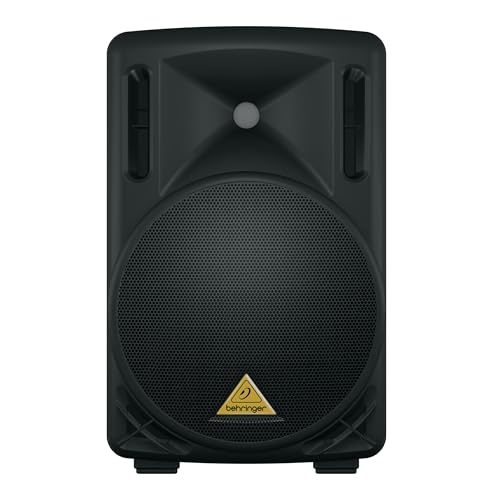
The Behringer Eurolive B210D is the one powered wedge to start with when a small stage needs a clear vocal monitor without a separate amplifier. Its cabinet tilts on its side for floor monitor use, so it sits low in front of a singer and aims the sound upward, and its compact size fits tight stages. The built-in amplifier means the setup is a signal cable and a mains cable, and the rear-panel level and EQ controls let the performer adjust the monitor without walking back to the mixer. It suits bands, worship teams, and rehearsal rooms that want a dependable first wedge.
Specs
- Active 2-way PA speaker system
- 10-inch woofer
- 1.35-inch compression driver
- 220-watt output stated in the Amazon listing title
- Cabinet tilts on its side for use as a floor monitor
- XLR and quarter-inch inputs
- XLR output for chaining a second speaker
- High and low EQ controls on the rear panel
Best for: Small stages, rehearsal rooms, and worship teams that need one powered wedge for a clear vocal mix.
Watch out for: The listing title states 220 watts while several other retailers list this model at 200 watts, so confirm the power figure on the live listing before you buy, and check that a single 10-inch wedge is loud enough for your stage before ordering a second one.
Which One Fits Your Situation
You sing in a small band
Choose the Behringer Eurolive B210D and place it on the floor in front of your microphone, angled up toward your ears. Its 10-inch woofer and compression driver keep vocals intelligible over a guitar amplifier and a modest drum kit, and the rear-panel level control lets you raise your own mix between songs. Feed it from a monitor send, keep the microphone behind the wedge, and you will hear pitch and timing without pushing the main speakers louder.
You run sound for a worship team
Choose the Behringer Eurolive B210D because a powered wedge keeps the setup simple for volunteers who rotate through the sound desk each week. One signal cable and one mains cable per monitor is easy to teach, and the XLR output lets you chain a second wedge for another vocalist without adding a mixer output. The compact cabinet fits a crowded platform beside keyboards and music stands, and the high and low EQ controls help tame a reflective hall.
You rehearse in a small room
Choose the Behringer Eurolive B210D because a rehearsal room needs clarity at moderate volume rather than maximum output. A single wedge in front of the singer keeps the vocal on top of the instruments without the whole band turning up, and the tilt-on-its-side design aims the sound where it is needed instead of bouncing it off the walls. In a very small room, start low and raise the level only until the vocal sits above the drums.
You need a monitor that doubles as a small main speaker
Choose the Behringer Eurolive B210D because the same cabinet works upright as a compact main speaker for a small gathering, a speech, or an acoustic set. Stand it on the floor or mount it on a pole, feed it from a mixer or a microphone, and it covers a small audience without a separate PA. This dual use matters when storage space and budget only allow one box.
Common Mistakes
- Placing the wedge in front of the microphone instead of behind it, which sends monitor sound straight into the mic and causes feedback. Always test the vocal level from behind the wedge, and move the mic stand back a step if the ringing starts.
- Aiming the monitor at the chest or knees instead of the ears, then turning it up to compensate and losing clarity while inviting feedback. Walk the stage during sound check and listen from the performer’s spot before the show starts.
- Buying a passive monitor without an amplifier, then discovering on gig day that there is nothing to drive it. Check the rear panel for a built-in amplifier before ordering, and ask the seller whether the listing is for a powered or a passive model.
- Sending a full band mix with heavy bass into a small wedge, which muddies the vocal and wastes the power that should carry the voice, leaving the singer straining to hear pitch over low-end rumble. Keep the monitor mix vocal-forward and let the main speakers carry the low end instead.
- Skipping a sound check at gig volume, so the monitor that sounded fine in rehearsal feeds back once the room fills and the band plays louder. Always test the monitor at performance level before the doors open, and re-check the levels once the audience is in, since a full room changes how the stage sounds.
Frequently Asked Questions
What is a floor monitor?
A floor monitor is a wedge-shaped speaker that sits on the stage floor and points sound up at a performer, so the performer hears the mix while the audience hears the main speakers. It is also called a stage monitor or wedge monitor, and it is a speaker for live sound, not a computer display. Powered versions have a built-in amplifier, while passive versions need a separate amplifier.
How many floor monitors does a small band need?
A small band usually starts with one monitor for the lead vocalist, since the singer needs to hear pitch and timing most. Add a second monitor when another vocalist or an acoustic player cannot hear clearly from the first wedge, and give the drummer a monitor only when the stage is large enough that the drum sound no longer carries. One good wedge beats two poorly placed ones.
Where should a floor monitor sit on stage?
Place the wedge on the floor in front of the performer, with the microphone behind the monitor rather than in front of it, and angle the grille toward the performer head. Keep the distance short enough that the sound arrives clearly, and leave space for pedalboards and stands. If the performer moves around, place the wedge at the centre of the area where they stand most.
Can a floor monitor also work as a main speaker?
Many powered wedges can work upright as a compact main speaker for a small audience, a speech, or an acoustic performance. Check the listing for a pole socket and an upright operating position before you rely on it, and remember that a single small box will not cover a large room. For bigger audiences, use the wedge as a monitor and let dedicated main speakers face the crowd.
FAQ
What is a floor monitor?
How many floor monitors does a small band need?
Where should a floor monitor sit on stage?
Can a floor monitor also work as a main speaker?
More from Amazon
Programs that pair well with the guide above. Offers and eligibility are set by Amazon and may change.
Free shipping on eligible items, Prime Video and more. Eligible new members can start with a free trial.
Start a Prime free trialAd-free music streaming. Eligible new subscribers can start with a free trial.
Try Music Unlimited freeA Prime membership for ages 18-24 with a trial period. Eligibility is set by Amazon.
See Prime for Young AdultsAudiobooks and podcasts to listen to on the go. Eligible new members can start with a free trial.
Try Audible freeAs an Amazon Associate we earn from qualifying purchases.