Our Short List of 3
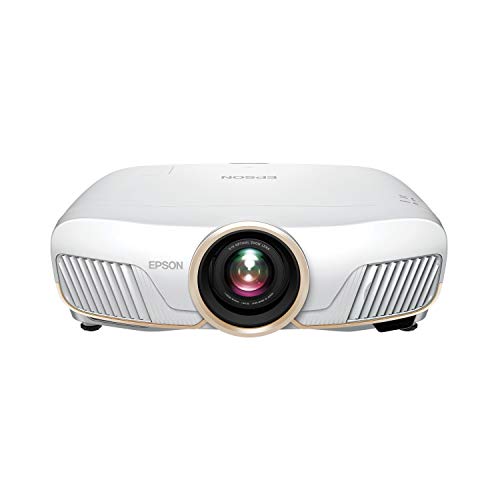
- Projection system: 3-chip 3LCD
- Brightness: 2,600 lumens colour and white brightness
- Resolution: 4K PRO-UHD (1920 x 1080 x 2 pixel shifting); Full HD in 3D mode
- Contrast ratio: up to 1,000,000:1
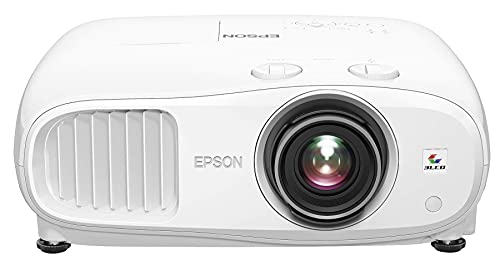
- Projection system: 3-chip 3LCD
- Brightness: 3,000 lumens colour and white brightness
- Resolution: 4K PRO-UHD (1920 x 1080 x 2 pixel shifting); Full HD in 3D mode
- Contrast ratio: up to 100,000:1

- Projection system: 3-chip 3LCD
- Brightness: 2,400 lumens colour and white brightness
- Resolution: 4K PRO-UHD (1920 x 1080 x 2 pixel shifting); Full HD in 3D mode
- Contrast ratio: up to 200,000:1
All 5 Picks at a Glance
| Product | Specs | Action |
|---|---|---|
| Epson Home Cinema 5050UB |
| Check price on Amazon |
| Epson Home Cinema 3800 |
| Check price on Amazon |
| Epson Home Cinema 4010 |
| Check price on Amazon |
 Epson Home Cinema 3200 |
| Check price on Amazon |
 Epson Home Cinema 2150 |
| Check price on Amazon |
Key takeaways
- Compare the best Epson 3D projectors for home theater, from 4K PRO-UHD models with powered lens shift to a 1080p pick with wireless streaming built in.
Most projector makers quietly dropped 3D years ago, which leaves anyone with a shelf of 3D Blu-ray discs with very few modern machines to choose from. Epson is the exception. The company kept active 3D support in its Home Cinema line long after rivals moved on, and its 3LCD models pair that support with high colour brightness, so 3D scenes stay punchy even after the glasses take their share of the light.
This guide collects five Epson projectors whose own specification sheets publish 3D capability. Four of them are 4K PRO-UHD models that use pixel shifting to put a sharpened Ultra HD image on screen while still playing Full HD 3D, and the fifth is a native 1080p machine with wireless streaming built in. All five use active shutter glasses of the radio-frequency type Epson sells as the ELPGS03, so one pair of glasses works across the whole group.
Below, each projector is presented with the figures Epson publishes for it, including brightness, contrast, lens range and the exact form its 3D support takes. After the five picks, a buying guide explains what separates the models, what a 3D setup needs beyond the projector itself, and how to match a machine to your room.
Epson Home Cinema 5050UB
- Projection system: 3-chip 3LCD
- Brightness: 2,600 lumens colour and white brightness
- Resolution: 4K PRO-UHD (1920 x 1080 x 2 pixel shifting); Full HD in 3D mode
- Contrast ratio: up to 1,000,000:1
The Home Cinema 5050UB is the flagship of Epson’s lamp-based home theatre line and the most complete 3D machine in this guide. Epson publishes 2,600 lumens of both colour and white brightness, and because a 3LCD design delivers the full colour signal at that output, 3D playback keeps the saturated look that single-chip designs lose when the glasses go on. The published contrast figure reaches 1,000,000:1 with the auto iris working, which gives dark 3D scenes genuine depth instead of grey fog.
Its 4K PRO-UHD processing shifts each pixel to build an Ultra HD picture from the 1080p imaging chips, with HDR10 and HLG support and full 10-bit colour processing. In 3D mode the resolution is Full HD, as Epson states in its own notes. The powered lens is the other headline: 2.1x zoom, powered focus and powered lens shift covering plus or minus 96 percent vertically and plus or minus 47 percent horizontally, with lens memory positions for switching between screen shapes. For a dedicated room where the projector goes up once and stays, this is the Epson to build around.
Epson Home Cinema 3800
- Projection system: 3-chip 3LCD
- Brightness: 3,000 lumens colour and white brightness
- Resolution: 4K PRO-UHD (1920 x 1080 x 2 pixel shifting); Full HD in 3D mode
- Contrast ratio: up to 100,000:1
The Home Cinema 3800 is the brightest model in this group, and brightness is the single most useful figure a 3D projector can carry. Epson publishes 3,000 lumens of colour and white brightness, a full step above its stablemates, which pays off directly in 3D mode where active shutter glasses cut the light reaching your eyes. Rooms that cannot be fully darkened, and larger screens that spread the same light over more area, both benefit from that headroom.
Under the brightness sits the same 4K PRO-UHD package as the 3200 below: pixel-shifted Ultra HD for flat content, Full HD in 3D mode, HDR10 and HLG handling, and 12-bit digital video processing for smooth tonal steps. The lens offers 1.62x manual zoom with manual lens shift of plus or minus 60 percent vertically and plus or minus 24 percent horizontally, generous figures for a machine in this part of the line. Bluetooth audio with aptX support lets the projector send sound to a wireless speaker or soundbar, which simplifies placement when the screen wall has no room for a receiver. Buyers who want one projector to handle bright-room sport in 2D and disc-based 3D at night will find the 3800 the most flexible pick here.
Epson Home Cinema 4010
- Projection system: 3-chip 3LCD
- Brightness: 2,400 lumens colour and white brightness
- Resolution: 4K PRO-UHD (1920 x 1080 x 2 pixel shifting); Full HD in 3D mode
- Contrast ratio: up to 200,000:1
The Home Cinema 4010 shares its powered lens platform with the 5050UB and aims it at colour accuracy. Epson publishes 2,400 lumens of colour and white brightness and a contrast figure of 200,000:1, and the spec sheet adds the detail film watchers look for: the projector reproduces the full DCI-P3 colour space inside its Digital Cinema mode, the same gamut used for theatrical releases. For 3D animation and nature discs, where colour volume carries the effect, that published gamut matters more than raw lumens.
Like its bigger sibling, the 4010 uses 4K PRO-UHD pixel shifting for Ultra HD sources and drops to Full HD for 3D playback, with HDR10 and HLG support over its 18 Gbps HDMI input. The motorised lens gives 2.1x zoom with powered focus and powered shift across plus or minus 96 percent vertically and plus or minus 47 percent horizontally, and lens position memory stores settings for different screen formats. The trade against the 5050UB is brightness and contrast on paper; the trade in its favour is that everything else about the installation experience is the same. In a light-controlled room with a screen of moderate size, the 4010 delivers the flagship lens and the wide-gamut colour for a permanent setup.
Epson Home Cinema 3200
- Projection system: 3-chip 3LCD
- Brightness: 2,900 lumens colour and white brightness
- Resolution: 4K PRO-UHD (1920 x 1080 x 2 pixel shifting); Full HD in 3D mode
- Contrast ratio: up to 40,000:1
The Home Cinema 3200 is the step-down twin of the 3800, built on the same chassis with a slightly softer set of published figures. Brightness is 2,900 lumens of colour and white output, the contrast figure is 40,000:1, and the lens is the same 1.62x manual zoom with vertical shift of plus or minus 60 percent and horizontal shift of plus or minus 24 percent. That still makes it one of the most placement-friendly 3D projectors in the Epson line, because lens shift at this level lets the machine sit off to the side of a room without tilting the image.
The 4K PRO-UHD processing matches the 3800, including 10-bit HDR colour processing, HDR10 and HLG support, and Full HD resolution when 3D mode engages. Epson’s launch material for the pair highlights the same active 3D support with high-performance RF glasses, and Bluetooth aptX audio is on board for sending sound to a speaker without a cable run. The honest difference between the two is headroom: the 3800’s extra brightness and deeper published contrast serve bigger screens and brighter rooms, while the 3200 covers the typical living-room screen with the same features everywhere else. For a screen around 100 to 120 inches in a room you can darken, the 3200 gives up very little.
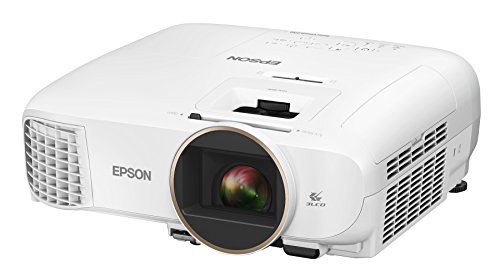
Epson Home Cinema 2150
- Projection system: 3-chip 3LCD
- Brightness: 2,500 lumens colour and white brightness
- Resolution: native Full HD 1080p (1920 x 1080)
- Contrast ratio: up to 60,000:1
The Home Cinema 2150 is the native 1080p member of this group, and for pure 3D playback that is no handicap at all: every other model here also resolves Full HD in 3D mode, so the 2150 shows 3D discs at exactly the same resolution as the 4K PRO-UHD machines. Epson publishes 2,500 lumens of colour and white brightness, a 60,000:1 dynamic contrast figure, and 3D capability using the same ELPGS03 active RF glasses as the rest of the line.
What the 2150 adds is convenience the others skip. Miracast wireless support mirrors content from compatible phones, tablets and computers without a cable, and one of its two HDMI inputs carries MHL for wired mobile sources. A 1.6x manual zoom and vertical lens shift make setup forgiving, frame interpolation smooths motion for sport, and a built-in 10-watt speaker covers sound for casual viewing. As a second-room machine, a portable big-screen option, or the projector that introduces a household to 3D on disc, the 2150 covers the format faithfully while asking the least of the room it lands in.
Buying Guide: How to Choose an Epson 3D Projector
Start with brightness, because 3D spends it. Active shutter glasses alternate between eyes many times per second, and each lens is dark part of the time, so the picture you perceive in 3D is noticeably dimmer than the same scene in 2D. That is why the brightness figures above matter more here than in a flat-only roundup. A 3,000-lumen machine like the 3800 keeps 3D watchable on a large screen or in a room with some ambient light, while 2,400 to 2,600 lumens is comfortable on a moderate screen in a darkened room. Epson publishes colour brightness alongside white brightness, and equal figures mean bright scenes keep their colour instead of washing toward white.
Understand what 4K PRO-UHD means for 3D. The four Ultra HD models in this guide build their 4K picture by shifting a 1080p image, and Epson states plainly that resolution in 3D mode is Full HD. There is no disadvantage against the native 1080p 2150 when the disc is a 3D Blu-ray, because the format itself is Full HD per eye. Where the PRO-UHD models pull ahead is everything else: streamed and disc-based 4K HDR content, sharper 2D playback, and more advanced video processing. Buy the 4K models for the whole library, not for 3D alone.
Plan the glasses and the source. All five projectors use active 3D with radio-frequency glasses, and Epson’s ELPGS03 pair is the published match across the line. Glasses are sold separately from these projectors, so a household needs one pair per seat. The source matters just as much: a 3D Blu-ray player or a game console that outputs frame-packed 3D feeds these machines their native signal, and the projector’s 3D menu handles formats such as side-by-side and top-and-bottom for broadcast or file-based content. A standard streaming stick will not turn flat content into the real format, so disc collectors get the most from this category.
Match the lens to the room. Throw ratio and lens shift decide where the projector can live. The 5050UB and 4010 use powered lenses with 2.1x zoom and very wide shift ranges, plus position memory, which suits ceiling mounts and screens with masks for different aspect shapes. The 3800 and 3200 share a 1.32 to 2.15:1 throw with manual shift that still allows off-centre placement, and the 2150’s 1.6x zoom and vertical shift cover shelf and coffee-table setups. Measure your throw distance before ordering, and prefer lens shift over keystone correction, since keystone throws away resolution the 3D picture cannot spare.
Check the lamp plan. Every model here is lamp-based, and lamps dim gradually across their service life, which shows up in 3D first because the format starts with less light in hand. A fresh lamp restores the published brightness, so factor a spare lamp into long-term ownership of any of these machines and keep the air filter clean to protect brightness between changes.
Frequently Asked Questions
Do these Epson projectors include 3D glasses in the box?
No. Epson sells the ELPGS03 active RF 3D glasses separately, and each viewer needs a pair. The same glasses model is the published match for all five projectors in this guide, so one set of spares covers whichever machine you choose.
What resolution do the 4K PRO-UHD models show in 3D mode?
Full HD 1080p. Epson states in its own product notes that 4K Enhancement shifts pixels for Ultra HD in 2D playback, while resolution in 3D mode is Full HD. That matches the 3D Blu-ray format itself, which is Full HD per eye.
Can these projectors convert regular 2D content into 3D?
The Home Cinema line’s published 3D support centres on genuine 3D signals: frame packing from 3D Blu-ray, plus side-by-side and top-and-bottom formats. Plan on feeding them real 3D sources, such as a 3D Blu-ray player, rather than relying on simulated depth from flat content.
How large a screen can these projectors fill for 3D?
Epson publishes image sizes up to 300 inches for the 4K PRO-UHD models, but 3D comfort narrows the sensible range. Because the glasses reduce perceived brightness, screens between roughly 100 and 150 inches keep 3D bright and immersive with the lumen figures these models publish, with the 3,000-lumen 3800 handling the upper end most easily.
Conclusion
Epson kept faith with 3D while the rest of the industry walked away, and these five projectors show the benefit of that decision. The Home Cinema 5050UB is the dedicated-room flagship, with the deepest published contrast and a powered lens that remembers its positions. The 3800 answers with the highest brightness in the group, the figure 3D playback values most, while the 4010 trades a little output for the same powered lens platform and full DCI-P3 colour. The 3200 keeps nearly everything the 3800 offers for typical living-room screens, and the 2150 proves that native 1080p loses nothing in 3D mode while adding wireless mirroring the others leave out. Whichever one fits your room, the format support is genuine, the glasses are shared across the line, and a 3D Blu-ray collection stays playable on modern hardware.
Disclosure: As an Amazon Associate, we earn from qualifying purchases made through links on this page, at no extra cost to you.
More from Amazon
Programs that pair well with the guide above. Offers and eligibility are set by Amazon and may change.
Free shipping on eligible items, Prime Video and more. Eligible new members can start with a free trial.
Start a Prime free trialAd-free music streaming. Eligible new subscribers can start with a free trial.
Try Music Unlimited freeA Prime membership for ages 18-24 with a trial period. Eligibility is set by Amazon.
See Prime for Young AdultsAudiobooks and podcasts to listen to on the go. Eligible new members can start with a free trial.
Try Audible freeAs an Amazon Associate we earn from qualifying purchases.