Our Short List of 3
All 4 Picks at a Glance
| Product | Specs | Action |
|---|---|---|
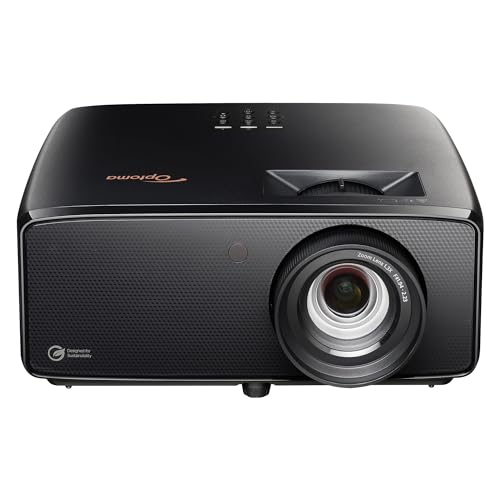 1. Optoma UHZ36 — Best Laser Home Theater Projector | Check price on Amazon | |
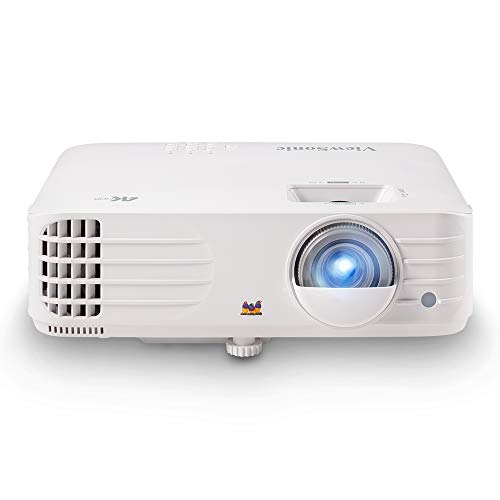 2. ViewSonic PX701-4K — Best Projector for Gaming | Check price on Amazon | |
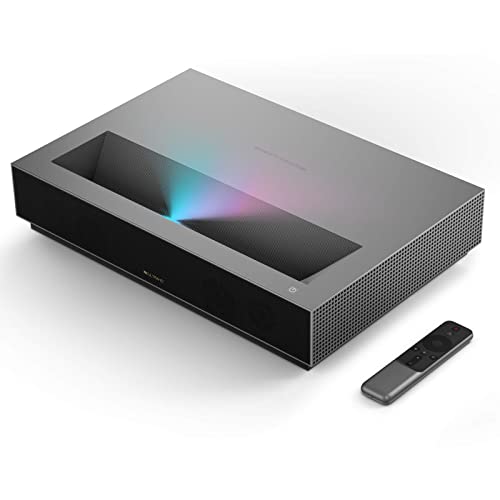 3. WEMAX Nova — Best Ultra Short Throw Laser TV | Check price on Amazon | |
 4. WiMiUS K13 — Best Smart Projector for Movie Nights | Check price on Amazon |
Key takeaways
- Best projectors available ever: four standout picks for movies, gaming, and home theater, plus a clear buying guide to help you choose the right one today.
Searching for the best projectors available ever is really a search for a shortlist that has stood the test of time: projectors that are bright enough for real rooms, sharp enough for films and games, easy enough to set up without a specialist, and well supported by their makers. The four picks in this guide cover the main ways people actually use a projector today. There is a laser home theater model for a dedicated movie room, a fast gaming projector for big-screen play, an ultra short throw laser TV for a living room, and a smart streaming projector for casual movie nights and outdoor viewing.
No single projector wins every category. A laser model with a long light-source life suits a room where the projector runs for hours every evening. A gaming projector with low input lag suits fast play but may have no built-in streaming apps. An ultra short throw model sits inches from the wall and looks like a television, but it needs a flat wall or a suitable screen and a sturdy low cabinet. A smart projector is the easiest to move and the quickest to start, but it is usually less bright than a fixed home theater model.
How to Choose a Projector
A good projector choice starts with the room, not the specification sheet. Measure the distance from the projector to the wall or screen, check how much light enters the room in the evening and during the day, and decide how large the picture should be. Those three facts narrow the field faster than any list of features.
Resolution: True 4K or 4K Support
Resolution is the first specification most shoppers check, and it is also one of the easiest to misunderstand. A true 4K projector produces a native image of 3840 by 2160 pixels. A projector described as supporting 4K may have a native resolution of 1920 by 1080 and downscale the incoming 4K signal. The picture can still look good, especially on a smaller screen in a dark room, but it is not the same as native 4K. For a large screen in a home theater, native 4K is worth prioritising. For a bedroom or a garden movie night, a native 1080p projector with 4K support is often enough.
Brightness and Room Light
Brightness is usually stated in lumens, and the honest figure to compare is ANSI lumens or ISO lumens, which are measured in a standardised way. Marketing figures that quote much larger numbers without naming a standard are not comparable. As a rough guide, a dark room needs far less brightness than a living room with lamps and windows. A projector rated around 1,200 to 2,000 ANSI lumens works well in a darkened room. A model rated at 3,000 ANSI lumens or more copes better with ambient light. No projector beats direct sunlight, so curtains or blinds still matter.
Light Source: Lamp, LED, or Laser
The light source decides how long the projector lasts before its brightness fades. Traditional lamps are bright and affordable, but they dim over time and eventually need replacing, typically after thousands of hours of use. LED light sources last longer and run cooler, and they are common in compact smart projectors. Laser light sources last longest of all, often rated for tens of thousands of hours, hold their brightness and colour well, and switch on quickly. Laser models cost more up front, but for a projector that runs every night, the long life and steady picture are a genuine advantage.
Throw Distance and Screen Size
Throw distance is the distance between the projector and the screen for a given image size. A long-throw projector needs several metres of room to fill a large screen. A short-throw projector fills the same screen from closer in. An ultra short throw projector sits just inches from the wall, which makes it ideal for a living room where a ceiling mount or a long table is impractical. Always check the throw ratio and the stated image-size range before buying, and measure the room rather than guessing. A projector that cannot fill the intended screen from the available distance is the wrong projector, however good its other specifications are.
Input Lag and Gaming
For gaming, input lag matters as much as picture quality. Input lag is the delay between a controller input and the picture changing on screen, and it is usually stated in milliseconds. A projector with low input lag, in the region of a few milliseconds at high refresh rates, feels responsive in fast games. A projector with high lag feels sluggish, even if the picture is beautiful. Refresh rate also matters: a 240Hz refresh rate at lower resolutions gives smoother motion than a standard 60Hz image. Check whether the low-lag figure applies at the resolution the reader actually plans to use, because some projectors are fastest at 1080p and slower at full 4K.
Top Picks
1. Optoma UHZ36 — Best Laser Home Theater Projector
The Optoma UHZ36 is the pick for a dedicated movie room or a living room where the projector will run for hours most nights. It is a true 4K projector with a native resolution of 3840 by 2160, a laser light source rated at 3,500 lumens, and a stated light-source life of up to 30,000 hours in eco mode. That combination is the core of its appeal: a sharp 4K picture, enough brightness for a room with some ambient light, and no lamp to replace for many years of regular use.
The UHZ36 supports HDR and includes a Filmmaker Mode, which preserves the frame rate, colour, and aspect ratio the director intended. Its stated image size runs from 28 inches to 300 inches, so it suits both a modest bedroom screen and a large home theater wall. It has two HDMI inputs, one with audio return, a USB power output, and a built-in 15-watt speaker that is adequate for casual viewing but not a substitute for a soundbar in a theater setup.
There are two things to know before buying. First, it has no built-in streaming apps listed, so a streaming stick, console, or media player is needed to supply content. Second, at around ten pounds it needs a solid shelf or ceiling mount rather than a flimsy side table. For a buyer who already owns a streaming device and wants a long-lived laser projector with a true 4K picture, those are acceptable trade-offs.
View the Optoma UHZ36 on Amazon
2. ViewSonic PX701-4K — Best Projector for Gaming
The ViewSonic PX701-4K is the pick for readers who want the biggest possible screen for gaming. Its headline figures are a true 4K resolution of 3840 by 2160, 3,200 ANSI lumens, a 240Hz refresh rate, and a stated input lag of 4.2 milliseconds. That low lag and high refresh rate are what make fast games feel responsive on a screen that can reach 300 inches, and HDR support adds depth to films and games alike.
Setup is flexible, with automatic horizontal and vertical keystone, four-corner adjustment, and 1.1x optical zoom, so the picture can be shaped to fit a room that is not perfectly square. Dual HDMI inputs cover a console and a streaming stick at the same time, and a powered USB port can run the stick without a separate plug. The lamp light source is rated for up to 20,000 hours in its extended eco mode, which is generous for a lamp projector, although it will eventually need a replacement lamp where a laser model would not.
View the ViewSonic PX701-4K on Amazon
3. WEMAX Nova — Best Ultra Short Throw Laser TV
The WEMAX Nova is the pick for a living room where a traditional projector would be impractical. As an ultra short throw projector, it sits on a low cabinet just inches from the wall and throws a picture of 80 to 150 inches, turning a plain wall into a television without a ceiling mount or a long table. It uses a laser light source with ALPD technology, a true 4K resolution of 3840 by 2160, and a stated brightness of 1,300 ANSI lumens.
Its built-in Android TV system gives access to streaming apps without an extra device, and Google Assistant voice control is included. Sound is a genuine strength here, with 30-watt speakers supporting Dolby Audio, which is far better than the small speakers in most portable projectors. Connectivity includes Wi-Fi, Bluetooth, HDMI, and USB, and the projector supports HDR10 for compatible content.
The Nova is a different kind of purchase from the other picks. It is larger and heavier than a standard projector, at around sixteen pounds, and it works best with a flat wall or a dedicated ultra short throw screen, because an ordinary textured wall shows up more at such a steep projection angle. It is also best in a room where light can be controlled in the evening, since its brightness is lower than the lamp and laser models above. For a buyer who wants a television-sized picture without hanging a television, it is the most living-room-friendly option in this guide.
4. WiMiUS K13 — Best Smart Projector for Movie Nights
The WiMiUS K13 is the pick for casual movie nights, bedrooms, and outdoor viewing, where ease of use matters more than reference picture quality. It has a native resolution of 1920 by 1080 with support for 4K input, a stated brightness of 1,200 lumens, and a bundled Google TV stick that gives access to streaming apps, including licensed Netflix, without buying extra hardware. Auto focus and auto keystone correction get a sharp, straight picture in seconds, and the projector can throw an image of up to 350 inches in a dark room.
Its 20-watt built-in speakers are louder and fuller than most projectors in its class, and Bluetooth lets the operator connect external speakers or headphones. Wi-Fi 6 and Bluetooth 5.2 cover wireless streaming and audio, and HDMI and USB ports cover a console, a laptop, or a media drive. At around seven pounds it is portable enough to carry between rooms or out to a garden, although it still needs mains power.
The honest limitation is brightness and resolution: a native 1080p picture at 1,200 lumens will not match a true 4K laser projector in a bright living room, and it is at its best after dark. For its intended job, a simple smart projector that starts quickly and fills a wall with a film, that is a fair trade, and its high owner rating reflects how well it does that job.
Comparison Table
| Projector | Best for | Native resolution | Brightness | Light source | Smart system |
|---|---|---|---|---|---|
| Optoma UHZ36 | Dedicated home theater | 3840 by 2160 | 3,500 lumens | Laser | None listed; use an external device |
| ViewSonic PX701-4K | Gaming on a big screen | 3840 by 2160 | 3,200 ANSI lumens | Lamp | None listed; use an external device |
| WEMAX Nova | Living-room laser TV | 3840 by 2160 | 1,300 ANSI lumens | Laser, ultra short throw | Android TV built in |
| WiMiUS K13 | Casual movie nights | 1920 by 1080, 4K support | 1,200 lumens | LED | Google TV stick bundled |
Setting Up a Projector Properly
A good projector in a bad setup looks worse than a modest projector in a good one, so setup deserves real attention. Start with placement: measure the throw distance for the intended screen size using the maker’s guidance, and mount or place the projector so the lens is centred on the screen. A screen, even a simple fixed-frame screen, gives a brighter and more even picture than a painted wall, and an ultra short throw projector benefits most of all from a flat, smooth surface.
Control the light next. Curtains, blinds, and dimmable lamps make a bigger difference than a small increase in brightness, and a dark wall behind the screen reduces reflected light. For sound, place a soundbar under the screen or speakers at ear height, and check that the projector’s audio output matches the sound system, using HDMI audio return where available. Finally, run a focus and keystone check with a test pattern or a paused film frame, and save the settings if the projector allows it, so the next movie night starts in seconds rather than with ten minutes of adjustment.
Outdoor viewing needs a few extra steps. Wait until dusk, because even a bright projector struggles against daylight, and choose a sheltered spot so wind does not move the screen. A portable screen or a taut white sheet works better than a wall with a texture, and a Bluetooth speaker placed near the seating area beats a projector speaker heard from across a garden. Keep the projector dry and bring it indoors afterwards, since dew and damp are not kind to electronics.
Frequently Asked Questions
What is the best projector for a home theater?
For a dedicated home theater, a true 4K laser projector such as the Optoma UHZ36 is a strong choice, because it combines native 4K resolution, good brightness, HDR support, and a light source rated for tens of thousands of hours. Pair it with a proper screen and a soundbar or speaker system, and control the room light for the best result.
Is a 4K projector worth it over a 1080p projector?
It depends on screen size and viewing distance. On a screen of 100 inches or more, viewed from a normal sofa distance, native 4K shows visibly more detail than 1080p, especially in films and games with fine textures. On a smaller screen, or in a bedroom where the picture is modest, a good 1080p projector with 4K support can look excellent and costs less.
How bright should a projector be for a living room?
A living room with lamps and windows needs more brightness than a darkened theater room. Look for a projector rated at 3,000 ANSI lumens or more for comfortable daytime and evening viewing with some ambient light, and use curtains or blinds to control the worst of the daylight. In a dark room, a projector rated around 1,200 to 2,000 ANSI lumens is enough for a vivid picture.
Can I use a projector instead of a television?
Yes, for many people a projector replaces a television entirely, especially an ultra short throw laser TV such as the WEMAX Nova, which sits under the screen like a television stand. The trade-offs are brightness in daylight, the need for a screen or a suitable wall, and sound, which usually needs a soundbar. A projector is at its best in the evening; a television is still easier in a bright room at midday.
Do projectors work well for gaming?
Projectors can work very well for gaming if input lag is low. The ViewSonic PX701-4K, with a stated lag of 4.2 milliseconds and a 240Hz refresh rate, is built for that job. Check the lag figure at the resolution you plan to play at, use a wired controller connection where possible, and prefer a game mode if the projector offers one, since picture processing modes can add delay.
Conclusion
The best projectors available ever are not defined by a single specification, but by how well they fit a room and a habit. The Optoma UHZ36 is the long-lived laser choice for a home theater, the ViewSonic PX701-4K is the fast choice for big-screen gaming, the WEMAX Nova is the living-room-friendly laser TV that needs no ceiling mount, and the WiMiUS K13 is the simple smart projector for movie nights and outdoor viewing. Measure the room, check the throw distance, decide whether native 4K or smart features matter more, and choose the pick that matches. Any of the four, set up with a decent screen and sound, will turn an ordinary evening into a cinema night.
Disclosure: As an Amazon Associate, we earn from qualifying purchases.
FAQ
What is the best projector for a home theater?
Is a 4K projector worth it over a 1080p projector?
How bright should a projector be for a living room?
Can I use a projector instead of a television?
Do projectors work well for gaming?
More from Amazon
Programs that pair well with the guide above. Offers and eligibility are set by Amazon and may change.
Free shipping on eligible items, Prime Video and more. Eligible new members can start with a free trial.
Start a Prime free trialAd-free music streaming. Eligible new subscribers can start with a free trial.
Try Music Unlimited freeA Prime membership for ages 18-24 with a trial period. Eligibility is set by Amazon.
See Prime for Young AdultsAudiobooks and podcasts to listen to on the go. Eligible new members can start with a free trial.
Try Audible freeAs an Amazon Associate we earn from qualifying purchases.