Key takeaways
- Ray tracing: NVIDIA holds a clear lead in ray-traced performance; AMD has improved substantially but still trails at the highest settings.
- Upscaling: NVIDIA’s DLSS is the most mature and widely supported; AMD’s FSR works across more hardware but historically trails slightly in image quality.
- Frame generation: NVIDIA’s Multi Frame Generation can insert multiple frames on RTX 50-series; AMD’s Fluid Motion Frames is broader but less refined.
- VRAM: AMD frequently offers more memory at a given price, benefiting high-resolution and texture-heavy gaming.
- Raster performance: AMD often leads in traditional (non-ray-traced) rendering per dollar.
- Efficiency and software: NVIDIA’s drivers and creator/AI software ecosystem are more established; AMD’s Adrenalin suite is polished and feature-rich too.
Choosing between an NVIDIA GeForce and an AMD Radeon graphics card is the biggest decision in any gaming build, and in 2026 the two giants have never been more evenly matched on raw performance—while diverging sharply on features. NVIDIA leads on ray tracing and AI-driven upscaling and frame generation; AMD counters with more raster performance and often more VRAM per dollar. The right card depends on the games you play, the resolution you target, and whether cutting-edge features or pure price-to-performance drives your buying decision.
This comparison lays out where each brand genuinely wins so you can spend confidently. Both make excellent GPUs at every tier from budget to flagship, and marketing hype aside, the practical differences come down to a handful of features and the specific price you can find. Here is how NVIDIA and AMD stack up for gaming in 2026.
Our top picks

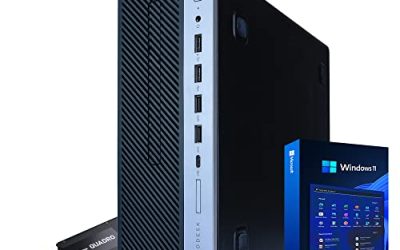
 iBUYPOWER Element Gaming PC Desktop Computer AMD
- Product Group: Personal Computer
- Binding: Personal Computers



As an Amazon Associate we earn from qualifying purchases at no extra cost to you. Ratings are shown as listed on Amazon.
⚡ Save on Your Next PC — Amazon Prime
Prime members get fast free shipping on the systems above, plus early access to Prime Day & Black Friday PC deals. New members get a 30-day free trial.
Watch: NVIDIA vs AMD GPUs in 2026 — Video Review
Quick Verdict
NVIDIA is the pick if you want the best ray tracing, the most mature upscaling (DLSS), and Multi Frame Generation for the smoothest high-refresh experience—its feature set is the most complete. AMD is the pick if you want more raw rasterization performance and VRAM for your money, which pays off in high-resolution gaming and future-proofing. For most gamers, NVIDIA’s features justify a modest premium, but AMD offers exceptional value that is hard to ignore, especially in the mid-range.
Key Differences
- Ray tracing: NVIDIA holds a clear lead in ray-traced performance; AMD has improved substantially but still trails at the highest settings.
- Upscaling: NVIDIA’s DLSS is the most mature and widely supported; AMD’s FSR works across more hardware but historically trails slightly in image quality.
- Frame generation: NVIDIA’s Multi Frame Generation can insert multiple frames on RTX 50-series; AMD’s Fluid Motion Frames is broader but less refined.
- VRAM: AMD frequently offers more memory at a given price, benefiting high-resolution and texture-heavy gaming.
- Raster performance: AMD often leads in traditional (non-ray-traced) rendering per dollar.
- Efficiency and software: NVIDIA’s drivers and creator/AI software ecosystem are more established; AMD’s Adrenalin suite is polished and feature-rich too.
NVIDIA GeForce
NVIDIA’s strength is its feature ecosystem. DLSS upscaling is supported in a vast library of games and generally produces the cleanest reconstructed image, and Frame Generation—especially Multi Frame Generation on the RTX 50-series—delivers the highest perceived frame rates for high-refresh gaming. In ray-traced titles, GeForce cards pull ahead decisively, so if you want to run games with full path tracing, NVIDIA is the practical choice.
Beyond gaming, NVIDIA’s cards excel at AI, streaming (NVENC encoder), and creative work, making them the versatile pick for gamers who also create content. The trade-offs are price—GeForce cards typically cost more at a given performance tier—and VRAM, where NVIDIA is sometimes stingier than AMD on comparably priced models.
AMD Radeon
AMD Radeon cards win on raw value. At most price points they deliver more traditional rasterization performance and more VRAM than the equivalent GeForce, which is exactly what high-resolution and texture-heavy games crave. For a gamer who plays mostly rasterized titles at 1440p or 4K and wants the most frames per dollar, Radeon is often the smarter buy.
AMD’s FSR upscaling works across a wide range of hardware, including older and competitor cards, and Fluid Motion Frames adds frame generation broadly. The gaps versus NVIDIA are in ray-tracing performance and the ultimate polish of the upscaling image, but for many gamers those trade-offs are well worth the money saved and the extra VRAM headroom.
Which Should You Buy?
- Choose NVIDIA if ray tracing, DLSS, and Frame Generation matter most to you.
- Choose NVIDIA if you also stream, edit video, or do AI work.
- Choose AMD if you want the most raster performance and VRAM per dollar.
- Choose AMD for high-resolution gaming where extra VRAM future-proofs your build.
- Compare the specific cards and prices in your budget—value shifts constantly between the two.
Frequently Asked Questions
Is NVIDIA or AMD better for gaming in 2026?
It depends on priorities. NVIDIA wins on ray tracing, DLSS upscaling, and Frame Generation, making it the feature leader. AMD wins on raw rasterization performance and VRAM per dollar. For cutting-edge features and creator work, choose NVIDIA; for the most frames per dollar in traditional games, choose AMD. Both are excellent at every tier.
Does more VRAM matter for gaming?
Increasingly, yes. Modern games at high resolutions and max textures can exceed 8GB of VRAM, causing stutter or forcing lower settings when the buffer fills. AMD often provides more VRAM at a given price, which helps at 1440p and 4K and provides future-proofing. For 1080p gaming, VRAM is less of a constraint.
How much better is NVIDIA at ray tracing?
NVIDIA holds a clear lead, particularly in demanding path-traced titles where the performance gap is largest. AMD has closed the distance considerably each generation and is fully playable with ray tracing at moderate settings, but if you want to max out heavy ray-traced or path-traced games, GeForce cards handle it with more headroom.
Is DLSS or FSR better?
DLSS generally produces a cleaner, more stable upscaled image and is supported in a large game library, giving NVIDIA the edge on quality. FSR’s advantage is breadth—it works across a wide range of hardware, including older and competitor GPUs. Both dramatically boost frame rates; the visual gap has narrowed but DLSS still leads in most head-to-heads.
Final Verdict
NVIDIA and AMD both make superb gaming GPUs in 2026, and the right one comes down to what you value. Pick NVIDIA for the most complete feature set—ray tracing, DLSS, and Frame Generation—and for content creation. Pick AMD for the best raster performance and VRAM per dollar, especially at high resolutions. Compare the actual cards and prices in your budget rather than the badge; both deliver excellent gaming at every tier.