Key takeaways
- Response time and speed: TN is fastest historically, but fast IPS panels now match it; VA is typically the slowest, prone to dark-transition smearing.
- Color accuracy: IPS leads with the best, most consistent color; VA is good; TN is the weakest.
- Contrast: VA wins decisively with deep blacks and high contrast ratios; IPS and TN have weaker contrast and can show “IPS glow.”
- Viewing angles: IPS offers the widest, most consistent angles; VA is decent; TN shifts color badly off-axis.
- Price: TN is cheapest, VA is mid-range, IPS spans budget to premium.
- Best use: TN for pure competitive speed on a budget, IPS for all-around gaming, VA for immersive and cinematic play.
The panel type inside a gaming monitor determines its color, contrast, response time, and viewing angles more than almost any other spec—and yet it is the detail buyers most often overlook. TN, IPS, and VA are the three LCD panel technologies, each with a distinct personality: one prizes speed, one prizes color, and one prizes contrast. Picking the right one for how you game is the difference between a display that delights you for years and one that quietly disappoints. In 2026, IPS has become the default, but TN and VA still win in specific scenarios.
This comparison lays out the real strengths and weaknesses of each panel type in plain terms, so you can match the technology to your games and priorities. There is no single “best” panel—a competitive esports player and a single-player cinematic gamer want opposite things. Here is how TN, IPS, and VA stack up for gaming, and which one you should choose.
Our top picks
 KOORUI 24 Inch 1440P Gaming Monitor
- Smooth & EyeCare Comfort: 180Hz refresh rate with…
- Fast IPS Visual Dominance: The monitor with a…
- Ergonomic Gaming & Working Station : This gaming…
 Viewedge 24-inch Gaming Monitor FHD
- 23.8" FHD VA Gaming Monitor: Features vivid 16.7M…
- 2ms (OD) Fast Response Time:Features Overdrive technology to…
- Adaptive-Sync Technology:Compatible with Adaptive-Sync (e.g., AMD FreeSync or…
 ViewSonic VA2456A-MHD 24 Inch 1080p Monitor
- This 24 inch computer monitor combines 1080p IPS…
- Adaptive display technology and a 4ms response time…
- HDMI, DisplayPort, and VGA inputs let this 24…
| Product | Key specs | |
|---|---|---|
| KOORUI 24 Inch 1440P Gaming Monitor | Smooth & EyeCare Comfort: 180Hz refresh rate with… Fast IPS Visual Dominance: The monitor with a… Ergonomic Gaming & Working Station : This gaming… | Check price |
| Viewedge 24-inch Gaming Monitor FHD | 23.8" FHD VA Gaming Monitor: Features vivid 16.7M… 2ms (OD) Fast Response Time:Features Overdrive technology to… Adaptive-Sync Technology:Compatible with Adaptive-Sync (e.g., AMD FreeSync or… | Check price |
| ViewSonic VA2456A-MHD 24 Inch 1080p Monitor | This 24 inch computer monitor combines 1080p IPS… Adaptive display technology and a 4ms response time… HDMI, DisplayPort, and VGA inputs let this 24… | Check price |
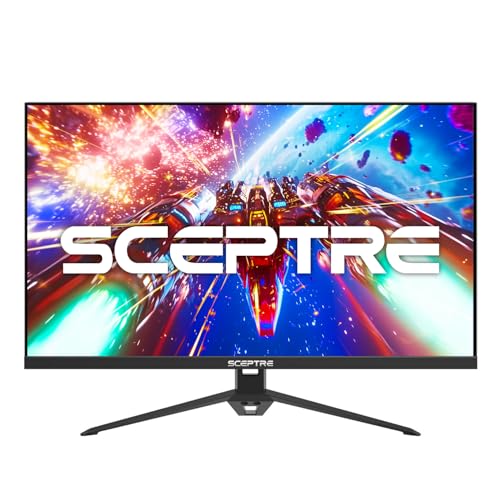 Sceptre 27-inch FHD 1080p IPS Gaming LED Sceptre 27-inch FHD 1080p IPS Gaming LED | Check price | |
 LESOWN 5 inch IPS Small Hdmi Monitor LESOWN 5 inch IPS Small Hdmi Monitor | ⚡ 【Excellent Color with IPS HD Panel】With IPS… ⚡️⚡️【 Plug and Play & Widely Compatible 】… ⚡️【Metal Appearance, Light-weight and Thin】The outline dimension of… | Check price |
 SCXryllexa 5 Inch Monitor Screen Display SCXryllexa 5 Inch Monitor Screen Display | 【5 Inch Mini Wide Angle Monitor】: This is… 【Plug-and-play,Widely Compatible】: This compact HDMI monitor supports Raspberry… 【Balance Work and Entertainment 】: This monitor with… | Check price |
 LESOWN 7inch Touch IPS Portable Monitor with LESOWN 7inch Touch IPS Portable Monitor with | ⚡ 【Excellent Color with IPS HD Panel】With IPS… ⚡️【Dual Built-in Speakers 】- Designed with dual integrated… ⚡️【Responsive Touching】It is equipped with 5-point capacitive touchscreen | Check price |
 VSDISPLAY 15'' 1024x768 4:3 LCD Touchscreen Industrial VSDISPLAY 15'' 1024x768 4:3 LCD Touchscreen Industrial | 【Specification】15'' 1024X768 LCD industrial touch screen monitor;aspect ratio:… 【Multiple Interface】Support VGA DVI video input,to meet different… 【Touchscreen Monitor】Touch sensor makes the operation more convenient,touch… | Check price |
As an Amazon Associate we earn from qualifying purchases at no extra cost to you.
⚡ Save on Your Next PC — Amazon Prime
Prime members get fast free shipping on the systems above, plus early access to Prime Day & Black Friday PC deals. New members get a 30-day free trial.
Watch: TN vs IPS vs VA Monitor Panels — Video Review
Quick Verdict
For most gamers in 2026, a fast IPS panel is the best all-around choice—it combines excellent color, wide viewing angles, and response times now fast enough for competitive play. Choose VA if you prioritize deep contrast and rich blacks for immersive single-player and cinematic gaming, and you can tolerate slightly slower pixel response. TN survives only in the cheapest ultra-high-refresh esports displays where raw speed and low cost trump everything else. IPS is the safe default; VA and TN serve specific niches.
Key Differences
- Response time and speed: TN is fastest historically, but fast IPS panels now match it; VA is typically the slowest, prone to dark-transition smearing.
- Color accuracy: IPS leads with the best, most consistent color; VA is good; TN is the weakest.
- Contrast: VA wins decisively with deep blacks and high contrast ratios; IPS and TN have weaker contrast and can show “IPS glow.”
- Viewing angles: IPS offers the widest, most consistent angles; VA is decent; TN shifts color badly off-axis.
- Price: TN is cheapest, VA is mid-range, IPS spans budget to premium.
- Best use: TN for pure competitive speed on a budget, IPS for all-around gaming, VA for immersive and cinematic play.
TN Panels
TN (Twisted Nematic) is the oldest LCD technology and historically the fastest, with the lowest response times and highest refresh rates at the lowest cost. For a competitive esports player on a tight budget who values nothing but raw speed and minimal motion blur, a high-refresh TN panel still makes sense. It is why some ultra-fast, low-cost gaming monitors continue to use TN.
The downsides are significant: TN has the worst color accuracy, the poorest contrast, and terrible viewing angles—the image visibly shifts color if you are not looking dead-on. As fast IPS panels have matched TN’s speed while offering far better image quality, TN has faded to a niche budget-speed option. For most buyers, the image compromises are no longer worth the small speed edge.
IPS Panels
IPS (In-Plane Switching) is the all-rounder and the default choice for 2026. It delivers the best color accuracy and the widest, most consistent viewing angles, and modern “Fast IPS” panels like those in the KOORUI 24″ 1440P 180Hz or Sceptre 27″ IPS gaming monitors achieve 1ms response times that satisfy all but the most extreme competitive players. Whether you play shooters, RPGs, or creative work on the side, IPS handles everything well.
IPS’s main weaknesses are contrast and “IPS glow”—blacks look more gray than on VA, and there can be a slight glow in dark scenes, especially in a dark room. It is also usually pricier than TN. But for the combination of speed, color, and versatility, IPS is the recommendation for the vast majority of gamers who want one monitor that does it all beautifully.
VA Panels
VA (Vertical Alignment) is the contrast champion, producing far deeper blacks and higher contrast ratios than IPS or TN—often several times better. For immersive single-player gaming, cinematic titles, and dark atmospheric games, a VA panel like the Viewedge 24″ 240Hz VA monitor delivers the richest, most punchy image, especially in a dim room. It is also common in curved and ultrawide gaming displays.
The trade-off is pixel response: VA panels are typically slower, particularly in dark-to-dark transitions, which can cause smearing or ghosting behind fast-moving objects in shooters. Viewing angles are better than TN but not as consistent as IPS. If you prioritize contrast and immersion over the last word in competitive speed, VA is a compelling and often affordable choice.
Which Should You Buy?
- Choose IPS for the best all-around gaming with great color, angles, and fast-enough response.
- Choose VA for immersive single-player and cinematic gaming with deep contrast.
- Choose TN only for budget competitive esports where raw speed and low price matter most.
- Choose VA for curved and ultrawide displays where its contrast shines.
- For a do-it-all monitor, fast IPS is the safe, satisfying default in 2026.
Frequently Asked Questions
Which panel type is best for gaming?
For most gamers, fast IPS is the best all-around choice—it balances excellent color, wide viewing angles, and response times now quick enough for competitive play. VA is better for contrast-heavy immersive gaming, and TN survives only in budget ultra-fast esports monitors. There is no universal best; IPS is the safest default, with VA and TN filling specific niches.
Is IPS or VA better for a gaming monitor?
IPS wins on color accuracy, viewing angles, and response speed, making it the versatile all-rounder. VA wins on contrast and black levels, making it superb for immersive single-player and cinematic gaming. Choose IPS if you want fast, accurate, do-it-all performance; choose VA if deep blacks and rich contrast in atmospheric games matter more than the last bit of speed.
Do TN panels still make sense in 2026?
Only in a narrow niche—budget competitive esports monitors where the priority is the lowest cost and fastest possible response. Fast IPS panels have matched TN’s speed while offering dramatically better color, contrast, and viewing angles, so for most buyers TN’s image compromises outweigh its small remaining advantages. Unless you specifically want cheap raw speed, look at IPS or VA.
What is IPS glow and does it matter?
IPS glow is a subtle brightening or glow visible in dark scenes, especially in the corners and when viewed off-angle in a dim room. It varies by panel and is usually mild. For most gaming and daytime use it is a non-issue, but if you play dark atmospheric games in a black room and want the deepest blacks, VA’s superior contrast avoids the concern entirely.
Final Verdict
Panel technology shapes your gaming experience profoundly, and the right choice depends on how you play. Fast IPS is the recommendation for most gamers in 2026—it does everything well with great color, wide angles, and competitive-grade speed. Pick VA for immersive, contrast-rich single-player and cinematic gaming, and reserve TN for budget esports builds chasing pure speed. Match the panel to your priorities and you will love your monitor for years.