Key takeaways
- Ultra-Low Input Latency: Reduces input response time down to 4–8ms compared to the 15–35ms variable delay typical of standard Bluetooth.
- Integrated Headset Audio: Restores full functionality to the controller’s built-in 3.5mm headphone jack for high-quality stereo audio and chat.
- Multi-Controller Support: Allows up to eight controllers to run simultaneously off a single USB slot without signal cross-talk or dropouts.
- Plug-and-Play Convenience: Bypasses the Windows Bluetooth pairing menu entirely; pushing the sync button on the adapter instantly pairs the gamepad.
- Stable Range and Signal Penetration: Operates on a dedicated channel that effectively avoids signal crowding from household smart home devices.
What's inside
The Short Answer
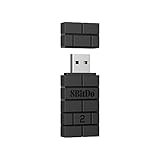
If you are wondering whether a dedicated adapter is required for gaming, the straightforward answer is: No, but it depends on your performance requirements and audio needs. A dedicated 2.4GHz wireless receiver is not mandatory simply to connect a gamepad to a modern desktop or laptop. Most current game controllers—including the Xbox Wireless Controller, Sony DualSense, and Nintendo Switch Pro Controller—ship with built-in Bluetooth technology that pairs directly with your computer’s existing Bluetooth receiver.
However, whether is a 2 4ghz wireless adapter necessary for pc controllers comes down to one single condition: Are you playing competitive, fast-paced games where input delay matters, or do you rely on a 3.5mm headset plugged directly into your gamepad? If the answer is yes, then a dedicated 2.4GHz adapter becomes necessary. Standard Bluetooth introduces measurable latency spikes and completely disables controller-based headphone jacks on PC. If you are playing casual single-player titles and use wireless desktop speakers or a USB headset, standard Bluetooth is more than enough.
As an Amazon Associate we earn from qualifying purchases at no extra cost to you. Product prices and availability are accurate as of the date shown and are subject to change.
What You Actually Get
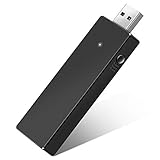
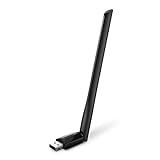
Understanding what a 2.4GHz controller adapter actually provides requires breaking down the physical hardware and the underlying wireless transmission protocols. Many buyers confuse network Wi-Fi dongles with controller adapters. For example, a network dongle like the TP-Link AC600 USB WiFi Adapter ($14.99) operates on 2.4GHz and 5GHz bands to deliver internet data to your desktop PC, but it cannot communicate with a game controller. A controller-specific dongle, such as the Cipon Wireless Adapter ($17.99), uses a proprietary 2.4GHz radio frequency channel specifically programmed to handle controller inputs and uncompressed audio packets.
When you rely on standard PC Bluetooth, your computer polls the controller at a variable frequency, often leading to input response times between 15 milliseconds and 35 milliseconds. In environments with heavy wireless interference—such as a living room filled with smart home hubs, smartphones, and routers—Bluetooth packet loss causes frustrating button drops or momentary stick drifting. Furthermore, the Bluetooth bandwidth allocation on Windows restricts audio passthrough, meaning the 3.5mm audio jack on your Xbox gamepad will not function at all.
By contrast, dedicated 2.4GHz controller adapters establish a high-bandwidth, low-latency direct link. Physical dimensions for these adapters are compact; a typical dongle measures approximately 1.8 x 0.8 x 0.4 inches and weighs under 0.5 ounces. They draw minimal power directly from a standard USB 2.0 or 3.0 port (operating at 5 volts and roughly 500mA). Inside that tiny plastic housing is a specialized processing chip that maintains a steady polling rate of 125Hz to 250Hz, locking input latency down to a stable 4 to 8 milliseconds.
Additionally, proprietary 2.4GHz adapters expand device capacity. While Windows struggles to maintain stable connections when more than two controllers are paired via Bluetooth, a single 2.4GHz controller adapter can stream signals for up to eight gamepads simultaneously without performance degradation, making it the ideal hardware solution for local multiplayer gaming.
Pros
- Ultra-Low Input Latency: Reduces input response time down to 4–8ms compared to the 15–35ms variable delay typical of standard Bluetooth.
- Integrated Headset Audio: Restores full functionality to the controller’s built-in 3.5mm headphone jack for high-quality stereo audio and chat.
- Multi-Controller Support: Allows up to eight controllers to run simultaneously off a single USB slot without signal cross-talk or dropouts.
- Plug-and-Play Convenience: Bypasses the Windows Bluetooth pairing menu entirely; pushing the sync button on the adapter instantly pairs the gamepad.
- Stable Range and Signal Penetration: Operates on a dedicated channel that effectively avoids signal crowding from household smart home devices.
Cons
- Consumes a Physical USB Port: Occupies a permanent USB-A port on your front panel, motherboard rear I/O, or desktop USB hub.
- Added Hardware Cost: Requires an extra investment ranging from $15 to $30 compared to using your computer’s built-in Bluetooth chip.
- Ecosystem Locking: A dedicated 2.4GHz adapter designed for Xbox protocols (like the Cipon adapter) will not work with PlayStation DualSense gamepads or Nintendo controllers.
- Physical Protrusion Risks: Bumping a 1.8-inch dongle plugged into the front of a desktop PC chassis can damage the USB port or snap the adapter.
Who Should Buy It
You should buy a dedicated 2.4GHz wireless adapter if you fit into any of the following categories:
- Competitive Gamers: Players who focus on fighting games, fast-paced shooters, rocket league, or precision platformers where every millisecond of input delay impacts performance.
- Living Room & Couch Gamers: Anyone running a home theater PC setup where the computer tower is located inside a TV console or behind a cabinet, which severely dampens standard Bluetooth signals.
- Headset Users: Gamers who prefer plugging their wired gaming headset directly into their controller rather than running a long wire back to the PC tower.
- Local Multiplayer Hosts: Anyone running local party games, sports titles, or racing simulators with three or more wireless gamepads connected simultaneously.
Who Should Skip It
You can safely skip purchasing a 2.4GHz adapter if your gaming habits look like this:
- Casual Single-Player Gamers: You primarily play turn-based strategy games, management sims, atmospheric RPGs, or cozy puzzle games where a 15ms latency difference is unnoticeable.
- Wired Connection Enthusiasts: You do not mind using a lightweight 6-foot or 10-foot USB-C cable, which gives you zero wireless interference, zero latency, and constant charging at $0 extra cost.
- Laptop Gamers on the Move: You play on a compact gaming laptop with limited USB ports and do not want extra dongles protruding from the sides of your machine.
Cheaper Alternatives
If you want to connect your controller to your PC without spending top dollar on official branded receivers, several alternative routes exist. The table below outlines how these connection options compare in terms of cost and functional trade-offs.
| Option | Cost | Trade-off |
|---|---|---|
| Direct USB-C / Micro-USB Cable | $5 – $10 | Provides absolute lowest latency and zero battery strain, but physically tethers you to your desk or PC chassis. |
| Generic USB Bluetooth 5.0 Dongle | $6 – $12 | Extremely cheap and adds general Bluetooth connectivity for audio/gamepads, but suffers higher latency and lacks controller audio support. |
| Third-Party 2.4GHz Receiver (e.g., Cipon) | $17.99 | Delivers near-identical performance to official brand adapters at roughly half the cost, though construction plastics feel slightly lighter. |
| Standard USB WiFi Adapter (e.g., TP-Link AC600) | $14.99 | Provides high-speed wireless internet access to desktop computers, but cannot connect or pair with game controllers. |
FAQ
Can I use a standard USB WiFi adapter like the TP-Link AC600 to connect my controller?
No, you cannot. A USB WiFi adapter provides wireless network data to your desktop PC. Even though WiFi operates on 2.4GHz and 5GHz frequencies, it uses network protocols like 802.11ac rather than the proprietary radio frequency signals required by game controllers. To connect a gamepad wirelessly without Bluetooth, you must purchase a dedicated controller receiver like the Cipon Wireless Adapter.
Does Bluetooth cause noticeable lag on PC game controllers?
For casual single-player gaming, Bluetooth lag is rarely noticeable. However, for fast-paced games, standard Bluetooth introduces input latency between 15ms and 35ms, along with potential polling inconsistencies. A dedicated 2.4GHz wireless adapter drops this latency to a stable 4ms to 8ms range, offering a feel that rivals a direct wired connection.
How many controllers can I connect to one 2.4GHz wireless adapter?
A single dedicated 2.4GHz Xbox-compatible wireless adapter can support up to eight controllers simultaneously for standard gaming. If you connect chat headsets to the controllers, it supports up to four controllers with stereo headsets attached, or two controllers equipped with stereo headsets and chat accessories.
Why doesn’t my controller’s headphone jack work over Bluetooth on PC?
The standard Bluetooth audio profile (A2DP / HFP) built into Windows does not have sufficient bandwidth allocation to simultaneously transmit low-latency controller input data and high-quality 16-bit stereo audio. Microsoft disables the 3.5mm controller port entirely during Bluetooth pairing to preserve input stability. In 2026, using a 2.4GHz adapter remains the only way to send uncompressed game audio directly through an Xbox gamepad to a wired headset on Windows PCs.