Key takeaways
- A game controller dropping its Bluetooth connection mid-session is one of the most frustrating issues on PC. The symptom usually follows a distinct pattern: your Xbox Wireless Controller, Sony DualSense, or Nintendo Switch Pro Controller suddenly stops responding, the guide…
What's inside
- Likely Causes
- Fix 1: Disable Windows Bluetooth Adapter Power Saving
- Fix 2: Disable Hands-Free Telephony Services
- Fix 3: Disable USB Selective Suspend and PCIe Link State Management
- Fix 4: Install Native Manufacturer Bluetooth Drivers
- Fix 5: Reconfigure Bluetooth Support Service Recovery Actions
- Fix 6: Attach Wi-Fi/Bluetooth Antenna and Relocate USB Dongles
- Fix 7: Clear Stale Registry Pairing Keys and Re-pair Controller
- If Nothing Works
- FAQ
A game controller dropping its Bluetooth connection mid-session is one of the most frustrating issues on PC. The symptom usually follows a distinct pattern: your Xbox Wireless Controller, Sony DualSense, or Nintendo Switch Pro Controller suddenly stops responding, the guide or LED light flashes rapidly, and your in-game character continues moving in the last registered direction for three to five seconds. In some cases, Windows reconnects the gamepad automatically after a brief pause; in others, you must power-cycle the controller or navigate Windows settings to manually re-establish pairing.
- Likely Causes
- Fix 1: Disable Windows Bluetooth Adapter Power Saving
- Fix 2: Disable Hands-Free Telephony Services
- Fix 3: Disable USB Selective Suspend and PCIe Link State Management
- Fix 4: Install Native Manufacturer Bluetooth Drivers
- Fix 5: Reconfigure Bluetooth Support Service Recovery Actions
- Fix 6: Attach Wi-Fi/Bluetooth Antenna and Relocate USB Dongles
- Fix 7: Clear Stale Registry Pairing Keys and Re-pair Controller
- If Nothing Works
- FAQ
In 2026, modern PC titles heavily rely on high-polling-rate controller inputs and rich haptic feedback channels, both of which strain wireless bandwidth. Because Bluetooth shares the crowded 2.4 GHz spectrum with Wi-Fi networks, peripheral dongles, and USB 3.0 ports, connection drops are rarely caused by a broken controller. Instead, aggressively configured aggressive Windows power-saving states, outdated Bluetooth radio stack drivers, or radio frequency interference are usually to blame. Fixing this issue requires systematic troubleshooting to stabilize the wireless signal and prevent Windows from putting your Bluetooth receiver to sleep.
Likely Causes
| Cause | How to confirm | Fix difficulty |
|---|---|---|
| Windows Bluetooth Power Saving | Disconnects happen during brief moments of inactivity or low battery. | Easy |
| Hands-Free Telephony Service Conflict | Audio stutters or drops occur simultaneously with controller input latency. | Easy |
| USB Selective Suspend & PCIe Power Management | Drops happen mostly on laptop battery or balanced power plans. | Medium |
| Generic or Outdated Bluetooth Driver | Device Manager shows “Generic Bluetooth Adapter” under Bluetooth nodes. | Medium |
| Bluetooth Support Service Crash | Bluetooth toggle vanishes from Windows Action Center after a disconnect. | Medium |
| 2.4 GHz RF Interference / Missing Antenna | Controller drops input when brought more than 3 feet away from the PC desktop tower. | Easy |
Fix 1: Disable Windows Bluetooth Adapter Power Saving
What causes it
Windows regularly cuts power to internal PCIe and USB-connected Bluetooth modules to reduce energy consumption. When a controller sends low packet volume during cutscenes or menu navigation, Windows misinterprets the state as idle and suspends the Bluetooth radio adapter.
How to check
Press Win + X and select Device Manager. Expand the Bluetooth category, right-click your primary adapter (such as Intel(R) Wireless Bluetooth(R) or Realtek Bluetooth Adapter), and select Properties. Look for a Power Management tab at the far right.
What to do
- In Device Manager, expand Bluetooth.
- Right-click your main Bluetooth adapter and click Properties.
- Click the Power Management tab.
- Uncheck Allow the computer to turn off this device to save power.
- Click OK and restart your PC.
How to undo it
Return to Device Manager > Bluetooth > [Your Adapter] > Properties > Power Management, re-check Allow the computer to turn off this device to save power, and click OK.
Fix 2: Disable Hands-Free Telephony Services
What causes it
Windows assigns game controllers with audio capabilities (like the DualSense or Xbox Wireless Controller) dual profiles: a standard HID gamepad profile and a Bluetooth Hands-Free Telephony audio profile. The telephony service continuously probes the controller for mic and headset data, saturating the limited Bluetooth bandwidth and causing packet loss that drops the input connection.
How to check
Press Win + R, type control printers, and press Enter to open the legacy Devices and Printers applet. Locate your controller, right-click it, select Properties, and inspect the Services tab.
What to do
- In Devices and Printers, right-click your game controller and click Properties.
- Navigate to the Services tab.
- Wait for the service list to load, then uncheck Handsfree Telephony.
- Uncheck Audio Sink if it appears in the list.
- Click Apply, then click OK.
How to undo it
Open control printers, open your controller’s Properties, switch to the Services tab, re-check Handsfree Telephony, and click Apply.
Fix 3: Disable USB Selective Suspend and PCIe Link State Management
What causes it
Onboard Bluetooth chips connect internally via USB or PCIe interfaces. When global Windows power plans enforce USB Selective Suspend or PCIe Link State Power Management, the root hub momentarily powers down the interface hosting your Bluetooth controller during gameplay state shifts.
How to check
Press Win + R, type powercfg.cpl, and press Enter. Click Change plan settings next to your active power plan, then click Change advanced power settings to open the configuration box.
What to do
- In Advanced Power Settings, expand USB settings > USB selective suspend setting.
- Change the setting to Disabled for both “On battery” and “Plugged in”.
- Expand PCI Express > Link State Power Management.
- Set it to Off for both “On battery” and “Plugged in”.
- Click Apply, then click OK.
How to undo it
Re-open Advanced Power Settings in powercfg.cpl, change USB selective suspend setting back to Enabled, and set Link State Power Management back to Moderate power savings.
Fix 4: Install Native Manufacturer Bluetooth Drivers
What causes it
Generic Microsoft Bluetooth drivers installed by Windows Update lack specialized packet-queuing routines required for high-polling gamepads. This mismatch leads to buffer overflows and sudden drops under heavy input loads.
How to check
Open Device Manager, expand Bluetooth, right-click your adapter, and choose Properties. Click the Driver tab. If Driver Provider displays “Microsoft”, you are running generic drivers rather than native hardware drivers.
What to do
- Visit your motherboard or laptop manufacturer’s support site (e.g., ASUS, MSI, Gigabyte, Lenovo) and download the latest Bluetooth driver package (Intel, Realtek, or MediaTek).
- In Device Manager, right-click your Bluetooth adapter and select Uninstall device.
- Check the box for Attempt to remove the driver for this device and click Uninstall.
- Run the downloaded manufacturer driver installer executable and reboot your computer.
How to undo it
Open Device Manager, right-click the Bluetooth adapter, select Update driver, click Search automatically for drivers, and allow Windows to overwrite the driver with the default Microsoft stack.
Fix 5: Reconfigure Bluetooth Support Service Recovery Actions
What causes it
The background Windows process responsible for handling Bluetooth discovery and stability (`bthserv`) can crash silently during wireless packet collisions. By default, Windows does not automatically restart this service when it fails, forcing the controller offline.
How to check
Press Win + R, type services.msc, press Enter, and locate Bluetooth Support Service. Check if the status column shows “Running” and if the startup type is set to “Manual”.
What to do
- In
services.msc, double-click Bluetooth Support Service. - On the General tab, change Startup type to Automatic.
- Click the Recovery tab.
- Set First failure, Second failure, and Subsequent failures to Restart the Service.
- Set Reset fail count after to
1days and Restart service after to1minutes. - Click Apply and OK.
How to undo it
Open services.msc, open Bluetooth Support Service, change Startup type back to Manual, and set all Recovery actions back to Take No Action.
Fix 6: Attach Wi-Fi/Bluetooth Antenna and Relocate USB Dongles
What causes it
Most motherboard-integrated Bluetooth modules share an external SMA antenna port with the Wi-Fi card. If the external antenna included with your motherboard is not screwed in, Bluetooth range drops to under two feet. Furthermore, plugging a USB Bluetooth dongle directly into a USB 3.0 port creates severe 2.4 GHz radio frequency interference due to unshielded port radiation.
How to check
Inspect the rear I/O panel on the back of your desktop PC tower. Look at the two gold-threaded SMA coaxial connectors on your motherboard. If no antenna is screwed into them, your Bluetooth chip lacks a functional transmitter/receiver antenna.
What to do
- Screw the external antenna accessory that came in your motherboard’s box directly onto the rear gold SMA connectors, even if you connect your PC via Ethernet.
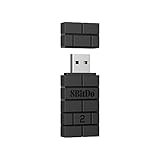
- If using a dedicated USB Bluetooth dongle, remove it from the rear USB 3.0 (blue/red) ports.
- Plug the dongle into a USB 2.0 extension cable (at least 3 feet long) and place the dongle on your desk, away from metal chassis panels and active USB 3.0 external hard drives.
How to undo it
Unscrew the external antenna from the rear panel or remove the USB extension cable and plug the dongle directly back into a rear USB port.
Fix 7: Clear Stale Registry Pairing Keys and Re-pair Controller
What causes it
When game controllers are paired across multiple devices or experience abrupt power losses, the Windows registry retains stale cryptographic link keys. During automated periodic re-keying over Bluetooth, these mismatched keys fail, dropping the connection.
How to check
Go to Settings > Bluetooth & devices > Devices. If your controller shows as “Paired” but fails to connect when turned on, or if selecting “Remove device” returns a “Remove failed” error, the link key cache is corrupted.
What to do
- Go to Settings > Bluetooth & devices > Devices. Click the three-dot menu next to your controller and click Remove device.
- Turn off Bluetooth on your PC using the main toggle, then turn it back on after 5 seconds.
- Open Device Manager, expand Human Interface Devices, right-click any grayed-out or duplicate entries labeled HID-compliant game controller, and select Uninstall device.
- Put your controller into pairing mode (e.g., hold the Xbox Sync button, or press Share + PS button until the light flashes quickly).
- In Windows Settings, click Add device > Bluetooth and re-pair the controller.
How to undo it
Navigate back to Settings > Bluetooth & devices > Devices, select your controller, and click Remove device to unpair it.
If Nothing Works
If your controller continues to drop its Bluetooth connection after applying these fixes, the issue may stem from outdated controller firmware or hardware-level radio degradation. Connect your controller to your PC using a USB cable and update its internal software. For Xbox controllers, download and run the Xbox Accessories app from the Microsoft Store to apply mandatory firmware updates. For PlayStation DualSense controllers, download and execute the official Firmware updater for DualSense wireless controller app on Windows.
If wireless drops persist exclusively over Bluetooth, consider bypassing the standard Windows Bluetooth stack altogether. You can switch to a dedicated 2.4 GHz proprietary wireless adapter, such as the Xbox Wireless Adapter for Windows, which uses a direct, non-Bluetooth connection protocol. Alternatively, test the controller on a secondary PC or console to verify whether the internal Bluetooth transmitter inside the gamepad itself has suffered hardware degradation.
FAQ
Why does my controller drop its connection only during specific games?
Certain modern game engines utilize high-frequency polling and rumble motor commands that send significantly more telemetry data across the Bluetooth link. If a game forces intensive, uncompressed haptic telemetry while streaming asset data over Wi-Fi, the influx of data can overflow the buffer on generic Bluetooth drivers, triggering a connection reset.
Is an external USB Bluetooth dongle better than onboard motherboard Bluetooth?
Onboard motherboard Bluetooth is generally superior because it operates over a direct PCIe interface rather than a shared USB bus, provided the external Wi-Fi/Bluetooth antenna is connected. Dedicated USB dongles are prone to thermal throttling and radio frequency noise emitted by nearby USB 3.0 ports.
Does Steam Input cause Bluetooth controller disconnects?
Steam Input itself does not drop the physical Bluetooth connection, but driver hooks can cause input freezes that feel like dropouts. If Steam Input and Windows native XInput drivers try to poll the device simultaneously, the controller can become unresponsive until the driver lock clears.
Will updating my motherboard BIOS fix Bluetooth dropping issues?
Yes. Motherboard manufacturers frequently release AGESA and microcode updates through BIOS revisions to fix internal PCIe and USB hub power-cycling bugs. Updating your motherboard BIOS resolves underlying hardware handshake issues that cause onboard Bluetooth modules to reset under load.