Key takeaways
- “More cores always means better gaming.” Most games depend on a few fast threads and cache behavior, which is why a Ryzen 7 with eight cores can beat chips with many more.
- “Intel runs hotter, AMD runs cooler.” It depends on the model and workload. Reviewers report that Arrow Lake runs cooler than the previous generation, and X3D chips can run warm if the cooler is weak.
- “A Ryzen 7 is only for gaming.” Non-X3D Ryzen 7 chips perform well in general use, and the X3D models handle productivity respectably.
- “The CPU matters more than the GPU.” For most players at 1440p and above, the graphics card limits performance more than the processor does.
- “Benchmarks from launch day are final.” BIOS, driver and Windows updates change results, so read recent reviews.
For most gaming builds in 2026, a Ryzen 7 with 3D V-Cache, such as the Ryzen 7 9800X3D, is the stronger pick, while an Intel Core processor such as the Core Ultra 7 265K makes more sense if you also do heavy multi-threaded work like video export, compiling or running virtual machines. The phrase “Intel Core vs Ryzen 7” mixes a whole brand family with a single tier, so it helps to define both sides before comparing them.
Our top picks
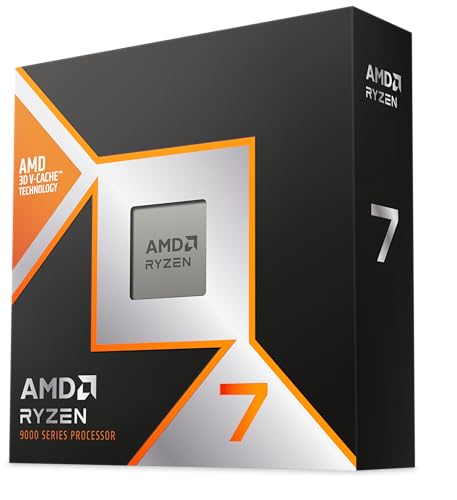 AMD RYZEN 7 9800X3D 8-Core
- The world’s fastest gaming processor, built on AMD…
- 8 cores and 16 threads, delivering +~16% IPC…
- 96MB L3 cache with better thermal performance vs
 Intel Core Ultra 7 processor 270K Plus
- Next‑Gen Platform Support: Compatible with Intel 800 Series…
- High‑Performance Core Configuration: Features up to 24 cores…
- Ultra‑Fast Boost Clocks: Reaches up to 5.5 GHz…
| Product | Key specs | |
|---|---|---|
| AMD RYZEN 7 9800X3D 8-Core | The world’s fastest gaming processor, built on AMD… 8 cores and 16 threads, delivering +~16% IPC… 96MB L3 cache with better thermal performance vs | Check price |
 Intel Core Ultra 7 Desktop Processor 265K | Check price | |
| Intel Core Ultra 7 processor 270K Plus | Next‑Gen Platform Support: Compatible with Intel 800 Series… High‑Performance Core Configuration: Features up to 24 cores… Ultra‑Fast Boost Clocks: Reaches up to 5.5 GHz… | Check price |
 AMD Ryzen 7 5800X3D 8-core | The world's fastest gaming desktop processor and first… 8 Cores and 16 processing threads with AMD… 4.5 GHz Max Boost, 100 MB cache, DDR4-3200… | Check price |
As an Amazon Associate we earn from qualifying purchases at no extra cost to you.
What Each Side Means
“Intel Core” is Intel’s mainstream desktop brand. Current desktop chips use the Core Ultra naming, with the Core Ultra 200S series (codenamed Arrow Lake) sitting on the LGA1851 socket and using DDR5 memory. Within that family, Core Ultra 5, 7 and 9 describe the performance tiers. The closest match to a Ryzen 7 is the Core Ultra 7, for example the Core Ultra 7 265K.
“Ryzen 7” is the upper-mid tier of AMD’s Ryzen lineup. Current desktop models belong to the Ryzen 9000 generation on the AM5 socket, which also uses DDR5. The Ryzen 7 9700X is a standard chip, while the Ryzen 7 9800X3D adds stacked L3 cache aimed squarely at gaming. Older Ryzen 7 parts on AM4, like the 5800X3D, still circulate in used and budget builds.
So the fair comparison is a Core Ultra 7 against a Ryzen 7, and the question is which design fits your workload and platform plans.
Key Differences at a Glance
| Area | Intel Core Ultra 7 (e.g. 265K) | AMD Ryzen 7 (e.g. 9800X3D / 9700X) |
|---|---|---|
| Socket | LGA1851 | AM5 |
| Memory | DDR5 | DDR5 |
| Core layout | Mix of performance and efficiency cores (hybrid) | Eight identical cores, 16 threads |
| Gaming strength | Good, but trails the best cache-heavy chips | X3D models lead most gaming comparisons |
| Multi-threaded work | Strong, extra efficiency cores help | Solid, eight cores is fewer than Intel’s total core count |
| Power and heat | Moderate in games, higher under all-core loads | Generally efficient in games, X3D needs sensible cooling |
| Upgrade path | Intel has not announced a follow-on for this socket, according to reviewers | AMD has said AM5 support continues into 2027 and beyond |
| Overclocking | K models unlocked | Unlocked, X3D has more limits on voltage and cache |
Gaming: Where the Gap Shows
Independent comparisons such as the one from XDA Developers and several aggregate benchmark sites report that the Ryzen 7 9800X3D leads the Core Ultra 7 265K in games, often by a double-digit percentage at 1080p and 1440p when the GPU is not the bottleneck. The stacked 3D V-Cache gives the processor a large pool of L3 cache, which reduces trips to system memory, and reviewers point to Arrow Lake’s higher memory latency as one reason Intel’s chip falls behind in cache-sensitive titles.
The size of the gap varies by title. Some games show large leads for the X3D chip, while others are close to a tie. At 4K with a mid-range graphics card, the GPU does most of the limiting, and the two processors land much closer together.
If you play esports titles at high refresh rates, simulation games or strategy games with large worlds, the cache-heavy Ryzen 7 X3D parts tend to show the clearest benefit. If you play mostly at 4K with detail turned up, spending the budget on the graphics card often helps more than choosing a faster processor.
Creator and Productivity Work
The Core Ultra 7 265K has 20 cores in total (a mix of performance and efficiency cores), compared with eight cores on a Ryzen 7. Reviewers report that this gives Intel a clear lead in highly threaded tasks such as rendering, video encoding and code compilation. The efficiency cores also help when you stream or run background apps while gaming.
The Ryzen 7 9700X and 9800X3D are still capable for photo editing, light video work and general multitasking. Their eight fast cores keep single-thread performance high, so everyday responsiveness is excellent. If your income depends on render times, step up to a Ryzen 9 or pick the Intel option.
Who Should Pick Which
Gamer chasing frame rates
Pick a Ryzen 7 X3D model. It is the safer choice for CPU-bound games, and the AM5 platform leaves room for a future upgrade.
Hybrid gamer and creator
The Core Ultra 7 is attractive if your workday includes exports and compiles and gaming is secondary. The 9800X3D still suits you if gaming is the main reason for the build and rendering is occasional.
Tight budget tiers
At the entry tier, the question usually becomes platform cost rather than brand. Compare the combined cost of processor, motherboard and memory. Older AM4 and LGA1700 parts can be good value, but they limit future upgrades and DDR5 support. Regional pricing changes constantly, so compare the totals at the time you buy.
Small form factor builders
Both families offer efficient models. Check the maker’s listed power limits and cooler requirements, and read your case’s clearance specifications.
Common Myths
- “More cores always means better gaming.” Most games depend on a few fast threads and cache behavior, which is why a Ryzen 7 with eight cores can beat chips with many more.
- “Intel runs hotter, AMD runs cooler.” It depends on the model and workload. Reviewers report that Arrow Lake runs cooler than the previous generation, and X3D chips can run warm if the cooler is weak.
- “A Ryzen 7 is only for gaming.” Non-X3D Ryzen 7 chips perform well in general use, and the X3D models handle productivity respectably.
- “The CPU matters more than the GPU.” For most players at 1440p and above, the graphics card limits performance more than the processor does.
- “Benchmarks from launch day are final.” BIOS, driver and Windows updates change results, so read recent reviews.
Platform and Upgrade Considerations
Motherboards matter as much as the processor. AM5 boards range from basic to feature-rich, with PCIe 5.0 storage and graphics support on many models. Intel’s LGA1851 boards also offer PCIe 5.0 and modern connectivity such as WiFi 7 on higher-tier boards, though exact features differ per board. Always read the motherboard maker’s compatibility list for BIOS version requirements, since an older BIOS may need an update before a new processor will boot.
Memory choices also differ. Both platforms use DDR5, but AMD systems often prefer memory tuned near the sweet spot the maker lists, while Intel’s Arrow Lake benefits more from faster kits. Check the board’s qualified vendor list for the exact kit.
Practical Recommendation
- List your top three tasks. If the first is gaming, shortlist Ryzen 7 X3D chips first.
- If rendering or compiling ranks above gaming, shortlist the Core Ultra 7 and compare it with a Ryzen 9.
- Pick the motherboard and memory that fit the processor, then budget for a quality cooler and power supply.
- Read at least two independent reviews that include the games you play.
- Keep BIOS settings at defaults at first. Overclocking or memory tuning can void warranties and cause instability.
Frequently Asked Questions
Is Ryzen 7 better than Intel Core for gaming?
The Ryzen 7 9800X3D leads current Intel Core Ultra chips in most gaming comparisons reported by reviewers. A standard Ryzen 7 without 3D V-Cache is closer to Intel’s performance. The result depends on the game and resolution.
Is Intel Core or Ryzen 7 better for video editing?
Reviewers report that Core Ultra chips with many efficiency cores finish heavily threaded exports faster than eight-core Ryzen 7 models. If editing is your job, compare against Ryzen 9 options too, since that tier has more cores.
Which platform has the better upgrade path?
AMD has stated that AM5 will be supported for several more years, so a Ryzen 7 build has a clearer path to a later processor. Intel has not announced a successor for LGA1851 according to reviewers, so check the maker’s roadmap before buying.
Do I need a special cooler for these processors?
Follow each maker’s listed cooling guidance. Many tower air coolers and 240mm liquid coolers handle these chips, and heavier all-core loads benefit from stronger cooling.
Can I use DDR4 with these processors?
Current AM5 and LGA1851 platforms use DDR5 only. DDR4 builds require older sockets such as AM4 or some LGA1700 boards.