Key takeaways
- Software Licensing: Meta Air Link costs $0. Virtual Desktop requires a single $19.99 purchase.
- Networking Hardware: Both platforms perform best with a dedicated Wi-Fi 6 or Wi-Fi 6E router placed in direct line-of-sight of your play space. A dedicated router (such as a compact $50 to $120 AX/AXE router wired via Cat6 to your PC) ensures a stable 1200 Mbps to 2400 Mbps local link speed.
- Power Consumption: Running high-bitrate wireless streaming consumes roughly 5W to 7W of power on standalone VR headsets, translating to approximately 2 to 2.5 hours of continuous runtime. Over 5 years of moderate use (6 hours per week), electrical costs for charging headset battery packs and dedicated routers remain under $25 total.
Designing a modern living room or home office that seamlessly accommodates virtual reality requires balancing visual aesthetics with high-performance technology. When setting up a wireless room-scale gaming space, nothing ruins a clean interior faster than a 16-foot active optical cable stretched across your hardwood floors or snagged on mid-century coffee table legs. Cutting the cord is the key to preserving both your home’s design harmony and your immersion. When evaluating air link vs virtual desktop for pc vr streaming, the primary decision comes down to balancing out-of-the-box convenience against deep performance customization within your living environment.
Both solutions leverage your home’s local Wi-Fi 6 or Wi-Fi 6E network to beam high-bitrate PC graphics directly to standalone headsets like the Meta Quest 3 or Quest 3S. However, they integrate into your daily home routine in very different ways. Meta Air Link comes built into your headset’s software at zero cost, making it an attractive plug-and-play solution for uncluttered living rooms. On the other hand, Virtual Desktop is a $19.99 third-party application famous for its raw performance optimization, extensive network diagnostics, and versatile desktop productivity environments.
Our top picks


As an Amazon Associate we earn from qualifying purchases at no extra cost to you. Ratings are shown as listed on Amazon.
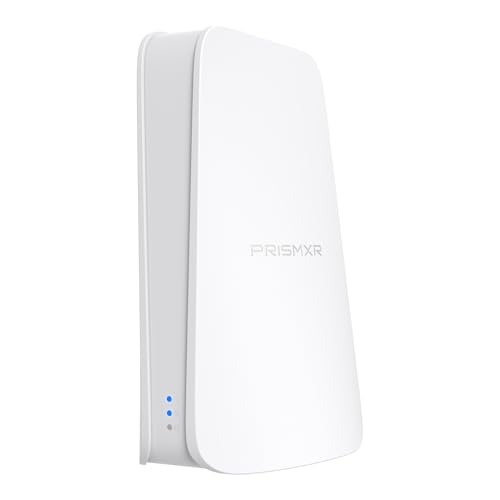
Optimizing your wireless VR ecosystem often involves supporting hardware to keep your space clean and performant. For example, installing a dedicated access point like a PC-VR Streaming Air Link WiFi6 VR Router Compatible with Meta Quest 3S/3/2 ($49.99) keeps headset traffic off your main home Wi-Fi network. For low-latency audio transmission across the room without running wires across your sofa, accessories like the FiiO Air Link USB-C Bluetooth Transmitter ($49.99) or the Twelve South AirFly Pro 2 ($59.99) offer sleek wireless sound bridges. Meanwhile, users preferring zero wireless interference still occasionally rely on direct tether kits like the HTC VIVE Wired PC Streaming Kit ($189) as a wired benchmark for absolute fidelity.
Quick Verdict
If you prioritize a clean, native experience that costs nothing upfront and integrates directly into your headset’s default interface without extra mobile apps or background configurations, Meta Air Link is your best starting point. It keeps your living space tech-light and works effortlessly for casual room-scale gaming.
If you suffer from Wi-Fi congestion in a multi-device household, want to stream PC media onto giant virtual screens in your living room, or require advanced video codecs (such as AV1 or HEVC 10-bit) to eliminate compression artifacts, Virtual Desktop is well worth the $19.99 investment. As home technology standards evolve in 2026, Virtual Desktop remains the power user’s choice for maximizing performance across complex home networks.
Side by Side
| Feature / Attribute | Meta Air Link | Virtual Desktop |
|---|---|---|
| Upfront Software Cost | Free (Built into headset OS) | $19.99 (One-time purchase) |
| Setup Comfort & Ergonomics | Native toggle in Quest menu; simple UI | Requires Quest app + PC streamer app installation |
| Household Aesthetic Impact | 100% wireless; zero additional desktop apps required | 100% wireless; requires small background PC tray app |
| Network Maintenance | Automated dynamic bitrate adjustments | Extensive manual tweakability (bitrates, codecs, SSW) |
| Space Needed | Standard 6.5 ft x 6.5 ft clear floor boundary | Standard 6.5 ft x 6.5 ft clear floor boundary |
| Visual Clarity & Codecs | H.264 / H.265 (up to 200–500 Mbps dynamic) | AV1, HEVC, H.264 (up to 400+ Mbps fine-tuned) |
| Desktop Environments | Basic virtual desktop windows | Rich environments (home theaters, modern apartments) |
| Resale & Ecosystem Value | Tied exclusively to Meta hardware ecosystem | App license stays with account across compatible headsets |
| Best For | Plug-and-play casual VR in clean spaces | Tinkerers, high-density homes, mixed productivity |
Where Air Link Wins
Meta Air Link’s greatest asset is its seamless, native operating system integration. Because it is coded directly into the Quest interface, you do not need to purchase or launch third-party software to begin playing. From a home usability perspective, this keeps your gaming routine simple: put on the headset, select “Air Link” from the quick settings panel, and connect instantly to your desktop PC tucked away in your home office.
Air Link handles dynamic bitrate scaling smoothly out of the box. If someone in another room begins streaming 4K video or downloading a large file, Air Link automatically lowers its video transmission bitrate (typically between 50 Mbps and 200 Mbps over standard Wi-Fi 6) to prevent sudden frame drops or spatial disorientations. This dynamic adjustment prevents visually jarring freezes without requiring you to pause your game and adjust developer sliders.
Additionally, Air Link carries zero software footprint costs. For homeowners who want to spend their budget on physical space enhancements—such as soft interlocking floor tiles, wall-mounted storage brackets, or clean lighting—Air Link keeps software expenses at zero.
Where Virtual Desktop for Pc Vr Streaming Wins
When comparing air link vs virtual desktop for pc vr streaming under real-world residential network conditions, Virtual Desktop shines in raw customization and network resilience. Typical homes are filled with wireless noise: smart TVs, IoT appliances, tablets, and smartphones competing for bandwidth. Virtual Desktop provides an in-headset performance overlay that pinpoints exact latency bottlenecks—down to the millisecond—split between encoding, network transmission, and decoding.
Virtual Desktop supports cutting-edge compression algorithms like AV1 (for RTX 40-series and RX 7000-series GPUs) and HEVC 10-bit. These codecs deliver richer colors and sharper text clarity at lower overall bitrates (e.g., 150 Mbps), which is crucial if your PC is located a room away from your designated play area. Furthermore, its Synchronous Spacewarp (SSW) frame generation algorithm runs smoothly on the headset itself, keeping gameplay responsive even when your PC graphics card drops frames during intense scenes.
From a lifestyle and home productivity standpoint, Virtual Desktop turns your headset into a multi-monitor workstation or a private virtual cinema. You can sit on your living room sofa and project your computer screen inside hyper-realistic virtual environments—such as a penthouse suite overlooking a city skyline or a classic movie theater—making it far more versatile for non-gaming tasks.
Cost Over 5 Years
Calculating the true cost of wireless VR streaming involves looking beyond software prices to include your home network infrastructure and power consumption over time.
- Software Licensing: Meta Air Link costs $0. Virtual Desktop requires a single $19.99 purchase.
- Networking Hardware: Both platforms perform best with a dedicated Wi-Fi 6 or Wi-Fi 6E router placed in direct line-of-sight of your play space. A dedicated router (such as a compact $50 to $120 AX/AXE router wired via Cat6 to your PC) ensures a stable 1200 Mbps to 2400 Mbps local link speed.
- Power Consumption: Running high-bitrate wireless streaming consumes roughly 5W to 7W of power on standalone VR headsets, translating to approximately 2 to 2.5 hours of continuous runtime. Over 5 years of moderate use (6 hours per week), electrical costs for charging headset battery packs and dedicated routers remain under $25 total.
In total, expect a 5-year operational cost of around $50 to $150 for an Air Link setup (inclusive of a dedicated router upgrade) versus $70 to $170 for a Virtual Desktop setup. The financial difference is minimal, making performance and user experience the real deciding factors.
Which One for Your Home
Small Apartment
In a compact apartment or studio where 5 GHz Wi-Fi channels are crowded by neighboring networks, Virtual Desktop is the superior choice. Its ability to manually switch between H.264, HEVC, and AV1 codecs allows you to push clean visual signals through congested airwaves at lower bitrates without hitching. You can easily set up a 6×6 ft play space near your sofa without worrying about signal drops caused by your neighbor’s router.
Family with Kids/Pets
For a busy family living room, Meta Air Link offers the most frictionless experience. Kids or casual users can jump into VR with two clicks inside the native interface, avoiding background tray app management on the main family computer. With no loose optical cables cluttering the floor, pet paws and running feet stay safe from tripping hazards or cord damage.
Rental
If you are renting and cannot drill holes to run Ethernet lines from a remote modem to your living room play zone, Virtual Desktop combined with a standalone travel router works wonders. You can create an isolated local hotspot sitting right on a coffee table or bookshelf, feeding your headset high-speed data without modifying rental walls or lease agreements.
Long-Term Home
If you own your home and have designed a dedicated media room or home office with hardwired Cat6/Cat6A wall ports, either solution will perform exceptionally well. However, Virtual Desktop takes full advantage of high-end dedicated access points and high-spec gaming rigs, rewarding your permanent home infrastructure investment with ultra-crisp, low-latency visuals and multi-monitor productivity tools.
FAQ
Do I need a dedicated router for wireless PC VR streaming?
While not strictly mandatory, using a dedicated router wired directly to your PC via a Cat5e or Cat6 Ethernet cable drastically reduces latency and stuttering. Sharing a standard ISP-provided router with multiple streaming devices in your household often leads to bandwidth bottlenecks and dropped frames.
Can I stream audio wirelessly to headphones while using wireless VR?
Yes. You can route audio directly through your headset’s built-in 3.5mm jack, or connect low-latency Bluetooth transmitters to your setup. Dedicated wireless adapters ensure synchronized spatial audio without introducing audio delay during fast-paced gaming.
How far away can I be from my gaming PC?
Your physical distance from the PC does not matter as much as your proximity to the Wi-Fi router. As long as your PC is connected to the router via Ethernet, your VR headset should ideally remain in the same room (or within direct line-of-sight) of the router, generally within 15 to 20 feet.
Is wireless streaming as good as a direct DisplayPort cable connection?
Modern Wi-Fi 6/6E streaming provides incredible freedom of movement and eliminates floor clutter, which most users prefer for home environments. However, wired connections (like dedicated PC tether kits) offer slightly lower latency and zero video compression artifacts, making wired setups a preferred choice for stationary flight simulators or sim racing rigs.