Our Short List of 3
All 5 Picks at a Glance
| Product | Specs | Action |
|---|---|---|
 ASUS TUF Gaming VG27UQ1A 27-Inch 4K 160Hz Gaming Monitor | Check price on Amazon | |
 Dell 27 Plus 4K Monitor S2725QS 27-Inch 4K 120Hz IPS | Check price on Amazon | |
 ASUS ProArt Display PA279CRV 27-Inch 4K HDR Monitor | Check price on Amazon | |
 Samsung Odyssey OLED G7 G70SH 27-Inch 4K 165Hz Gaming Monitor | Check price on Amazon | |
 Gigabyte M32U 32-Inch 4K 144Hz Gaming Monitor | Check price on Amazon |
Our Top Picks
A 4K monitor packs 3840 x 2160 pixels onto a desk screen, and the jump in sharpness over a 1080p or 1440p panel is easy to see in text, photos and games alike. The best 4k resolution monitors pair that pixel density with the right panel, refresh rate and ports for the way you work and play, so the choice is less about the resolution number and more about the screen around it.
This guide compares five 4K monitors that cover the main desk setups: a fast 27-inch gaming panel, a smooth 120 Hz everyday screen, a vivid QD-OLED display, a factory-calibrated creator monitor and a large 32-inch panel for roomy multitasking. Every pick below is a true 3840 x 2160 computer monitor with a current Amazon US listing, and each section names the ports, refresh rate and color coverage from the listing so you can match the screen to your graphics card, console and laptop before you order.
What to Look For
Pixel density and size. A 27-inch 4K panel holds about 163 pixels per inch, which keeps small text crisp at a normal viewing distance, while a 32-inch 4K panel holds about 138 pixels per inch and trades a little density for more room across the screen. A 27-inch screen suits a single display at arm’s length, a 32-inch screen suits two windows side by side without squinting, and either size beats a lower-resolution panel of the same size for reading, coding and photo work. Measure your desk depth before you pick: a larger screen pushed too close fills your field of view and forces constant head movement, while a smaller screen set too far back wastes the extra pixels.
Panel type. IPS panels give wide viewing angles and steady color from off-center seats, which is why four of the five picks here use IPS or a fast IPS variant. QD-OLED panels give deep blacks, strong contrast and near-instant response times, which suits dark rooms and fast games, though a screen that shows the same windows for hours each day needs the screen-care habits described in the FAQ below. The panel type shapes contrast and motion more than the resolution number does, so weigh it as heavily as the pixel count.
Refresh rate. A 60 Hz panel is enough for editing, writing and office work, while 120 Hz and above makes mouse movement, scrolling and games feel smoother. Match the refresh rate to what your hardware can drive: a console tops out at 4K and 120 Hz, and a mid-range graphics card may hold 4K at 60 Hz in demanding games while reaching higher refresh rates in lighter titles. HDMI 2.1 carries 4K at 120 Hz, while the full 144 Hz, 160 Hz or 165 Hz of the faster picks in this guide needs a DisplayPort connection on some models, so check the port list against the cable you plan to use.
Ports and desk fit. Count the devices before you count the ports: a desktop, a console and a laptop can fill a monitor quickly. USB-C with power delivery turns a monitor into a single-cable laptop dock, a KVM switch lets one keyboard and mouse serve two connected machines, and built-in speakers remove a pair of desk speakers for casual listening. A height-adjustable stand matters for long sessions, and a VESA mount pattern lets the panel move to an arm later. The picks below spell out their ports so you can see which desk each one fits.
Color and HDR. For web work and general use, full sRGB coverage is the baseline to look for. For video work, wide DCI-P3 coverage matters, and for print work, Adobe RGB coverage matters. Factory calibration with a Delta E figure under 2 means the panel was checked against a known color target before shipping, and DisplayHDR 400 marks a panel that can show brighter highlights than a standard display. None of these figures replaces a look at the listing: makers state color coverage in different ways, so compare the same named gamut across panels rather than mixing gamut names.
The Picks
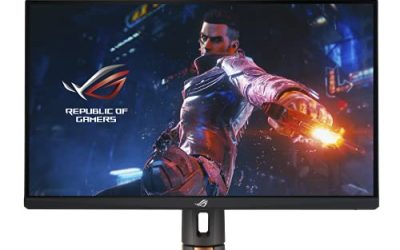
ASUS TUF Gaming VG27UQ1A 27-Inch 4K 160Hz Gaming Monitor
The ASUS TUF Gaming VG27UQ1A is the fast gaming pick in this guide. Its listing names a 27-inch 4K Fast IPS panel running at 160 Hz with a 1 ms response time, and the panel covers 95 percent of DCI-P3, so games get vivid color alongside quick motion. ELMB Sync pairs backlight strobing with adaptive sync to keep fast movement clear, and the combination suits competitive titles where a moving target needs to stay readable.
Connectivity covers a modern desk: HDMI 2.1 carries 4K at up to 120 Hz without chroma subsampling for consoles, per the ASUS listing, while the full 160 Hz refresh rate is a DisplayPort figure for PC play. That split is worth knowing before you buy, because a console tops out at 120 Hz anyway and loses nothing, while a PC with a DisplayPort output gains the extra headroom. The 27-inch size keeps the pixel density high, so text stays sharp when the same screen doubles as a work display between games.
This is the pick for a desk that mixes PC gaming with console play and needs one screen to handle both well. The high refresh rate, fast response and wide color coverage cover the gaming side, and the 4K IPS panel covers the work side without a second monitor.
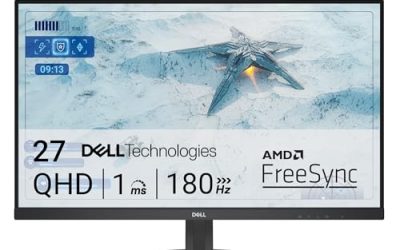
Dell 27 Plus 4K Monitor S2725QS 27-Inch 4K 120Hz IPS
The Dell 27 Plus 4K Monitor S2725QS is the everyday pick in this guide. Its listing names a 27-inch 4K IPS panel at 120 Hz with 99 percent sRGB coverage, two HDMI 2.1 ports, FreeSync Premium support and built-in speakers, which is a rounded set for work, streaming and lighter gaming from a single screen. The 120 Hz refresh rate makes scrolling and mouse movement feel smooth all day, and the built-in speakers cover video calls and casual listening without desk speakers.
One detail to note is the response time: the listing names 5 ms in one place and a faster figure in a mirror of the listing, so this guide uses 5 ms and flags the conflict rather than picking the faster number. Another limit is the lack of USB-C laptop charging, which the Dell S2725QS does not carry, so a laptop on this desk still needs its own charger. Neither point changes the core of the monitor, but both shape the desk around it, and the listing should be opened to confirm the current port list before you order.
This is the pick for a general-use desk where one 4K screen handles documents, video and games in turn. The 120 Hz panel and built-in speakers cover daily use, and the 99 percent sRGB coverage keeps web content and photos looking as their makers intended.
ASUS ProArt Display PA279CRV 27-Inch 4K HDR Monitor
The ASUS ProArt Display PA279CRV is the color-first pick in this guide. Its listing names a 27-inch 4K IPS panel with factory calibration covering 99 percent of DCI-P3 and 99 percent of Adobe RGB at a Delta E under 2, and the Calman Verified calibration means each unit is checked against a known color target before shipping. That pairing covers print work in Adobe RGB and cinema-oriented video in DCI-P3 without forcing a choice between the two, which is the reason this panel leads the creator picks.
The panel runs at 60 Hz with a 5 ms gray-to-gray response, and brightness reaches 400 nits with DisplayHDR 400 certification for HDR viewing. Connectivity is built for a single-cable laptop desk: a USB-C port carries DisplayPort video and up to 96 watts of power delivery, alongside DisplayPort 1.4 with a daisy-chain output for a second monitor, two HDMI 2.0 ports and a USB hub. The 60 Hz refresh rate fits editing, design and media work rather than high-refresh gaming, and that trade is the honest shape of a creator panel.
This is the pick for photo and video editors who need color that matches print or graded video. The wide gamut coverage, factory calibration and USB-C laptop connection cover a creator desk in one screen, and the daisy-chain output leaves room for a second monitor later.
Samsung Odyssey OLED G7 G70SH 27-Inch 4K 165Hz Gaming Monitor
The Samsung Odyssey OLED G7 G70SH is the contrast pick in this guide. Its listing names a 27-inch 4K QD-OLED panel at 165 Hz with a 0.03 ms response time, TrueBlack 400 support and a glare-free coating, which is a strong set for dark-room gaming and movie watching. QD-OLED pairs the deep blacks of OLED with the color volume of quantum dots, so bright highlights and shadow detail hold up together, and the near-instant response keeps fast motion clean.
One limit to plan around is the single HDMI 2.1 port: a desk with two consoles or a console plus a desktop needs a plan for the second device, whether that is a DisplayPort connection for the desktop or a switch in the chain. The 165 Hz refresh rate is PC headroom over DisplayPort, while a console tops out at 4K and 120 Hz over the HDMI 2.1 port. As with any OLED desk screen, vary the content across the day and use the panel’s screen-care features when the same windows stay on screen for hours.
This is the pick for a player who values contrast above all else and games in a dim room. The QD-OLED panel, 165 Hz refresh rate and glare-free coating cover that use well, and the single HDMI 2.1 port is the one compromise to plan around.
Gigabyte M32U 32-Inch 4K 144Hz Gaming Monitor
The Gigabyte M32U is the large-screen pick in this guide. Its listing names a 32-inch screen and a 3840 x 2160 resolution, and the SuperSpeed IPS panel runs at 144 Hz with a 1 ms MPRT response time and Adaptive Sync support. Two HDMI 2.1 ports and a DisplayPort 1.4 input cover a modern graphics card and a console, and a USB-C port with KVM lets one keyboard and mouse serve two connected machines. The panel covers broad DCI-P3 color and supports HDR, so games and media get vivid color alongside the high refresh rate.
The listing states a 31.5-inch IPS display in its description text while marketing the monitor as 32 inches, which is the same viewable-area convention as the other picks in this guide. The stand is height adjustable, and the panel supports picture-in-picture and picture-by-picture modes for watching a second source beside your game. One limit to know before you order: the HDMI 2.1 ports carry 4K at 120 Hz, and the full 144 Hz refresh rate needs the DisplayPort 1.4 input, per the maker’s own answers on the listing, so a graphics card with DisplayPort is the cable to use for the top refresh rate.
This is the pick for a roomy desk where one large screen replaces two smaller ones. The 32-inch size, KVM switch and picture modes cover multitasking and two-machine desks, and the 144 Hz panel covers gaming when the workday ends.
Comparison Table
| Monitor | Size / Resolution | Panel / Refresh | Key Ports | Best For |
|---|---|---|---|---|
| ASUS TUF VG27UQ1A | 27-inch / 3840 x 2160 | Fast IPS / 160 Hz | HDMI 2.1, DisplayPort | Fast PC and console gaming |
| Dell 27 Plus S2725QS | 27-inch / 3840 x 2160 | IPS / 120 Hz | 2x HDMI 2.1, DisplayPort | Everyday work and play |
| ASUS ProArt PA279CRV | 27-inch / 3840 x 2160 | IPS / 60 Hz | USB-C 96W, DisplayPort daisy-chain | Color-critical photo and video |
| Samsung Odyssey OLED G7 G70SH | 27-inch / 3840 x 2160 | QD-OLED / 165 Hz | 1x HDMI 2.1, DisplayPort | Deep contrast gaming |
| Gigabyte M32U | 32-inch / 3840 x 2160 | SuperSpeed IPS / 144 Hz | 2x HDMI 2.1, USB-C KVM | Large-screen multitasking |
Frequently Asked Questions
Is a 27-inch 4K monitor sharp enough for text and code?
Yes. A 27-inch 4K panel holds about 163 pixels per inch, so small fonts stay crisp at a normal viewing distance, and most systems scale the interface to 150 percent so text and menus stay a comfortable size. A 32-inch 4K panel holds about 138 pixels per inch, which is still sharp for text while giving more room for two windows side by side. If your work is mostly reading, writing and code, either size works, and the 27-inch panel gives the crisper text of the two.
Do I need HDMI 2.1 for a 4K monitor?
It depends on the refresh rate you want. A 60 Hz 4K signal travels over a standard HDMI or DisplayPort cable, so a work or editing desk needs nothing special. For 4K at 120 Hz from a console or a newer graphics card, HDMI 2.1 is the port to look for, and every gaming pick in this guide carries it. For the full 144 Hz, 160 Hz or 165 Hz of the faster panels, a DisplayPort connection is needed on some models, so match the cable to the port that carries the refresh rate you want and check the listing for the port list before you order.
Is an OLED 4K monitor a good choice for a desk used all day?
It can be, with habits that fit the panel. An OLED screen gives deeper blacks and faster response than an IPS panel, which shows in dark games and movies, and the glare-free coating on the Samsung pick in this guide helps in a bright room. For a desk where the same windows stay on screen for hours, vary the content across the day, use the panel’s screen-care features, and hide static toolbars when you can. If the screen will show the same taskbar and panels from morning to night without a break, an IPS pick such as the Dell or the ASUS ProArt in this guide is the safer shape for that desk.
How to Choose
Match the monitor to the desk, not to the spec sheet alone. For a gaming desk, the ASUS TUF VG27UQ1A covers fast PC play and console play in one 27-inch screen, and the Gigabyte M32U covers the same ground on a larger panel with a KVM switch for a second machine. For an everyday desk, the Dell S2725QS covers work, streaming and lighter gaming with its 120 Hz panel and built-in speakers, and it asks only that a laptop keeps its own charger. For color work, the ASUS ProArt PA279CRV covers print and video with its wide gamut coverage and factory calibration. For contrast in a dim room, the Samsung Odyssey OLED G7 G70SH covers dark games and movies with its QD-OLED panel, and it asks only that you plan around its single HDMI 2.1 port.
Before you order, open the listing and confirm three things: the model number matches the pick in this guide, the port list covers every device on your desk, and the refresh rate you want travels over the cable you plan to use. A 4K panel lasts through several computer upgrades, so the right choice is the one whose size, ports and panel type still fit the desk a year from now.
Disclosure: As an Amazon Associate, we may earn a commission from qualifying purchases made through links in this article, at no additional cost to you.
FAQ
Is a 27-inch 4K monitor sharp enough for text and code?
Do I need HDMI 2.1 for a 4K monitor?
Is an OLED 4K monitor a good choice for a desk used all day?
More from Amazon
Programs that pair well with the guide above. Offers and eligibility are set by Amazon and may change.
Free shipping on eligible items, Prime Video and more. Eligible new members can start with a free trial.
Start a Prime free trialAd-free music streaming. Eligible new subscribers can start with a free trial.
Try Music Unlimited freeA Prime membership for ages 18-24 with a trial period. Eligibility is set by Amazon.
See Prime for Young AdultsAudiobooks and podcasts to listen to on the go. Eligible new members can start with a free trial.
Try Audible freeAs an Amazon Associate we earn from qualifying purchases.