Our Short List of 3
All 3 Picks at a Glance
| Product | Specs | Action |
|---|---|---|
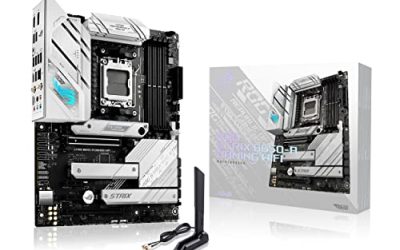
 ASUS ROG Strix X870E-E Gaming WiFi | Check price on Amazon | |
 ASUS TUF Gaming B850-PLUS WiFi | Check price on Amazon | |
 ASUS ROG Strix Z890-E Gaming WiFi | Check price on Amazon |
Our Top Picks
As an Amazon Associate we earn from qualifying purchases.
Choosing the best ASUS motherboards starts with a simple truth: ASUS is not one product line, it is several, and they are aimed at different builders. Republic of Gamers, sold as ROG and ROG Strix, is the enthusiast tier, with the heaviest power delivery, the most M.2 slots, and the newest connectivity. TUF Gaming is the durability-focused middle, built around strong core specifications, military-grade components in ASUS marketing language, and fewer decorative extras. Prime is the mainstream line, plainer in appearance, lighter on gaming branding, and often the most sensible choice for a compact or mixed work-and-play build. ProArt exists as well for creators, but for a general gaming-focused shortlist, ROG, TUF, and Prime cover the ground most buyers actually shop.
This guide compares five ASUS motherboards that together span those decisions honestly. At the top sits a flagship ROG Strix board for AMD AM5 and a flagship ROG Strix board for Intel LGA 1851. In the middle sits a TUF Gaming B850 board that gives AM5 builders most of what matters for gaming without the flagship feature stack. For Intel builders who are still on, or deliberately buying into, LGA 1700, there is a TUF Gaming Z790 board with a mature platform behind it. And for compact AM5 builds, there is a Prime micro-ATX board that trades expansion for size and simplicity. Every pick is an ASUS motherboard, every specification below is taken from the product listings and manufacturer details for that exact model, and the right choice among them depends entirely on the processor you already own or intend to buy.
How to Choose an ASUS Motherboard
Start with the socket, not the brand line
The socket decides everything else. AMD AM5 boards in this guide take Ryzen 7000, 8000, and 9000 series desktop processors and use DDR5 memory only. Intel LGA 1851 boards take Intel Core Ultra desktop processors, also with DDR5. Intel LGA 1700 boards take 12th, 13th, and 14th generation Core processors, and the Z790 pick here uses DDR5 as well. None of these platforms share processors or, in practical build terms, a simple upgrade path between them. If you are upgrading and want to keep your current processor, its socket is your shortlist. If you are building new, choose the processor first on performance and availability, then buy the ASUS board that matches it.
Then choose the chipset for the features you will use
Within one socket, the chipset sets the ceiling for expansion and connectivity. On AM5, X870E is the enthusiast tier, with the broadest PCIe lane provision and, on the flagship pick here, USB4 and five M.2 slots. B850 is the mainstream gaming tier, still offering a PCIe 5.0 graphics slot and a PCIe 5.0 M.2 slot on the TUF pick here, but with fewer total slots and ports. B650 is the earlier mainstream AM5 tier, and the Prime pick shows what it still does well in a small board: a PCIe 5.0 M.2 slot, 2.5Gb Ethernet, and WiFi, without pretending to be an expansion platform. On Intel, Z890 is the current enthusiast chipset for LGA 1851, while Z790 was its equivalent for LGA 1700. Pay for the higher chipset only when you will actually populate the extra M.2 slots, use the extra high-speed ports, or overclock in a way the higher tier supports better.
Understand what ROG, TUF, and Prime actually change
The line names are not just styling. ROG Strix boards in this guide carry the strongest power-stage counts, the most M.2 slots, diagnostic and convenience features aimed at enthusiasts, and ASUS AI-branded tuning and networking tools. TUF Gaming boards keep power delivery and cooling as the priority, with simpler aesthetics and a shorter feature list, which is why the TUF picks are usually the value argument inside the ASUS range. Prime boards strip the gaming presentation away almost entirely, keep the platform essentials, and suit smaller cases and quieter builds. None of that makes one line universally better. It means you should pay for ROG when you need its expansion or tuning features, choose TUF when you want durable core specifications, and choose Prime when the build is compact or deliberately simple.
Check power delivery against your processor tier
Listings state power designs in stages, and the picks here range from the Prime board at the modest end to the ROG flagships with 18-stage-class designs. For a mid-range gaming processor run at stock settings, every board in this guide has adequate power delivery on paper. For a high-core-count flagship processor, sustained all-core work, or deliberate overclocking, the ROG and TUF ATX boards are the appropriate tier, and their larger VRM heatsinks matter as much as the stage count. Match the board tier to the processor tier rather than pairing the most expensive processor with the cheapest board that shares its socket.
Count M.2 slots and check lane sharing
M.2 counts in this guide run from two on the compact Prime board to seven on the Intel ROG flagship. More is only better if you will install the drives, and on heavily populated boards, some M.2 slots share PCIe lanes with the graphics slot or with each other, which can reduce graphics bandwidth or disable a slot in certain configurations. Before buying any board here for a multi-drive build, read the manufacturer’s lane-sharing notes for that exact model and plan which slots you will populate first. The same caution applies to the second PCIe x16 slot on boards that have one, since its speed often depends on what else is installed.
Confirm memory, case size, and networking
All five picks use DDR5, but stated maximum speeds and capacities differ, and memory support always depends on the processor and on the manufacturer’s qualified vendor list, so check your exact kit there before ordering. Form factor is equally concrete: four picks here are ATX and one is micro-ATX, and an ATX board simply does not fit a case built only for micro-ATX. For networking, the newer boards offer WiFi 7, while the LGA 1700 TUF board and the Prime board offer WiFi 6 generation wireless; every pick includes 2.5Gb Ethernet. If you game over a wired connection, that Ethernet port matters more than the WiFi generation, and if you game wirelessly, confirm your router generation before paying for a WiFi tier you cannot use yet.
The Picks at a Glance
| Pick | Socket and chipset | Form factor | M.2 slots | Networking | Best for |
|---|---|---|---|---|---|
| ASUS ROG Strix X870E-E Gaming WiFi | AM5, X870E | ATX | 5 | WiFi 7, 5Gb-class LAN on listing details | Flagship AM5 gaming and expansion |
| ASUS TUF Gaming B850-PLUS WiFi | AM5, B850 | ATX | 3 | WiFi 7, 2.5Gb LAN | Mainstream AM5 gaming value inside ASUS |
| ASUS ROG Strix Z890-E Gaming WiFi | LGA 1851, Z890 | ATX | 7 | WiFi 7, 5Gb LAN on listing details | Flagship Intel Core Ultra builds |
| ASUS TUF Gaming Z790-Plus WiFi | LGA 1700, Z790 | ATX | 4 | WiFi 6, 2.5Gb LAN | 12th to 14th generation Intel builds |
| ASUS Prime B650M-A AX II | AM5, B650 | Micro-ATX | 2 | WiFi 6, 2.5Gb LAN | Compact AM5 builds |
ASUS ROG Strix X870E-E Gaming WiFi
This is the flagship AM5 argument in the ASUS range, and its listing specifications explain why. The board is built around an 18+2+2 power stage design, five M.2 slots, PCIe 5.0 support, WiFi 7, and USB4, with ASUS features including Dynamic OC Switcher, Core Flex, DDR5 AEMP memory profiling, AI Overclocking, AI Cooling II, and AI Networking. For a Ryzen 9000 series build intended to hold several fast NVMe drives, a current-generation graphics card, and high-speed external storage at the same time, this is the ASUS board that asks the fewest compromises.
The five M.2 slots are the headline for storage-heavy builders, but they come with the lane-sharing caution described above: on boards this densely populated, which slots run at full speed depends on the processor and on what else is installed, so the manual for this exact model is essential reading before you plan a four or five drive layout. The Q-Release Slim mechanism for the graphics slot is a smaller detail that frequent upgraders will appreciate, since removing large modern graphics cards from tightly spaced builds is otherwise an awkward job.
Choose this board if you are building at the top of AM5 and expect the system to grow. Skip it if your build has one drive and one graphics card and no plans beyond that, because in that configuration the TUF B850 pick below delivers the same gaming essentials and the extra slots and stages here would sit unused. This is a board bought for headroom, and it should be judged on whether you will use that headroom.
ASUS TUF Gaming B850-PLUS WiFi
For most AM5 gaming builds, this TUF board is the sensible centre of the ASUS range. Its listing describes 14+2+1 power stages rated at 80A with an 8-layer PCB and dual ProCool power connectors, three M.2 slots with heatsinks including one PCIe 5.0 slot and two PCIe 4.0 slots, PCIe 5.0 for the graphics slot, WiFi 7, 2.5Gb Ethernet, a rear USB 20Gbps Type-C port, a front USB 10Gbps Type-C connector, and support for a Thunderbolt USB4 header. DDR5 support is stated up to 8000 MHz across four slots with a large maximum capacity, which is more memory headroom than a gaming build is likely to need during the platform’s life.
What the TUF gives up against the ROG flagship is breadth, not basics: fewer M.2 slots, no built-in USB4 port of its own, and a plainer presentation. What it keeps is the combination that actually shapes a gaming system day to day, namely strong power delivery for Ryzen processors, one genuinely fast storage slot plus two more behind heatsinks, current wireless, and BIOS FlashBack for updating firmware without a compatible processor installed. For a single-GPU build with two or three drives, that is the full checklist.
ASUS ROG Strix Z890-E Gaming WiFi
Intel builders on the current LGA 1851 platform get their flagship in this Z890 board. The listing describes an 18+2+1+2 power stage design, seven M.2 slots, DDR5 support, WiFi 7, Thunderbolt 4 ports, USB Type-C connectivity, and the same family of ASUS AI Overclocking, Cooling, and Networking tools as the AMD flagship. Seven M.2 slots is the most storage expansion in this guide by a wide margin, and it makes this board the natural ASUS choice for a Core Ultra build that doubles as a storage-heavy workstation or a game library machine with several NVMe drives installed at once.
That density again comes with homework. With seven slots, lane sharing is not a footnote but a central planning question, and the manufacturer’s documentation for this model should decide your drive layout before purchase, especially if you also plan capture or expansion cards in the secondary PCIe slots. The dual Thunderbolt 4 provision is the other distinguishing feature, giving high-speed external storage and docking options that the AM5 TUF and Prime picks do not match directly.
Choose the Z890-E when the processor decision is already made in favour of Intel Core Ultra and the build brief includes serious expansion. If the build is a straightforward one-GPU, one-or-two-drive gaming system on Intel’s current socket, this board is more than the brief requires, and a lower Z890 tier within ASUS would be the proportionate buy even though it is not part of this five-board shortlist.
ASUS TUF Gaming Z790-Plus WiFi
LGA 1700 is no longer Intel’s newest socket, and this board should be bought with that fact understood rather than ignored. It supports 12th, 13th, and 14th generation Core processors, which is precisely why it remains relevant: a large installed base of those processors exists, DDR5 memory for the platform is widely available, and a builder upgrading a motherboard, or using an existing LGA 1700 processor, needs a board for that socket, not for LGA 1851. The listing describes 16+1 DrMOS power stages, four PCIe 4.0 M.2 slots, a PCIe 5.0 graphics slot, WiFi 6, 2.5Gb LAN, a front USB 3.2 Gen 2 Type-C connector, and Thunderbolt 4 header support.
The TUF formula is the same as on the B850 pick: enlarged VRM heatsinking, M.2 and chipset heatsinks, and components chosen for durability, in a board without the ROG tier’s decorative and diagnostic extras. Four M.2 slots is generous for the platform’s age and enough for a boot drive, a game library drive, and room to spare. The honest limitation is the platform ceiling: there is no processor upgrade path beyond the generations listed, so this is a board for builders who already own, or are deliberately and knowingly buying, an LGA 1700 processor at a sensible total system cost.
Do not buy this board as the start of a new flagship Intel build in ignorance of the socket change, and do not dismiss it either. Judged on its own terms, as the ASUS option for a very large family of existing Intel processors, it is a complete and well-cooled board whose specification has no obvious gaming gap.
ASUS Prime B650M-A AX II
The Prime pick is the only micro-ATX board here, and the only one that makes no attempt at gaming presentation, which is exactly its role. It is an AM5 board for Ryzen 9000, 8000, and 7000 series processors in a compact format, with DDR5 support, two M.2 slots, the first supporting PCIe 5.0 speeds, 2.5Gb Ethernet, WiFi 6, DisplayPort and HDMI outputs, USB 3.2 ports including Type-C, and BIOS FlashBack. For a small case build that still wants a current AMD platform and one very fast drive, that specification covers the essentials without paying for ATX expansion the case cannot use.
The compromises are structural and should be accepted knowingly. Two M.2 slots and a micro-ATX layout mean fewer drives, fewer expansion cards, and tighter working space during the build than any ATX pick here. Power delivery and cooling provision are appropriate to the Prime tier rather than the ROG tier, so this board pairs best with mid-range Ryzen processors run at stock settings, in a case with sensible airflow. Within those limits, it is a coherent board rather than a cut-down embarrassment: the platform is current, the networking is complete, and the fast primary storage slot is present.
Choose it for compact AM5 systems, smaller desks, and builds where the gaming hardware is the graphics card and processor rather than the motherboard’s feature list. Choose one of the ATX picks instead the moment the brief includes several drives, an extra expansion card, or a flagship processor, because no specification reading can make a micro-ATX Prime into an expansion board.
Which ASUS Motherboard Should You Buy?
Work through the decision in the same order as the How to Choose section. If your processor is a Ryzen 7000, 8000, or 9000 chip, your choice is among the three AM5 boards: the ROG Strix X870E-E for flagship expansion and tuning headroom, the TUF Gaming B850-PLUS WiFi for the mainstream gaming build that most people are actually assembling, and the Prime B650M-A AX II when the case is micro-ATX and the brief is compact and simple. If your processor is an Intel Core Ultra chip, the ROG Strix Z890-E is this guide’s ASUS flagship for that socket, with its seven M.2 slots making it the expansion pick of the entire list. If your processor is a 12th, 13th, or 14th generation Core chip, the TUF Gaming Z790-Plus WiFi is the matching board, bought knowingly for a mature platform.
Whichever pick you choose, confirm three things on the live listing and the manufacturer’s page for the exact model before ordering: that your specific processor appears on the board’s CPU support list at a BIOS version you can reach, that your exact memory kit appears on the qualified vendor list, and that the lane-sharing notes for the M.2 slots match the drive layout you plan. Those checks take minutes and prevent the most common motherboard disappointments, which are almost never about the board’s headline features and almost always about a compatibility detail that was published all along.
Disclosure
Disclosure: This article contains affiliate links. If you buy through those links, a commission may be earned at no additional cost to you. Product information was taken from the listings and manufacturer details available at the time of writing, and specifications should be confirmed on the live listing before purchase.
FAQ
Which ASUS Motherboard Should You Buy?
More from Amazon
Programs that pair well with the guide above. Offers and eligibility are set by Amazon and may change.
Free shipping on eligible items, Prime Video and more. Eligible new members can start with a free trial.
Start a Prime free trialAd-free music streaming. Eligible new subscribers can start with a free trial.
Try Music Unlimited freeA Prime membership for ages 18-24 with a trial period. Eligibility is set by Amazon.
See Prime for Young AdultsAudiobooks and podcasts to listen to on the go. Eligible new members can start with a free trial.
Try Audible freeAs an Amazon Associate we earn from qualifying purchases.