Our Short List of 3

- Best for: Convertibles, boats, ATVs, and any install where moisture and volume both matter.
- 6×9-inch 3-way coaxial design
- 150W RMS and 450W peak power handling
- 4-ohm impedance
- Frequency response of 30Hz to 22kHz
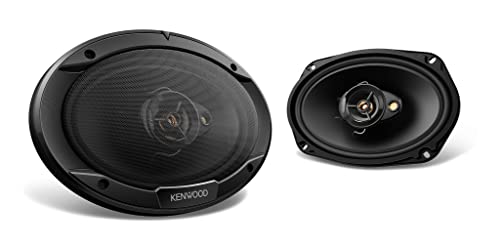
- Best for: Drivers replacing worn 6×9 rear-deck or door speakers who want the install done in minutes.
- 6×9-inch 3-way coaxial design
- 45W RMS and 400W peak power handling
- 4-ohm impedance
- Frequency response of 35Hz to 20kHz

- Best for: Drivers who want strong, full-range sound on stock power, including cars that already have a subwoofer.
- 6.5-inch 2-way coaxial design
- 60W RMS and 180W peak power handling
- 3-ohm impedance
- Designed to match systems powered by a head unit or factory amplifier
All 5 Picks at a Glance
| Product | Specs | Action |
|---|---|---|
| Polk Audio DB692 DB+ Series 6×9 Coaxial Speakers |
| Check price on Amazon |
| Kenwood KFC-6966R 6×9 3-Way Coaxial Speakers |
| Check price on Amazon |
| JBL GTO629 6.5-Inch 2-Way Coaxial Speakers |
| Check price on Amazon |
 KICKER 46CSC654 6.5-Inch 2-Way Coaxial Speakers (Two Pairs) |
| Check price on Amazon |
 Rockford Fosgate P165-SI 6.5-Inch Component Speaker System |
| Check price on Amazon |
Key takeaways
- Compare five car speakers for factory radios and amplified builds, with fitment, sensitivity, and power guidance to match the right set to your car.
Most factory speakers do not die all at once. They lose their edge over years of heat, vibration, and damp door cavities, so vocals turn thin, bass turns loose, and distortion creeps in long before a cone actually tears. Replacing them is the single most effective upgrade a stock stereo can get, but only when the new set fits the opening, matches the head unit, and suits the way you listen. A speaker that is too deep for the door, too demanding for factory power, or built for an amplifier you will never buy solves nothing.
This guide is for daily drivers replacing worn stock speakers, commuters who want clearer sound from a factory radio, and owners planning a fuller build around an amplifier. Each pick below comes from its Amazon listing title and published specifications, with size, power handling, sensitivity, and impedance stated so you can check fitment before you order.
Quick Picks
As an Amazon Associate we earn from qualifying purchases.
| Product | Best for | Key spec from title |
|---|---|---|
| Polk Audio DB692 DB+ Series | Wet, loud, all-weather installs | 6×9 coaxial, 150W RMS |
| Kenwood KFC-6966R | Easy 6×9 rear-deck replacement | 6×9 3-way coaxial, 45W RMS |
| JBL GTO629 | Full sound on factory power | 6.5-inch 2-way coaxial, 3-ohm |
| KICKER 46CSC654 (Two Pairs) | Replacing all four door speakers | 6.5-inch coaxial, 100W RMS |
| Rockford Fosgate P165-SI | Component staging on a modest setup | 6.5-inch component system, 60W RMS |
How to Choose
Match the size and mounting depth to your car
Size comes before every other specification, because a speaker that does not fit is useless no matter how good it sounds on paper. The two dominant sizes are 6.5-inch round drivers for most doors and 6×9-inch ovals for most rear decks, and they are not interchangeable without an adapter plate. Pull the factory grille, measure the cutout, and measure the depth behind it, since a magnet that is a fraction too deep will foul the window mechanism or the door card. Shallow-mount designs exist for tight doors, and multi-fit adapters bridge many mismatches, but neither fixes a depth problem. Confirm both numbers before you order anything.
Read sensitivity and impedance before power handling
If you are keeping the stock head unit, sensitivity is the number that decides how loud your new speakers play. A speaker rated at 92dB or 93dB turns the modest output of a factory radio into noticeably more volume than a 90dB speaker on the same power, with no extra equipment. Impedance matters just as much: most car speakers are 4-ohm, while some JBL models run 3-ohm voice coils that draw more current and play louder from the same head unit. Keep all four corners in the same impedance ballpark so one pair does not dominate the others, and check what your head unit is rated to drive before mixing loads.
Decide between coaxial convenience and component staging
Coaxial speakers mount the tweeter in the center of the woofer, so everything plays from one point and the install is a single hole, one wiring run, and an afternoon of work. Component systems separate the tweeter with its own crossover, letting you mount tweeters high on the dash or A-pillars to pull the soundstage up to ear level. Components image better and sound more spacious, but they take longer to install and need planning for tweeter placement and crossover mounting. If you want a straightforward swap, choose coaxial; if staging and vocal placement matter most to you, accept the extra install time and choose components.
Build for the environment your doors actually live in
A door cavity is a harsh place: summer heat, winter condensation, road vibration, and the occasional window leak. Polypropylene cones resist moisture far better than untreated paper, and rubber surrounds hold up longer than foam through years of heat cycles. If the speakers face real weather, such as a convertible, a Jeep with the top off, a boat, or an ATV, look for a genuine weather-resistance claim backed by testing rather than the word marine on the box. The Polk DB692, for example, carries IP56 weather protection with salt-fog, UV, and humidity testing. For a sealed sedan door, weatherproofing matters less, and you can put the emphasis on sensitivity and tone instead.
The 5 Best Options
Polk Audio DB692 DB+ Series 6×9 Coaxial Speakers
- Best for: Convertibles, boats, ATVs, and any install where moisture and volume both matter.
- 6×9-inch 3-way coaxial design
- 150W RMS and 450W peak power handling
- 4-ohm impedance
- Frequency response of 30Hz to 22kHz
Convertibles, boats, ATVs, and any install where moisture and volume both matter.
The large 6×9 frame needs a matching opening and mounting depth; it can sound thin when driven only by a weak factory head unit.
The DB692 is the pick for drivers whose speakers live where weather lives. Its 6×9 frame gives more cone area than a round 6.5-inch driver, and the 150W RMS handling leaves real headroom if you add an amplifier later. The silk dome tweeter keeps highs smooth rather than harsh, and the 30Hz low-end reach gives kick drums genuine weight on a 6×9 opening. Polk backs the weather claim with testing against salt fog, UV, and humidity, so this set suits convertibles, off-roaders, and boats as well as ordinary cars. It needs a matching 6×9 opening and real depth behind the panel, so measure first.
Watch out for: The large 6×9 frame needs a matching opening and mounting depth; it can sound thin when driven only by a weak factory head unit.
Kenwood KFC-6966R 6×9 3-Way Coaxial Speakers
- Best for: Drivers replacing worn 6×9 rear-deck or door speakers who want the install done in minutes.
- 6×9-inch 3-way coaxial design
- 45W RMS and 400W peak power handling
- 4-ohm impedance
- Frequency response of 35Hz to 20kHz
Drivers replacing worn 6×9 rear-deck or door speakers who want the install done in minutes.
The 45W RMS figure means limited headroom on a large amplifier, and fitment has been reported as tricky on some specific vehicles.
The KFC-6966R is built for the most common job in car audio: replacing tired 6×9 rear-deck speakers without a fight. Its shallow frame and low tweeter height slip into tight rear decks, and the grilles come in the box, so the finished install looks complete. The 3-way layout adds a dedicated tweeter for cleaner highs, while the 35Hz low-end reach gives bass genuine presence for a speaker fed by a head unit. With 45W RMS handling it is a factory-power speaker, not an amplifier speaker, and that focus is what makes it so easy to live with. Measure the cutout first, since fitment varies by vehicle.
Watch out for: The 45W RMS figure means limited headroom on a large amplifier, and fitment has been reported as tricky on some specific vehicles.
JBL GTO629 6.5-Inch 2-Way Coaxial Speakers
- Best for: Drivers who want strong, full-range sound on stock power, including cars that already have a subwoofer.
- 6.5-inch 2-way coaxial design
- 60W RMS and 180W peak power handling
- 3-ohm impedance
- Designed to match systems powered by a head unit or factory amplifier
Drivers who want strong, full-range sound on stock power, including cars that already have a subwoofer.
The mounting shape does not align in every vehicle, so a quick measurement of the factory cutout is worth the effort; as a 2-way design it has less tweeter separation than a 3-way.
The GTO629 is the pick for a driver who wants full, confident sound from a factory radio or a factory amplifier, with no extra equipment. Its 3-ohm voice coil draws more current from a modest source than a standard 4-ohm load, so it plays fuller at the same volume setting, and the 60W RMS handling keeps it clear and controlled even when a subwoofer in the trunk is competing for attention. As a 2-way coaxial it is a direct drop-in for the common 6.5-inch door opening, with the tweeter carrying more of the upper range on its own. Check the depth and basket shape against your opening before ordering.
Watch out for: The mounting shape does not align in every vehicle, so a quick measurement of the factory cutout is worth the effort; as a 2-way design it has less tweeter separation than a 3-way.
KICKER 46CSC654 6.5-Inch 2-Way Coaxial Speakers (Two Pairs)
- Best for: Replacing all four factory door speakers in one matched order.
- 6.5-inch 2-way coaxial design, sold as two pairs (four speakers)
- 100W RMS and 300W peak power handling
- 4-ohm impedance
- 90dB sensitivity
Replacing all four factory door speakers in one matched order.
The 90dB sensitivity needs a little more volume knob than the higher-sensitivity picks, and the PEI tweeter can edge toward harsh on bright recordings at high volume.
This listing covers two pairs, so one order replaces all four door speakers with a matched set. The headline figure is 100W RMS handling per speaker, double the JBL Club coaxial in this guide, wrapped in a heavy-duty motor with Extended Voice Coil technology that keeps bass clean when you push it. UV-treated surrounds suit sun-baked doors, zero-protrusion tweeters fit under factory grilles without fouling the door panel, and steel mesh grilles come in the box. At 90dB sensitivity it needs a touch more volume than the 92–93dB picks, but it slots into any factory system without drama.
Watch out for: The 90dB sensitivity needs a little more volume knob than the higher-sensitivity picks, and the PEI tweeter can edge toward harsh on bright recordings at high volume.
Rockford Fosgate P165-SI 6.5-Inch Component Speaker System
- Best for: Listeners who want component staging and clearer imaging without a complex install.
- 6.5-inch 2-way component speaker system
- 60W RMS and 120W peak power handling
- 4-ohm impedance
- Integrated concealed crossover
Listeners who want component staging and clearer imaging without a complex install.
The 120W maximum handling means it is not an amplifier-first build, and separate tweeter placement still takes some planning.
The P165-SI is the clever compromise of this list: component-system staging without the usual component-system install headache. Separate tweeters mount high for proper imaging, while the crossover is integrated into a concealed design, so the wiring stays close to coaxial effort. Mineral-filled polypropylene cones with Santoprene rubber surrounds are built to survive real doors, and the whole system is tuned to run off factory power. You give up some top-end refinement and power handling against the JBL component set, but you keep the single biggest sonic advantage of components: tweeters at ear level.
Watch out for: The 120W maximum handling means it is not an amplifier-first build, and separate tweeter placement still takes some planning.
Which One Fits Your Situation
Replacing blown factory speakers on a stock radio
Choose the Kenwood KFC-6966R if your openings are 6×9, or the JBL GTO629 if they are 6.5-inch round. Both are built to run cleanly from a factory head unit, with sensitivity and impedance chosen to pull the most from modest power. The Kenwood installs fastest, while the JBL plays fuller and holds its own if a subwoofer joins the system later.
Building a louder system with an amplifier in mind
Choose the Polk Audio DB692 for its 150W RMS headroom, or the KICKER 46CSC654 for 100W RMS across all four doors. Both have the continuous power handling to grow into an amplifier, rather than running out of steam the moment you add one. The Polk adds weatherproofing and deeper bass; the Kicker covers the whole car in a single order.
Upgrading front staging for clearer vocals
Choose the Rockford Fosgate P165-SI. Its separate tweeters mount high, pulling vocals and instruments up to ear level instead of leaving them at your knees, and the integrated crossover keeps the install manageable. It is the right call when imaging matters more than outright volume, and it still runs happily off factory power while you decide on an amplifier.
Speakers that face weather, boats, or open tops
Choose the Polk Audio DB692 and nothing else on this list. Its IP56 weather protection, salt-fog testing, and coated steel baskets are built for moisture, dust, and sun, which matters more than any frequency-response number once the top comes off or the boat leaves the dock. Confirm the 6×9 opening and depth first, since this is the largest frame here.
Safety Notes
Car speakers connect to a 12-volt electrical system, so confirm the impedance your head unit or amplifier is rated to drive before mixing loads, and never force a speaker into an opening that needs cutting unless you accept the modification. Disconnect the vehicle battery before touching door wiring, and if the install involves running new wires through door boots or drilling for tweeter mounts, have it done by a qualified installer. The listings in this guide state power handling and impedance; use those figures, not guesswork, when matching speakers to your system.
Common Mistakes
- Ordering before measuring the factory cutout and mounting depth, then finding the new speaker fouls the window or door card.
- Chasing the peak wattage number on the box instead of matching RMS handling to the head unit or amplifier.
- Mixing 3-ohm and 4-ohm speakers across the four corners, so one pair plays noticeably louder than the other.
- Picking a component system for staging, then mounting the tweeters low in the doors where the imaging advantage disappears.
- Judging new speakers in the first hour, before the surrounds have loosened and the midbass has filled in.
Frequently Asked Questions
Do I need an amplifier to upgrade my car speakers?
Usually not. High-sensitivity speakers rated at 90dB and above are designed to run cleanly off a factory head unit, and several picks in this guide are built for exactly that. An amplifier becomes worthwhile when you choose lower-sensitivity speakers, want serious volume without distortion, or run a component system you plan to push hard.
What size car speakers fit my car?
The two most common sizes are 6.5-inch round drivers for most doors and 6×9-inch ovals for most rear decks. Always confirm your factory size and mounting depth before ordering by checking the owner manual, a fitment guide, or measuring the factory speaker yourself. Adapters can bridge many size mismatches, but they cannot fix a depth problem.
What is the difference between coaxial and component car speakers?
Coaxial speakers mount the tweeter in the center of the woofer, so everything plays from one point and the install is a quick drop-in. Component systems separate the tweeter with an external crossover, letting you mount tweeters higher for a wider, better-imaged soundstage. Components sound better staged, while coaxials install faster and cost less effort.
Can I mix speaker brands in my car?
Yes, and most people do. A common build pairs a component set up front, where imaging matters, with coaxials in the rear deck for fill duty. Just keep sensitivity and impedance in the same ballpark so one pair does not dramatically outplay the other off the same head unit, and match the sizes to each opening.
FAQ
Do I need an amplifier to upgrade my car speakers?
What size car speakers fit my car?
What is the difference between coaxial and component car speakers?
Can I mix speaker brands in my car?
More from Amazon
Programs that pair well with the guide above. Offers and eligibility are set by Amazon and may change.
Free shipping on eligible items, Prime Video and more. Eligible new members can start with a free trial.
Start a Prime free trialAd-free music streaming. Eligible new subscribers can start with a free trial.
Try Music Unlimited freeA Prime membership for ages 18-24 with a trial period. Eligibility is set by Amazon.
See Prime for Young AdultsAudiobooks and podcasts to listen to on the go. Eligible new members can start with a free trial.
Try Audible freeAs an Amazon Associate we earn from qualifying purchases.