Our Short List of 3

- Best for: First tower setups on a modest budget.
- 1-inch tweeter, 6.5-inch Dynamic Balance driver
- Two 6.5-inch bass radiators
- 150 watts maximum output power
- 6 ohms impedance

- Best for: Warm, full-range stereo listening.
- 3-way, 4-driver design
- Two 5.12-inch woofers, 1-inch tweeter, 3/4-inch super tweeter
- Frequency response 45 Hz to 50 kHz
- 145 watts maximum input power
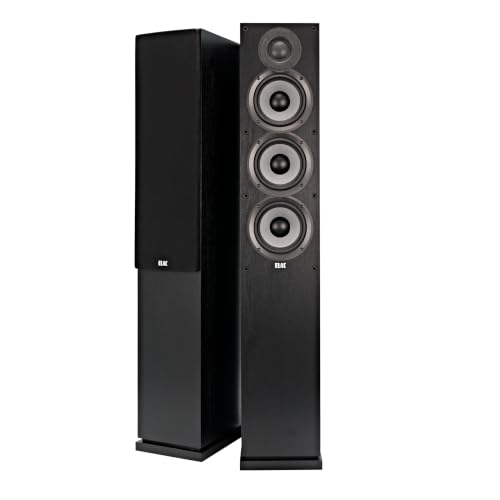
- Best for: Detailed, critical listening in a medium room.
- 1-inch cloth dome tweeter with waveguide
- Three 5.25-inch aramid fiber woofers
- Frequency response 42 Hz to 35 kHz
- Up to 140 watts recommended amplifier power
All 4 Picks at a Glance
| Product | Specs | Action |
|---|---|---|
| Polk Audio T50 |
| Check price on Amazon |
| Sony SSCS3 |
| Check price on Amazon |
| ELAC Debut 2.0 F5.2 |
| Check price on Amazon |
 Klipsch R-600F |
| Check price on Amazon |
Key takeaways
- Find the best floor standing speakers for music, from warm Polk and Sony towers to detailed ELAC and Klipsch models, and match the right pair to your room.
Floorstanding speakers fill a room in a way bookshelf models rarely match. The tall cabinet gives bass room to breathe, the extra drivers spread the sound across a wider stage, and the music keeps its weight even at low volumes. For a dedicated listening room, a pair of towers is still the most direct route to a full, satisfying sound without adding a subwoofer.
This guide compares four floorstanding speakers for music, from an affordable Polk tower to a horn-loaded Klipsch built for dynamics. Each pick was chosen from the name and specifications shown on its Amazon page, and every model below is a passive speaker that needs an amplifier or AV receiver. The right pair depends on your room size, your amplifier, and the kind of music you play most.
Quick Picks
As an Amazon Associate we earn from qualifying purchases
| Product | Best for | Key spec from title |
|---|---|---|
| Polk Audio T50 | First tower setup | Dual 6.5-inch bass radiators, 150 watts |
| Sony SSCS3 | Warm, full-range sound | 3-way, 4-driver, 45 Hz to 50 kHz |
| ELAC Debut 2.0 F5.2 | Detailed listening | Triple 5.25-inch woofers, 42 Hz to 35 kHz |
| Klipsch R-600F | Dynamics and efficiency | 96 dB sensitivity, Tractrix horn |
How to Choose
Room Size Sets the Tower Size
A tower that is too large for a small room will overpower it with bass, while a small tower in a large room will sound thin at the far end. Measure the room, note where the speakers will stand, and leave space behind each cabinet for the port to breathe. As a rough guide, a compact tower suits a bedroom or a small living room, a mid-size tower suits a normal living room, and the largest towers belong in open-plan spaces. The cabinet height also matters visually: a 40-inch tower dominates a small room, so check the proportions before you order.
Check What Your Amplifier Can Drive
Every tower in this guide is passive, which means your amplifier does the work. Check the speaker’s impedance and sensitivity against your amplifier’s output, since a low-sensitivity speaker needs more power to reach the same volume. A speaker rated at 86 dB needs a stronger amplifier than one rated at 96 dB, and a 6-ohm load asks more of the amplifier than an 8-ohm load. Most modern receivers handle 6-ohm speakers without trouble, but a very small amplifier may struggle with a demanding tower, so match the pair before you buy.
Drivers and Crossovers Shape the Sound
The driver layout tells you a lot about how a tower will sound. A three-way design with separate woofer, midrange, and tweeter drivers usually images better than a two-way tower, since each driver handles a narrower band. The crossover is the hidden part: it splits the signal between drivers, and a well-designed crossover keeps vocals smooth where the drivers hand off to each other. Read the listing for the driver sizes and the design type, and favor towers whose makers publish the full driver complement rather than hiding it.
Remember That Most Towers Sell Individually
Many floorstanding speakers are sold one at a time, not as a pair, and the listing price covers a single cabinet. Check the unit count on the Amazon page before you order, since buying one tower by mistake leaves you with half a stereo system. Budget for two cabinets, two runs of speaker wire, and a pair of floor spikes or pads, and confirm that the finish matches across both units if you order them separately. Ordering both cabinets at once helps, since one batch is more likely to share the same finish. Keep the boxes until both speakers are tested, so a return is easy if one cabinet arrives damaged.
The 4 Best Options
Polk Audio T50
- Best for: First tower setups on a modest budget.
- 1-inch tweeter, 6.5-inch Dynamic Balance driver
- Two 6.5-inch bass radiators
- 150 watts maximum output power
- 6 ohms impedance
First tower setups on a modest budget.
The listing covers one speaker, so order two for a stereo pair.
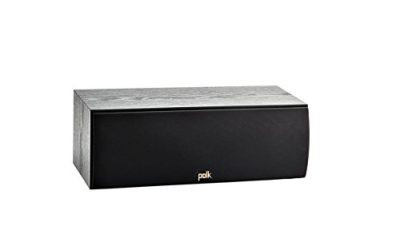
The Polk T50 is the accessible starting point for a first tower system, and it keeps the formula simple. A 1-inch tweeter handles the highs, a 6.5-inch driver covers the midrange, and dual 6.5-inch bass radiators add low-end weight without a powered subwoofer inside the cabinet. The wooden enclosure stands 36.5 inches tall and fits a normal living room without dominating it, and the 6-ohm impedance works with most home theater receivers. It is sold individually, so a stereo setup needs two cabinets, and its 150-watt maximum rating suits small and medium rooms. The simple crossover keeps the sound clean at low volumes, which suits late-night listening.
Watch out for: The listing covers one speaker, so order two for a stereo pair.
Sony SSCS3
- Best for: Warm, full-range stereo listening.
- 3-way, 4-driver design
- Two 5.12-inch woofers, 1-inch tweeter, 3/4-inch super tweeter
- Frequency response 45 Hz to 50 kHz
- 145 watts maximum input power
Warm, full-range stereo listening.
At 29 pounds per cabinet, it needs a firm floor and careful positioning.
The Sony SSCS3 is the warm, full-range pick for listeners who want a complete sound from a single pair of towers. Its three-way, four-driver layout pairs dual 5.12-inch woofers with a 1-inch tweeter and a 3/4-inch super tweeter, reaching from 45 Hz up to 50 kHz for high-resolution recordings. The mica-reinforced woofer cones keep bass controlled, and the optimized crossover hands off cleanly between drivers so vocals stay smooth. It is sold individually, it stands on four foot pads, and it pairs naturally with Sony’s matching center and bookshelf models for a full surround system later. The wide frequency range also flatters high-resolution recordings without adding harshness.
Watch out for: At 29 pounds per cabinet, it needs a firm floor and careful positioning.
ELAC Debut 2.0 F5.2
- Best for: Detailed, critical listening in a medium room.
- 1-inch cloth dome tweeter with waveguide
- Three 5.25-inch aramid fiber woofers
- Frequency response 42 Hz to 35 kHz
- Up to 140 watts recommended amplifier power
Detailed, critical listening in a medium room.
The 86 dB sensitivity needs a stronger amplifier than the Klipsch, and the rear ports need clearance from the wall.
The ELAC Debut 2.0 F5.2 is the detailed listener’s tower, built around a three-way design with a 1-inch cloth dome tweeter and three 5.25-inch aramid fiber woofers. The tweeter’s waveguide controls directivity so the stereo image stays stable across the couch, and the braced MDF cabinet with three rear-firing ports keeps vibration down while extending the bass to 42 Hz. The 86 dB sensitivity asks for a capable amplifier, but the reward is a balanced, refined sound that suits acoustic music, jazz, and classical as well as rock. It is sold individually and includes spike feet for the plinth base. Solid floors help the spikes do their job.
Watch out for: The 86 dB sensitivity needs a stronger amplifier than the Klipsch, and the rear ports need clearance from the wall.
Klipsch R-600F
- Best for: Loud, dynamic listening with a modest amplifier.
- 1-inch aluminum LTS tweeter with 90-degree by 90-degree Tractrix horn
- Two 6.5-inch spun-copper TCP woofers
- 96 dB sensitivity
- Frequency response 38 Hz to 21 kHz
Loud, dynamic listening with a modest amplifier.
The horn sound is forward and lively, which some listeners find bright in a hard, reflective room.
The Klipsch R-600F is the dynamic pick for listeners who want their music loud, lively, and efficient. Its 96 dB sensitivity means even a modest amplifier drives it to room-filling volume, and the 1-inch aluminum tweeter sits behind a larger 90-degree by 90-degree Tractrix horn that keeps the highs clean and direct. Dual 6.5-inch spun-copper woofers deliver punchy bass, and the 100-watt continuous and 400-watt peak handling leaves plenty of headroom for crescendos. Unlike the other towers here, this listing covers a pair, so one order completes the stereo setup. The horn also keeps dialogue crisp when the pair doubles as home theater fronts.
Watch out for: The horn sound is forward and lively, which some listeners find bright in a hard, reflective room.
Which One Fits Your Situation
Small Room, First Stereo
The Polk T50 fits a small room best. Its compact cabinet and modest power needs suit a bedroom or a small living room, and the dual bass radiators give music real weight without a subwoofer. Buy two cabinets, place them a few feet apart, and keep them slightly away from the wall.
Warm Sound for Long Sessions
The Sony SSCS3 suits long listening sessions. Its warm voicing and wide frequency range flatter vocals, acoustic instruments, and orchestral music, and the three-way layout keeps the sound smooth from the lowest bass to the highest harmonics. It is a comfortable speaker for an evening of albums rather than a short burst of volume.
Critical Listening and Detail
The ELAC F5.2 is the pick for listeners who sit down and really listen. Its waveguide tweeter and braced cabinet produce a stable, detailed image that rewards good recordings and a capable amplifier. Give it room to breathe behind the cabinet, and feed it with a solid stereo amplifier rather than a basic receiver.
Big Room, Big Dynamics
The Klipsch R-600F owns the big room. Its 96 dB sensitivity fills a large space from a modest amplifier, and the horn-loaded tweeter keeps the sound crisp at the far end of the couch. Since the listing covers a pair, it is also the simplest order in this guide. Place the pair wide apart and toe them in slightly, so the stereo image holds together across a long room.
Common Mistakes
- Ordering one tower when the listing sells a single speaker, leaving half a stereo system.
- Pushing a rear-ported tower flat against the wall and losing the bass it was designed to produce.
- Pairing a low-sensitivity tower with a weak amplifier and wondering why it sounds thin.
- Placing towers in corners, where bass builds up and drowns the midrange.
- Skipping speaker wire and stands in the budget, then improvising with the wrong gauge.
Frequently Asked Questions
Do floorstanding speakers need a subwoofer for music?
Usually not. A good tower reaches deep enough for most music on its own, and a poorly set up subwoofer can muddy the bass. Add one only when the room is very large or your music has extreme low end, and cross it over low so the towers still do most of the work.
How far from the wall should tower speakers stand?
Start with at least a foot of space behind a rear-ported tower, and more if the bass sounds boomy. Front-ported or sealed towers can sit closer, but every tower sounds better with some air around it. Move the speakers in small steps and listen, since the right distance depends on the room.
Can I use floorstanding speakers with a small amplifier?
Sensitivity decides the answer. A high-sensitivity tower like the Klipsch plays loud from a modest amplifier, while a low-sensitivity design like the ELAC needs more power to reach the same volume. Check the sensitivity and impedance figures against your amplifier’s output before you buy. A trial run at home tells you more than any specification sheet.
Is it better to buy towers as a pair or individually?
It makes no difference to the sound as long as both cabinets are the same model and finish. Pair listings are simpler to order, while individual listings let you replace one damaged cabinet later. Either way, confirm the unit count on the listing so you know exactly what arrives. Matching finishes matter most with wood veneer.
FAQ
Do floorstanding speakers need a subwoofer for music?
How far from the wall should tower speakers stand?
Can I use floorstanding speakers with a small amplifier?
Is it better to buy towers as a pair or individually?
More from Amazon
Programs that pair well with the guide above. Offers and eligibility are set by Amazon and may change.
Free shipping on eligible items, Prime Video and more. Eligible new members can start with a free trial.
Start a Prime free trialAd-free music streaming. Eligible new subscribers can start with a free trial.
Try Music Unlimited freeA Prime membership for ages 18-24 with a trial period. Eligibility is set by Amazon.
See Prime for Young AdultsAudiobooks and podcasts to listen to on the go. Eligible new members can start with a free trial.
Try Audible freeAs an Amazon Associate we earn from qualifying purchases.