Key takeaways
- Four high end home theater projectors compared on listing specs: native or shifted 4K, laser and LED light sources, HDR formats, lenses and brightness.
Choosing a high end projector is a decision about which kind of 4K you are paying for. Two of these listings state native 4K imaging devices; one uses pixel shifting under its maker’s own PRO-UHD branding; one is an LED model at a stated 3840 by 2160. The light sources split between laser and LED, the HDR formats differ by brand, and one ultra short throw model throws the image from inches away while the others need a room behind them.
The four projectors serve dedicated theater rooms and serious living-room setups. High end is argued only from what the listings state: imaging device, brightness, light-source life, HDR formats as listed, and lens facts such as an all-glass 65 mm lens or stated lens shift ranges. Each pick was chosen from the names and specifications on its Amazon product page, and a fifth famous model was dropped for a reason given in the FAQ.
Quick Picks
As an Amazon Associate we earn from qualifying purchases.
| Product | Best for | Key spec from title |
|---|---|---|
| JVC DLA-NZ8 | A dedicated dark theater room that wants native 4K imaging, deep stated contrast and flexible lens shift. | Native 4K D-ILA with 8K e-shiftX, 2,500 lumen laser |
| Sony VPL-XW5000ES (Black) | Buyers who want a native 4K laser projector from Sony’s line in a comparatively compact body. | Native 4K SXRD panel, laser, up to 2,000 lumens |
| Epson EpiqVision Ultra LS800 (White) | Bright living rooms that want a huge image from a projector placed inches from the wall, with sound built in. | 4,000 lumens, 4K PRO-UHD, ultra short throw laser |
| BenQ HT4550i | A mixed living-room theater that wants LED light, streaming built in and flexible placement without a separate streamer. | 3,200 lumens LED, HDR10+, 100% DCI-P3 per listing |
How to Choose
Native 4K and shifted 4K are different products
Two listings here state native 4K imaging devices, one JVC D-ILA and one Sony SXRD, and both are priced by their positioning as the real thing. The Epson states 4K PRO-UHD, its own pixel-shifted branding, and the honest reading is that shifting trades a measure of per-pixel exactness for brightness and placement freedom. Neither approach is a trick; they are different engineering budgets. Decide whether your room rewards exactness or light output before comparing anything else.
Brightness only means anything in your room
The stated figures run from up to 2,000 lumens to 4,000, and the right end of that range depends on ambient light, not preference. A dedicated dark room makes the lower figures look rich and lets contrast do the work; a bright living room eats lumens and needs the top of the range, especially on very large images. Match the listing’s brightness to the room’s worst lighting hour, not its best, and treat contrast claims as dark-room specifications.
HDR formats are stated unevenly, so read literally
One listing names HDR10+ and Frame Adapt HDR, another names HDR10+, HDR10 and HLG, a third describes 10-bit HDR processing, and the Sony listing names no format beyond the words 4K HDR in its title. Those are four different levels of promise. If your discs or streams carry a specific format, only buy the projector whose listing actually names it; assuming an unstated format is supported is the most common way these purchases disappoint.
Placement decides the model before the panel does
An ultra short throw projector lives on a sideboard inches from the screen wall and suits rooms that cannot be darkened or drilled. Lens-shift models need a shelf or mount behind the seating and reward it with flexible alignment: the stated shift ranges and zoom figures differ meaningfully between the JVC and the BenQ. Measure your room’s throw distance and mounting options first, because the best panel in the wrong placement geometry is the wrong projector.
The 4 Best Options
JVC DLA-NZ8

The NZ8 is the dedicated-theater flagship of this group, and its listing is precise about the imaging: a native 4K D-ILA device with 8K e-shiftX producing the 8K image — native 4K, shifted to 8K, never native 8K. Around it sit a BLU-Escent laser with a stated 20,000-hour life, 2,500 lumens, a stated native contrast of 80,000:1 and a 65 mm all-glass lens in an aluminium barrel. HDR10+ and Frame Adapt HDR are both stated, as are 8K/60P and 4K/120P inputs, which is why the title also pitches it for gaming.
Specs
- Imaging: native 4K D-ILA device with 8K e-shiftX per listing description
- Brightness: 2,500 lumen per listing title and fields
- Light source: BLU-Escent laser, 20,000-hour life per listing
- Contrast: native contrast 80,000:1 per listing fields
- Lens: 65 mm all-glass, 17-element / 15-group, aluminium barrel per listing
- Lens shift: V 80% / H 34%, 2.0x zoom per listing comparison table
- HDR: HDR10+ and Frame Adapt HDR (Generation 2); FILMMAKER MODE per listing
- Inputs: supports 8K/60P and 4K/120P per listing title
Best for: A dedicated dark theater room that wants native 4K imaging, deep stated contrast and flexible lens shift.
Watch out for: One spec table in the listing mislabels the native resolution as an 8K figure; the title and description agree it is a native 4K device with 8K e-shiftX, and the table’s throw-distance figures are implausible, so no throw figure is printed here.
Sony VPL-XW5000ES (Black)

The XW5000ES is Sony’s native 4K laser entry, and its listing states the panel plainly: a 0.61-inch native 4K SXRD panel of 8.3 million pixels. The laser source is quoted at up to 2,000 lumens and up to 20,000 hours, with the X1 Ultimate for projector processor and TRILUMINOS PRO colour behind it. Sony positions it in the listing as bringing true 4K home in a high-value laser projector, in a body about 30 percent smaller and 35 percent lighter than its predecessor. It is the native 4K purist’s alternative to the JVC.
Specs
- Panel: native 4K SXRD, 0.61-inch, 8.3 million pixels (3,840 x 2,160) per listing
- Brightness: up to 2,000 lumens per listing manufacturer content
- Light source: laser, up to 20,000 uninterrupted hours per listing
- Processing: X1 Ultimate for projector per listing
- Colour: TRILUMINOS PRO per listing
- Optics: Wide Dynamic Range Optics per listing
- Size: about 30% smaller and 35% lighter than the VPL-VW915ES per listing
- HDR: the listing title states 4K HDR; no specific HDR format is named in the captured text
Best for: Buyers who want a native 4K laser projector from Sony’s line in a comparatively compact body.
Watch out for: The captured listing names no HDR format beyond the title’s ‘4K HDR’ wording, and one technical field mislabels the throw type, so neither a format nor a throw claim is printed here: check both on the live page before ordering.
Epson EpiqVision Ultra LS800 (White)
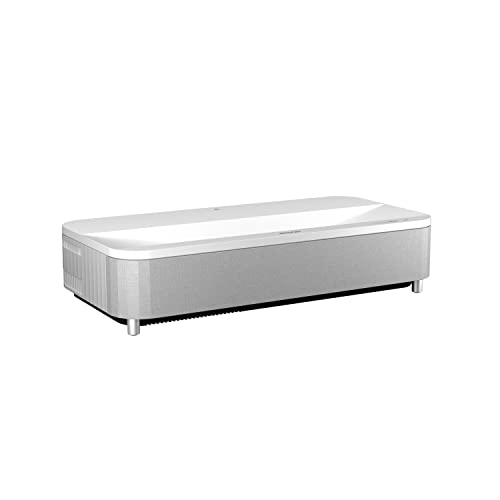
The LS800 solves a different room problem: it is an ultra short throw laser projector that sits close to the wall and still fills up to a stated 150 inches. Its listing quotes 4,000 lumens of colour and white brightness from a 3-Chip 3LCD design with a laser-array source, full 10-bit HDR colour processing and support for 4K HDR content at 60 Hz. The imaging is 4K PRO-UHD, Epson’s pixel-shifted branding, stated here as the listing states it rather than as native 4K. Android TV and a built-in 2.1 channel Yamaha sound system complete the living-room package.
Specs
- Brightness: 4,000 lumens of colour and white brightness per quoted listing text
- Imaging: 4K PRO-UHD (pixel-shifted, per the listing’s own branding); 3-Chip 3LCD per listing
- Light source: laser-array per listing
- Placement: ultra short throw lens; picture up to 150 inches per listing
- HDR: full 10-bit HDR colour processing; supports 4K HDR content at 60 Hz per listing
- Gaming: one HDMI port dedicated for gaming, supporting 1080p/120 Hz per listing
- Smart features: Android TV streaming per listing
- Audio: built-in 2.1ch Yamaha speakers per listing
Best for: Bright living rooms that want a huge image from a projector placed inches from the wall, with sound built in.
Watch out for: This is the White listing; the Black version is a different ASIN and the two must not be interchanged. Its verification is mirror-tier, so confirm the ASIN field and a live offer on the Amazon page before ordering.
BenQ HT4550i

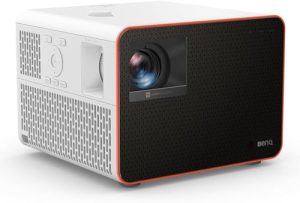
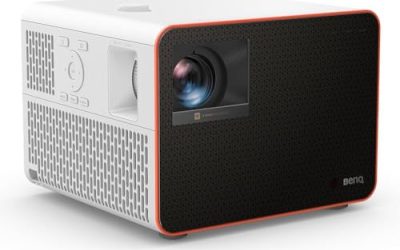
The HT4550i is the LED-lit, smart-equipped pick. Quoted listing text states 3,200 lumens, a 3840 by 2160 resolution and an LED light source, with HDR support listed as HDR10+, HDR10 and HLG — the widest format list in this group alongside the JVC. BenQ’s HDR-PRO technology with Local Contrast Enhancer and Tone Mapping is named, as is 100 percent DCI-P3 colour coverage with factory-calibrated colour. Android TV with Netflix and built-in Chromecast handle streaming, and 2D lens shift with a 1.3x zoom eases placement in ordinary rooms.
Specs
- Brightness: 3,200 lumens per listing fields
- Resolution: 3840 x 2160 per listing fields
- Light source: LED per listing
- HDR: HDR10+, HDR10 and HLG per listing title; HDR-PRO with Local Contrast Enhancer and Tone Mapping per listing
- Colour: 100% DCI-P3 coverage, factory-calibrated per listing feature text
- Smart features: Android TV with Netflix, Chromecast built in per listing title
- Lens: 2D lens shift and 1.3x zoom per listing feature text
- Audio: built-in speaker per listing title
Best for: A mixed living-room theater that wants LED light, streaming built in and flexible placement without a separate streamer.
Watch out for: Verification is mirror-tier and one aggregator table contradictorily listed a lower resolution for this model; the listing fields agree on 3840 by 2160, but confirm the live Amazon page and offer before ordering.
Which One Fits Your Situation
A dedicated, light-controlled theater room
Take the JVC DLA-NZ8: native 4K imaging, a stated 80,000:1 native contrast and the widest lens shift here are specifications a dark room actually uses. The 65 mm all-glass lens and 2.0x zoom give the installer real freedom in projector placement, and FILMMAKER MODE is stated for viewers who want the image left as mastered.
A bright family living room wanting a 150-inch image
Take the Epson LS800 for its stated 4,000 lumens, ultra short throw placement and built-in Yamaha sound, with no ceiling mount or separate speakers required. Android TV is built in, so streaming needs no extra box, and the laser-array source avoids lamp changes across the projector’s working life in daily use.
A native 4K buyer who values Sony’s processing
Take the Sony VPL-XW5000ES: a stated native 4K SXRD panel, laser light and the X1 Ultimate for projector processor in a smaller body. Wide Dynamic Range Optics and TRILUMINOS PRO colour are both stated in the listing, and the body is about a third smaller than its predecessor for shelf placement.
A mixed room that streams more than it screens discs
Take the BenQ HT4550i for its LED source, Android TV with Netflix built in and lens shift that forgives imperfect placement. Its stated HDR list is the widest here alongside the JVC, covering HDR10+, HDR10 and HLG, so broadcast, discs and streams are all named in its own text.
Common Mistakes
- Calling a pixel-shifted projector native 4K, or an e-shift model native 8K, when the listings themselves use careful wording that this guide repeats exactly.
- Assuming an HDR format is supported because the projector is expensive, when one listing here names no format beyond the words 4K HDR in its title.
- Ordering the wrong colourway listing, since the Epson’s Black version carries a different ASIN from the White listing used in this guide.
- Ignoring placement geometry until delivery day, when ultra short throw and lens-shift models demand completely different rooms and furniture.
- Judging brightness without the room in mind, then blaming the projector for a washed-out image that its stated lumens never promised to prevent.
Frequently Asked Questions
Which of these projectors are truly native 4K?
Two. The JVC DLA-NZ8 states a native 4K D-ILA device, using 8K e-shiftX for its 8K mode, and the Sony VPL-XW5000ES states a native 4K SXRD panel. The Epson LS800 states 4K PRO-UHD, its pixel-shifted branding, and is not described here as native.
Is the JVC DLA-NZ8 a native 8K projector?
No. Its listing title says Native 4K with 8K e-ShiftX technology, and its description confirms a native 4K device with e-shift producing the 8K image. One internal spec table mislabels this; the title and description wording is what this guide prints.
Which projector is brightest on stated figures?
The Epson LS800, at a stated 4,000 lumens of colour and white brightness. The BenQ HT4550i states 3,200 lumens, the JVC DLA-NZ8 states 2,500, and the Sony VPL-XW5000ES states up to 2,000 lumens in its listing content. All four figures are the listings’ own brightness statements, presented as each maker states them for these models.
Why is the Samsung Premiere LSP9T not in this guide?
Its captured listing mixes two variants: the title and bullets describe the 130-inch triple-laser model while the description describes a smaller single-laser sibling, and the page showed no featured offers. It was dropped rather than written from contradictory text, pending a clean live listing.
FAQ
Which of these projectors are truly native 4K?
Is the JVC DLA-NZ8 a native 8K projector?
Which projector is brightest on stated figures?
Why is the Samsung Premiere LSP9T not in this guide?
More from Amazon
Programs that pair well with the guide above. Offers and eligibility are set by Amazon and may change.
Free shipping on eligible items, Prime Video and more. Eligible new members can start with a free trial.
Start a Prime free trialAd-free music streaming. Eligible new subscribers can start with a free trial.
Try Music Unlimited freeA Prime membership for ages 18-24 with a trial period. Eligibility is set by Amazon.
See Prime for Young AdultsAudiobooks and podcasts to listen to on the go. Eligible new members can start with a free trial.
Try Audible freeAs an Amazon Associate we earn from qualifying purchases.