Key takeaways
- Wattage Capacity: Total your PC’s peak power draw (GPU plus CPU plus peripherals) and choose a UPS rated at least 20% above that figure to avoid overloads and allow headroom for future upgrades.
- Sine Wave Output: Active PFC power supplies in modern gaming PCs run best on pure or simulated sine wave output; avoid stepped approximations on high-end builds to prevent instability or audible coil whine.
- Runtime Needs: Decide whether you need just enough time for a safe shutdown (two to five minutes) or longer coverage to finish a match; most consumer UPS units fall into the former category at realistic gaming wattages.
- Outlet Count and Placement: Look for eight or more outlets with adequate spacing for bulky power bricks, and confirm that battery-backed and surge-only outlets are clearly separated so you can prioritize critical components.
- AVR and Surge Protection: Automatic voltage regulation cleans up minor brownouts and overvoltage events without draining the battery, extending battery lifespan and keeping your system stable during dirty power conditions.
A sudden power outage during a ranked match or raid is every PC gamer’s nightmare. Beyond the frustration of a disconnected session, unexpected power loss can corrupt save files, destabilize your OS, and in worst cases damage the high-end GPU and PSU hardware you’ve invested thousands into building. An uninterruptible power supply (UPS) acts as a critical bridge between your wall outlet and your gaming rig, providing instant battery backup the moment mains power drops, while also offering surge protection against voltage spikes that can quietly degrade sensitive electronics over time.
Our top picks





As an Amazon Associate we earn from qualifying purchases at no extra cost to you.
This guide covers the best UPS units for gaming PCs in 2026, focused on models that deliver enough wattage to support a dedicated graphics card and modern CPU under load. We’ve prioritized units with sine wave output, automatic voltage regulation (AVR), and sufficient outlet capacity for a multi-monitor setup and peripherals. Whether you need a few minutes to safely shut down or enough runtime to ride out a short flicker, these picks balance clean power delivery, reliability, and value.
🛒 Best Price Today on Amazon
Prime members get fast, free shipping on everything above, plus member-only deals. New members get a 30-day free trial — cancel anytime.
Watch: Best Ups For Gaming PC — Video Review
How to Choose a/an Ups For Gaming PC (2026)
- Wattage Capacity: Total your PC’s peak power draw (GPU plus CPU plus peripherals) and choose a UPS rated at least 20% above that figure to avoid overloads and allow headroom for future upgrades.
- Sine Wave Output: Active PFC power supplies in modern gaming PCs run best on pure or simulated sine wave output; avoid stepped approximations on high-end builds to prevent instability or audible coil whine.
- Runtime Needs: Decide whether you need just enough time for a safe shutdown (two to five minutes) or longer coverage to finish a match; most consumer UPS units fall into the former category at realistic gaming wattages.
- Outlet Count and Placement: Look for eight or more outlets with adequate spacing for bulky power bricks, and confirm that battery-backed and surge-only outlets are clearly separated so you can prioritize critical components.
- AVR and Surge Protection: Automatic voltage regulation cleans up minor brownouts and overvoltage events without draining the battery, extending battery lifespan and keeping your system stable during dirty power conditions.
The Best Ups For Gaming PC (2026)s Reviewed
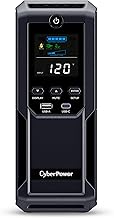
CyberPower CP1500PFCLCD PFC Sinewave
With 1000W of sine wave output and 12 outlets, this CyberPower unit is the top all-around choice for serious gaming builds. AVR and a clear LCD make it easy to monitor load and incoming voltage in real time.
APC Back-UPS Pro BX1500M
APC’s BX1500M delivers 900W across 10 outlets with AVR and a practical LCD, making it a reliable workhorse for mid-to-high gaming rigs. The 68-minute runtime at 100W gives generous headroom for safe shutdowns.
CyberPower CP1500AVRLCD3 Intelligent LCD
This model offers 900W, 12 outlets, and two USB charging ports for peripherals. It shares the AVR and LCD feature set of its siblings at a slightly lower price point, ideal for gamers who want solid protection without paying for sine wave output.
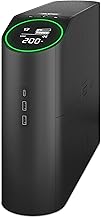
CyberPower GX150C2-E Gaming UPS
Designed specifically for gamers, this 1000W unit adds RGB lighting, 13 outlets, and USB-C charging to a capable UPS backbone. It is the best pick if you want your backup power to match your setup’s aesthetic.
APC Back-UPS Pro BR1500MS2 Pure Sine Wave
APC’s BR1500MS2 provides 900W of pure sine wave power with USB-C charging and a user-replaceable battery. It is the strongest option for gamers running high-end PFC power supplies who want long-term serviceability.
Frequently Asked Questions
What size UPS do I need for a gaming PC?
Add your GPU’s TDP, CPU’s TDP, and roughly 100W for monitors and peripherals, then multiply by 1.2. Most modern gaming builds with a mid-range or better graphics card should look at 1000W or higher UPS units.
Do I need a pure sine wave UPS for gaming?
If your PC uses an Active PFC power supply, which most modern units do, pure or simulated sine wave output is strongly recommended. Stepped wave output can cause instability, shutdowns, or audible noise from the PSU under load.
How long will a UPS keep my gaming PC running?
At typical gaming load (300 to 500W), expect two to six minutes of runtime on a 900W to 1000W UPS. That is enough to safely save and shut down, though not to continue playing through an extended outage.
Can a UPS protect my monitor and peripherals too?
Yes, as long as the total wattage stays within the UPS rating. Plug your primary monitor into a battery-backed outlet and use surge-only outlets for less critical accessories to maximize available runtime for the PC.
Final Thoughts
For most gamers, the CyberPower CP1500PFCLCD PFC Sinewave offers the best mix of wattage, sine wave output, and outlet capacity. Those wanting pure sine wave output with a user-replaceable battery should consider the APC Back-UPS Pro BR1500MS2, while the CyberPower GX150C2-E is the standout pick for anyone who wants their backup power to look as good as the rest of their build.