Key takeaways
- Height is not the whole footprint. A cooler can meet the height limit and still overhang the memory slots or hit the top of a rear I/O shroud.
- Fan versus no fan. Some specification tables list the fin stack height and note the fan separately. Read which one the number describes.
- Mounted position. Raising a fan to clear memory raises the total height.
- Case cable cover or PSU shroud. This can affect rear fan and radiator clearance.
- Different standards between makers. One company may include the fan clip or the base mount while another does not. Compare like with like.
A CPU cooler height limit is the maximum cooler height, measured from the processor’s surface to the top of the cooler, that a case can fit before the side panel will not close; you compare the cooler’s listed height with the case maker’s stated limit, and keep a few millimetres of margin.
What the limit actually means
Case makers publish a maximum CPU cooler height in their specifications. Cooler makers publish the cooler’s total height, usually measured from the motherboard-facing base to the top of the fan or fin stack, and some also list the height with the fans mounted. The limit exists because the side panel sits a fixed distance from the motherboard tray. If the cooler is taller than that distance, the panel will press against it or will not close at all.
The figure is stated in millimetres, and the safest approach is to read both numbers from the maker’s own pages rather than from a retailer summary.
How to check fit in four steps
- Find the case limit. Look in the case specifications or manual for “maximum CPU cooler height” or “CPU cooler clearance.”
- Find the cooler height. Look at the cooler’s specification table for total height. Some makers list height with and without the fan.
- Compare with margin. The cooler height should be below the case limit. A little spare room helps with cable bends, panel flex and tolerances.
- Check other clearances. Memory height, top-mounted radiators, motherboard heatsinks and graphics card position can all matter.
Typical size classes
Exact numbers vary by model, so treat these as classes, not promises, and read the maker’s table for the cooler you want.
| Cooler class | Typical height range | Where it usually fits | Watch for |
|---|---|---|---|
| Low-profile cooler | Well under a typical tower; Noctua’s L9 line is advertised at roughly 37 mm | Small-form-factor and slim cases | Lower heat capacity, so best for modest chips |
| Compact tower | Moderate | Many mid-size and smaller cases | Check the case limit anyway |
| Standard tower | Tall, often mid-150 mm and above | Most mid-tower cases | RAM clearance, side panel gap |
| Large dual-tower | Taller and wider still | Roomy mid-towers and full-towers | Width over memory slots and rear fan or top radiator conflicts |
| Liquid cooler (pump block) | Block height is small | Almost any case with radiator support | Radiator mount size and tube length |
Why a number on the box can mislead
- Height is not the whole footprint. A cooler can meet the height limit and still overhang the memory slots or hit the top of a rear I/O shroud.
- Fan versus no fan. Some specification tables list the fin stack height and note the fan separately. Read which one the number describes.
- Mounted position. Raising a fan to clear memory raises the total height.
- Case cable cover or PSU shroud. This can affect rear fan and radiator clearance.
- Different standards between makers. One company may include the fan clip or the base mount while another does not. Compare like with like.
Small-form-factor builds
Compact cases often use tight limits because the CPU sits close to the side panel. Makers of SFF cases typically list both a height limit and whether the case is designed for a low-profile air cooler, a slim tower or a specific all-in-one liquid cooler. Some SFF cases also have a separate limit for flipped motherboard layouts, so use the exact layout when reading the table.
Liquid coolers and the height question
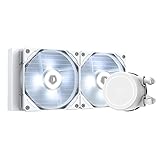
All-in-one liquid coolers sidestep the tall tower problem because only the pump block sits above the processor. The limits move to radiator size, top and front mount support, tube length and whether the radiator thickness plus fans collide with the motherboard or memory. Case makers list supported radiator sizes per mount, and the cooler maker lists radiator thickness. Combine both numbers before buying.
Decision table
| Situation | Suggested approach |
|---|---|
| Mid-tower, wide side panel gap | Standard or dual-tower air cooler is generally fine; confirm the limit |
| Slim or compact case | Choose a compact tower or a low-profile model listed for that case |
| Hot, high-power processor in a small case | Look at an all-in-one liquid cooler that the case supports |
| Tall RAM modules | Check the cooler’s memory clearance figure |
| Case limit equals cooler height | Treat as risky; pick something a bit shorter |
| Unclear spec numbers | Ask the maker’s support for the figure |
Common mistakes
- Reading the cooler’s fan height as the total height, or the other way around.
- Forgetting that a case’s stated limit may assume a certain motherboard layout.
- Overlooking RAM clearance when the cooler’s front fan sits low.
- Buying a very tall cooler for a processor that does not need it, which adds weight for no practical gain.
- Treating a thin margin as safe. Panels flex, so leave breathing room.
What if the cooler is slightly too tall?
Do not force the side panel closed, because pressure can bend the cooler or the panel and can strain the socket. Options include removing a fan to see if the cooler fits without it (which typically changes performance, so read the cooler maker’s guidance), picking a shorter cooler, or switching to a liquid cooler with a supported radiator mount. Some cases also have a variant with a wider side panel, so ask the case maker.
Alternatives
- Shorter tower with a larger fan: Compact towers can offer solid cooling when height is limited.
- Low-profile top-down cooler: Suitable for slim cases and moderate chips, and helps cool nearby board components with its airflow.
- All-in-one liquid cooler: Moves the height problem to the radiator mount.
A note on measuring
If a maker’s figure is unclear, measure the gap yourself. With the PC unplugged and the side panel off, measure from the processor’s top surface to the inside of the side panel and compare it with the cooler’s total height. Include the fan and any clip that sits on top. Case panels are not perfectly flat, and some have raised sections for ventilation, so measure at the point directly above the cooler. A cooler maker’s support team can also confirm which case models have been reported to fit, though that remains guidance, not a guarantee.
Frequently Asked Questions
What is a CPU cooler height limit?
It is the tallest cooler a case can hold with the side panel closed, stated by the case maker in millimetres. Compare it with the cooler’s listed height before buying.
How much spare room should I leave?
Leave a small margin of a few millimetres so the panel is not pressing on the cooler. A cooler that matches the limit exactly is risky because of tolerances.
Does the limit include the fan?
That depends on how the maker lists it. Read the specification table closely, since some give the fin stack height and others the full assembly.
Do liquid coolers have a height limit?
The pump block is short, so the limit shifts to radiator size and mounting. Check the case’s radiator support list and the cooler’s radiator thickness.
Will a taller cooler always cool better?
Not always. Fin area, heatpipes and fan quality count, so a well-designed shorter cooler can match a poorly designed taller one.
What if the case maker does not list a limit?
Contact the maker’s support, or check the manual. Do not guess, since a wrong guess can mean a side panel that will not close.
FAQ
What if the cooler is slightly too tall?
What is a CPU cooler height limit?
How much spare room should I leave?
Does the limit include the fan?
Do liquid coolers have a height limit?
Will a taller cooler always cool better?
What if the case maker does not list a limit?
More from Amazon
Programs that pair well with the guide above. Offers and eligibility are set by Amazon and may change.
Free shipping on eligible items, Prime Video and more. Eligible new members can start with a free trial.
Start a Prime free trialAd-free music streaming. Eligible new subscribers can start with a free trial.
Try Music Unlimited freeA Prime membership for ages 18-24 with a trial period. Eligibility is set by Amazon.
See Prime for Young AdultsAudiobooks and podcasts to listen to on the go. Eligible new members can start with a free trial.
Try Audible freeAs an Amazon Associate we earn from qualifying purchases.