
Key takeaways
- 1080p high/ultra: both cards typically run modern AAA games in an approximate 60-110 FPS band, and esports titles far higher.
- 1440p high: roughly 50-90 FPS in demanding games for either card, with the 8 GB RTX 4060 Ti most likely to need lower textures.
For most buyers the RX 6700 XT is the better value when it is cheaper, because it delivers close to RTX 4060 Ti raster performance with 12 GB of VRAM, while the RTX 4060 Ti is the smarter pick if you want stronger ray tracing, DLSS 4 upscaling with Frame Generation and lower power draw, ideally in its 16 GB version. The 8 GB RTX 4060 Ti is the weakest of the three options for 1440p because it runs out of memory in new games before it runs out of GPU power.
Our top picks


As an Amazon Associate we earn from qualifying purchases at no extra cost to you.
What Each Card Brings
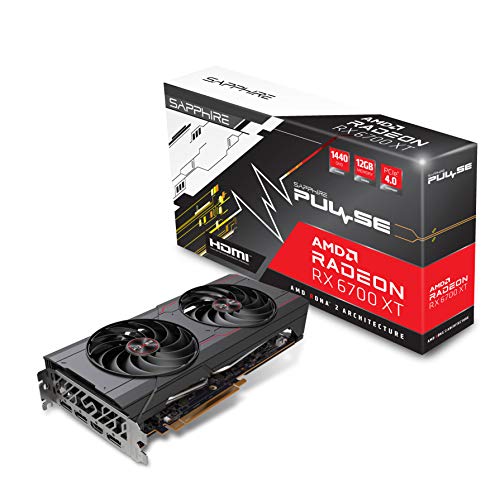
The RX 6700 XT is an RDNA 2 card from March 2021 that launched at $479. It pairs 2,560 stream processors with a 192-bit memory bus, 12 GB of GDDR6 and a 96 MB Infinity Cache. It is a full-size PCIe 4.0 x16 card rated at 230 W.
The RTX 4060 Ti launched in May 2023 on the Ada Lovelace architecture in two memory versions: 8 GB at $399 and 16 GB at $499. Both use the same GPU with 4,352 CUDA cores, a narrow 128-bit bus and a large 32 MB L2 cache to compensate. They run on PCIe 4.0 x8 and are rated at only 160-165 W. Today both cards are previous-generation products; the RTX 5060 Ti and RX 9060 XT replaced them, so most buyers will be looking at clearance stock or the used market.
Spec Comparison
| Spec | RX 6700 XT | RTX 4060 Ti 8GB | RTX 4060 Ti 16GB |
|---|---|---|---|
| Architecture | RDNA 2.0 | Ada Lovelace | Ada Lovelace |
| Release date | 3 March 2021 | 18 May 2023 | 18 May 2023 |
| Launch MSRP | $479 | $399 | $499 |
| Shaders | 2,560 | 4,352 | 4,352 |
| Boost clock | 2,581 MHz | 2,535 MHz | 2,535 MHz |
| Process | 7 nm | 5 nm | 5 nm |
| TDP | 230 W | 160 W | 165 W |
| Memory | 12 GB GDDR6 | 8 GB GDDR6 | 16 GB GDDR6 |
| Bus / bandwidth | 192-bit / 384.0 GB/s | 128-bit / 288.0 GB/s | 128-bit / 288.0 GB/s |
| Cache | 3 MB L2 + 96 MB L3 | 32 MB L2 | 32 MB L2 |
| Interface | PCIe 4.0 x16 | PCIe 4.0 x8 | PCIe 4.0 x8 |
| Power connectors | 1x 6-pin + 1x 8-pin | 1x 16-pin | 1x 16-pin |
| Length / width | 267 mm / 2-slot | 240 mm / 2-slot | 240 mm / 2-slot |
The 16-pin listing refers to the Founders Edition; many partner RTX 4060 Ti cards use a standard 8-pin connector instead, so check the model.
Raster Performance: Closer Than the Price Tags Suggest
Hardware Unboxed ran one of the largest head-to-heads of these two cards, published on TechSpot across 50 games at 1080p and 1440p. Their day-one data had the RX 6700 XT only about 5% slower than the RTX 4060 Ti on average, and the larger test showed the result swinging game by game: the 6700 XT was dramatically faster in titles such as Doom Eternal at 1440p, while the 4060 Ti led in others like Resident Evil 4 and Star Wars Jedi: Survivor. Aggregated benchmark sites tend to put the 4060 Ti around 10% ahead at 1440p. A fair summary is that the two land within roughly 5-10% of each other in rasterized games, with the RTX 4060 Ti usually slightly ahead at 1080p and the RX 6700 XT closing the gap at 1440p thanks to its wider bus.
- 1080p high/ultra: both cards typically run modern AAA games in an approximate 60-110 FPS band, and esports titles far higher.
- 1440p high: roughly 50-90 FPS in demanding games for either card, with the 8 GB RTX 4060 Ti most likely to need lower textures.
These ranges vary with settings, CPU, drivers and game patches.
The 8 GB problem
Hardware Unboxed found that in VRAM-heavy cases the 8 GB RTX 4060 Ti could become unusable at 1440p while the RX 6700 XT kept running smoothly. That is the single biggest reason the AMD card often wins this comparison despite its age. The 16 GB RTX 4060 Ti removes the problem, but it launched $100 above the 8 GB model.
Ray Tracing, Upscaling and Frame Generation
Ray tracing is where NVIDIA pulls clearly ahead. RDNA 2’s first-generation RT hardware is much slower, and in heavier RT titles the RTX 4060 Ti can lead by a large margin. With path tracing or heavy RT effects, the 6700 XT is not a realistic option.
Upscaling widens the gap further. The RTX 4060 Ti supports DLSS 4 Super Resolution with the transformer model plus DLSS Frame Generation (not Multi Frame Generation, which is RTX 50 only). The RX 6700 XT uses FSR 2 and FSR 3, including FSR 3 frame generation, but AMD’s machine-learning FSR 4 is officially limited to RDNA 4 cards. At 1440p with Quality upscaling, DLSS generally produces a cleaner image than FSR 3, which effectively gives the NVIDIA card a performance-at-equal-quality advantage in games that support it.
VRAM Headroom by Resolution
| Use case | RX 6700 XT 12GB | RTX 4060 Ti 8GB | RTX 4060 Ti 16GB |
|---|---|---|---|
| 1080p high textures | Comfortable | Borderline in new AAA | Comfortable |
| 1440p high textures | Mostly comfortable | Often limited | Comfortable |
| 1440p with ray tracing | Fine on memory, slow on RT | Limited | Good |
| Mods, high-res texture packs | Good | Weak | Best |
Power, PSU and Size
Using the rule of GPU TDP plus CPU plus about 150 W of headroom:
- RX 6700 XT: 230 W + 105 W CPU + 150 W = about 485 W, so a quality 550-600 W unit is a good fit.
- RTX 4060 Ti: 165 W + 105 W + 150 W = about 420 W, so a quality 500-550 W unit is enough.
The roughly 65 W difference also means less heat and fan noise from the NVIDIA card, which matters in small cases or warm rooms. Both cards are two-slot designs; the RX 6700 XT reference card is 267 mm long and needs a 6-pin plus 8-pin, while the RTX 4060 Ti is 240 mm. One more detail: the RTX 4060 Ti runs on eight PCIe lanes, so on an older PCIe 3.0 motherboard it loses a little performance, mostly when the 8 GB model overflows its memory. The RX 6700 XT uses the full x16 link.
Cost per Frame
At launch MSRP, with the RTX 4060 Ti scored at 100 and the RX 6700 XT at about 95: the 6700 XT cost about $5.04 per point ($479 / 95), the 4060 Ti 8GB about $3.99 ($399 / 100) and the 4060 Ti 16GB about $4.99 ($499 / 100). Launch pricing favored NVIDIA’s 8 GB model, but launch prices are history. The RX 6700 XT dropped fast and is now usually found used in the $200-$250 range, while used RTX 4060 Ti 8GB cards tend to sit around $250-$300 and 16 GB versions a bit higher. At those prices the 6700 XT usually offers the best raster value per dollar, and the 4060 Ti 16GB offers the most complete feature set.
Driver and Platform Notes
AMD moved RDNA 1 and RDNA 2 cards to a maintenance driver track in 2025, meaning they still receive security and bug fixes but fewer game-specific optimizations than RDNA 3 and RDNA 4. NVIDIA’s RTX 40 series remains fully supported in mainstream Game Ready drivers. Neither change makes the 6700 XT a bad buy for current games, but it does tilt long-term support toward the NVIDIA card.
Decision Table
| If you… | Pick |
|---|---|
| Play mostly rasterized games at 1080p-1440p on a tight budget | RX 6700 XT |
| Want ray tracing and the best upscaling | RTX 4060 Ti 16GB |
| Have a small case or a 500 W power supply | RTX 4060 Ti |
| Use high-resolution texture mods | RX 6700 XT or RTX 4060 Ti 16GB |
| Can only find the 8 GB RTX 4060 Ti at the same price as a 6700 XT | RX 6700 XT |
| Want current-gen features and warranty | Consider an RTX 5060 Ti 16GB or RX 9060 XT 16GB instead |
Frequently Asked Questions
Is the RTX 4060 Ti faster than the RX 6700 XT?
Slightly, on average. Hardware Unboxed’s data showed the two within about 5% overall, with results swinging by game, and aggregator data puts the gap closer to 10% at 1440p. In ray tracing the RTX 4060 Ti is much faster.
Is the 8 GB RTX 4060 Ti worth buying in 2026?
Only at a clear discount and for 1080p gaming. Several new games exceed 8 GB at high textures, which causes stutter or texture pop-in. The 16 GB version or a 12 GB card like the RX 6700 XT holds up better.
Can the RX 6700 XT use FSR 4?
Not officially. AMD limits FSR 4 to RDNA 4 Radeon RX 9000 cards, so the 6700 XT relies on FSR 2 and FSR 3, including FSR 3 frame generation where games support it. XeSS also runs on it in supported titles.
What PSU do I need for the RX 6700 XT?
A quality 550-600 W unit is a comfortable choice with a typical gaming CPU. The card needs a 6-pin and an 8-pin connector on the reference design, and partner cards may vary.
Does PCIe 3.0 hurt the RTX 4060 Ti?
Only modestly in most games, because the card uses eight lanes. The loss grows when the 8 GB version runs out of VRAM and pulls data across the bus, so PCIe 3.0 users benefit more from the 16 GB model.









