Key takeaways
- WiFi Standard: WiFi 6 (802.11ax) is the current sweet spot for price-to-performance, while WiFi 7 future-proofs your investment with multi-link operation and higher throughput. Match the standard to your client devices — there’s no benefit paying for WiFi 7 if your gaming adapter maxes out at WiFi 6.
- Coverage and Mesh Expansion: Calculate your square footage honestly, accounting for walls, floors, and interference. A single high-power router may cover a compact apartment, but larger homes benefit from a mesh system with wired backhaul to eliminate latency between nodes.
- Wired Connectivity: For competitive gaming, nothing beats a hardwired Ethernet connection to your PC. Prioritize routers with multiple Gigabit ports, and look for 2.5GbE if you transfer large files or want headroom for high-speed fiber plans.
- QoS and Traffic Management: Effective Quality of Service settings let you prioritize gaming traffic over background downloads and streaming. Look for routers with gaming-specific QoS presets or granular per-device controls to keep your matches lag-free.
- Security and Management: Modern routers should support WPA3 encryption at minimum. Cloud-managed options with app control make remote troubleshooting and guest network setup straightforward, which is especially valuable for users managing networks on the go.
If you’ve ever watched your ping spike to unplayable levels mid-match, or suffered a disconnect during a critical raid, you already know that a subpar router can sabotage even the most powerful gaming rig. PC gamers demand consistent low latency, enough bandwidth to handle game downloads alongside streaming, and rock-solid stability across multiple devices. The problem is that the consumer networking market is flooded with confusing specs, inflated marketing claims, and hardware that looks impressive on paper but crumbles the moment your whole household starts hammering the connection simultaneously.
Our top picks


As an Amazon Associate we earn from qualifying purchases at no extra cost to you.
This guide cuts through the noise by focusing on what actually matters for real-world gaming performance: throughput that holds up under load, wired backhaul options for lag-free mesh setups, modern standards like WiFi 6 and WiFi 7, and multi-gigabit Ethernet for direct connections to your battlestation. Whether you’re blanketing a large home in seamless mesh coverage, outfitting an RV for mobile connectivity, or simply replacing an aging ISP-provided router, we’ve identified the options worth your money.
🛒 Best Price Today on Amazon
Prime members get fast, free shipping on everything above, plus member-only deals. New members get a 30-day free trial — cancel anytime.
Watch: Wireless Router System: Review & Buyer’s Guide — Video Review
How to Choose a Wireless Router System
- WiFi Standard: WiFi 6 (802.11ax) is the current sweet spot for price-to-performance, while WiFi 7 future-proofs your investment with multi-link operation and higher throughput. Match the standard to your client devices — there’s no benefit paying for WiFi 7 if your gaming adapter maxes out at WiFi 6.
- Coverage and Mesh Expansion: Calculate your square footage honestly, accounting for walls, floors, and interference. A single high-power router may cover a compact apartment, but larger homes benefit from a mesh system with wired backhaul to eliminate latency between nodes.
- Wired Connectivity: For competitive gaming, nothing beats a hardwired Ethernet connection to your PC. Prioritize routers with multiple Gigabit ports, and look for 2.5GbE if you transfer large files or want headroom for high-speed fiber plans.
- QoS and Traffic Management: Effective Quality of Service settings let you prioritize gaming traffic over background downloads and streaming. Look for routers with gaming-specific QoS presets or granular per-device controls to keep your matches lag-free.
- Security and Management: Modern routers should support WPA3 encryption at minimum. Cloud-managed options with app control make remote troubleshooting and guest network setup straightforward, which is especially valuable for users managing networks on the go.
The Best Wireless Router Systems Reviewed
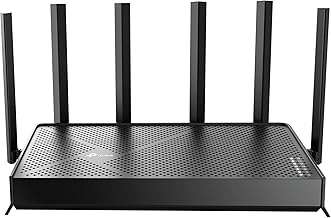
InHand Networks BE4200 5G Router
This WiFi 7 cellular router with dual SIM failover is purpose-built for RV owners, rural properties, and mobile businesses that need connectivity beyond traditional broadband. With 2.5GbE ports and carrier certification across major networks, it delivers reliable high-speed internet where cable and fiber simply can’t reach.
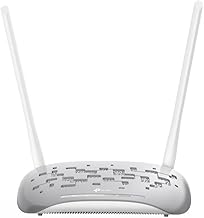
WAVLINK AX3000 WiFi 6 Mesh (1 Pack)
A single-node mesh unit delivering up to 3.0 Gbps across 2,500 square feet, this WAVLINK system supports wired backhaul for gamers who refuse to compromise on inter-node latency. It’s an excellent budget-conscious entry point for smaller homes or as a replacement for aging router-plus-extender setups.
WAVLINK AX3000 WiFi 6 Mesh (3 Pack)
The three-pack extends that same AX3000 performance to 7,300 square feet, making it ideal for multi-story homes where blanket coverage matters. Wired backhaul support and straightforward app management mean you can deploy a low-latency mesh without needing an IT background.
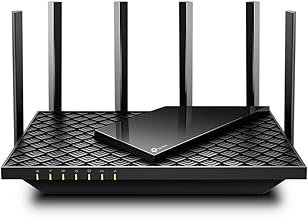
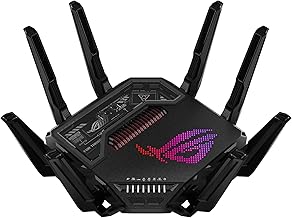
WAVLINK AX6000 Dual Band WiFi 6 Router
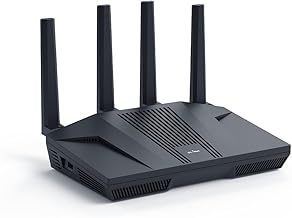
With eight high-gain antennas, a 2.5G Ethernet port, and eight spatial streams, this router is engineered for large homes with heavy device loads. OpenVPN support and WPA3 security round out a feature set that serious gamers and power users will appreciate at a competitive price point.
Pyle Wireless BT Receiver Wall Mount (PWA15BT)
While not a networking device, this 100W in-wall Bluetooth audio receiver deserves a mention for gamers building immersive audio setups. With USB, aux, and microphone inputs alongside speaker terminal connectivity, it serves as a clean integrated solution for in-wall speaker systems.
Frequently Asked Questions
Is WiFi 6 enough for gaming, or should I wait for WiFi 7?
WiFi 6 delivers more than enough throughput and latency reduction for current gaming needs. WiFi 7 is worth considering only if you’re building a long-term network and already own compatible adapters, since adoption is still in its early stages.
Does mesh add latency compared to a single router?
Wireless mesh backhaul does introduce some added latency between nodes. Using wired Ethernet for backhaul eliminates this penalty entirely, making it the preferred approach for competitive gamers running multi-node setups.
Can a cellular router replace my home broadband?
For rural areas or mobile use cases like RVs, a capable 5G cellular router with dual SIM failover can absolutely serve as primary connectivity. Performance depends heavily on your local tower signal quality and carrier congestion.
How important is a 2.5GbE port on a gaming router?
For most gamers on standard broadband, Gigabit Ethernet is sufficient. A 2.5GbE port becomes valuable if you have multi-gig internet, transfer large files on your LAN, or want to future-proof your infrastructure for faster service tiers.
Final Thoughts
For PC gamers, the standout picks come down to use case: the WAVLINK AX6000 delivers the strongest single-router performance with its eight-stream design and 2.5G port for wired battlestations, the WAVLINK AX3000 Mesh 3 Pack blankets larger homes with low-latency coverage when paired with wired backhaul, and the InHand Networks BE4200 5G solves the connectivity problem for rural gamers and RV setups that traditional broadband can’t reach. Match the hardware to your specific environment, and your ping will thank you.