Key takeaways
- Compare the best AC VPN routers with our guide to 802.11ac Wi-Fi, OpenVPN support, AiMesh, MU-MIMO and the VPN features that matter for home use.
The best AC VPN routers pair 802.11ac Wi-Fi with real VPN support built into the router itself, so every device on the network can use the VPN without installing software on each one. AC here means the 802.11ac wireless standard, also called Wi-Fi 5, and VPN means the router can act as a VPN server for remote access to the home network, a VPN client that routes traffic through a VPN service, or both. That combination matters for households that want remote access to home files and cameras, or that want phones, consoles and streaming boxes covered by a VPN without per-device setup.


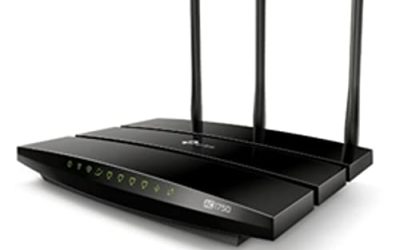
This guide covers three ASUS routers from the RT-AC line: the RT-AC86U, the RT-AC88U and the RT-AC68U. All three are dual-band 802.11ac routers with ASUSWRT firmware, VPN server and client support, AiMesh compatibility for building a mesh network from ASUS routers, and AiProtection network security. They differ in combined Wi-Fi speed, port count and processing power, and those differences decide which one fits a given home. The RT-AC86U leads on balance, the RT-AC88U leads on wired ports, and the RT-AC68U remains the sensible pick for smaller homes and lighter loads.
All three ASINs below were confirmed through Amazon search results, and every one of them needs a live check before publishing, because no product page could be opened in this round. Amazon blocks direct product-page access, so these ASINs rest on search results only. The RT-AC86U also has a conflicting second ASIN in one secondary source, which is flagged in its section.
How to Choose
1. VPN server, VPN client, or both
Work out which VPN job the router must do. A VPN server lets a phone or laptop connect back into the home network from elsewhere, which suits remote access to home files, cameras and printers. A VPN client routes the home network traffic through a VPN service, which suits covering devices that cannot run VPN software themselves, such as consoles and streaming boxes. Some routers do one job well and the other poorly, so check the firmware for both. All three routers in this guide support OpenVPN, PPTP and L2TP through ASUSWRT, and the router can run a VPN client while keeping a separate connection for regular traffic where the firmware allows it.
2. AC speed class and MU-MIMO
AC routers are sold by combined speed class: AC1900, AC2900 and AC3100 in this guide. The figure is a combined theoretical total across the 2.4GHz and 5GHz bands, not a speed one device will ever see, but it still signals the radio hardware inside. MU-MIMO matters more in daily use, because it lets the router serve several devices at their maximum speed at the same time instead of one after another. All three picks here support MU-MIMO, so the practical difference between them is the number of streams on the 5GHz band and the processor behind them.
3. Processor and memory under load
A VPN encrypts and decrypts traffic, and that work lands on the router processor. A weak processor becomes the bottleneck the moment VPN traffic grows, and the symptom is a fast internet connection that feels slow through the VPN. The RT-AC86U carries a 1.8GHz dual-core processor, which is the strongest of the three for VPN throughput. Check the processor and memory figures before choosing, and expect VPN throughput to sit well below the headline Wi-Fi speed on any of these routers, because encryption is the limiting step.
4. Wired ports and USB
Count the wired devices before choosing. The RT-AC88U has eight Gigabit LAN ports, twice the number most routers provide, which suits homes with many wired devices such as desktops, consoles, network storage and smart hubs. The other two picks have four Gigabit LAN ports each. USB ports matter too: a USB 3.0 port can share a drive or a printer over the network, and all three routers carry USB ports for that job. If the home has more than four wired devices, the eight-port model saves buying a separate switch.
5. AiMesh and future expansion
All three routers are AiMesh compatible, which means two or more of them can form a single mesh network with one network name, instead of a main router plus a separate extender with its own name. That matters for larger homes where one router cannot cover every room. Buying into AiMesh keeps the option open to add a second ASUS router later, rather than replacing the whole setup. Check that any second unit is also AiMesh compatible before pairing them, because not every ASUS router supports it.
6. Security and parental controls
AiProtection, included with these routers, is a commercial-grade network security system powered by Trend Micro, and it covers the whole network rather than one device at a time. Parental controls and Adaptive QoS sit alongside it in ASUSWRT, letting the household prioritise gaming or streaming traffic and set access schedules. These features cost nothing extra on these models, with lifetime internet security included, so they are worth weighing against routers that charge a subscription for the same protection.
Top Picks
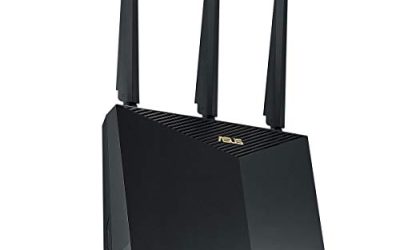
ASUS RT-AC86U
The RT-AC86U is the best all-round AC VPN router in this guide. It is an AC2900 dual-band router with a 1.8GHz dual-core processor, 802.11ac MU-MIMO, NitroQAM technology on the 5GHz band, and four Gigabit LAN ports. The combined speed figure is 2917Mbps across the bands, with the 5GHz quad-stream radio delivering the bulk of it. It supports VPN server and client through ASUSWRT, works with AiMesh, and includes lifetime AiProtection security.
Key specs:
- Wi-Fi standard: 802.11ac, dual band
- Combined speed: AC2900
- Processor: 1.8GHz dual-core
- LAN ports: 4 Gigabit
- USB: USB 3.0 and USB 2.0
- VPN: OpenVPN, PPTP and L2TP server and client
- Mesh: AiMesh compatible
- Security: AiProtection, Adaptive QoS, parental controls
Who it is for: households that want the strongest VPN performance in the AC line, with gaming and streaming prioritised through Adaptive QoS and WTFast game acceleration. The 1.8GHz processor handles VPN encryption better than the older models, and the quad-stream 5GHz radio suits homes with several high-bandwidth devices at once.
Caveats: one secondary source lists a conflicting ASIN, B075WFL15D, for the same model, while the Amazon listing and another secondary source agree on B0752FD3XJ, which is the ASIN linked here. Confirm the exact listing before ordering. The router dates from 2017, so it is a mature design rather than a current-generation model, and buyers who want Wi-Fi 6 should look at the AX line instead. The Amazon listing for this router was confirmed through search results; the product page itself could not be opened in this round, so confirm current availability on the listing before ordering.
ASUS RT-AC88U
The RT-AC88U is the pick for homes with many wired devices. It is an AC3100 dual-band router with eight Gigabit LAN ports, twice the number most routers provide, and NitroQAM technology delivering a combined 3167Mbps. It supports MU-MIMO, AiMesh, AiProtection, Adaptive QoS and WTFast, and its VPN server and client support matches the rest of the line. The eight ports mean desktops, consoles, network storage and smart hubs can all plug in directly without a separate switch.
Key specs:
- Wi-Fi standard: 802.11ac, dual band
- Combined speed: AC3100
- LAN ports: 8 Gigabit
- VPN: OpenVPN, PPTP and L2TP server and client
- Mesh: AiMesh compatible
- Security: AiProtection, Adaptive QoS, parental controls
- Extras: WTFast game acceleration, link aggregation on teamed ports
Who it is for: larger homes and home offices with many wired devices, where eight LAN ports remove the need for a switch, and where the AC3100 radio hardware suits heavy streaming and gaming loads. Link aggregation on teamed ports suits network storage that benefits from a wider wired pipe.
Caveats: the RT-AC88U is an older design than the RT-AC86U and its processor is less capable for VPN throughput, so households whose main job is VPN performance should weigh the RT-AC86U instead. The Amazon listing for this router was confirmed through search results; the product page itself could not be opened in this round, so confirm current availability on the listing before ordering.
ASUS RT-AC68U
The RT-AC68U is the sensible pick for smaller homes and lighter loads. It is an AC1900 dual-band router with four Gigabit LAN ports, MU-MIMO, AiMesh compatibility and the same ASUSWRT VPN server and client support as its larger siblings. It covers the core jobs of this guide, VPN access for the whole household and solid AC Wi-Fi, without the higher speed class or the eight-port layout of the models above.
Key specs:
- Wi-Fi standard: 802.11ac, dual band
- Combined speed: AC1900
- LAN ports: 4 Gigabit
- VPN: OpenVPN, PPTP and L2TP server and client
- Mesh: AiMesh compatible
- Security: AiProtection, Adaptive QoS, parental controls
Who it is for: smaller homes, flats and households with modest device counts, where AC1900 is enough for streaming and browsing and the VPN is used for occasional remote access rather than constant heavy traffic. It also works well as a second AiMesh node paired with a stronger main router.
Caveats: the AC1900 speed class and older processor mean VPN throughput and multi-device performance sit below the RT-AC86U, so heavy households should step up. This ASIN comes from a prior-batch verification rather than a fresh search in this round, so it needs a live check before publishing. The Amazon listing was confirmed through search results only; the product page itself could not be opened in this round.
Comparison Table
| Router | Wi-Fi class | LAN ports | Processor | VPN server and client | AiMesh |
|---|---|---|---|---|---|
| RT-AC86U | AC2900 | 4 Gigabit | 1.8GHz dual-core | Yes | Yes |
| RT-AC88U | AC3100 | 8 Gigabit | Dual-core | Yes | Yes |
| RT-AC68U | AC1900 | 4 Gigabit | Dual-core | Yes | Yes |
Which One Is Right for You?
For most households, buy the RT-AC86U first: the strongest processor for VPN work, AC2900 Wi-Fi, and four wired ports. For homes with many wired devices, take the RT-AC88U, because eight Gigabit LAN ports remove the need for a separate switch and the AC3100 radio suits heavy streaming loads. For smaller homes and lighter VPN use, take the RT-AC68U, which covers the same core jobs at the AC1900 class and works well as an AiMesh node later.
If VPN throughput is the main job, the processor matters more than the speed class, and the RT-AC86U is the pick. If the home has more than four wired devices, the port count matters more, and the RT-AC88U is the pick. If the budget is tight and the device count is modest, the RT-AC68U is the pick, with the option to add a second AiMesh unit later rather than replacing the whole setup.
Frequently Asked Questions
What does AC mean on a VPN router?
AC means the router uses the 802.11ac wireless standard, also called Wi-Fi 5. It describes the Wi-Fi radio, not the VPN. A router can be an AC router and a VPN router at the same time, which is what this guide covers: 802.11ac Wi-Fi with VPN server and client support built into the firmware.
Can a VPN router cover a games console?
Yes. When the router runs a VPN client, every device connected to it uses the VPN, including consoles, streaming boxes and smart TVs that cannot run VPN software themselves. Set the VPN up on the router once, and the whole household is covered without per-device setup.
Will a VPN slow down my connection?
A VPN adds encryption work, and that work lands on the router processor, so VPN throughput sits below the headline Wi-Fi speed on any router. A stronger processor, such as the 1.8GHz dual-core in the RT-AC86U, handles that work better than a weaker one. Expect the VPN connection to run slower than the raw internet connection, and choose the router with that in mind.
Can I add a second router to extend coverage?
Yes, if both routers support AiMesh. All three routers in this guide are AiMesh compatible, so a second ASUS router can join the network under one network name instead of acting as a separate extender. Check that any second unit is also AiMesh compatible before pairing them.
Disclosure: As an Amazon Associate, we may earn from qualifying purchases.
FAQ
Which One Is Right for You?
What does AC mean on a VPN router?
Can a VPN router cover a games console?
Will a VPN slow down my connection?
Can I add a second router to extend coverage?
More from Amazon
Programs that pair well with the guide above. Offers and eligibility are set by Amazon and may change.
Free shipping on eligible items, Prime Video and more. Eligible new members can start with a free trial.
Start a Prime free trialAd-free music streaming. Eligible new subscribers can start with a free trial.
Try Music Unlimited freeA Prime membership for ages 18-24 with a trial period. Eligibility is set by Amazon.
See Prime for Young AdultsAudiobooks and podcasts to listen to on the go. Eligible new members can start with a free trial.
Try Audible freeAs an Amazon Associate we earn from qualifying purchases.