Our Short List of 3
All 4 Picks at a Glance
| Product | Specs | Action |
|---|---|---|
 JVC DLA-NZ900: The Current Flagship | Check price on Amazon | |
 JVC DLA-NZ8: e-shiftX With the Wider Lens Shift | Check price on Amazon | |
| JVC DLA-NZ9: The Earlier Flagship With the 100 mm Lens | Check price on Amazon | |
 JVC DLA-NZ7: The Entry Point Into Genuine 8K Display | Check price on Amazon |
Key takeaways
- Four genuine 8K-capable projectors compared: JVC laser models with 8K e-shift display, 8K/60p inputs, HDR tone mapping and 4K/120p gaming support today.
As an Amazon Associate we earn from qualifying purchases.
The market for 8K projectors is much smaller than search results suggest, and honesty matters more here than in almost any other projector category. There is currently no consumer projector with a native 8K imaging chip that a home buyer can order and install. Every genuine 8K projector on sale today builds its 8,192 x 4,320 image by pixel shifting: a native 4K imaging device is driven at high speed while an optical element shifts the picture by fractions of a pixel, flashing multiple sub-frames so quickly that the eye sees a single image with 8K addressability. Done well, with a lens sharp enough to resolve the result, this produces a picture that is visibly finer than native 4K alone. Done as a marketing shortcut, the same vocabulary gets attached to ordinary 4K projectors that merely accept or upscale toward 8K without ever displaying it.
That distinction shapes this entire guide. To earn a place below, a projector had to meet three tests drawn from manufacturer specifications rather than listing headlines. First, it must actually display an 8,192 x 4,320 image on screen through a documented pixel-shift system. Second, it must accept an 8K signal, so the display resolution is not limited to upscaling lower-resolution sources. Third, it must be a real product with a live retail listing, not a trade-show announcement. Those tests eliminate some famous names. A well-known ultra-short-throw model announced as the first 8K Association certified projector has never reached a confirmed retail launch, so it cannot be recommended as something to buy. Several excellent native 4K laser projectors from other brands also fall short, because native 4K with good upscaling is still a 4K display, however fine it looks.
What survives the filter is a single family: JVC’s D-ILA laser projectors. JVC is, at the time of writing, effectively the only manufacturer selling home projectors that both display 8K through e-shift and accept 8K/60p input. The four picks below span two generations of that family, from the current flagship down to the most accessible entry point that still qualifies. They are all large, heavy, dedicated-room machines built for darkened home theaters, and they share more technology than they differ in. The sections that follow explain how to read 8K claims, what separates these models, and which one fits which room.
How to Choose an 8K Projector
Start with the display claim, not the input claim. A projector that accepts an 8K signal but displays 4K is a 4K projector with a future-proof input. A projector that upscales 4K content toward 8K without a pixel-shift display system is showing an estimate, not 8K. The specification that matters is display resolution: look for an explicit figure of 8,192 x 4,320 achieved through a named shifting technology, and for the native resolution of the imaging chips stated separately. On every pick in this guide the chips are native 4K at 4,096 x 2,160, and the 8K image comes from shifting. Any seller unwilling to state both numbers is hiding the important one.
Understand the two generations of e-shift. JVC’s earlier 8K e-shift shifts the image in two directions, doubling the pixel count on screen. The newer e-shiftX shifts in four directions, up, down, left and right, producing a fully addressable 8K grid of more than 35 million pixels. In practice the X version holds fine detail, text edges and diagonal lines more convincingly, especially with a genuine 8K source. The standard version still improves on native 4K, but the gap between the two is one of the clearest reasons to prefer the newer or higher-tier models when the budget allows.
Brightness decides screen size more than resolution does. These projectors are rated between 2,200 and 3,300 lumens. In a properly darkened theater that is enough for screens from about 100 inches up to 200 inches or more on the brightest model, but none of them is a living-room projector for daytime viewing. Higher resolution actually raises the brightness stakes: the finer detail of an 8K image is easiest to appreciate on a large screen, and a large screen spreads the same light over more area. Match the model to the screen you honestly plan to install, not the largest one the throw chart allows.
Contrast is where this family earns its reputation. Native contrast figures here run from 40,000:1 to 150,000:1, measured without dynamic tricks, and they are the main reason these projectors dominate dedicated theater builds. Deep, stable blacks make HDR tone mapping work properly and give dark film scenes the layered shadow detail that brighter but lower-contrast machines wash out. If most viewing is movies in a controlled room, contrast should rank ahead of a few hundred extra lumens. If the room has ambient light the projector cannot overcome, neither figure will save the picture, and a different class of projector is the honest answer.
Check the inputs against your sources. All four picks carry two HDMI inputs rated at 48 Gbps, accepting 8K at 60 frames per second and 4K at 120 frames per second. The 4K/120 path matters for gaming on current consoles and PCs, and a low-latency mode is provided for that use. True 8K sources remain rare: a suitably equipped PC is the realistic one today, while most viewing will be 4K discs, streaming and games that the projector scales up through its 8K scaling engine. Buy the 8K display for what it does with 4K content now, plus the input headroom, rather than for a library of native 8K material that does not yet exist.
Plan the installation like furniture, not electronics. These projectors weigh roughly 22 to 26 kilograms, need a mount or shelf that genuinely supports that load, and reward careful placement with motorized zoom, focus and lens shift on every model here. The flagship’s larger 100 mm lens adds wider shift range and supports larger screens. Laser light sources are rated for around 20,000 hours, removing lamp replacements from the budget, but the purchase remains a long-term installation decision. Professional calibration is worth considering at this level, and all four models carry ISF certification to support it.
JVC DLA-NZ900: The Current Flagship
The DLA-NZ900 sits at the top of JVC’s current line and is the most complete 8K projector in this guide. Its third-generation native 4K D-ILA devices are paired with second-generation 8K e-shiftX, which shifts the image in four directions to project a fully addressable 8,192 x 4,320 picture. A new 8K scaling engine handles the upconversion of 4K and HD sources, so the display resolution is exercised constantly rather than only with rare native 8K input. Brightness is rated at 3,300 lumens, the highest here, and native contrast at 150,000:1, also the highest here, a combination that suits large screens in dark rooms.
The lens is the other flagship marker: a 100 mm all-glass design with motorized zoom and focus and lens shift reaching plus or minus 100 percent vertically. That flexibility, together with support for projected images up to 300 inches, makes the NZ900 the natural choice for a purpose-built theater with a big screen and a projector position that cannot be perfectly centered. Frame Adapt HDR with HDR10+ support handles tone mapping scene by scene, and the two 48 Gbps HDMI inputs accept 8K/60p and 4K/120p, keeping the gaming path open alongside film use.
Choose this model when the room and screen are already serious and the projector is the final piece. Its advantages over the step-down models are real but concentrated in brightness headroom, contrast depth and lens quality, which only a large, well-treated room fully reveals. In a modest theater the same money spread across screen, seating and acoustic treatment may show more. As the reference point of the category, though, nothing else in this guide exceeds it.
JVC DLA-NZ8: e-shiftX With the Wider Lens Shift
The DLA-NZ8 comes from the generation that introduced 8K input to home projection, and its specification still reads like a flagship checklist. Three 0.69-inch native 4K D-ILA devices work with 8K e-shiftX, the four-direction shifting system, to display 8,192 x 4,320. Brightness is rated at 2,500 lumens and native contrast at 80,000:1. The 65 mm all-glass lens is motorized, and the rated lens shift of plus or minus 80 percent vertically and plus or minus 43 percent horizontally gives installers generous freedom in rooms where the projector cannot sit dead center behind the seating.
For gaming and mixed use, the NZ8 matches the newer models where it counts: two HDMI inputs at 48 Gbps accept 8K/60p and 4K/120p signals, and Frame Adapt HDR with HDR10+ support provides the same dynamic tone mapping approach as the flagship line. The BLU-Escent laser light source is rated for approximately 20,000 hours, so the ownership story is installation and calibration rather than lamp budgeting.
The honest caveat is generational. The NZ8 belongs to the earlier series that the NZ800 and NZ900 succeeded, so buyers should confirm on the live listing exactly which model and condition is being offered before purchase, and weigh it against current-generation pricing through authorized dealers. As a specification package, 8K e-shiftX display, 8K input and this level of native contrast in one chassis, it remains entirely credible, and it may suit buyers who find one at a favorable point in its lifecycle.
JVC DLA-NZ9: The Earlier Flagship With the 100 mm Lens
Before the NZ900, the DLA-NZ9 was the statement model of the range, and its hardware explains why it keeps a place here. It uses the same four-direction 8K e-shiftX display system as the NZ8, producing an 8,192 x 4,320 image from three native 4K D-ILA devices, but raises brightness to 3,000 lumens and native contrast to 100,000:1. Its distinguishing feature is the 100 mm all-glass lens in an aluminum barrel, the larger optic it shares in spirit with the current flagship, bringing a 2x motorized zoom and lens shift up to plus or minus 100 percent vertically.
That lens, and the brightness behind it, make the NZ9 the earlier-generation pick for very large screens, with projection sizes rated up to 300 inches. The input stage is the same 48 Gbps pair of HDMI ports with 8K/60p and 4K/120p support, and Frame Adapt HDR with HDR10+ covers tone mapping. At roughly 25 kilograms it demands the same serious mounting as the NZ900.
Two cautions belong with this pick. First, the model has been succeeded by the NZ900, and some listings describe this generation as discontinued, so availability and condition need direct confirmation on the live listing before any purchase decision. Second, where the current flagship is within reach, it is the cleaner long-term buy. The NZ9 makes sense as the high-lens, high-brightness option of its generation when a specific listing checks out, not as a default recommendation over its successor.
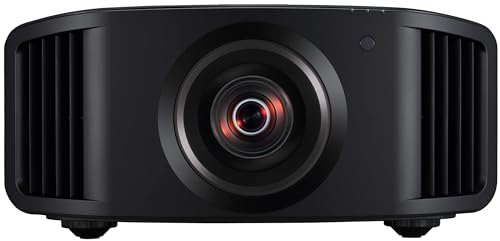
JVC DLA-NZ7: The Entry Point Into Genuine 8K Display
The DLA-NZ7 is where genuine 8K display starts in this family, and its compromises are clearly drawn. It uses the earlier form of 8K e-shift, shifting in two directions rather than four, to display 8,192 x 4,320 from its three native 4K D-ILA devices. That still places it in a different class from 4K projectors that merely accept an 8K signal, and it keeps the same 48 Gbps HDMI inputs with 8K/60p and 4K/120p support as its more expensive siblings. Brightness is rated at 2,200 lumens and native contrast at 40,000:1, the lowest figures in this guide but still strong by the standards of the wider projector market.
The rest of the package follows the family pattern: a BLU-Escent laser light source rated around 20,000 hours, a 65 mm all-glass motorized lens, and Frame Adapt HDR with HDR10+ support. Screen sizes up to about 200 inches are the realistic territory, and a darkened room is assumed. For a first dedicated theater that wants the 8K display path without flagship outlay, this is the rational starting point, and its picture benefits from the same D-ILA contrast character that defines the range.
As with the NZ8, this is a previous-generation model succeeded by newer machines that, notably, dropped 8K display at the entry levels: the current NZ500 and NZ700 are native 4K projectors without e-shiftX and without 8K input. That makes the NZ7 interesting as possibly the most accessible route to a projector that truly displays 8K, provided the specific listing, condition and seller are verified carefully before buying.
What About Native 8K and the Missing Names?
Readers comparing lists will notice absences, and they are deliberate. No pick here is native 8K, because no consumer projector with a native 8K imaging device is on retail sale; the category is, for now, a pixel-shifting category, and the four models above represent its most developed form. Sony’s excellent native 4K laser projectors do not display 8K and do not claim to, so they belong in a 4K guide. Epson’s pixel-shifting models shift to 4K, not 8K. Samsung’s announced 8K ultra-short-throw model earned an industry certification but has no confirmed retail listing to buy from. JVC’s own current NZ500 and NZ700, despite sitting beside the flagship in the catalog, are native 4K models with no 8K display or 8K input, and including them would repeat exactly the confusion this guide exists to cut through.
The practical conclusion is simple. If displaying an 8K image is the requirement, the choice today is among JVC’s e-shift and e-shiftX laser models, split by generation, lens and brightness. If the requirement is really just the best picture for a given room, native 4K alternatives deserve a look in parallel, because 8K display is one ingredient among contrast, brightness and lens quality rather than a guarantee on its own.
Disclosure
Disclosure: This article contains affiliate links. If you buy through those links, a commission may be earned at no additional cost to you. Product information was taken from the listings and manufacturer details available at the time of writing, and specifications should be confirmed on the live listing before purchase.
FAQ
What About Native 8K and the Missing Names?
More from Amazon
Programs that pair well with the guide above. Offers and eligibility are set by Amazon and may change.
Free shipping on eligible items, Prime Video and more. Eligible new members can start with a free trial.
Start a Prime free trialAd-free music streaming. Eligible new subscribers can start with a free trial.
Try Music Unlimited freeA Prime membership for ages 18-24 with a trial period. Eligibility is set by Amazon.
See Prime for Young AdultsAudiobooks and podcasts to listen to on the go. Eligible new members can start with a free trial.
Try Audible freeAs an Amazon Associate we earn from qualifying purchases.