Our Short List of 3
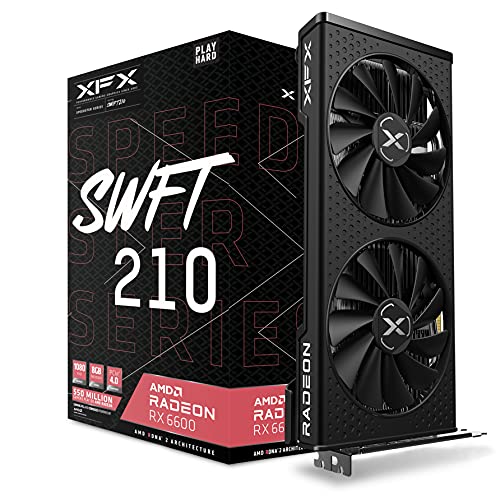
- Best for: Builders who want the strongest 1080p performance in this tier with 8 GB of memory.
- AMD Radeon RX 6600 graphics with RDNA 2 architecture
- 8GB GDDR6 memory
- Boost clock up to 2491 MHz
- XFX Speedster SWFT210 dual-fan cooling

- Best for: Builders who want modern upscaling, AI features and DisplayPort 2.0 in a budget card.
- Intel Arc A580 graphics with Xe HPG architecture
- 8GB GDDR6 memory
- Boost clock up to 2000 MHz
- Dual-fan cooling with 0dB silent mode
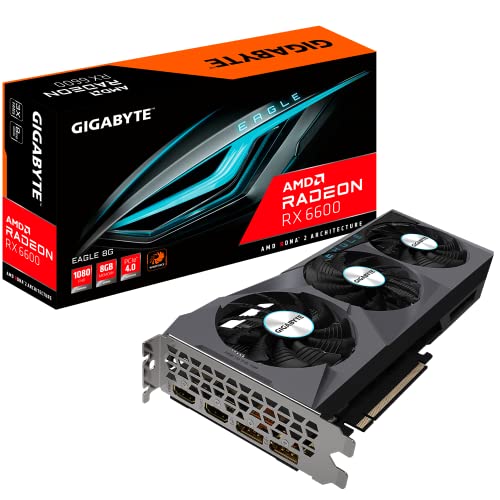
- Best for: Builders who want triple-fan cooling and modest power draw in an 8 GB card.
- AMD Radeon RX 6600 graphics with RDNA 2 architecture
- 8GB GDDR6 memory, 128-bit interface
- Base clock 1626 MHz and boost clock up to 2044 MHz
- WINDFORCE 3X triple-fan cooling
All 3 Picks at a Glance
| Product | Specs | Action |
|---|---|---|
| XFX Speedster SWFT 210 RX 6600 |
| Check price on Amazon |
| ASRock Arc A580 Challenger 8GB OC |
| Check price on Amazon |
| Gigabyte RX 6600 Eagle 8G |
| Check price on Amazon |
Our Top Picks
A graphics card sets the ceiling for every game a PC can run, and the entry tier is where most builders start. The challenge is that this tier mixes genuinely capable 1080p cards with older models that struggle in newer titles. The real decision is finding a card with enough memory, modern features and solid cooling to stay useful for a few years, without paying for performance a modest monitor will never show. Memory size, power draw and physical size matter as much as the chip name.
This guide is for builders putting together a first gaming PC or upgrading an older machine on a modest budget. Every product below was chosen from the name and specifications shown on its Amazon page, with attention to memory, cooling, power needs and outputs.
Quick Picks
As an Amazon Associate we earn from qualifying purchases
| Product | Best for | Key spec from title |
|---|---|---|
| XFX Speedster SWFT 210 RX 6600 | Strong 1080p value | 8GB GDDR6, boost up to 2491 MHz |
| ASUS Dual RTX 3050 6GB OC | Compact NVIDIA pick | 6GB GDDR6, 2-slot Axial-tech design |
| ASRock Arc A580 Challenger | Modern features and AI | 8GB GDDR6, 2000 MHz boost clock |
| Gigabyte RX 6600 Eagle 8G | Triple-fan cooling | 8GB GDDR6, WINDFORCE 3X cooling |
How to Choose
Memory Size and Type
Memory decides how much texture and scene data a card holds at once. Eight gigabytes of GDDR6 is the sensible floor for 1080p gaming in current titles, since smaller buffers force the card to swap data constantly and cause stutter. Six gigabytes still works for lighter games and esports titles, but newer releases at higher settings will push against it. Memory bus width matters too: a 128-bit bus with fast GDDR6 keeps up at 1080p, while wider buses suit higher resolutions. Treat memory as a hard limit that cannot be upgraded later.
Power Supply and Connectors
Every card lists a minimum power supply, and the build must meet it with headroom to spare. Most cards in this tier ask for a 450 to 550 watt unit, and the connector layout matters as much as the wattage: some cards need one 8-pin plug, others need two. Check the power supply’s available connectors before ordering, since an adapter is a poor substitute for a proper plug. A card that draws 175 watts needs more cooling and a stronger unit than one that draws 132 watts, so match the card to the power supply already in the case.
Cooling and Physical Size
Dual and triple fan coolers keep a card quiet under load, and a 0dB mode that stops the fans at idle suits a quiet room. Length is the practical limit: cards in this tier run from compact two-slot designs near 20 cm to longer triple-fan models near 28 cm, and a small case may not fit the longer ones. Check the case’s maximum GPU clearance in the listing or manual before buying. A backplate adds rigidity and helps cooling, while a two-slot bracket leaves room for a capture card or Wi-Fi adapter below.
Features and Outputs
Modern features stretch a budget card further. Upscaling support lifts frame rates in demanding titles, ray tracing adds lighting depth where the card can handle it, and AV1 encoding helps streamers and creators. Outputs decide the monitor setup: most cards here offer one HDMI port and three DisplayPorts, which covers dual monitors easily. Check that the card’s HDMI version matches the monitor, especially for high-refresh displays, and confirm the PCIe slot version so the card runs at full speed.
The 4 Best Options
XFX Speedster SWFT 210 RX 6600
- Best for: Builders who want the strongest 1080p performance in this tier with 8 GB of memory.
- AMD Radeon RX 6600 graphics with RDNA 2 architecture
- 8GB GDDR6 memory
- Boost clock up to 2491 MHz
- XFX Speedster SWFT210 dual-fan cooling
Builders who want the strongest 1080p performance in this tier with 8 GB of memory.
The 550-watt power supply requirement is the highest here, so confirm the unit in the case before ordering.
The XFX Speedster SWFT 210 RX 6600 is the strongest 1080p value in this group, pairing AMD’s RDNA 2 architecture with 8 GB of GDDR6 memory and a boost clock up to 2491 MHz. Its dual-fan SWFT210 cooler keeps the card steady during long sessions, while one HDMI port and three DisplayPorts cover multi-monitor setups. The card suits builders who want smooth high-settings 1080p play without a large power supply, since the listing asks for a 550 watt unit. Eight gigabytes of memory gives headroom for newer titles that punish smaller buffers.
Watch out for: The 550-watt power supply requirement is the highest here, so confirm the unit in the case before ordering.
ASUS Dual RTX 3050 6GB OC
The ASUS Dual RTX 3050 6GB OC is the compact NVIDIA pick, built for small cases and modest power supplies. Its two Axial-tech fans move air efficiently through a 20 cm, two-slot body, and 0dB technology stops the fans entirely at light loads for silent desktop use. Six gigabytes of GDDR6 memory and a factory overclock cover 1080p gaming and esports titles, while HDMI 2.1 and DisplayPort 1.4a outputs handle modern monitors. A steel bracket resists bending, and GPU Tweak III software plus a three-year warranty round out a card made for tight builds.
Specs
- NVIDIA GeForce RTX 3050 graphics, OC Edition
- 6GB GDDR6 memory
- PCIe 4.0 interface with 2-slot design
- Axial-tech fan design with 0dB technology
- HDMI 2.1 and DisplayPort 1.4a outputs
- Steel bracket and GPU Tweak III software
- 3-year warranty and 20 cm length
Best for: Small-case builders who want a compact NVIDIA card with silent idle operation.
Watch out for: Six gigabytes of memory limits texture settings in newer titles at higher detail levels.
ASRock Arc A580 Challenger 8GB OC
- Best for: Builders who want modern upscaling, AI features and DisplayPort 2.0 in a budget card.
- Intel Arc A580 graphics with Xe HPG architecture
- 8GB GDDR6 memory
- Boost clock up to 2000 MHz
- Dual-fan cooling with 0dB silent mode
Builders who want modern upscaling, AI features and DisplayPort 2.0 in a budget card.
The card needs two 8-pin connectors and a longer case, so measure before ordering.
The ASRock Arc A580 Challenger brings the newest feature set in this group, with Intel’s Xe HPG architecture, 8 GB of GDDR6 memory and a 2000 MHz boost clock. Its 384 XMX engines accelerate AI work and content creation, while XeSS upscaling lifts frame rates in supported games. Dual fans with 0dB silent cooling keep the card quiet at idle, and DisplayPort 2.0 outputs suit newer monitors. The card needs two 8-pin power connectors and a 271 mm clearance, so check the case and power supply first. For builders open to Intel graphics, it offers modern features at this tier.
Watch out for: The card needs two 8-pin connectors and a longer case, so measure before ordering.
Gigabyte RX 6600 Eagle 8G
- Best for: Builders who want triple-fan cooling and modest power draw in an 8 GB card.
- AMD Radeon RX 6600 graphics with RDNA 2 architecture
- 8GB GDDR6 memory, 128-bit interface
- Base clock 1626 MHz and boost clock up to 2044 MHz
- WINDFORCE 3X triple-fan cooling
Builders who want triple-fan cooling and modest power draw in an 8 GB card.
The 282 mm length needs a mid-tower case, so measure smaller cases before ordering.
The Gigabyte RX 6600 Eagle 8G pairs the same RX 6600 chip as the XFX pick with a triple-fan WINDFORCE 3X cooler, which spreads heat across a longer heatsink for steady temperatures under load. Eight gigabytes of GDDR6 memory on a 128-bit bus and a boost clock up to 2044 MHz cover smooth 1080p gaming, while two HDMI 2.1 ports and two DisplayPort 1.4a outputs support dual monitors. At 132 watts and a single 8-pin connector, it asks less of the power supply than most cards here, and the 282 mm length fits standard mid-tower cases.
Watch out for: The 282 mm length needs a mid-tower case, so measure smaller cases before ordering.
Which One Fits Your Situation
First Gaming PC on a Modest Budget
The XFX RX 6600 suits a first build best. Its 8 GB of memory and high boost clock cover current 1080p titles at strong settings, and the dual-fan cooler stays quiet during long sessions.
The dual-fan cooler stays quiet during long sessions, and the 8 GB buffer gives the build room to grow into newer titles without an early upgrade.
A Small Case or Quiet Room
The ASUS Dual RTX 3050 fits tight builds. Its 20 cm two-slot body slides into compact cases, and the fans stop entirely at idle, which keeps a quiet room silent during desktop work.
The two-slot body also leaves room below for a capture card or Wi-Fi adapter, and the steel bracket keeps the card steady during transport.
Modern Features and Content Creation
The ASRock Arc A580 suits builders who also edit video or stream. Its XMX engines and XeSS upscaling add value beyond gaming, and DisplayPort 2.0 covers newer monitors.
The AI engines also speed up video work and streaming, while DisplayPort 2.0 keeps the card ready for newer monitors down the road.
Cool Running in a Mid-Tower
The Gigabyte RX 6600 Eagle fits standard mid-tower builds. Triple-fan cooling keeps temperatures steady, and a single 8-pin connector suits modest power supplies.
The triple-fan cooler spreads heat well during long sessions, and the modest power draw keeps the build cool and the fan noise low.
Common Mistakes
- Buying a card with too little memory for newer titles and hitting stutter.
- Ignoring the power supply’s connectors and wattage before ordering.
- Ordering a long triple-fan card for a case that cannot fit it.
- Expecting high-refresh 1440p play from an entry-tier card.
- Skipping the output check and finding the monitor’s port unsupported.
Frequently Asked Questions
Is 8 GB of memory enough for 1080p gaming?
Yes, for current titles at high settings. Eight gigabytes holds the textures and scene data most 1080p games need without constant swapping, which keeps frame times smooth. Six gigabytes still works for esports and lighter games, but newer releases at higher detail levels will push against the smaller buffer and cause stutter in demanding scenes.
Do I need a new power supply for a budget graphics card?
It depends on the unit already in the case. Most cards in this tier ask for a 450 to 550 watt supply with the right 8-pin connectors, and a quality unit from a known maker usually covers it. Check the wattage, the available connectors and the unit’s age before ordering, since a weak supply can cause crashes.
Will these cards work in an older PCIe 3.0 motherboard?
Yes. All four cards use a PCIe x16 slot and run on PCIe 3.0 boards, though a card with a PCIe 4.0 x8 interface may lose a small amount of speed on the older slot. The difference is minor at 1080p for most games, so an older board is not a reason to avoid these cards.
Should I pick NVIDIA, AMD or Intel at this tier?
Each brand has a strength here. NVIDIA offers the broadest game support and mature upscaling, AMD gives strong 1080p value with 8 GB of memory, and Intel brings modern features and AI acceleration. Match the card to the games and software used most, and treat driver maturity and feature support as the deciding factors.
FAQ
Is 8 GB of memory enough for 1080p gaming?
Do I need a new power supply for a budget graphics card?
Will these cards work in an older PCIe 3.0 motherboard?
Should I pick NVIDIA, AMD or Intel at this tier?
More from Amazon
Programs that pair well with the guide above. Offers and eligibility are set by Amazon and may change.
Free shipping on eligible items, Prime Video and more. Eligible new members can start with a free trial.
Start a Prime free trialAd-free music streaming. Eligible new subscribers can start with a free trial.
Try Music Unlimited freeA Prime membership for ages 18-24 with a trial period. Eligibility is set by Amazon.
See Prime for Young AdultsAudiobooks and podcasts to listen to on the go. Eligible new members can start with a free trial.
Try Audible freeAs an Amazon Associate we earn from qualifying purchases.