Key takeaways
- Three graphics cards for smooth PUBG play at 1080p and 1440p, from an efficient entry card to a 16GB option with headroom for high settings.
PUBG rewards a different kind of graphics card than most shooters. The game is built on large open maps where spotting a moving player at distance matters more than cinematic effects, and most competitive players deliberately run reduced settings to keep targets clear and frame rates high. The real decision is which resolution you play at: 1080p with competitive settings is a modest ask that efficient midrange cards handle easily, while 1440p with higher detail for streaming or casual squad play needs meaningfully more memory and compute.


This guide is for PUBG players upgrading from older hardware or building a dedicated rig for the game. The three picks cover the 1080p competitive tier, a 16GB option for 1440p headroom, and a triple-fan step-up for players who split time between PUBG and heavier titles, with all specs taken from the Amazon listings.
Quick Picks
As an Amazon Associate we earn from qualifying purchases.
| Product | Best for | Key spec from title |
|---|---|---|
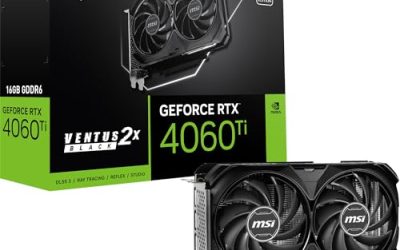
| MSI GeForce RTX 4060 Ventus 2X Black 8G OC | 1080p competitive settings | Extreme clock 2505 MHz |
| Sapphire Pulse AMD Radeon RX 9060 XT 16GB | 1440p PUBG with memory headroom | 16GB GDDR6 memory |
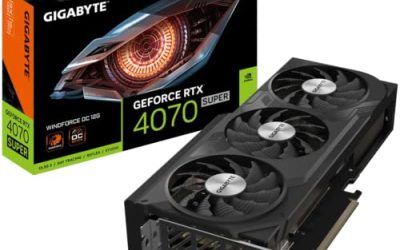
| Gigabyte GeForce RTX 4060 Ti Gaming OC 8G | Long sessions and mixed game libraries | 3X WINDFORCE fans |
How to Choose
Decide your resolution and settings first
PUBG plays like two different games depending on your settings. At 1080p with the competitive profile most ranked players use, where effects and foliage are turned down for visibility, the load on the GPU is moderate and the entry pick in this guide is genuinely sufficient. At 1440p with textures and view distance raised, memory use climbs and frame rates fall, which is where the 16GB card earns its place. Be honest about which game you play. Buying 1440p hardware to run a 1080p competitive profile wastes money, and buying a 1080p card for a 1440p monitor produces the stutter this guide exists to prevent.
Memory: 8GB works, 16GB breathes
PUBG’s maps stream large amounts of texture and terrain data, and memory pressure shows up as hitching when you scope in or sweep across a town. An 8GB card at 1080p competitive settings stays within its budget because those settings deliberately limit texture load. Raise the resolution or the texture setting and the same card starts swapping, which is felt immediately in a game where a single stutter can lose a fight. The 16GB pick removes that ceiling entirely at 1440p and leaves room for recording or streaming software to share the card without disturbing the game.
Frame rate stability beats peak numbers
In PUBG, the lowest frame rates matter more than the average. Drops happen in exactly the worst places: final circles with many players alive, smoke on screen and fast vehicle movement across open ground. A card that holds a steadier rate slightly below a rival’s peak is the better PUBG card in practice. Cooling plays a role here, because a card that stays cool keeps its clocks through a long session of back-to-back matches. That is why one pick below is a triple-fan design despite sharing its GPU class with slimmer cards: sustained clocks are a PUBG feature.
Efficiency and the rest of your system
PUBG is not only a GPU purchase. The game leans on the CPU during crowded late-game moments, and an old processor can cap your frame rate no matter which card you install. The good news is that all three picks here are efficient designs that run on mainstream power supplies, so most upgrade budgets can go to the card itself. Check the basics before ordering: a power supply in the class the listing implies, a case that fits the card’s length, and a monitor connection that matches the outputs the card provides.
The 3 Best Options
MSI GeForce RTX 4060 Ventus 2X Black 8G OC
This is the natural PUBG card for the way most people actually play the game. The RTX 4060’s efficiency suits long sessions, its stated extreme clock of 2505 MHz comes from a factory overclock on the Ventus 2X Black edition, and the 8GB of GDDR6 memory is sized correctly for 1080p competitive settings, which is where the majority of serious PUBG players live. DLSS support gives you an additional lever in the settings menu when a particular map or update runs heavier than expected. The compact dual-fan TORX design also fits the smaller cases that older upgrade systems tend to have.
Specs
- 8GB GDDR6 memory, 128-bit interface
- Extreme clock 2505 MHz
- PCI Express Gen 4 interface
- TORX Fan 4.0 dual-fan cooler
- HDMI and DisplayPort outputs
- NVIDIA DLSS 3 support
- Model: RTX 4060 VENTUS 2X BLACK 8G OC
Best for: 1080p players running competitive settings who want high, stable frame rates.
Watch out for: The 8GB memory limits 1440p high-texture play, so match it to a 1080p monitor.
ASIN: B0C8BPW1SP
Sapphire Pulse AMD Radeon RX 9060 XT 16GB
The Pulse RX 9060 XT is the pick for players moving PUBG to 1440p. Its headline figure is 16GB of GDDR6 memory, double the other two cards here, which removes memory pressure as a concern when textures and view distance go up. The listing states a boost clock up to 3290 MHz with a 2700 MHz game clock, 2,048 stream processors and a 128-bit interface running at 20 Gbps, and the card’s 170W board power keeps it easy to power and cool. For squads who play PUBG at 1440p and record or stream the session, this is the card with room to spare.
Specs
- 16GB GDDR6 memory, 128-bit interface, 20 Gbps
- Boost clock up to 3290 MHz, game clock up to 2700 MHz
- 2,048 stream processors
- PCI Express 5.0 x16 interface
- 2 x HDMI and 1 x DisplayPort 2.1a outputs
- 32 MB Infinity Cache
- Board power 170W
- Model: 11350-03-20G
Best for: 1440p PUBG players who want memory headroom for high textures and streaming.
Watch out for: It offers one DisplayPort where some rivals offer more, so check your monitor connections first.
ASIN: B0F9LN5VZ6
Gigabyte GeForce RTX 4060 Ti Gaming OC 8G
The RTX 4060 Ti Gaming OC is the step-up for players whose library extends past PUBG but whose standards were set by it. The Ti GPU adds meaningful compute over the standard 4060, Gigabyte’s Gaming OC edition wraps it in a triple-fan WINDFORCE cooler with a stated 2580 MHz core clock, and the result is a card that holds its clocks through marathon sessions and handles heavier games on your off nights. Memory stays at 8GB of GDDR6 at 18 Gbps, so this remains a 1080p-first card for PUBG, with 1440p competitive settings in reach. Dual BIOS and the metal back plate suit a machine that gets used hard every day.
Specs
- 8GB GDDR6 memory, 128-bit interface, 18 Gbps
- Core clock 2580 MHz
- 4,352 CUDA cores
- PCI Express 4.0 interface
- 3X WINDFORCE fans with RGB Fusion lighting
- 2 x DisplayPort 1.4 and 2 x HDMI 2.1a outputs
- Dual BIOS and metal back plate
- Model: GV-N406TGAMING OC-8GD
Best for: Players who want stronger cooling and more compute for PUBG plus heavier titles.
Watch out for: Like the Ventus, it carries 8GB, so 1440p play should stick to competitive texture settings.
ASIN: B0C5B9M9JY
Which One Fits Your Situation
You play ranked at 1080p with competitive settings
Choose the MSI RTX 4060 Ventus 2X Black 8G OC. Your settings profile is designed to keep the GPU load light and visibility high, and this card is built exactly for that workload: efficient, factory overclocked and compact. The money you do not spend on a bigger card is better kept for a high-refresh 1080p monitor if you do not already own one, since that upgrade changes PUBG more than any GPU step within this tier.
You moved to a 1440p monitor
Choose the Sapphire Pulse RX 9060 XT 16GB. The resolution jump is what strains memory and frame rates in PUBG, and this card answers with double the VRAM of the other picks plus the clocks to use it. It also leaves capacity for the recording and streaming tools that often arrive with a monitor upgrade, so the whole setup grows together instead of the card becoming the next bottleneck.
You play PUBG daily and other games on weekends
Choose the Gigabyte RTX 4060 Ti Gaming OC 8G. The triple-fan cooler and higher compute ceiling serve both habits: stable clocks through daily PUBG sessions, and enough extra power for the heavier single-player and co-op titles in a mixed library. Stay at 1080p, or at 1440p with competitive settings, and the 8GB memory will not be the thing that limits you.
You are upgrading an older prebuilt
Start with the MSI RTX 4060 Ventus 2X Black. Prebuilts usually mean a modest power supply and a tight case, and this card’s efficiency and compact dual-fan design are the safest fit of the three. Confirm the power supply wattage and that your case has the length the card needs, and the upgrade stays a drop-in job rather than turning into a partial rebuild.
Common Mistakes
- Buying a card for ultra settings when your actual PUBG profile turns most effects down for visibility.
- Pairing a 1440p-capable card with a 1080p 60 Hz monitor and never seeing the frame rates you paid for.
- Ignoring memory capacity when moving to 1440p, where texture load is the first thing that causes stutter.
- Blaming the GPU for late-game frame drops that are actually caused by an aging CPU in crowded circles.
- Choosing a long triple-fan card without measuring the case, especially in older prebuilt systems.
Frequently Asked Questions
What graphics card do most PUBG players actually need?
For the way the game is usually played, less than you might expect. At 1080p with competitive settings, an efficient midrange card such as the RTX 4060 in this guide delivers high frame rates, because the settings profile deliberately reduces GPU load. The cards above that tier are for 1440p monitors, higher texture settings, streaming, or players who also run heavier games on the same machine.
Is 8GB of VRAM enough for PUBG?
At 1080p, yes, including with competitive settings and reasonable texture levels. The pressure appears at 1440p with textures turned up, where 8GB cards can stutter as the game streams map data. If you play at 1440p now or plan to, the 16GB Sapphire Pulse in this guide removes the question entirely, which is why it is the recommended pick for that resolution.
Does PUBG benefit from DLSS or FSR upscaling?
It can, particularly at 1440p or when an update makes a map heavier than usual. Upscaling renders the game at a lower internal resolution and reconstructs the image, trading a small amount of clarity for a meaningful frame-rate gain. Many competitive players at 1080p leave it off because their cards already reach their monitor’s ceiling, but it is a useful lever to have, and both brands in this guide offer one.
Should I upgrade my CPU or GPU first for PUBG?
Check which one is limiting you. If frame rates drop mainly in crowded late-game moments and cities while open-field play is smooth, the CPU is likely the ceiling. If rates are low everywhere and fall further when you raise resolution or textures, the GPU is the bottleneck and the cards in this guide are the fix. PUBG needs both in balance more than most shooters do.
FAQ
What graphics card do most PUBG players actually need?
Is 8GB of VRAM enough for PUBG?
Does PUBG benefit from DLSS or FSR upscaling?
Should I upgrade my CPU or GPU first for PUBG?
More from Amazon
Programs that pair well with the guide above. Offers and eligibility are set by Amazon and may change.
Free shipping on eligible items, Prime Video and more. Eligible new members can start with a free trial.
Start a Prime free trialAd-free music streaming. Eligible new subscribers can start with a free trial.
Try Music Unlimited freeA Prime membership for ages 18-24 with a trial period. Eligibility is set by Amazon.
See Prime for Young AdultsAudiobooks and podcasts to listen to on the go. Eligible new members can start with a free trial.
Try Audible freeAs an Amazon Associate we earn from qualifying purchases.