Our Short List of 3
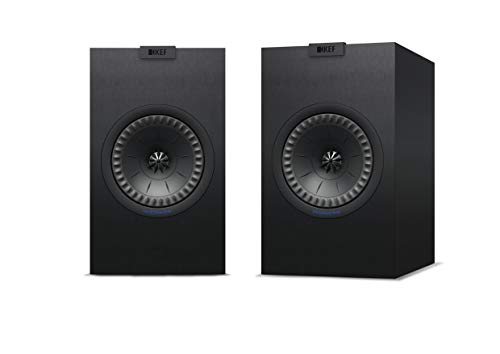
- Best for: Precise imaging and critical listening.
- 5.25-inch Uni-Q driver array
- 1-inch vented aluminum dome tweeter
- Frequency response 51 Hz to 28 kHz
- 86 dB sensitivity

- Best for: Warm, full bass in a medium room.
- 1-inch cloth dome tweeter, response up to 35,000 Hz
- 6.5-inch woven aramid fiber woofer
- Frequency response 44 Hz to 35 kHz
- 120 watts maximum output power

- Best for: Dynamic, high-energy listening.
- 1-inch titanium LTS vented tweeter
- 90-degree by 90-degree silicone composite hybrid Tractrix horn
- 6.5-inch Cerametallic woofer
- 400 watts maximum output power
All 4 Picks at a Glance
| Product | Specs | Action |
|---|---|---|
| KEF Q150 |
| Check price on Amazon |
| ELAC Debut 2.0 B6.2 |
| Check price on Amazon |
| Klipsch RP-600M II |
| Check price on Amazon |
 Polk Signature Elite ES20 |
| Check price on Amazon |
Key takeaways
- Compare the best hifi speakers for detailed stereo listening, from coaxial KEF and horn-loaded Klipsch to warm ELAC and Polk bookshelf pairs for every room.
HiFi speakers exist for one purpose: to play music as faithfully as the recording allows. They do not add bass for effect, they do not compress the dynamics, and they do not flatter a bad recording. What they do is disappear, leaving the listener with the performance itself. That honesty is why a good pair of bookshelf speakers can anchor a stereo system for a decade or more.
This guide compares four HiFi bookshelf speakers for serious stereo listening, from a coaxial KEF design to a horn-loaded Klipsch. Each pick was chosen from the name and specifications shown on its Amazon page, and every model below is a passive pair that needs a stereo amplifier or receiver. The right pair depends on your room, your amplifier, and the music you return to most.
Quick Picks
As an Amazon Associate we earn from qualifying purchases
| Product | Best for | Key spec from title |
|---|---|---|
| KEF Q150 | Precise imaging | 5.25-inch Uni-Q array, 51 Hz to 28 kHz |
| ELAC Debut 2.0 B6.2 | Warm, full bass | 6.5-inch aramid woofer, 44 Hz to 35 kHz |
| Klipsch RP-600M II | Dynamics and punch | Tractrix horn, 400 watts |
| Polk Signature Elite ES20 | Big sound, easy drive | Power Port, 4- and 8-ohm compatible |
How to Choose
Start With the Amplifier, Not the Speaker
A HiFi speaker is only as good as the amplifier driving it, so check the pairing before you fall in love with a cabinet. Sensitivity and impedance decide how much power the speaker needs: an 86 dB speaker asks far more of an amplifier than a high-sensitivity design, and a 6-ohm load is harder to drive than an 8-ohm one. A small integrated amplifier suits an efficient speaker, while a demanding design needs a stronger amp to open up. Read both figures on the listing, compare them with your amplifier’s output, and remember that an underpowered amplifier sounds worse than a modest speaker.
Cabinet Size and Placement Shape the Sound
Bookshelf speakers need real space to sound their best, and the rear port on most HiFi designs is the reason why. A rear-ported cabinet pushed flat against a wall will sound boomy, while the same speaker pulled a few inches out will sound clean and balanced. Measure your shelf depth as well as its width, since the largest cabinets here are nearly 14 inches deep and need stands or deep shelves. Heavy, braced cabinets resist vibration better than light ones, so weight is a useful clue to build quality when you cannot hear the speaker first.
Driver Design Tells You the Character
The driver layout is the clearest guide to a speaker’s sound. A coaxial design like KEF’s Uni-Q places the tweeter inside the woofer, which creates a single point source and a wide, stable stereo image. A horn-loaded tweeter like Klipsch’s Tractrix horn plays loud and dynamic with less amplifier power. A soft dome tweeter, as on the ELAC and Polk models, sounds smoother and less fatiguing over long sessions. None of these is better in every room, so choose the character that matches your taste and your amplifier.
Check That the Listing Covers a Pair
HiFi bookshelf speakers almost always sell as a pair, but not every listing does, so confirm the unit count before you order. A pair listing includes two cabinets for a stereo setup, while a single listing covers one speaker and needs a second order to complete the system. Check whether the finish matches across both cabinets, and budget for speaker stands, since bookshelf speakers sound best at ear height rather than flat on a shelf. If you buy the cabinets separately, order them together so the finish comes from the same batch.
The 4 Best Options
KEF Q150
- Best for: Precise imaging and critical listening.
- 5.25-inch Uni-Q driver array
- 1-inch vented aluminum dome tweeter
- Frequency response 51 Hz to 28 kHz
- 86 dB sensitivity
Precise imaging and critical listening.
The rear port needs clearance from the wall, and the 86 dB sensitivity needs a stronger amplifier than the Klipsch.
The KEF Q150 is the imaging champion of this guide, and its Uni-Q driver array is the reason why. Placing the 1-inch vented aluminum dome tweeter in the center of the 5.25-inch mid-bass driver creates a single point source, so the stereo image stays wide and stable no matter where you sit. The two-way bass reflex design reaches from 51 Hz to 28 kHz, and the computational fluid dynamics port keeps the bass tight for such a compact cabinet. It is sold as a pair in black, it weighs 25 pounds for the pair, and its 86 dB sensitivity asks for a capable amplifier to show its best.
Watch out for: The rear port needs clearance from the wall, and the 86 dB sensitivity needs a stronger amplifier than the Klipsch.
ELAC Debut 2.0 B6.2
- Best for: Warm, full bass in a medium room.
- 1-inch cloth dome tweeter, response up to 35,000 Hz
- 6.5-inch woven aramid fiber woofer
- Frequency response 44 Hz to 35 kHz
- 120 watts maximum output power
Warm, full bass in a medium room.
At nearly 15 inches tall and over 10 inches deep, it needs a deep shelf or a proper stand.
The ELAC Debut 2.0 B6.2 is the warm, full-bodied pick for listeners who want real bass from a bookshelf cabinet. Its 6.5-inch woven aramid fiber woofer is the largest in this guide, and it reaches down to 44 Hz while the 1-inch cloth dome tweeter extends the top end to 35,000 Hz for high-resolution recordings. The braced MDF cabinet keeps vibration down, and the waveguide around the tweeter spreads the highs evenly across the listening area. It is sold as a pair, each cabinet weighs 16.3 pounds, and the 6-ohm impedance suits most stereo amplifiers.
Watch out for: At nearly 15 inches tall and over 10 inches deep, it needs a deep shelf or a proper stand.
Klipsch RP-600M II
- Best for: Dynamic, high-energy listening.
- 1-inch titanium LTS vented tweeter
- 90-degree by 90-degree silicone composite hybrid Tractrix horn
- 6.5-inch Cerametallic woofer
- 400 watts maximum output power
Dynamic, high-energy listening.
The rear port needs space behind the cabinet, and the horn sound is forward, which can feel bright in a hard, reflective room.
The Klipsch RP-600M II is the dynamic pick for listeners who want their music loud, punchy, and alive. Its 1-inch titanium LTS vented tweeter sits behind a larger 90-degree by 90-degree silicone composite hybrid Tractrix horn, which delivers crisp highs with very little distortion, while the 6.5-inch Cerametallic woofer provides fast, controlled bass. The 400-watt maximum output and 8-ohm impedance make it easy to drive, and the dual binding posts support bi-wiring or bi-amping for listeners who want to go further. It is sold as a pair in ebony with a 5-year manufacturer warranty.
Watch out for: The rear port needs space behind the cabinet, and the horn sound is forward, which can feel bright in a hard, reflective room.
Polk Signature Elite ES20
- Best for: Big sound from a modest amplifier.
- 1-inch Terylene tweeter, 6.5-inch woofer
- Dynamically Balanced Acoustic Array with precision crossovers
- Patented Power Port technology
- 125 watts maximum output power
Big sound from a modest amplifier.
The cabinet is genuinely large for a bookshelf speaker, so plan on stands or a very deep shelf.
The Polk Signature Elite ES20 is the easy-driving pick for listeners who want big sound from an ordinary amplifier. Its 1-inch Terylene tweeter and 6.5-inch woofer sit in a Dynamically Balanced Acoustic Array with precision crossovers, and Polk’s patented Power Port technology smooths airflow out of the port for deeper bass with less turbulence. The 4- and 8-ohm compatibility means most amplifiers and AV receivers can drive it, including Dolby Atmos and DTS:X models, and the 86 dB sensitivity keeps it efficient. It is sold as a pair in black and works as well for music as for home theater.
Watch out for: The cabinet is genuinely large for a bookshelf speaker, so plan on stands or a very deep shelf.
Which One Fits Your Situation
Small Room, Close Listening
The KEF Q150 fits close listening in a small room. Its Uni-Q array creates a wide sweet spot even when you sit near the speakers, and the compact cabinet fits a desk or a small shelf. Feed it with a capable integrated amplifier and it rewards you with imaging that larger speakers struggle to match.
Warm Sound for Vinyl and Jazz
The ELAC B6.2 suits vinyl, jazz, and acoustic music. Its large woofer and soft dome tweeter produce a warm, relaxed sound that flatters long sessions, and the deep bass means you will not miss a subwoofer. Give it a deep shelf and a few inches behind the port.
Loud, Energetic Listening
The Klipsch RP-600M II owns the energetic room. Its horn-loaded tweeter and efficient design play loud without strain, and the 8-ohm impedance makes it the easiest speaker here to drive. It suits rock, pop, and anything with dynamics that need room to breathe. Place the pair on solid stands at ear height, and the horns will throw a wide, lively image across the whole room.
One Pair for Music and Movies
The Polk ES20 is the flexible pick for a system that plays both music and movies. Its wide amplifier compatibility and Power Port bass suit either role, and the Hi-Res Audio certification covers high-resolution music streams. Use it as a stereo pair now and add a matching center later for surround sound.
Common Mistakes
- Pushing a rear-ported bookshelf flat against the wall and wondering why the bass booms.
- Pairing a low-sensitivity speaker with a weak amplifier and blaming the speaker.
- Placing bookshelf speakers flat on a low shelf instead of at ear height on stands.
- Ordering one cabinet when the listing sells a single speaker, not a pair.
- Judging a HiFi speaker in the first hour, before the drivers and your ears have settled in.
Frequently Asked Questions
Do HiFi bookshelf speakers need a subwoofer?
Usually not for music. A good bookshelf pair reaches deep enough for most recordings, and the ELAC in this guide reaches 44 Hz on its own. Add a subwoofer only for very large rooms or for music with extreme low end, and set the crossover low so the bookshelf speakers still handle the midrange.
What amplifier power do these speakers need?
It depends on sensitivity. An 86 dB speaker needs a stronger amplifier than an efficient design to reach the same volume, so check the sensitivity figure against your amplifier’s output. Most of the speakers here work well with a 50-watt or stronger stereo amplifier, and the Klipsch needs the least power of the four.
How far apart should stereo speakers stand?
Start with the speakers as far apart as you sit from them, forming an equilateral triangle with your listening seat. Toe them slightly inward so the tweeters aim at your ears, then adjust in small steps. Too close together and the image collapses, too far apart and a hole opens in the middle.
Why do some HiFi speakers sound bright in my room?
Hard, reflective rooms with bare floors, glass, and plaster walls emphasize the treble, which makes horn-loaded and metal-dome tweeters sound forward. A rug, curtains, or a bookshelf on the wall tames the reflections, and a soft dome tweeter suits such rooms better than a horn. Moving the speakers a little farther from the wall also softens the top end.
FAQ
Do HiFi bookshelf speakers need a subwoofer?
What amplifier power do these speakers need?
How far apart should stereo speakers stand?
Why do some HiFi speakers sound bright in my room?
More from Amazon
Programs that pair well with the guide above. Offers and eligibility are set by Amazon and may change.
Free shipping on eligible items, Prime Video and more. Eligible new members can start with a free trial.
Start a Prime free trialAd-free music streaming. Eligible new subscribers can start with a free trial.
Try Music Unlimited freeA Prime membership for ages 18-24 with a trial period. Eligibility is set by Amazon.
See Prime for Young AdultsAudiobooks and podcasts to listen to on the go. Eligible new members can start with a free trial.
Try Audible freeAs an Amazon Associate we earn from qualifying purchases.