Our Short List of 3
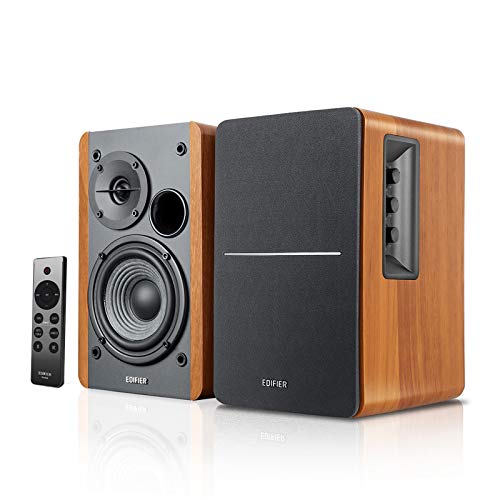
- Best for: A desk or TV setup that needs several inputs in a compact pair.
- 42W RMS total power (21W + 21W)
- Bluetooth 5.0 wireless streaming
- 13mm silk dome tweeter and 4-inch woofer
- 51Hz to 20kHz frequency response

- Best for: Vinyl listeners and living rooms that need clear dialogue.
- 70W total system power (35W RMS x 2)
- 120W peak power x 2
- 105.5dB maximum acoustic output
- 76Hz to 21kHz frequency response

- Best for: A larger room or desktop where full, balanced sound matters.
- 90W Class D amplifier (2 x 45W RMS)
- Bluetooth 5.0 wireless streaming
- 5-inch woven glass fiber woofer
- 1-inch silk soft dome tweeter
All 4 Picks at a Glance
| Product | Specs | Action |
|---|---|---|
| Edifier R1280DBs |
| Check price on Amazon |
| Klipsch R-41PM |
| Check price on Amazon |
| Fluance Ai41 |
| Check price on Amazon |
 Edifier R1700BTs |
| Check price on Amazon |
Key takeaways
- Compare the best stereo bluetooth speakers for home listening. Find pairs with Bluetooth 5.0, optical inputs, phono support, and room-filling stereo sound.
A stereo pair of Bluetooth speakers fills a room in a way a single speaker cannot. Two separate cabinets place instruments and voices across a real soundstage, so music gains width and depth that a one-box speaker flattens. The four powered pairs in this guide all connect to a phone over Bluetooth, and each one also takes a wired source, so a turntable, a television, or a computer can join the same setup. No separate amplifier is needed, since the power is built into the speakers.
The picks range from a compact desk pair to a larger set with five-inch woofers, and they differ in inputs, power, and character. One adds a phono stage for vinyl, one leads on raw power, and two come from the same maker at different sizes. The right pair follows the room and the sources you already own. All four pairs in this guide are powered, so they connect straight to a phone, a television, or a turntable with no extra amplifier.
Quick Picks
These four powered pairs cover desks, living rooms, vinyl setups, and larger spaces.
As an Amazon Associate we earn from qualifying purchases
| Product | Best for | Key spec from title |
|---|---|---|
| Edifier R1280DBs | Desk and TV stereo | 42W RMS with Bluetooth 5.0 |
| Klipsch R-41PM | Vinyl and living rooms | 70W with phono pre-amp |
| Fluance Ai41 | Bigger room sound | 90W with 5-inch woofers |
| Edifier R1700BTs | Strongest Edifier pair | 66W RMS with aptX HD |
How to Choose
Measure the room before the speakers
A stereo pair needs space to breathe, and the room decides how large the speakers should be. A small desk suits a compact four-inch pair, while a living room rewards a larger cabinet with a five-inch woofer. Check the listed dimensions for each speaker and measure the shelf or desk where they will sit, leaving room for the rear port to vent. A pair squeezed against a wall sounds boomy, while one with a little air behind it stays balanced. Measure twice, since a pair that is too wide for the shelf ends up on the floor.
Count the inputs you actually use
Bluetooth handles the phone, but the wired inputs decide what else can join. An optical input takes a television feed without conversion, RCA jacks accept a turntable preamp or a computer, and a USB input links a laptop directly. A built-in phono stage is the standout feature for vinyl, since it connects a turntable with no extra box. List your sources before shopping, and pick the pair that covers them all without an adapter chain. A remote control is worth having too, since it saves a walk across the room for every volume change.
Compare power honestly
Power ratings tell you how loud a pair can play before distortion, but the numbers need care. RMS power describes continuous output, while peak power describes short bursts, so compare RMS figures when you compare models. A 42-watt pair suits a bedroom or a desk, a 66-watt pair fills a living room, and a 90-watt pair handles a large open space. Higher power also gives headroom at normal volumes, which keeps the sound clean. A pair with a higher RMS figure also stays composed during loud passages, where a weaker pair starts to distort.
Think about the subwoofer question
A bookshelf pair with a four-inch woofer reaches down to about 50Hz, which covers most music, but deep bass needs a subwoofer. A subwoofer output on the speaker lets you add one later without replacing the pair, and a built-in crossover hands the low notes over cleanly. If you listen to bass-heavy music or watch films, a sub out is worth having, even if the subwoofer comes months later. Check the crossover controls too, since a good crossover blends the subwoofer with the bookshelf pair without a gap.
The 4 Best Options
Edifier R1280DBs
- Best for: A desk or TV setup that needs several inputs in a compact pair.
- 42W RMS total power (21W + 21W)
- Bluetooth 5.0 wireless streaming
- 13mm silk dome tweeter and 4-inch woofer
- 51Hz to 20kHz frequency response
A desk or TV setup that needs several inputs in a compact pair.
The 4-inch woofer limits deep bass, so add a subwoofer for film nights.
The Edifier R1280DBs is the most versatile compact pair in this guide, and it suits a desk or a television equally well. Bluetooth 5.0 links a phone or a laptop, while optical, coaxial, and dual RCA inputs cover a television and a computer at the same time. The 42-watt RMS output drives a 13mm silk dome tweeter and a 4-inch woofer in each cabinet, and the wooden enclosure keeps the sound warm. A wireless remote and a subwoofer output round out a pair that punches above its size. The side-panel dials put volume, bass, and treble within easy reach.
Watch out for: The 4-inch woofer limits deep bass, so add a subwoofer for film nights.
Klipsch R-41PM
- Best for: Vinyl listeners and living rooms that need clear dialogue.
- 70W total system power (35W RMS x 2)
- 120W peak power x 2
- 105.5dB maximum acoustic output
- 76Hz to 21kHz frequency response
Vinyl listeners and living rooms that need clear dialogue.
The forward horn sound suits lively music better than soft background listening.
The Klipsch R-41PM brings a living-room character to the powered speaker category, with a horn-loaded tweeter and a copper woofer that sound lively and forward. A 4-inch spun-copper woofer and a 1-inch aluminum tweeter sit behind a 90-degree Tractrix horn, which keeps dialogue clear across a wide seating area. The built-in amplifier delivers 70 watts in total, and the input list is the broadest here: Bluetooth, USB, optical, RCA, 3.5mm, and a phono preamp for a turntable. The pair needs no receiver, so a turntable and a phone are enough to fill the room with music.
Watch out for: The forward horn sound suits lively music better than soft background listening.
Fluance Ai41
- Best for: A larger room or desktop where full, balanced sound matters.
- 90W Class D amplifier (2 x 45W RMS)
- Bluetooth 5.0 wireless streaming
- 5-inch woven glass fiber woofer
- 1-inch silk soft dome tweeter
A larger room or desktop where full, balanced sound matters.
The bigger cabinets need more shelf space than the compact pairs here.
The Fluance Ai41 is the largest pair in this guide, and its five-inch woofers give it the fullest sound. A 90-watt Class D amplifier drives a 1-inch silk dome tweeter and a 5-inch woven glass fiber woofer in each cabinet, and the internally braced enclosure keeps resonance down. Bluetooth 5.0 handles wireless streaming, RCA and optical inputs cover a turntable and a television, and a subwoofer output leaves room to grow. It suits a small room or a desktop where stereo imaging matters. The two-year warranty and lifetime support give the pair a safety net that cheaper models rarely match.
Watch out for: The bigger cabinets need more shelf space than the compact pairs here.
Edifier R1700BTs
- Best for: Living-room music listening with the strongest wireless quality here.
- 66W RMS total power
- Bluetooth 5.0 with Qualcomm aptX HD
- 19mm silk dome tweeter and 4-inch woofer
- Dual RCA inputs
Living-room music listening with the strongest wireless quality here.
There is no optical input, so a television needs an RCA connection.
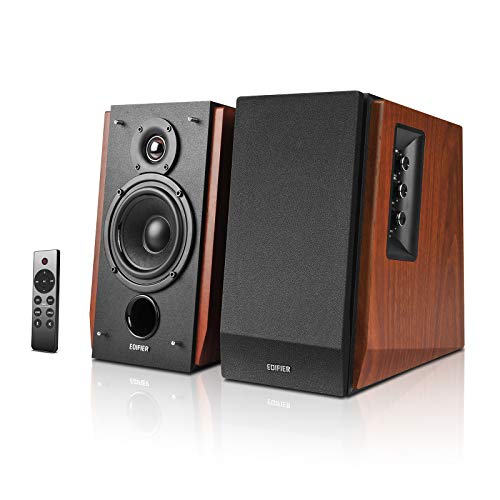
The Edifier R1700BTs is the strongest pair from Edifier in this guide, with 66 watts RMS and Bluetooth 5.0 with Qualcomm aptX HD for higher-quality wireless audio. A 19mm silk dome tweeter and a 4-inch woofer sit in each wooden cabinet, and digital signal processing with dynamic range control keeps the sound clean at higher volumes. Dual RCA inputs connect two sources at once, and a subwoofer output with a built-in crossover makes adding bass simple. Side-panel controls and a remote cover volume, bass, and treble. The wooden cabinets suit a living room shelf, and the pair looks at home next to a television.
Watch out for: There is no optical input, so a television needs an RCA connection.
Which One Fits Your Situation
A desk with a computer and a phone
Choose the Edifier R1280DBs. Its compact size fits a desk, and the optical and RCA inputs cover a computer and a second source. The remote keeps volume within reach without leaning across the keyboard. Keep the speakers level with your ears and a few feet apart, so the stereo image stays wide and clear.
A living room with a turntable
Choose the Klipsch R-41PM. The built-in phono preamp connects a turntable directly, and the horn tweeter keeps vocals clear from the sofa. Place the pair at ear height and a few feet apart for the best stereo image. A record cleaning brush and a level turntable keep the vinyl sounding its best through the horn tweeters.
A larger room that needs full sound
Choose the Fluance Ai41. The five-inch woofers and 90-watt amplifier fill a room that smaller pairs leave thin, and the braced cabinets keep the bass tight. Give the rear ports room to breathe for the cleanest low end. A rug and soft furniture tame echoes in a bare room, so the larger cabinets sound their best.
A living room with a phone as the main source
Choose the Edifier R1700BTs. Bluetooth aptX HD gives the best wireless quality in this guide, and the 66-watt output fills the room. Add a subwoofer later through the dedicated output when the budget allows. The aptX HD link rewards a phone that supports it, so check the phone specs before expecting the best quality.
Common Mistakes
- Placing both speakers on the same side of the room, which kills the stereo image and muddies the bass.
- Comparing peak power figures instead of RMS power when choosing between pairs on a shortlist.
- Pushing bookshelf speakers hard against the wall, which muddies the bass and booms at low volume.
- Buying a pair without the input your turntable or television needs, then hunting for an adapter.
- Skipping the subwoofer output, then wanting deeper bass a year later when the room changes.
Frequently Asked Questions
Do I need an amplifier for powered speakers?
No, powered speakers have a built-in amplifier, so they connect directly to a phone, a computer, a television, or a turntable. You only need a separate amplifier for passive speakers, which have no power of their own. Powered speakers still need a power outlet, so plan the cable run before you place them.
What is the difference between RMS and peak power?
RMS power is the continuous power a speaker can handle, while peak power is the maximum it can reach in short bursts. RMS figures give the honest comparison between models, since peak numbers are always higher and harder to compare. A speaker with a higher RMS rating also plays cleaner at normal volume, not just louder.
Can stereo speakers connect to a TV?
Yes, most powered stereo pairs connect to a television through an optical, RCA, or AUX input, depending on the model. Check the inputs on the listing and match them to the outputs on your television before ordering. An optical cable gives the cleanest digital link, while RCA works when the television lacks optical out.
How far apart should stereo speakers sit?
A good starting point is to place the speakers as far apart as you sit from them, forming a triangle with your listening spot. Keep them at ear height, angle them slightly inward, and leave a little space behind each cabinet. Sit at the point of the triangle and the soundstage opens up, with voices centred between the speakers.
FAQ
Do I need an amplifier for powered speakers?
What is the difference between RMS and peak power?
Can stereo speakers connect to a TV?
How far apart should stereo speakers sit?
More from Amazon
Programs that pair well with the guide above. Offers and eligibility are set by Amazon and may change.
Free shipping on eligible items, Prime Video and more. Eligible new members can start with a free trial.
Start a Prime free trialAd-free music streaming. Eligible new subscribers can start with a free trial.
Try Music Unlimited freeA Prime membership for ages 18-24 with a trial period. Eligibility is set by Amazon.
See Prime for Young AdultsAudiobooks and podcasts to listen to on the go. Eligible new members can start with a free trial.
Try Audible freeAs an Amazon Associate we earn from qualifying purchases.