Key takeaways
- Ultra-low latency: 8,000Hz polling cuts click-to-response time noticeably on fast displays.
- Elite sensors: 35K-50K DPI optical sensors track flawlessly at high speed.
- Featherweight options: Models from 39-54g reduce fatigue in long sessions.
- Adjustable polling: Drop to 1K or 4K to extend battery when needed.
An 8K polling rate mouse reports its position to your PC 8,000 times per second, eight times faster than the long-standing 1,000Hz standard. On a high-refresh gaming monitor, that translates to smoother cursor motion, lower click latency, and tracking that feels almost telepathic. For competitive players chasing every millisecond, 8KHz has gone from novelty to a genuine edge.
But higher polling only helps when the rest of the mouse keeps up: a fast sensor, light weight, and stable wireless. We compared the leading 8K-capable mice, from Razer’s Viper and DeathAdder line to featherweight challengers like Pulsar and ATTACK SHARK, to see which deliver on the promise.
Our top picks

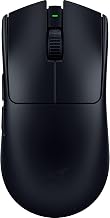
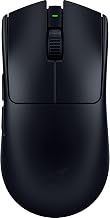
 Razer DeathAdder V3 Wired Gaming Mouse
- Product Group: Personal Computer
- Binding: Personal Computers


As an Amazon Associate we earn from qualifying purchases at no extra cost to you. Ratings are shown as listed on Amazon.
🎮 Get More From Your Setup — Free
Prime Gaming gives you free PC games every month, in-game loot, and a free Twitch channel sub — plus fast free shipping on all the gear above. New members get a 30-day free trial.
Watch: 8k Hz Mouse: Review & Buyer’s Guide — Video Review
Design & Build
The 8KHz field splits into shapes and weights. The Razer Viper V3 Pro (54g) and Viper V4 Pro (49g) are the esports darlings, symmetrical and ultra-light with premium Gen-3 and Gen-4 optical switches. The Razer DeathAdder V3 (59g) keeps the beloved ergonomic hump for palm-grippers. On the featherweight extreme, the ATTACK SHARK R5 Ultra (39g) and Pulsar Xlite Crazylight (41g) chase the lowest possible mass with carbon-fiber and honeycomb-free shells. The Rapoo VT2 stands out as a value entry with true 8K wireless and a huge 750-hour battery. Build quality on the Razers is the benchmark, but the lighter challengers feel impressively rigid for their weight.
Performance
At 8,000Hz the difference is most visible on 240Hz-plus monitors, where cursor motion loses its faint stepping and micro-corrections land instantly. The Viper V4 Pro pairs 8K polling with a 50K DPI optical sensor and Gen-4 switches, making it the most complete package for pros. The ATTACK SHARK R5 Ultra pushes an eye-popping 42K DPI PAW3950 sensor at just 39g, ideal for flick-heavy aimers. Battery is the trade-off with 8K wireless: running at full polling drains cells fast, though the Viper V4 Pro’s 180-hour rating and the Rapoo VT2’s 750-hour figure ease that concern. All these mice let you dial polling down when you don’t need the maximum.
Pros & Cons
- Ultra-low latency: 8,000Hz polling cuts click-to-response time noticeably on fast displays.
- Elite sensors: 35K-50K DPI optical sensors track flawlessly at high speed.
- Featherweight options: Models from 39-54g reduce fatigue in long sessions.
- Adjustable polling: Drop to 1K or 4K to extend battery when needed.
- Battery drain: Full 8K wireless polling shortens runtime versus 1K.
- System demand: You need a strong CPU and high-refresh monitor to feel the benefit.
Alternatives to Consider
If you want the definitive pro package, the Razer Viper V4 Pro is the most refined 8K mouse here. Palm-grip players who dislike flat symmetrical shells should choose the ergonomic DeathAdder V3. Aimers obsessed with the lowest weight will love the 39g ATTACK SHARK R5 Ultra or the Pulsar Xlite Crazylight, while budget buyers curious about 8K should start with the long-lasting Rapoo VT2.
Frequently Asked Questions
Do I need a special monitor to benefit from 8KHz?
You feel it most on 240Hz or faster displays. On a 60Hz screen the gains are minimal, so pair an 8K mouse with a high-refresh monitor.
Does 8K polling use more CPU?
Yes, slightly. Sending 8,000 reports per second adds a small CPU load, so a reasonably modern processor is recommended to avoid stutter.
Will battery life suffer at 8,000Hz?
Wireless mice drain faster at full polling. Models like the Viper V4 Pro and Rapoo VT2 offset this with large batteries, and you can lower polling to extend runtime.
Is a lighter mouse always better?
Not necessarily. Ultra-light 39-41g mice suit flick aiming, but some players prefer the stability and comfort of a slightly heavier 54-59g shape.
Verdict
An 8KHz mouse is a real competitive upgrade when paired with a fast monitor. The Razer Viper V4 Pro is our top all-round pick, the ATTACK SHARK R5 Ultra wins on sheer lightness, and the Rapoo VT2 makes true 8K wireless accessible without draining your wallet or its battery.