Key takeaways
- Large simulations and strategy games: these are heavy on one or a few threads and benefit from fast cores and cache.
- Open-world games with many characters: crowd and physics calculations can load the CPU.
- Competitive shooters at high frame rates: the CPU must prepare each frame very quickly.
- Games with ray tracing: these can add CPU work for the scene set-up.
For most gamers in 2026, a modern six-core processor is enough and an eight-core processor is the safer choice, because the graphics card decides frame rates far more often than the CPU does. The CPU matters most when you play at 1080p with a high-refresh monitor, pair it with a very fast graphics card, or run streaming and other apps at the same time.
Our top picks
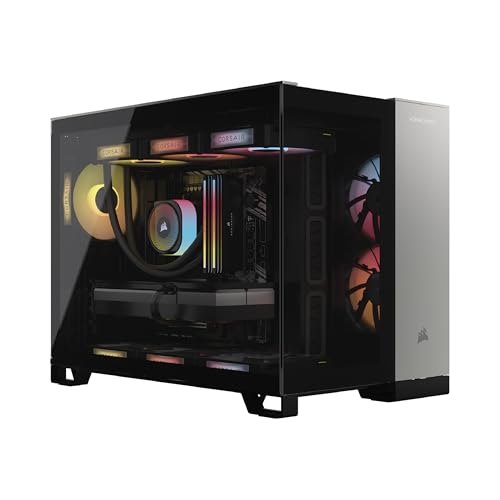 Corsair Vengeance i5100 Gaming PC
- GeForce RTX 50 Series Graphics Card: Powered by…
- 14th Gen Intel Core Processor: Offers the latest…
- CORSAIR iCUE LINK 2500X RGB Dual Chamber Case:…
| Product | Key specs | |
|---|---|---|
 iBUYPOWER Element Gaming PC Desktop Computer AMD | Check price | |
 iBUYPOWER Y40 PRO Black Gaming PC Desktop | Check price | |
| Corsair Vengeance i5100 Gaming PC | GeForce RTX 50 Series Graphics Card: Powered by… 14th Gen Intel Core Processor: Offers the latest… CORSAIR iCUE LINK 2500X RGB Dual Chamber Case:… | Check price |
 iBUYPOWER Element SE Gaming PC Desktop Computer | AMD Ryzen 5 8400F, NVIDIA GeForce RTX 3050… Connectivity: 6 x USB 3.1 | 1x RJ-45… Special Add-Ons: Tempered Glass RGB Gaming Case |… | Check price |
As an Amazon Associate we earn from qualifying purchases at no extra cost to you.
The quick rule
Buy a recent six-core chip if your budget is tight and your graphics card is mid-range. Buy an eight-core chip, or an X3D model, if you want headroom for the next few years, a stronger graphics card, or competitive high-refresh play. Guides surveyed for this article broadly agree that six to eight modern cores covers gaming, and that going beyond eight cores brings diminishing returns for games, though it helps productivity work like rendering.
Core count is not the whole story
Single-core speed, cache size and the architecture generation often matter more than the headline core number. A recent six-core processor can be faster in games than an older eight-core one. Large L3 cache, as on AMD’s X3D chips, is reported to lift 1% lows in engines that stutter, which makes games feel smoother even when average frame rates look similar.
Match the CPU to the graphics card
| Graphics card class | CPU class that usually suffices | Notes |
|---|---|---|
| Entry level (for example RTX 5060-class or comparable Radeon) | Modern 6-core | Guides describe a recent six-core as sufficient for this class |
| Mid-range | Modern 6 to 8 cores | Eight cores add headroom for background apps |
| High-end | 8 cores or an X3D chip | One source says a 6-core can limit a very fast card, other guides are less strict |
| Top-end at 4K | 6 to 8 modern cores | At 4K the graphics card is almost entirely the limit |
| Top-end at 1080p high refresh | Best gaming CPU you can afford | The graphics card renders frames quickly, so the CPU is exposed |
Resolution and refresh rate change the answer
At 4K, each frame takes the graphics card longer to draw, so the CPU waits and rarely limits performance. At 1080p with a 144 Hz or faster monitor, the graphics card can finish frames quickly and the CPU becomes the pace-setter. If your screen is 60 Hz and 1080p, even an older six-core processor is often enough. If you play competitive shooters at several hundred frames per second, CPU speed and cache matter much more.
What kinds of games need more CPU
- Large simulations and strategy games: these are heavy on one or a few threads and benefit from fast cores and cache.
- Open-world games with many characters: crowd and physics calculations can load the CPU.
- Competitive shooters at high frame rates: the CPU must prepare each frame very quickly.
- Games with ray tracing: these can add CPU work for the scene set-up.
Most single-player games at 1440p or 4K are far less demanding on the processor.
Streaming and multitasking
Guides suggest eight to twelve cores if you stream while gaming, record gameplay or keep many browser tabs, chat and capture software open. Hardware encoding on the graphics card reduces the CPU load of streaming, so a six-core with a modern GPU encoder is often fine. Software encoding on the CPU is more demanding and benefits from more cores.
Examples of current processors by tier
| Tier | Example processors | Best for |
|---|---|---|
| Budget | Ryzen 5 7600 or Ryzen 5 9600X (6 cores) | Gaming with a mid-range card |
| Mid-range | Ryzen 7 9700X (8 cores), which Newegg’s guide names as a 2026 sweet spot | Gaming plus light multitasking |
| Premium gaming | Ryzen 7 9800X3D | High-refresh play and fast graphics cards |
| Intel options | Core Ultra 200S series, or the previous-generation Core i5-14600K | Mixed gaming and productivity |
Review current benchmarks for the specific models, because availability and results change, and confirm the socket and memory type on the motherboard maker’s page.
How to tell whether your CPU is the limit
- Run the game at your normal settings and watch GPU utilisation in a monitoring tool.
- If the graphics card sits near full load, it is the limit and a faster CPU will not help much.
- If GPU use is low and one CPU core is pinned near full, the CPU is limiting.
- Lower the resolution briefly. If frame rate barely changes, the CPU is the limit.
Also look at stutter and 1% lows, not just averages. Temperature or power limits can throttle a processor, so make sure cooling is adequate.
Common mistakes
Spending on cores instead of the graphics card
For most builds, upgrading the graphics card brings more extra frames than moving from a six-core to a twelve-core chip.
Judging by core count alone
Architecture generation, clock speed and cache can outweigh the number of cores. Always read reviews for the specific model.
Ignoring the platform
A processor needs a compatible motherboard and the right memory. AM5 needs DDR5, and a newer socket gives a better upgrade path than an end-of-life one.
Trusting bottleneck calculators blindly
Online calculators give rough estimates and do not replace benchmark data for the game you play.
Forgetting cooling and power
A processor that overheats loses performance. Follow the maker’s cooler recommendations, and only change BIOS or overclocking settings if you accept the risk of instability and a possible warranty issue.
Decision table
| Your situation | Suggested CPU level |
|---|---|
| 1080p, 60 Hz, budget card | Recent 6-core |
| 1440p, mid-range card | Recent 6 to 8 cores |
| 1080p, 240 Hz competitive play | 8 cores or X3D |
| 4K with a high-end card | 6 to 8 modern cores |
| Gaming plus streaming | 8 to 12 cores |
Memory, storage and the rest of the PC
A processor is only part of the equation. Games on current platforms benefit from enough fast memory, with DDR5 on AM5 and newer Intel platforms, and a solid-state drive to cut load times. Slow or single-channel memory can cost frames in CPU-limited games, so install memory in the slots the motherboard manual recommends for dual channel. These parts are cheaper to fix than a processor, so review them before blaming the CPU.
How long will a CPU last
One guide expects a six-core chip bought in 2026 to remain viable for gaming through about 2029 to 2030, which is a single source’s estimate and not a guarantee. Longevity depends on the games you play, the resolution and how fast your graphics card advances. Choosing a platform with a socket that supports future processors makes a later upgrade simpler.
Frequently Asked Questions
Is a 6-core CPU enough for gaming in 2026?
Yes, for most players. Guides describe a modern six-core, twelve-thread processor as the practical minimum and sufficient for most games, especially at 1440p and 4K. It has less headroom if you stream or pair it with a very fast graphics card.
Do I need 8 cores for gaming?
You do not need them for most games, but eight cores give more headroom for background apps and future titles. Many guides call eight the safe buy for a system you want to keep for years.
Does the CPU matter at 4K?
Much less than at lower resolutions. At 4K the graphics card is almost entirely the limit, so a recent six-core processor rarely holds back even a strong card in most games.
What is an X3D processor and do I need one?
X3D chips from AMD carry extra L3 cache, which reviewers report improves 1% lows and high-refresh results in many games. They suit players who want the smoothest play, but they are not needed for casual gaming.
Will an old CPU bottleneck a new graphics card?
It can, particularly at 1080p and high refresh rates. Check reviews that pair your processor class with the graphics card you want, and monitor utilisation to see which part is limiting.
Should I buy for gaming now or for future games?
If you plan to keep the PC for several years, a modern six-core is expected to stay viable for gaming for a while, and eight cores adds margin. A platform with an upgrade path, such as AM5, lets you swap the processor later.
FAQ
Is a 6-core CPU enough for gaming in 2026?
Do I need 8 cores for gaming?
Does the CPU matter at 4K?
What is an X3D processor and do I need one?
Will an old CPU bottleneck a new graphics card?
Should I buy for gaming now or for future games?
More from Amazon
Programs that pair well with the guide above. Offers and eligibility are set by Amazon and may change.
Free shipping on eligible items, Prime Video and more. Eligible new members can start with a free trial.
Start a Prime free trialAd-free music streaming. Eligible new subscribers can start with a free trial.
Try Music Unlimited freeA Prime membership for ages 18-24 with a trial period. Eligibility is set by Amazon.
See Prime for Young AdultsAudiobooks and podcasts to listen to on the go. Eligible new members can start with a free trial.
Try Audible freeAs an Amazon Associate we earn from qualifying purchases.