Our Short List of 3

- Sensor: HERO 2 optical, up to 44,000 DPI
- Tracking: up to 888 IPS, up to 88 G acceleration
- Weight: 60 g
- Connection: LIGHTSPEED wireless, polling up to 8,000 Hz

- Sensor: PixArt PAW3950 optical, up to 30,000 DPI
- Tracking: up to 750 IPS, up to 50 G acceleration
- Weight: 49.5 g
- Connection: wired USB, 8,000 Hz polling

- Sensor: PixArt PAW3395 optical, up to 26,000 DPI
- Tracking: up to 650 IPS, up to 50 G acceleration
- Weight: 54 g
- Connection: 2.4 GHz wireless and wired, 1,000 Hz polling, 4K ready
All 4 Picks at a Glance
| Product | Specs | Action |
|---|---|---|
| 1. Logitech G PRO X Superlight 2 (White) |
| Check price on Amazon |
| 2. Endgame Gear OP1 8k v2 (White) |
| Check price on Amazon |
| 3. Pulsar X2H Wireless Gaming Mouse (White) |
| Check price on Amazon |
 4. ASUS ROG Harpe Ace Aim Lab Edition (Black) |
| Check price on Amazon |
Our Top Picks
- Logitech G Pro X Superlight 2 Lightspeed WirelessClassic1.57 x 2.5 x 4.92 inches0.1 poundsCheck on Amazon
Counter-Strike rewards a very specific kind of aiming. Most rounds are decided by low-sensitivity arm movement, a hard counter-strafe, and a first bullet that has to land exactly where the crosshair sits. There is no room for a sensor that adds its own acceleration, smooths your flicks, or spins out during a fast swipe across the pad. The mouse also has to disappear under your hand: light enough to stop dead without overshoot, shaped so a claw or fingertip grip can make micro-corrections, and consistent enough that the same swipe always moves the crosshair the same distance.
That is why this list looks different from a general gaming roundup. Every pick below is a lightweight competitive mouse with a flawless optical sensor, clean tracking at the low DPI settings Counter-Strike players actually use, and switches that register each tap shot crisply. Two are wireless flagships trusted across the pro scene, one is a wired 8,000 Hz specialist for players who want the shortest possible input path, and two come from smaller esports-focused brands that build almost exclusively for aim. Read the shape notes closely, because in Counter-Strike the right shell for your grip matters more than any single number on a spec sheet.
Disclosure: As an Amazon Associate, we earn from qualifying purchases made through links on this page, at no extra cost to you.
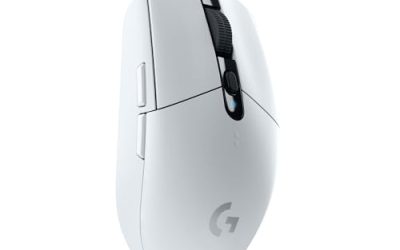
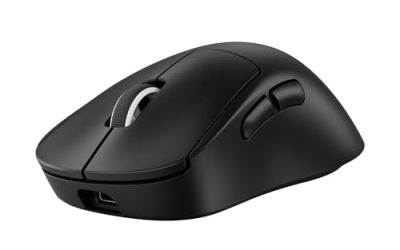
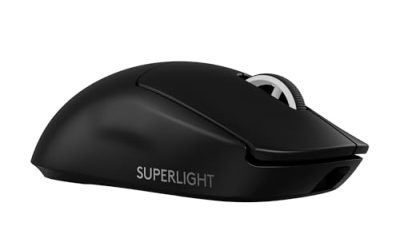
1. Logitech G PRO X Superlight 2 (White)
- Sensor: HERO 2 optical, up to 44,000 DPI
- Tracking: up to 888 IPS, up to 88 G acceleration
- Weight: 60 g
- Connection: LIGHTSPEED wireless, polling up to 8,000 Hz
No mouse is more closely associated with modern Counter-Strike than the Superlight line, and the second generation keeps the formula that made the original a fixture on pro desks. The symmetrical shell is deliberately plain: a gentle hump, no aggressive curves, and sides that let claw and fingertip players reposition freely during long low-sensitivity swipes. At 60 grams it stops as sharply as it starts, which is exactly what counter-strafing and one-tap duels demand.
The HERO 2 sensor tracks up to 44,000 DPI with no smoothing or acceleration, and it stays composed at the 400 to 800 DPI settings most Counter-Strike players run. LIGHTSPEED wireless supports polling up to 8,000 Hz, so the link adds no perceptible delay, while the LIGHTFORCE hybrid switches pair optical actuation speed with a mechanical click feel that makes tap firing feel deliberate. Battery life reaches up to 95 hours per charge over USB-C, and the five-button layout keeps the side buttons exactly where a thumb expects them for grenade binds. If you want the safest, most proven Counter-Strike mouse shape of the current generation, this is it.
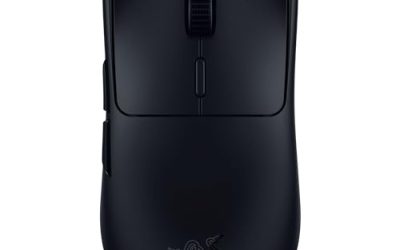
2. Endgame Gear OP1 8k v2 (White)
- Sensor: PixArt PAW3950 optical, up to 30,000 DPI
- Tracking: up to 750 IPS, up to 50 G acceleration
- Weight: 49.5 g
- Connection: wired USB, 8,000 Hz polling
The OP1 8k v2 is built for players who still prefer a cable and want the fastest wired input path available. Its compact symmetrical shell, just over 118 mm long, was shaped around claw grip from the start: a narrow waist, a low front, and sides that let your fingers pull the mouse into your palm for vertical control when you drag down to manage recoil. At roughly 49.5 grams it feels almost weightless during the long horizontal sweeps that entry fragging requires.
Inside, the PixArt PAW3950 sensor tracks up to 30,000 DPI and reports at a true 8,000 Hz over the wired connection, so every micro-adjustment reaches the game with minimal delay. The main buttons use Kailh GX mechanical switches on hot-swappable sockets, which means a worn switch can be replaced instead of retiring the whole mouse, and the mechanical scroll encoder gives each weapon-switch step a defined notch. There is no battery to manage and no wireless link to think about, just a flexible cable and a sensor that never smooths or accelerates your input. For dedicated claw-grip players who play wired, few mice are this focused.
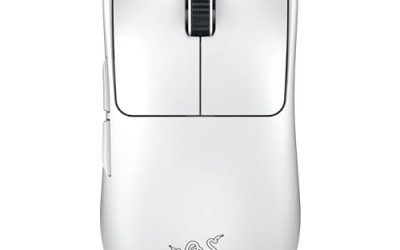
3. Pulsar X2H Wireless Gaming Mouse (White)
- Sensor: PixArt PAW3395 optical, up to 26,000 DPI
- Tracking: up to 650 IPS, up to 50 G acceleration
- Weight: 54 g
- Connection: 2.4 GHz wireless and wired, 1,000 Hz polling, 4K ready
The X2H takes the symmetrical esports formula and raises the back of the shell. That higher rear hump fills the palm of a claw gripper, so the mouse stays planted when you lift and reset between angles, while the narrow waist still lets fingertip players steer with small movements. It is a shape that suits the stop-start rhythm of Counter-Strike: hold a tight angle with the hump locked into your palm, then flick to the next head position without the shell shifting in your hand.
Pulsar pairs the shape with a PixArt PAW3395 sensor tracking up to 26,000 DPI with zero smoothing, acceleration or filtering, plus optical main switches that actuate with light rather than a metal contact, which keeps click latency low and removes double-click wear from the equation. The 2.4 GHz wireless link polls at 1,000 Hz out of the box and the mouse is ready for 4,000 Hz with the maker’s separate high-polling receiver. At 54 grams with up to 70 hours of battery life, it carries flagship tracking in one of the most distinctive claw shapes on the market.
4. ASUS ROG Harpe Ace Aim Lab Edition (Black)
- Sensor: ROG AimPoint optical, up to 36,000 DPI
- Tracking: up to 650 IPS, up to 50 G acceleration
- Weight: 54 g
- Connection: 2.4 GHz SpeedNova wireless, Bluetooth, wired USB
The Harpe Ace was shaped with direct input from aim trainers and professional FPS players, and it shows in the details. The right-handed shell runs longer than most mice on this page at 127.5 mm, with a low profile that supports palm-claw and relaxed claw grips for medium and larger hands. The surface uses a dry, grippy finish that stays consistent during long sessions, and the whole mouse weighs just 54 grams, so the larger footprint never feels sluggish when you sweep across a low-sensitivity pad.
The ROG AimPoint optical sensor tracks up to 36,000 DPI and holds up to 650 IPS without losing the cursor during fast flicks. Connectivity is genuinely flexible: ROG SpeedNova 2.4 GHz wireless for competition, Bluetooth for a second machine, and wired USB when you want to play while charging, with battery life up to 90 hours in wireless mode. ROG optical micro switches deliver instant actuation with a rated 70-million-click lifespan, and the five programmable buttons cover push-to-talk and grenade binds without crowding the shell. It is the pick for players who want a slightly larger, trainer-influenced shape.
5. Corsair Sabre v2 Pro Ultralight (Black)
At 36 grams, the Sabre v2 Pro is the lightest mouse from a major gaming brand, and that single number changes how Counter-Strike feels. Flicks take almost no effort to start or stop, micro-corrections happen with fingertip pressure alone, and long sessions of angle clearing put far less strain on the wrist. The symmetrical shell is compact with a safe, low hump, so claw and fingertip grips both settle in quickly, and the box includes grip tape and a spare set of skates for tuning the feel.
The Corsair Marksman S sensor tracks up to 33,000 DPI at up to 750 IPS, and the mouse polls at up to 8,000 Hz over both its 2.4 GHz wireless link and a wired connection, matching the fastest input path on this page without a cable tether. Mechanical switches keep the clicks crisp for tap shooting, and battery life runs up to 70 hours at 1,000 Hz polling, dropping when you push the polling rate to its maximum. Settings live in a browser-based hub, so there is no heavy software suite to install before a match. If low weight is your top priority, nothing else here comes close.
Specs
- Sensor: Corsair Marksman S optical, up to 33,000 DPI
- Tracking: up to 750 IPS, up to 50 G acceleration
- Weight: 36 g
- Connection: 2.4 GHz wireless and wired, polling up to 8,000 Hz
- Battery: up to 70 hours at 1,000 Hz polling
- Switches: mechanical
- Shape: symmetrical, 119 x 62 x 38 mm
- Model number: CH-931G000-WW
How to Choose a Gaming Mouse for Counter-Strike
Start with shape, because it decides how your aim feels more than any sensor figure. Counter-Strike aiming is mostly arm movement at low sensitivity, with the wrist and fingers handling corrections. Claw and fingertip grips dominate for a reason: they let you pull the mouse down against recoil and make small vertical adjustments without moving your whole arm. Match the shell to your hand size and grip first, then look at everything else.
Weight comes next. Every mouse on this page sits between 36 and 60 grams, and the trend exists because a lighter mouse is easier to stop precisely at the end of a flick. Players coming from a heavy general-purpose mouse usually need a few days to adjust, and many lower their sensitivity slightly while they adapt. Skates matter too: clean PTFE feet and a consistent cloth pad keep glide predictable, which is what spray control depends on.
Sensor numbers need context. Counter-Strike players typically run 400 to 800 DPI with an in-game sensitivity that puts their effective DPI somewhere between roughly 600 and 1,200. At those settings, any modern flagship sensor on this page tracks flawlessly, with no acceleration or smoothing to fight. What actually differs is polling rate and connection. A 1,000 Hz link is proven at the highest level of play; 4,000 and 8,000 Hz options shave the report interval further and feel smoothest on high-refresh monitors, at the expense of battery life on wireless models.
Finally, think about switches and settings. Optical and hybrid switches actuate faster and resist the double-click faults that ruin a held angle, while mechanical switches offer the crispest tactile break for tap firing. Whichever you choose, set the mouse up once, turn off any pointer enhancement in your operating system, and keep your DPI and in-game sensitivity fixed so your muscle memory compounds instead of resetting every week.
FAQ
What DPI and sensitivity do Counter-Strike players use?
Most competitive players run 400 or 800 DPI on the mouse and adjust the rest in game, landing at an effective DPI between about 600 and 1,200. The exact figure is personal, but the principle is not: low enough that a full pad swipe turns you around, high enough that clearing corners does not need a second lift. Every mouse on this page tracks accurately at those settings.
Is wireless reliable enough for competitive Counter-Strike?
Yes. Modern 2.4 GHz gaming links from Logitech, Pulsar, ASUS and Corsair match wired latency at 1,000 Hz and go beyond it at higher polling rates, which is why wireless mice now dominate professional play. The practical differences are battery management and the freedom of playing without cable drag, not performance.
Does 8,000 Hz polling make a difference in Counter-Strike?
It shortens the interval between mouse reports from one millisecond to an eighth of that, which can make fast swipes render a touch more smoothly on a high-refresh monitor. The effect is subtle, and shape, weight and sensor consistency matter far more, but if your monitor runs at 240 Hz or above and the option is there, it does no harm beyond extra battery drain on wireless models.
Which shape suits a claw grip best?
Look for a shorter shell with a defined rear hump and a narrow waist, like the OP1 8k v2 and the X2H on this page. The hump gives your curled fingers and palm a fixed anchor, the waist lets your fingertips steer, and a length around 118 to 121 mm keeps the mouse controllable for small and medium hands. Larger hands that claw should look at the Harpe Ace instead.
More from Amazon
Programs that pair well with the guide above. Offers and eligibility are set by Amazon and may change.
Free shipping on eligible items, Prime Video and more. Eligible new members can start with a free trial.
Start a Prime free trialAd-free music streaming. Eligible new subscribers can start with a free trial.
Try Music Unlimited freeA Prime membership for ages 18-24 with a trial period. Eligibility is set by Amazon.
See Prime for Young AdultsAudiobooks and podcasts to listen to on the go. Eligible new members can start with a free trial.
Try Audible freeAs an Amazon Associate we earn from qualifying purchases.