Our Short List of 3

- Best for: Living-room movie nights and casual gaming in rooms that cannot go fully dark.
- 4K PRO-UHD smart streaming projector with Android TV
- 3-chip 3LCD technology
- 2,800 lumens of color and white brightness
- HDR10 and HLG support

- Best for: Bedroom streaming, small-room movie nights, and portable use where a full theater setup would not fit.
- 1080p native resolution, accepts 4K input
- 430 ISO lumens brightness
- Google TV with licensed Netflix
- D65 color temperature standard

- Best for: Shared living rooms where the screen must disappear after movie night.
- 100-inch diagonal viewing size
- 16:9 aspect ratio
- Manual pull-down operation
- Listed as 4K, 8K, and 3D ready
All 4 Picks at a Glance
| Product | Specs | Action |
|---|---|---|
| Epson Home Cinema 2350 |
| Check price on Amazon |
| XGIMI MoGo 2 Pro (New) |
| Check price on Amazon |
| Elite Screens Manual B M100H |
| Check price on Amazon |
 Elite Screens ezFrame R100WH1-AP2 |
| Check price on Amazon |
Key takeaways
- Find the best home projectors and screens for movie nights, gaming, and streaming, with bright 4K and portable picks plus manual and fixed screens.
A home projector setup is really two purchases that have to work together: the projector decides how bright, sharp, and colorful the picture looks, while the screen decides how much of that picture actually reaches your eyes. A strong projector thrown onto a textured wall or a wrinkled sheet loses contrast and fine detail, and a fine screen cannot rescue a dim projector in a bright living room. The decision that matters most is matching brightness and resolution to your room, then choosing a screen surface and size that fit the same space.
This guide is for living-room movie watchers, casual gamers who want a huge display without a huge television, and renters who need a setup that can move from room to room. The picks below were chosen from the names and specifications shown on their Amazon listings, covering a bright 4K home theater projector, a portable smart projector, a manual pull-down screen, and a fixed-frame screen.
Quick Picks
As an Amazon Associate we earn from qualifying purchases
| Product | Best for | Key spec from title |
|---|---|---|
| Epson Home Cinema 2350 | Bright living-room movie nights and casual gaming | 4K PRO-UHD, 3-chip 3LCD, 2,800 lumens |
| XGIMI MoGo 2 Pro (New) | Portable streaming in bedrooms and small rooms | 1080p, 430 ISO lumens, Google TV |
| Elite Screens Manual B M100H | A pull-down screen that disappears when not in use | 100-inch diagonal, 16:9, manual pull down |
| Elite Screens ezFrame R100WH1-AP2 | A permanent dedicated theater wall | 100-inch diagonal, 16:9, fixed frame |
How to Choose
Match brightness to your room light
Brightness decides whether a projector survives daylight. A living room with windows, lamps, and light-colored walls needs a brighter projector than a dark basement theater, because ambient light washes out blacks and flattens contrast long before resolution becomes the limiting factor. Look at the lumen figure on the listing and treat it as a rough guide rather than a precise promise, since makers measure it in different ways. If your room cannot be darkened, favor a brighter model and pair it with a screen that holds contrast, and keep the image size modest, because spreading the same light over a larger area makes every part of the picture dimmer.
Pick resolution for your viewing distance
Resolution matters most when you sit close to a large image. From a typical sofa distance, a 1080p picture on a 100-inch screen still looks clean for streaming and casual gaming, while 4K enhancement adds visible texture to films and detailed game worlds when you sit nearer or go larger. Do not chase resolution alone: a sharp 1080p projector with good color and contrast often looks better than a soft 4K image from a dim light source. Check whether the listing says native 4K, 4K enhancement, or 4K input accepted at a lower native resolution, because those three phrases describe different things.
Size the screen to the wall, not the dream
Measure the wall before falling in love with a diagonal size. A 100-inch 16:9 screen needs roughly 87 inches of width plus frame and mounting clearance, and the projector needs its own throw distance in front of it, which the listing usually states as a throw ratio. Leave room for speakers, furniture, and walking space, and confirm the ceiling height if you plan a pull-down screen, since the housing hangs below the mount. A screen that fits with breathing room beats a larger one that crowds the wall, blocks a doorway, or forces the projector into a corner where keystone correction has to rescue a skewed image.
Decide between pull-down, fixed, and portable
A manual pull-down screen suits shared living rooms, because it rolls away and leaves the wall free for everyday life, but the surface can develop waves over time if it is pulled unevenly or left down in humidity. A fixed-frame screen stays perfectly flat and gives the most consistent picture, which makes it the right call for a dedicated theater room where the wall belongs to the screen. A portable projector with a built-in smart platform suits renters and bedroom viewing, since it moves easily and needs no separate streaming stick, though its lower brightness means it belongs in dim rooms and smaller image sizes.
The 4 Best Options
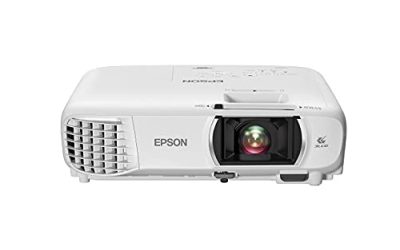
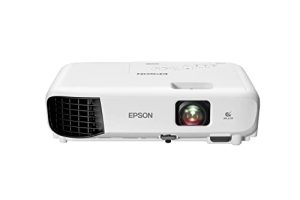
Epson Home Cinema 2350
- Best for: Living-room movie nights and casual gaming in rooms that cannot go fully dark.
- 4K PRO-UHD smart streaming projector with Android TV
- 3-chip 3LCD technology
- 2,800 lumens of color and white brightness
- HDR10 and HLG support
Living-room movie nights and casual gaming in rooms that cannot go fully dark.
It accepts a 4K signal through pixel shifting rather than displaying native 4K, so confirm your seating distance and screen size before expecting the finest detail.
The Home Cinema 2350 is the pick for a living room that doubles as a theater, because it combines a bright 3-chip 3LCD image with built-in Android TV, so movie nights start without extra boxes or cables. Its 4K PRO-UHD enhancement sharpens films and streaming shows, HDR10 support adds depth to bright highlights and dark scenes, and the low-latency mode keeps casual gaming responsive. The built-in speaker covers small rooms on its own, while Bluetooth output lets you send sound to a soundbar or headphones when the household is asleep.
Watch out for: It accepts a 4K signal through pixel shifting rather than displaying native 4K, so confirm your seating distance and screen size before expecting the finest detail.
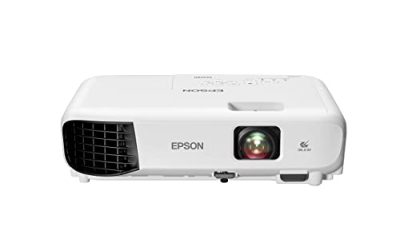
XGIMI MoGo 2 Pro (New)
- Best for: Bedroom streaming, small-room movie nights, and portable use where a full theater setup would not fit.
- 1080p native resolution, accepts 4K input
- 430 ISO lumens brightness
- Google TV with licensed Netflix
- D65 color temperature standard
Bedroom streaming, small-room movie nights, and portable use where a full theater setup would not fit.
With 430 ISO lumens it needs a dim room, so plan on curtains or evening viewing, and keep the image near 100 inches or smaller for the brightest result.
The MoGo 2 Pro in its newer Google TV version is the pick for people who want a projector that travels from bedroom to living room to a friend’s place. Its compact body weighs around one kilogram, its automatic focus and keystone correction straighten the picture within moments of being set down, and Google TV with licensed Netflix puts streaming apps on screen without a separate device. The dual speakers handle dialogue and casual viewing, and the 1080p image stays crisp at the modest sizes this brightness level suits best.
Watch out for: With 430 ISO lumens it needs a dim room, so plan on curtains or evening viewing, and keep the image near 100 inches or smaller for the brightest result.
Elite Screens Manual B M100H
- Best for: Shared living rooms where the screen must disappear after movie night.
- 100-inch diagonal viewing size
- 16:9 aspect ratio
- Manual pull-down operation
- Listed as 4K, 8K, and 3D ready
Shared living rooms where the screen must disappear after movie night.
Pull the screen down evenly and let it retract slowly, since uneven handling is the usual cause of waves or edge curl over time.
The Manual B M100H is the pick for a living room that needs a real screen without a permanent installation. It pulls down by hand, locks at the height you choose, and retracts into its housing when the movie ends, leaving the wall free for anything else. The 100-inch 16:9 surface suits films, sports, and games in the format most streaming content uses, and the screen material is listed as ready for 4K and 8K sources, so it will not be the weak link if you upgrade the projector later. Wall or ceiling mounting keeps the setup flexible for rooms with limited wall space.
Watch out for: Pull the screen down evenly and let it retract slowly, since uneven handling is the usual cause of waves or edge curl over time.
Elite Screens ezFrame R100WH1-AP2
- Best for: Dedicated theater rooms where the screen stays up all the time.
- 100-inch diagonal viewing size
- 16:9 aspect ratio
- Fixed-frame design with aluminum frame
- Viewing area 49 inches high by 87 inches wide
Dedicated theater rooms where the screen stays up all the time.
Measure the wall and the projector throw distance together before ordering, because a fixed frame cannot be folded away if the size turns out to be wrong.
The ezFrame is the pick for a room that is a theater first and everything else second. Its aluminum frame stretches the screen surface taut and flat, which removes the waves and curl that pull-down screens can develop and keeps geometry consistent from edge to edge. The 100-inch 16:9 surface matches the shape of films and streaming content, and the slim frame gives the wall a finished, deliberate look rather than a temporary setup. Once mounted, it needs no adjustment before each viewing, so the projector is the only thing you switch on.
Watch out for: Measure the wall and the projector throw distance together before ordering, because a fixed frame cannot be folded away if the size turns out to be wrong.
Which One Fits Your Situation
You want the brightest living-room picture
Choose the Epson Home Cinema 2350 and pair it with either Elite screen, because its 2,800 lumens hold up better than a portable projector when lamps are on or curtains are thin. The fixed-frame ezFrame gives the most consistent surface in a dedicated room, while the Manual B keeps a shared living room flexible. Add a soundbar later if the built-in speaker feels thin at larger image sizes.
You rent or move the projector between rooms
Choose the XGIMI MoGo 2 Pro (New), because its light body, automatic setup, and built-in Google TV remove the friction of moving a theater setup. Pair it with the Manual B screen in the room where you watch most, and use a plain wall for occasional viewing elsewhere. Keep the room dim and the image modest, and the portable picture stays satisfying.
You want a screen that vanishes after the film
Choose the Elite Screens Manual B M100H with either projector in this guide. The pull-down design suits living rooms, bedrooms, and multipurpose spaces where the wall serves other roles during the day. Mount it high enough that the viewing area sits at eye level from the sofa, and retract it after use to protect the surface.
You are building a permanent theater wall
Choose the Elite Screens ezFrame R100WH1-AP2 with the Epson Home Cinema 2350. The flat fixed surface and the bright 3LCD image are a natural pair for a room that stays dark and dedicated. Plan the mount, seating, and speaker placement around the screen position first, then set the projector distance from the finished screen size.
Common Mistakes
- Buying the largest screen that fits the wall without checking the projector throw distance, then discovering the image cannot fill it from the available seating position.
- Judging a projector only by resolution while ignoring brightness, so a sharp image looks washed out the first time a lamp is switched on.
- Projecting onto a painted wall with visible texture and expecting the same contrast and color a smooth screen surface delivers.
- Mounting a pull-down screen too high, which forces viewers to crane their necks through a whole film.
- Skipping the sound plan entirely, then relying on a small built-in speaker in a large room where dialogue gets lost.
Frequently Asked Questions
What size screen works best for a living room?
A 100-inch 16:9 screen suits most living rooms, because it feels cinematic from a typical sofa distance without overwhelming the wall. Measure the width first, since the screen needs about 87 inches of viewing width plus its frame, and confirm the projector can fill that size from where it will sit before ordering.
Do I need a screen, or is a white wall enough?
A white wall works for casual viewing, but a screen surface is smoother, more uniform, and built to reflect light evenly, which improves contrast and color. The difference is easiest to see in dark scenes, where wall texture and uneven paint show up as blotches, and in bright scenes, where a screen holds whites more cleanly.
Can a portable projector replace a home theater projector?
It can replace one in a bedroom or a small dim room, where its automatic setup and built-in streaming are genuine advantages. It cannot match a bright home theater projector in a lit living room or at very large image sizes, because its lower light output spreads thin over a big area and contrast fades first.
How far should the projector sit from the screen?
That depends on the throw ratio on the listing and the screen size you want. A projector with a 1.2:1 throw ratio needs about 1.2 feet of distance for every foot of image width, so a 100-inch screen with an 87-inch width needs roughly 8.7 feet. Check the ratio on your model and measure the room before mounting anything.
FAQ
What size screen works best for a living room?
Do I need a screen, or is a white wall enough?
Can a portable projector replace a home theater projector?
How far should the projector sit from the screen?
More from Amazon
Programs that pair well with the guide above. Offers and eligibility are set by Amazon and may change.
Free shipping on eligible items, Prime Video and more. Eligible new members can start with a free trial.
Start a Prime free trialAd-free music streaming. Eligible new subscribers can start with a free trial.
Try Music Unlimited freeA Prime membership for ages 18-24 with a trial period. Eligibility is set by Amazon.
See Prime for Young AdultsAudiobooks and podcasts to listen to on the go. Eligible new members can start with a free trial.
Try Audible freeAs an Amazon Associate we earn from qualifying purchases.