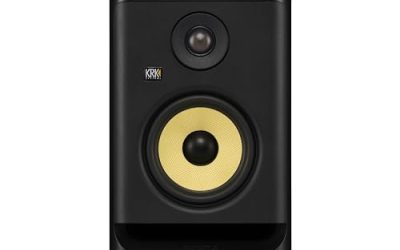
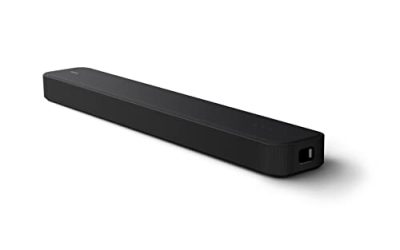
Our Short List of 3

- Best for: A first pair of home speakers for a small room, with no amplifier needed.
- Powered bookshelf speakers
- 42W RMS output

- Best for: Lively, efficient home audio in a small or medium room.
- Pair of bookshelf speakers
- 5.25″ spun-copper IMG woofer
- 1″ horn-loaded tweeter
- 85W RMS

- Best for: An affordable first passive pair for a home system built around a receiver.
- Pair of bookshelf speakers
- 5.25″ Dynamic Balance woofer
- 0.75″ silk dome tweeter
- 100W power handling
All 5 Picks at a Glance
| Product | Specs | Action |
|---|---|---|
| Edifier R1280T |
| Check price on Amazon |
| Klipsch R-51M |
| Check price on Amazon |
| Polk T15 |
| Check price on Amazon |
 Sony SSCS5 |
| Check price on Amazon |
 Sony SS-CS5M2 |
| Check price on Amazon |
Key takeaways
- Compare the 5 best home speakers for 2026: bookshelf picks from Edifier, Klipsch, Polk and Sony for clear, room-filling home audio in every room and budget.
Home speakers are the furniture of sound. They sit in one place for years, they get heard every day, and the wrong pair becomes a daily irritation while the right pair disappears into the routine. The choice is not about the loudest box or the most expensive brand — it is about matching a speaker to the room, the amplifier, and the kind of music that actually gets played there.
This guide covers five home speakers chosen from their Amazon listings for sound quality, build, and how well they suit ordinary rooms. Every pick here is a bookshelf speaker designed for home audio, and each one fits a different room and a different budget, from a first pair for a small flat to a serious set for a listening room.
Quick Picks
As an Amazon Associate we earn from qualifying purchases.
| Product | Best for | Key spec from title |
|---|---|---|
| Edifier R1280T | A first pair for a small room | Powered bookshelf, 42W RMS |
| Klipsch R-51M | Lively, efficient home audio | 5.25″ woofer, 85W RMS, 93dB sensitivity |
| Polk T15 | Affordable bookshelf sound | 5.25″ woofer, 100W, 60Hz–24kHz |
| Sony SSCS5 | A classic three-way bookshelf | 3-way 3-driver, 5.12″ woofer |
| Sony SS-CS5M2 | Sony’s newer bookshelf model | Newer Sony bookshelf design |
How to Choose
Bookshelf speakers need a room, not a stage
Bookshelf speakers are designed for rooms, not halls, and their sound depends on where they sit. A pair on a shelf against a wall gains bass for free, while the same pair on stands in the middle of a room sounds leaner and cleaner. Give them a little space from the wall if the bass gets boomy, and angle them slightly toward the listening seat. A speaker that sounds thin in a shop often sounds full once it is placed properly at home.
Powered or passive changes the setup
Powered speakers have the amplifier built in, so they plug straight into a phone, a computer, or a turntable with a built-in preamp. Passive speakers need a separate amplifier or receiver, which adds cost and a box to the shelf but gives more control over the sound. A first pair for a small room is usually simpler powered, while a serious listening room usually goes passive. Decide which camp you are in before comparing models, because the two kinds are not interchangeable.
Sensitivity matters more than wattage
A speaker’s sensitivity tells you how loud it plays with a given amount of power, and a high-sensitivity speaker needs far less amplifier to fill a room. The Klipsch R-51M at 93dB, for example, plays louder on the same amplifier than a less sensitive speaker would. Wattage figures on the listing describe what the speaker can handle, not how loud it will sound, so read the sensitivity and the frequency range instead of chasing the biggest number. A high-sensitivity speaker needs far less amplifier power to fill a room, which saves money on the receiver as well.
Match the speaker to the music
A speaker tuned for rock and pop will not flatter a string quartet, and a speaker tuned for classical will not punch hard enough for dance music. The driver layout is the best clue: a horn-loaded tweeter usually means lively, forward highs, while a silk dome tweeter usually means softer, smoother treble. A three-way design with a dedicated midrange driver usually handles voices better than a two-way design. Think about what gets played most and let that decide the tuning.
The 5 Best Options
Edifier R1280T
- Best for: A first pair of home speakers for a small room, with no amplifier needed.
- Powered bookshelf speakers
- 42W RMS output
A first pair of home speakers for a small room, with no amplifier needed.
The powered design means the amplifier is built in, so there is no upgrade path — if you later want a separate amp, you will need different speakers.
The R1280T is the natural first pair in this guide. It is a powered bookshelf speaker, so it needs no separate amplifier — plug it in, connect a phone or a computer, and it plays. Forty-two watts RMS is plenty for a small room, and the classic wood-finish cabinet suits a desk or a shelf without drawing attention. It is the pick for anyone who wants good sound without buying an amplifier, a receiver, and a shelf full of boxes. The classic wood-finish cabinet suits a desk or a shelf, and the simple controls work without a manual.
Watch out for: The powered design means the amplifier is built in, so there is no upgrade path — if you later want a separate amp, you will need different speakers.
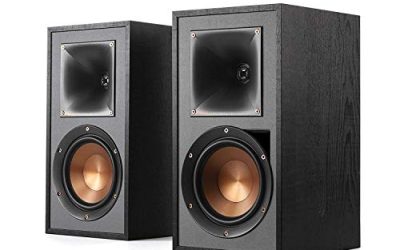
Klipsch R-51M
- Best for: Lively, efficient home audio in a small or medium room.
- Pair of bookshelf speakers
- 5.25″ spun-copper IMG woofer
- 1″ horn-loaded tweeter
- 85W RMS
Lively, efficient home audio in a small or medium room.
The horn tweeter is forward by design, so listeners who prefer a soft treble should audition them first or look at the silk-dome Polk instead.
The R-51M is the liveliest speaker here, and its horn-loaded tweeter is the reason. The 1-inch horn tweeter and the 5.25-inch spun-copper woofer give a forward, energetic sound that suits rock, pop, and film soundtracks, while the 93dB sensitivity means even a modest amplifier drives them loudly. At 85 watts RMS and a 62Hz to 21kHz range, they cover most music without a subwoofer in a small or medium room. They are the pick for listeners who like their music to feel present in the room. The spun-copper woofer looks as good as it sounds, and the 8-ohm impedance suits most receivers.
Watch out for: The horn tweeter is forward by design, so listeners who prefer a soft treble should audition them first or look at the silk-dome Polk instead.
Polk T15
- Best for: An affordable first passive pair for a home system built around a receiver.
- Pair of bookshelf speakers
- 5.25″ Dynamic Balance woofer
- 0.75″ silk dome tweeter
- 100W power handling
An affordable first passive pair for a home system built around a receiver.
It is a passive speaker, so budget for an amplifier or receiver — the low price is only part of the system cost.
The Polk T15 is the budget pick, and it earns its place on value alone. A 5.25-inch Dynamic Balance woofer and a 0.75-inch silk dome tweeter give a smooth, easy sound that suits long listening sessions, and the 100-watt handling and 60Hz to 24kHz range cover most music comfortably. It is a passive speaker, so it needs an amplifier or receiver, but the low price leaves room in the budget for one. For a first passive pair, it is hard to beat. The smooth treble suits long sessions, and the compact cabinet fits a shelf without dominating the room.
Watch out for: It is a passive speaker, so budget for an amplifier or receiver — the low price is only part of the system cost.
Sony SSCS5
- Best for: Balanced, classic home audio where voices and acoustic music matter most.
- Pair of bookshelf speakers
- 3-way 3-driver design
- 5.12″ foamed-mica woofer
Balanced, classic home audio where voices and acoustic music matter most.
The three-way design needs a decent amplifier to show its best, so pair it with a receiver that has some headroom rather than the cheapest option.
The SSCS5 is the classic three-way bookshelf in this guide. A 3-way, 3-driver design with a 5.12-inch foamed-mica woofer gives it a dedicated midrange that two-way speakers have to compromise on, which shows in voices and acoustic instruments. It is a passive speaker, so it pairs with an amplifier or receiver, and the traditional Sony tuning suits a wide range of music without favouring any one genre too strongly. It is the pick for listeners who want a proven, balanced design. The 5.12-inch woofer gives the bass real weight for a bookshelf speaker.
Watch out for: The three-way design needs a decent amplifier to show its best, so pair it with a receiver that has some headroom rather than the cheapest option.
Sony SS-CS5M2
- Best for: Buyers who want Sony’s newest bookshelf design rather than the classic SSCS5.
- Bookshelf speaker from Sony’s current line
- Successor to the SSCS5 bookshelf model
Buyers who want Sony’s newest bookshelf design rather than the classic SSCS5.
As the newer model, it has less long-term owner feedback than the SSCS5, so confirm the listing details on the product page before ordering.
The SS-CS5M2 is Sony’s newer bookshelf model, the successor to the long-running SSCS5 line. It carries the same bookshelf brief — a pair of home speakers for a living room or study — with a refreshed design for current systems. Buy it when you want the newest Sony bookshelf rather than the classic model, and check the listing for the current specifications and finish options before ordering, since the newer model supersedes the older one in Sony’s range.
Watch out for: As the newer model, it has less long-term owner feedback than the SSCS5, so confirm the listing details on the product page before ordering.
Which One Fits Your Situation
You want sound without buying an amplifier
Take the Edifier R1280T. It is the only powered pair here, so it plugs straight into a phone or a computer and plays. Forty-two watts is plenty for a small room, and the simple setup means the speakers are making music within minutes of unboxing. The simple setup means the speakers are making music within minutes of unboxing, with no extra boxes to wire up.
You want lively, efficient sound
Take the Klipsch R-51M. The horn-loaded tweeter and 93dB sensitivity make them the most energetic speakers here, and they play loudly on a modest amplifier. They suit rock, pop, and film soundtracks in a small or medium room. They suit film soundtracks as well as rock, and the forward sound keeps dialogue clear even at low volume.
You are building a system on a budget
Take the Polk T15. It is the cheapest pair here, and the smooth silk-dome treble suits long sessions. Budget for a receiver as well, since the T15 is passive, and the whole system still costs less than most single pairs. The smooth silk-dome treble suits long sessions, and the low price leaves room for a decent receiver.
You want a classic, balanced design
Take the Sony SSCS5 or the newer SS-CS5M2. The SSCS5 is the proven three-way design with a dedicated midrange for voices, while the SS-CS5M2 is Sony’s current successor for buyers who prefer the newest model. Choose the classic for track record and the newer one for the latest design. The three-way design gives voices a dedicated driver, which shows in acoustic music and spoken-word recordings.
Common Mistakes
- Buying passive speakers without an amplifier — they will not play at all without one, so budget for the receiver too.
- Placing speakers flat against the wall — a little space behind them tames boomy bass and opens up the sound.
- Judging a speaker by wattage — sensitivity and frequency range predict the sound far better than the power figure.
- Ignoring the tweeter type — a horn tweeter sounds forward and lively, while a silk dome sounds softer and smoother.
- Putting bookshelf speakers on the floor — they are designed for ear height on a shelf or a stand, not for the ground.
Frequently Asked Questions
Do bookshelf speakers need a subwoofer?
Not usually in a small or medium room. The Klipsch and Polk picks reach down to around 60Hz, which covers most music, and the Sony three-way design handles voices well. A subwoofer helps for film effects and bass-heavy music in a large room, but it is an addition, not a requirement.
Can I use these speakers with a turntable?
Yes, with the right connection. The powered Edifier pair connects to a turntable with a built-in preamp, while the passive models connect through a receiver or an amplifier with a phono input. Check the turntable’s output before buying, since a turntable without a preamp needs a phono stage in the chain.
How far apart should the speakers sit?
A good starting point is the same distance apart as the distance from each speaker to the listening seat, forming an equilateral triangle. Angle them slightly inward toward the seat, and keep them at ear height on a shelf or a stand for the best stereo image.
Is the newer Sony model better than the classic?
It is newer, not necessarily better for every listener. The SS-CS5M2 supersedes the SSCS5 in Sony’s current range, while the SSCS5 has years of owner feedback behind it. Choose the classic for a proven design and the newer model for the latest iteration.
FAQ
Do bookshelf speakers need a subwoofer?
Can I use these speakers with a turntable?
How far apart should the speakers sit?
Is the newer Sony model better than the classic?
More from Amazon
Programs that pair well with the guide above. Offers and eligibility are set by Amazon and may change.
Free shipping on eligible items, Prime Video and more. Eligible new members can start with a free trial.
Start a Prime free trialAd-free music streaming. Eligible new subscribers can start with a free trial.
Try Music Unlimited freeA Prime membership for ages 18-24 with a trial period. Eligibility is set by Amazon.
See Prime for Young AdultsAudiobooks and podcasts to listen to on the go. Eligible new members can start with a free trial.
Try Audible freeAs an Amazon Associate we earn from qualifying purchases.