Our Short List of 3

- Best for: Owners of vintage or preamp-free turntables who also want one speaker pair for TV and computer duty.
- Powered monitor with built-in amplifier; no receiver needed
- Integrated phono pre-amp
- Phono/line analog input with switch and ground screw terminal
- Bluetooth wireless technology
- Best for: Listeners whose turntable already has a built-in preamp and outputs line level.
- Active (powered) bookshelf speakers, 2.0 pair
- 42W RMS total power output (R/L: 21W + 21W)
- Bluetooth 5.0 wireless
- Optical input and coaxial input

- Best for: Small rooms and desks where a phono-ready pair must also handle everyday streaming.
- Built-in phono preamp — connects directly to vintage or modern turntables
- Class D amplifier, 140W peak power
- 4-inch Kevlar drivers and 1-inch silk dome tweeters
- Bluetooth streaming
All 3 Picks at a Glance
| Product | Specs | Action |
|---|---|---|
| Klipsch R-51PM Powered Bluetooth Speaker — Black |
| Check price on Amazon |
| Edifier R1280DBs Active Bluetooth Bookshelf Speakers — Black |
| Check price on Amazon |
| Kanto YU4 Powered Speakers — Matte Grey |
| Check price on Amazon |
Key takeaways
- Compare the 3 best powered speakers for your turntable, from phono-preamp pairs for vintage decks to a line-level set for modern turntables.
A turntable does not plug into speakers the way a phone does. Its cartridge produces a faint signal that needs phono preamplification and equalisation before any amplifier can use it, so the first decision is not about sound quality at all: it is whether that preamp lives inside your turntable, inside the speakers, or nowhere yet. Get that chain wrong and a record plays back barely audible or thin and harsh, however good the speakers are.
This roundup serves three kinds of listener. Owners of vintage decks with no preamp of their own need speakers carrying a phono stage, which is where the Klipsch R-51PM and Kanto YU4 come in. Listeners whose modern turntable already outputs line level can take the simpler Edifier R1280DBs. Anyone who also streams from a phone gets Bluetooth on all three. Each pick was chosen from its listing name and stated specifications, with the phono arrangement checked first.
Quick Picks
As an Amazon Associate we earn from qualifying purchases.
| Product | Best for | Key spec |
|---|---|---|
| Klipsch R-51PM Powered Bluetooth Speaker | Vintage turntables with no preamp of their own | Switchable phono/line input with ground terminal |
| Edifier R1280DBs Active Bluetooth Bookshelf Speakers | Modern turntables that already output line level | 42W RMS output with Bluetooth 5.0 |
| Kanto YU4 Powered Speakers (Matte Grey) | Small rooms needing phono input and streaming | Built-in phono preamp, 140W peak |
How to Choose
Start With the Phono Question
Every other choice comes after this one. A turntable with a built-in preamp, usually marked by a phono/line switch set to line, outputs a standard signal that any powered speaker accepts. A deck without one sends raw phono level, and only speakers with an integrated phono preamp, like the Klipsch R-51PM and Kanto YU4 here, can raise it to a listenable volume. The Edifier R1280DBs takes line level only. Check the back of your turntable or its manual before ordering, because this single fact decides which of these three speakers will work at all.
Match the Inputs to Your Other Listening
Turntable buyers rarely listen to vinyl alone, so count the connections before you commit. The Klipsch R-51PM covers the widest ground with phono/line analog, RCA, optical and USB inputs, which lets one pair handle a record deck, a television and a computer. The Edifier R1280DBs pairs its line-level analog inputs with optical and coaxial digital connections plus Bluetooth 5.0, and adds a subwoofer line out for later. The Kanto YU4 leans on Bluetooth streaming alongside its phono input. List every source you actually use weekly, then pick the speaker whose rear panel matches that list.
Read Power Figures Carefully, Then Size for the Room
Wattage numbers on these listings are not measured the same way, so compare them loosely. Edifier quotes 42W RMS total for the R1280DBs, a continuous figure, while Kanto quotes 140W peak for the YU4, a momentary ceiling; neither number alone tells you how loud a pair plays in your room. Driver size matters more day to day: the YU4’s 4-inch Kevlar drivers suit desks and small rooms, while larger cabinets fill open living spaces with less strain. Place any of these on stands or a solid sideboard, keep the tweeters near ear height, and leave a little space behind the cabinets.
Plan for Grounding, Hum and Everyday Convenience
Vinyl setups punish sloppy installation with hum, and turntables are unusually sensitive to it. If your deck has a separate ground wire, the Klipsch R-51PM’s ground screw terminal gives that wire a proper home, which often removes the buzz that otherwise follows the music. Route signal cables away from power bricks, keep the pair a sensible distance apart for stereo imaging, and think about daily habits too: the Kanto YU4 wakes and sleeps automatically and ships with a remote, small mercies when the speakers sit across the room from your chair.
The 3 Best Options
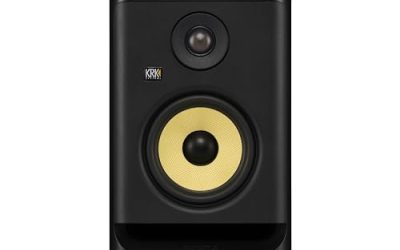
Klipsch R-51PM Powered Bluetooth Speaker — Black
- Best for: Owners of vintage or preamp-free turntables who also want one speaker pair for TV and computer duty.
- Powered monitor with built-in amplifier; no receiver needed
- Integrated phono pre-amp
- Phono/line analog input with switch and ground screw terminal
- Bluetooth wireless technology
Owners of vintage or preamp-free turntables who also want one speaker pair for TV and computer duty.
Availability signals for this listing conflict, with trackers showing third-party offers rather than a current Amazon-sold price, so confirm a live featured offer for the exact ASIN before ordering.
The R-51PM is the safest starting point for a mixed collection of equipment because it answers the phono question both ways. Its analog input switches between phono and line and carries a ground screw terminal, so a vintage deck connects directly while a modern one bypasses the internal stage. The built-in amplifier is engineered for these cabinets, removing any need for a receiver, and optical, RCA and USB inputs let the same pair serve a television or computer between records. Bluetooth covers casual phone streaming.
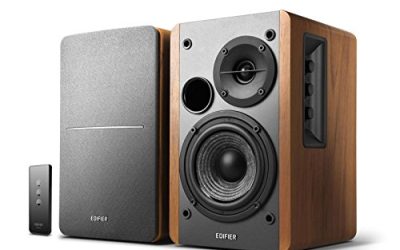
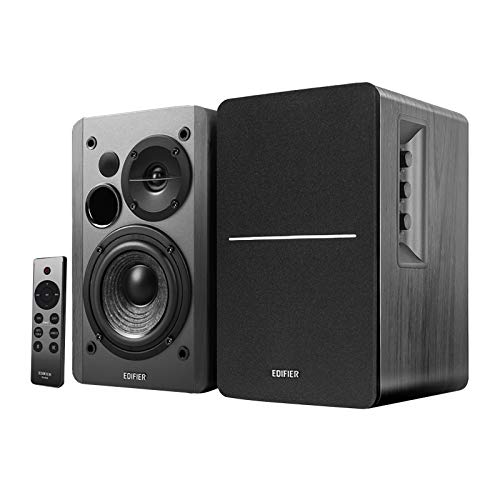
Edifier R1280DBs Active Bluetooth Bookshelf Speakers — Black
- Best for: Listeners whose turntable already has a built-in preamp and outputs line level.
- Active (powered) bookshelf speakers, 2.0 pair
- 42W RMS total power output (R/L: 21W + 21W)
- Bluetooth 5.0 wireless
- Optical input and coaxial input
Listeners whose turntable already has a built-in preamp and outputs line level.
There is no phono preamp in these speakers, so a turntable without its own built-in preamp will play extremely quietly unless you add a separate phono stage; also confirm you are ordering the Black listing, since other finishes are sold under separate listings.
The R1280DBs is the straightforward budget route, provided your turntable does the preamp work itself. It is a powered 2.0 pair with 42W RMS on tap, Bluetooth 5.0 for phone streaming, and optical and coaxial inputs that suit a television or games console sharing the shelf. A subwoofer line out leaves room to add low-end weight later. What it deliberately lacks is any phono stage: its analog inputs accept line level only, which defines exactly who should and should not buy it.
Kanto YU4 Powered Speakers — Matte Grey
- Best for: Small rooms and desks where a phono-ready pair must also handle everyday streaming.
- Built-in phono preamp — connects directly to vintage or modern turntables
- Class D amplifier, 140W peak power
- 4-inch Kevlar drivers and 1-inch silk dome tweeters
- Bluetooth streaming
Small rooms and desks where a phono-ready pair must also handle everyday streaming.
No fresh Amazon price or stock point could be pinned for this Matte Grey listing, so confirm a live featured offer for the exact ASIN before ordering, and check that the finish on the listing matches the colour you intend to receive.
The YU4 packs the turntable-friendly hardware into the smallest cabinet of the three. A built-in phono preamp accepts vintage and modern decks directly, the Class D amplifier is rated at 140W peak, and 4-inch Kevlar drivers with 1-inch silk dome tweeters keep voices and acoustic detail clear at desk and small-room distances. Bluetooth handles streaming between records, automatic standby and auto power-up remove daily friction, and the included remote means volume changes happen from the sofa rather than at the speaker.
Which One Fits Your Situation
Your turntable is a vintage deck with no preamp
Choose between the Klipsch R-51PM and the Kanto YU4, the two picks with a phono stage inside. The Klipsch suits a living-room setup where its ground screw terminal can silence an ungrounded deck and its extra inputs earn their keep. The Kanto is the tighter fit for a bedroom or study shelf. Either way, the Edifier cannot help you here: without a preamp somewhere in the chain, your records will barely whisper.
Your modern turntable already outputs line level
The Edifier R1280DBs was made for you. Decks from the current generation usually carry a built-in preamp with a line setting, and that signal is all this powered pair asks for. You get Bluetooth 5.0, optical and coaxial inputs and a subwoofer output for less fuss than the phono models demand, and the money saved can go toward records or a cartridge upgrade instead.
One shelf must serve records, television and your phone
The Klipsch R-51PM is the natural hub. Its optical input takes the television, USB serves a computer, the switchable phono/line input handles the deck, and Bluetooth fills the gaps from your phone, all through one amplified pair with no receiver in the rack. The Kanto YU4 covers a smaller version of the same brief where shelf depth is limited and a remote matters more than input count.
You listen at a desk or in a small room
Take the Kanto YU4. Its 4-inch drivers are voiced for near and mid distances, the phono preamp keeps the wiring to a single cable run from almost any deck, and automatic standby means it sleeps when the record ends. The remote saves reaching across a desk mid-session, and Bluetooth keeps podcasts and playlists one tap away between sides.
Common Mistakes
- Buying passive speakers for a turntable setup and discovering too late that nothing in the chain can amplify the signal.
- Connecting a phono-level turntable to line-level inputs like the Edifier’s, then blaming the speakers for the faint, thin result.
- Running a turntable’s line output into a speaker’s phono input, which double-amplifies the signal and overloads it into distortion.
- Leaving the ground wire unconnected, so a mains hum rides underneath every record you play.
- Comparing a peak wattage figure against an RMS figure as if they were the same measurement when judging loudness.
Frequently Asked Questions
Do powered speakers need a receiver to work with a turntable?
No. Each pair here carries its own built-in amplifier, which is the point of choosing powered speakers for vinyl. The turntable connects straight to the speaker inputs, and the only remaining requirement is a phono preamp somewhere in the chain: inside the turntable, inside the speakers, or in a small external box between the two.
What happens if neither my turntable nor the speakers have a phono preamp?
The record will play far too quietly and sound thin, because the cartridge signal never gets amplified or equalised. You have three fixes: choose speakers with a phono stage built in, like the Klipsch or Kanto here, use a turntable that has one, or place an external phono preamp between any deck and any line-level powered speaker.
Can I use these speakers for my TV and phone as well as records?
Yes, and that flexibility is a genuine reason to buy powered speakers. The Klipsch adds optical and USB inputs for a television or computer, the Edifier offers optical and coaxial connections, and all three pairs stream over Bluetooth. One shelf of equipment can therefore cover film nights, gaming and background listening without a separate receiver or soundbar.
Why does my turntable hum through powered speakers, and how do I stop it?
Hum usually means the turntable’s ground wire has nowhere to go, or signal cables are running alongside power leads. Connect the ground wire to a proper terminal where one exists, as on the Klipsch R-51PM, reroute cables away from power bricks, and confirm the phono/line switch matches your deck’s output. Those three checks cure most cases.
FAQ
Do powered speakers need a receiver to work with a turntable?
What happens if neither my turntable nor the speakers have a phono preamp?
Can I use these speakers for my TV and phone as well as records?
Why does my turntable hum through powered speakers, and how do I stop it?
More from Amazon
Programs that pair well with the guide above. Offers and eligibility are set by Amazon and may change.
Free shipping on eligible items, Prime Video and more. Eligible new members can start with a free trial.
Start a Prime free trialAd-free music streaming. Eligible new subscribers can start with a free trial.
Try Music Unlimited freeA Prime membership for ages 18-24 with a trial period. Eligibility is set by Amazon.
See Prime for Young AdultsAudiobooks and podcasts to listen to on the go. Eligible new members can start with a free trial.
Try Audible freeAs an Amazon Associate we earn from qualifying purchases.