Key takeaways
- Pick the best movie projector for home cinema, from dedicated-theater 4K models to smart laser projectors with Dolby Vision and big-screen punch.
A movie projector turns a film into an event, but the choice is not only about resolution. The real decision is how dark your room gets, how large the image will be, and how much the projector should handle on its own. Contrast and color matter more at 120 inches than on a television, because flaws that stay hidden at 55 inches show up clearly when the picture covers a wall. A projector that shines in a bright living room can still disappoint in a dark theater room if its blacks look grey.
This guide is for home cinema fans, from dedicated dark-room setups to living-room film nights and portable backyard screenings. Each projector below was selected from the name and specifications on its Amazon listing, so brightness, resolution, and features are quoted from the listing itself. The five models range from a serious theater projector to compact smart units that set up in minutes.
Quick Picks
As an Amazon Associate we earn from qualifying purchases
| Product | Best for | Key spec from title |
|---|---|---|
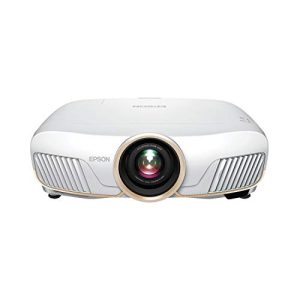
| Epson Home Cinema 5050UB | Dedicated theater rooms | 4K PRO-UHD, 3-chip 3LCD |
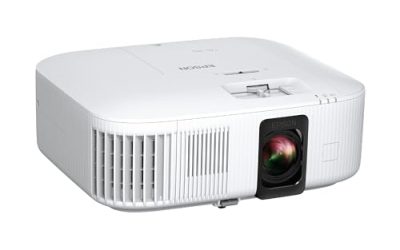
| Epson Home Cinema 2350 | Bright living-room cinema | 4K PRO-UHD, 2,800 lumens |
| BenQ TK710 | Laser cinema with low lag | 4K laser, 3,200 lumens |
| ViewSonic PX701-4K | Value 4K home theater | 4K UHD, 3,200 lumens |
| XGIMI HORIZON S Pro | Smart 4K with Dolby Vision | 4K, Dolby Vision, 1,800 ISO lumens |
How to Choose
Control the light before you choose the projector
A movie projector lives or dies by room darkness. Blackout curtains and a dark ceiling let even a modest projector show deep blacks, while a bright room flattens contrast no matter how much the projector costs. Before comparing models, decide how dark the room can get during films. A dedicated theater room opens up the whole market, but a living room with windows pushes you toward brighter laser models that hold their picture with some ambient light present. A room with glass doors facing the afternoon sun behaves very differently from a basement room with one small window.
Look past resolution to contrast and color
Resolution gets the headlines, yet contrast and color decide whether a film looks cinematic. A 4K projector with weak contrast shows grey shadows where a good 1080p model shows real black, and wide color coverage makes skin tones and landscapes look natural instead of flat. Check the listed color technology and HDR support alongside resolution, and favor models that name their color coverage or HDR formats rather than those that only promise a sharp picture. A projector that lists its color coverage or HDR formats gives you something real to compare, while vague claims about a sharp picture tell you nothing.
Size the image to your seating distance
A 120-inch image feels spectacular from three metres away and overwhelming from two, so seating distance sets the right screen size. Measure the gap between the sofa and the wall, then work backward: the projector needs a throw distance that fits the room while producing that image size. Short-throw models help in tight rooms, while long-throw units suit a projector mounted behind the seating area. Getting this wrong means moving furniture after the purchase. A 100-inch image viewed from two metres feels cramped, while the same image from four metres can feel small, so seating distance should set the size.
Weigh smart features against a separate player
Built-in Android TV and streaming apps make a projector a one-box cinema, which suits bedrooms, rentals, and portable use. A dedicated theater room usually pairs the projector with a separate player or streaming box anyway, so smart features matter less there. Decide whether the projector must work alone or will join an existing setup, because a display-only model can be the better buy when a player and sound system already exist. If the projector will sit in a bedroom or a rental, built-in streaming saves space and cables; in a fixed theater, the player you already own may do the job better.
The 5 Best Options
Epson Home Cinema 5050UB
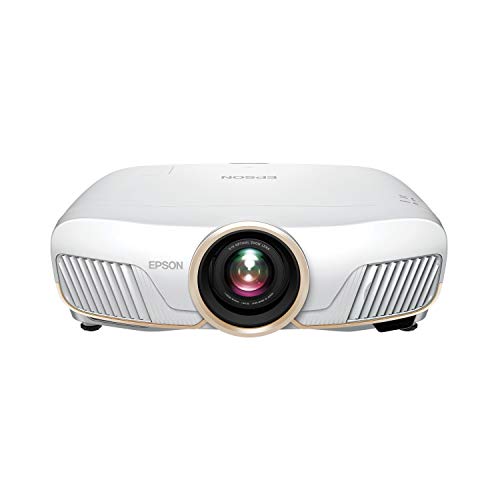
The 5050UB is the dedicated theater projector in this guide, built for a dark room where films get the full treatment. Its 4K PRO-UHD resolution and 3-chip 3LCD engine produce rich, accurate color with the kind of shadow detail that cheaper models flatten, and HDR support keeps bright highlights from blowing out. Motorized lens shift, zoom, and focus make ceiling mounting painless, since the image can be aligned without moving the unit. In Eco mode it runs quietly enough to disappear behind the film.
Specs
- 4K PRO-UHD resolution
- 3-chip 3LCD technology
- HDR support
- Motorized lens shift, zoom, and focus
- 2.1x optical zoom lens
- Quiet operation in Eco mode
Best for: Dedicated dark rooms where films are the main event.
Watch out for: It needs a dark room to show its strengths, so a bright living room will hide the contrast advantage.
Epson Home Cinema 2350

The Home Cinema 2350 brings cinema into a living room that never goes fully dark. With 2,800 lumens of color and white brightness, it keeps the picture punchy while lamps stay on, and the 3-chip 3LCD design delivers color that stays vivid at that brightness. Android TV is built in, so films start without an extra streaming stick, and the 10-watt speaker handles casual viewing in a small room. Low latency also keeps it ready for a game after the credits roll.
Specs
- 4K PRO-UHD resolution
- 3-chip 3LCD technology
- 2,800 lumens color and white brightness
- HDR10 and HLG support
- Android TV built in
- 10-watt speaker
- Bluetooth connectivity
Best for: Living-room film nights where the lights stay partly on.
Watch out for: Deep blacks soften in a bright room, so draw the curtains for the most cinematic picture.
BenQ TK710

The TK710 pairs a laser light source with 4K resolution, which makes it the brightest and most durable cinema pick here. Its 3,200 ANSI lumens hold the image in rooms with ambient light, and the laser engine keeps brightness steady for years without a lamp swap. A 4-millisecond input lag and 240Hz refresh rate mean fast scenes stay smooth and games stay responsive, while HDR10 and HLG support keep films properly graded. Vertical lens shift and 1.3x zoom ease placement on a shelf or a ceiling mount.
Specs
- 4K HDR laser projection
- 3,200 ANSI lumens brightness
- 4ms input lag
- 240Hz refresh rate
- HDR10 and HLG support
- ARC and eARC support
- Vertical lens shift and 1.3x zoom
- 3D keystone correction
Best for: Bright rooms where films share the screen with games.
Watch out for: Laser brightness helps with light, but the deepest blacks still need a dark room, so check contrast with your curtains drawn.
ViewSonic PX701-4K
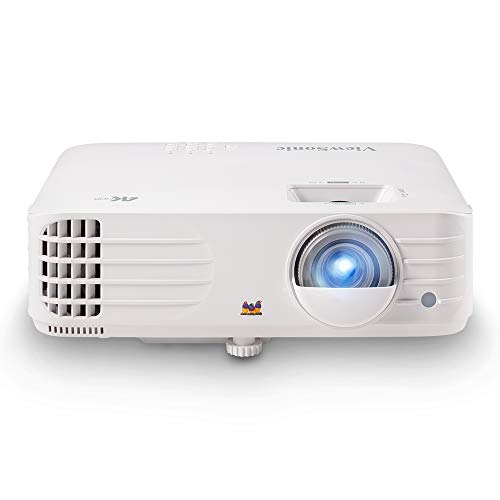
The PX701-4K is the value route into 4K home cinema, offering a large, sharp image without the flagship price of a dedicated theater model. Its 3,200 lumens keep the picture bright in a living room, and the 240Hz refresh rate with 4.2-millisecond input lag keeps motion smooth in action scenes and games. HDR support adds depth to highlights, while auto keystone and dual HDMI inputs make setup straightforward. A 1.1x optical zoom and lens shift help the image fit the wall without moving furniture.
Specs
- 4K UHD 3840×2160 resolution
- 3,200 lumens brightness
- 240Hz refresh rate
- 4.2ms input lag
- HDR support
- Auto keystone correction
- Dual HDMI inputs
- 1.1x optical zoom with lens shift
Best for: Buyers who want a bright 4K cinema image at a sensible cost.
Watch out for: It has no built-in smart TV system, so plan on a streaming stick or player for films.
XGIMI HORIZON S Pro

The HORIZON S Pro is the compact smart cinema pick, a 4K projector with Dolby Vision that sets up in minutes. Its 1,800 ISO lumens suit a dimmed room, where its wide color coverage and Dolby Vision support make films look rich and layered. The built-in flexible stand tilts the lens toward the ceiling or a high wall without propping the unit up, and Intelligent Screen Adaptation handles focus and keystone automatically. Two Harman Kardon speakers carry dialogue clearly, so a soundbar can wait.
Specs
- 4K resolution with Dolby Vision
- 1,800 ISO lumens brightness
- 110% BT.2020 color coverage
- Built-in flexible stand
- Intelligent Screen Adaptation
- 2 x 12W Harman Kardon speakers
Best for: Dimmed rooms where a compact smart projector handles the whole film night.
Watch out for: At 1,800 ISO lumens it is a dim-room projector, so daylight viewing needs curtains drawn.
Which One Fits Your Situation
You have a dedicated dark theater room
Choose the Epson Home Cinema 5050UB. Its 4K PRO-UHD image, 3-chip color, and motorized lens controls are made for a ceiling-mounted setup in a light-controlled room. Pair it with a separate player and sound system, and it delivers the most cinematic picture in this guide. Ceiling mounting stays simple, since the image aligns without moving the unit.
Your films play in a bright living room
Pick the BenQ TK710 or the ViewSonic PX701-4K. Both reach 3,200 lumens, so the picture stays bright with lamps on. The BenQ adds laser longevity and lower lag for gaming, while the ViewSonic offers a similar 4K image at a lower cost, though it needs a separate streaming stick. Either one keeps films bright with lamps on, and both handle games well enough for casual play after the credits.
You want films without extra boxes
Go with the Epson Home Cinema 2350 or the XGIMI HORIZON S Pro. Both run Android TV directly, so a film starts with one remote. The Epson suits brighter rooms, while the XGIMI brings Dolby Vision and a flexible stand for dimmed rooms and awkward placement. Both also carry usable built-in speakers, so casual viewing needs nothing more until a soundbar arrives.
You watch films in different rooms or outdoors
The XGIMI HORIZON S Pro is the most portable of the smart models here, with automatic setup and a tilting stand that adapts to any wall. For a truly portable option, a battery-powered mini projector suits backyard nights, though its brightness needs darkness to shine. Its automatic setup adapts to each new wall, so moving it between rooms takes minutes rather than a full realignment.
Common Mistakes
- Judging a projector in a bright showroom, then watching it in a dark room where contrast matters more.
- Buying for resolution alone while ignoring contrast and color coverage.
- Sizing the image to the wall instead of the seating distance.
- Skipping a sound plan, then finding built-in speakers too quiet for a large room.
- Mounting the projector before checking throw distance and lens shift limits.
Frequently Asked Questions
What makes a projector good for movies?
Contrast, color, and resolution together make a movie projector. Deep blacks and accurate color matter more than raw brightness in a dark room, while HDR support keeps highlights and shadows detailed. A good movie projector also runs quietly, so fan noise never competes with dialogue during quiet scenes.
Is a laser projector better for movies?
Laser projectors keep brightness steady for years and start instantly, with no lamp to replace. They also tend to hold color accuracy longer than lamp models. A lamp projector can still look excellent in a dark room, so laser is a durability and convenience advantage rather than a strict picture-quality requirement.
How big should the screen be for movies?
A 100 to 120-inch image suits most living rooms, giving a cinema feel from a normal seating distance. Larger images need a longer throw distance and a darker room to stay sharp and bright. Measure your seating distance first, then choose an image size that fills your view without forcing you to turn your head.
Do I need a soundbar with a movie projector?
Built-in speakers work for casual viewing in a small room, but a soundbar or surround system transforms films in a larger space. Dialogue stays clearer and sound effects gain impact at cinema volume. Start with the built-in speakers, then add a soundbar if the audio feels thin during action scenes.
FAQ
What makes a projector good for movies?
Is a laser projector better for movies?
How big should the screen be for movies?
Do I need a soundbar with a movie projector?
More from Amazon
Programs that pair well with the guide above. Offers and eligibility are set by Amazon and may change.
Free shipping on eligible items, Prime Video and more. Eligible new members can start with a free trial.
Start a Prime free trialAd-free music streaming. Eligible new subscribers can start with a free trial.
Try Music Unlimited freeA Prime membership for ages 18-24 with a trial period. Eligibility is set by Amazon.
See Prime for Young AdultsAudiobooks and podcasts to listen to on the go. Eligible new members can start with a free trial.
Try Audible freeAs an Amazon Associate we earn from qualifying purchases.