Key takeaways
- Panel Type: QD-OLED panels offer higher peak brightness and more vibrant colors, while W-OLED panels tend to deliver deeper blacks in dark rooms. Both are excellent, but your room lighting should guide the decision.
- Refresh Rate: 240Hz remains the standard for QHD OLEDs, but newer 280Hz panels are pushing the envelope. Competitive players should prioritize higher refresh rates; single-player gamers won’t notice much difference above 180Hz.
- Response Time: Nearly all current OLED monitors hit 0.03ms GtG, so this spec is essentially solved. Don’t pay extra for marketing claims beyond what the panel natively delivers.
- Coating: Glossy coatings enhance perceived contrast and color pop but reflect ambient light. Matte or glare-free coatings trade a small amount of image crispness for better usability in bright rooms.
- Burn-in Protection: Look for features like pixel shifting, logo detection, and panel-level safeguards. A three-year warranty covering burn-in is non-negotiable in 2026.
Finding the right OLED monitor in 2026 is both exciting and overwhelming. Panel technology has evolved rapidly, with QD-OLED and W-OLED options now delivering near-instantaneous response times, true blacks, and HDR performance that makes traditional IPS and VA panels look dated by comparison. The problem for most buyers is navigating the sea of specifications: refresh rates ranging from 180Hz to 280Hz, different panel sub-types, matte versus glossy coatings, and wildly varying warranty terms that can make or break your long-term satisfaction.
Our top picks


As an Amazon Associate we earn from qualifying purchases at no extra cost to you. Ratings are shown as listed on Amazon.
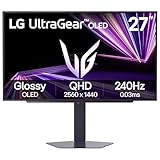
This guide covers the best OLED monitors currently available for PC gaming, focusing on 27-inch QHD models that hit the performance sweet spot for modern graphics cards. Whether you’re building a high-refresh rig around a flagship GPU or want a premium display that handles competitive shooters and cinematic single-player titles equally well, these picks represent the strongest options on the market. We’ve considered panel type, refresh rate, build quality, burn-in protection, and overall value.
🛒 Best Price Today on Amazon
Prime members get fast, free shipping on everything above, plus member-only deals. New members get a 30-day free trial — cancel anytime.
Watch: Best OLED Monitor 2026 — Video Review
How to Choose an OLED Monitor 2026
- Panel Type: QD-OLED panels offer higher peak brightness and more vibrant colors, while W-OLED panels tend to deliver deeper blacks in dark rooms. Both are excellent, but your room lighting should guide the decision.
- Refresh Rate: 240Hz remains the standard for QHD OLEDs, but newer 280Hz panels are pushing the envelope. Competitive players should prioritize higher refresh rates; single-player gamers won’t notice much difference above 180Hz.
- Response Time: Nearly all current OLED monitors hit 0.03ms GtG, so this spec is essentially solved. Don’t pay extra for marketing claims beyond what the panel natively delivers.
- Coating: Glossy coatings enhance perceived contrast and color pop but reflect ambient light. Matte or glare-free coatings trade a small amount of image crispness for better usability in bright rooms.
- Burn-in Protection: Look for features like pixel shifting, logo detection, and panel-level safeguards. A three-year warranty covering burn-in is non-negotiable in 2026.
The Best OLED Monitor 2026s Reviewed
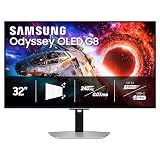
Samsung Odyssey OLED G6 (G61SH)
The Odyssey OLED G6 pairs a 240Hz QD-OLED panel with Samsung’s glare-free coating and Pantone validation, making it one of the most versatile picks on this list. With a 0.03ms response time, OLED Safeguard burn-in protection, and a full three-year warranty, it’s the most well-rounded QHD OLED for mixed-use gaming and content consumption.
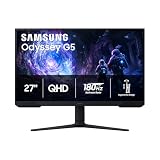
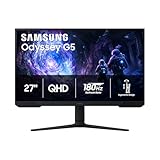
Samsung Odyssey OLED G5 (G50SF)
For gamers who want OLED image quality without chasing the highest refresh rate, the Odyssey OLED G5 delivers a 180Hz QD-OLED panel at a more accessible price point. G-Sync and FreeSync support keep things smooth, and the 0.03ms response time means motion clarity remains class-leading despite the lower frame rate ceiling.
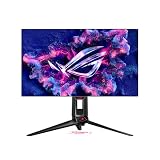
ASUS ROG XG27AQDMG
ASUS went with a glossy W-OLED coating here, and the result is stunning contrast and color vibrancy that matte panels can’t match. The custom heatsink enables higher sustained brightness, and features like Anti-Flicker and Uniform Brightness make it a top-tier pick for both PC and console gaming.
AOC Agon Pro AG276QZD2
The AOC Agon Pro packs a 240Hz QD-OLED panel with HDR TrueBlack 400 certification and a surprisingly solid built-in speaker system. It’s a practical, no-nonsense option with VESA mounting, height adjustability, and the kind of color accuracy that pulls double duty for gaming and light creative work.
GIGABYTE MO27Q28GR
GIGABYTE’s MO27Q28GR uses a tandem W-OLED panel to reach 280Hz, edging out the standard 240Hz field. With a USB-C port, KVM switching, and FreeSync Premium Pro, it’s the most feature-dense monitor here and a strong choice for gamers who also run a work-from-home setup on the same desk.
Frequently Asked Questions
Is burn-in still a problem with OLED monitors in 2026?
Modern OLED panels have significantly reduced burn-in risk through pixel shifting, dimming of static elements, and improved panel materials. Combined with a three-year warranty that covers burn-in on most major brands, the risk is manageable for typical gaming use.
QHD or 4K for OLED gaming?
QHD at 27 inches remains the sweet spot for high-refresh OLED gaming, offering an excellent pixel density and frame rates that current GPUs can actually push. 4K OLEDs exist but demand significantly more GPU horsepower to run at high frame rates.
Do I need a special graphics card for an OLED monitor?
Any modern mid-range or better GPU will drive these monitors fine, but to hit 240Hz or 280Hz in demanding titles, you’ll want a current-generation upper-mid or high-end card. Both NVIDIA and AMD GPUs support the adaptive sync standards these displays use.
Are these monitors good for console gaming?
Most of these QHD OLEDs support 120Hz over HDMI, making them excellent companions for PS5 or Xbox Series X. Some models, like the ASUS ROG XG27AQDMG, are explicitly marketed as console-ready in addition to their PC gaming focus.
Final Thoughts
The Samsung Odyssey OLED G6 stands out as the best all-around pick, combining QD-OLED image quality, a glare-free coating, and robust burn-in protection with a strong warranty. The ASUS ROG XG27AQDMG is the top choice for gamers who want maximum image vibrancy with a glossy panel, and the GIGABYTE MO27Q28GR is ideal for anyone who wants the highest refresh rate and the most connectivity features in a single display.